
Technology
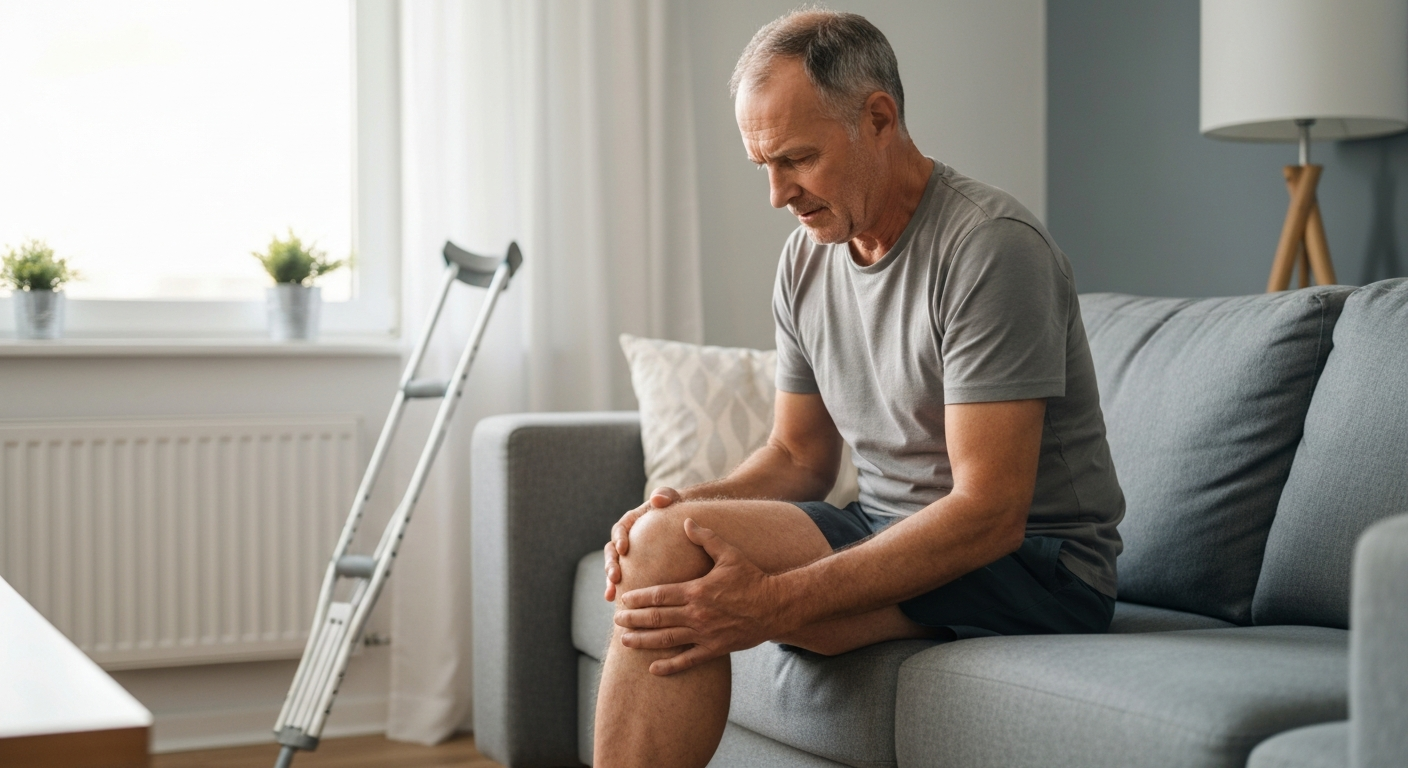

Your knee feels tight after meniscus surgery because of post-operative swelling, scar tissue formation, and muscle inhibition—all normal parts of the healing process that typically improve significantly within 6 to 12 weeks with proper rehabilitation.
The stiffness you're experiencing when you try to bend your knee is frustrating, but it's actually your body's protective response to surgical trauma. Your joint capsule has swelled, collagen fibers are laying down as part of healing, and your quadriceps muscle has temporarily "shut off" to guard the knee. Understanding exactly why this happens—and what to do about it—can help you recover full range of motion faster.
| ✓Our Pick |
Knee ice wrap and compression sleeve for post-surgery recovery Trusted by professionals and everyday users alike — a smart investment that pays for itself. See on Amazon → |
| ✓Our Pick |
Clear Wellness 360 — joint support, collagen, gut health, and menopause relief supplements; also formulated for pet mobility and arthritis No special skills required — straightforward to use and most orders ship quickly. Learn More → |
Knee stiffness after meniscus surgery results from a combination of swelling inside the joint, scar tissue forming around healing tissues, and protective muscle guarding—all working together to limit your range of motion during the critical early healing phase.
Several interconnected factors contribute to that tight, hard-to-bend sensation in your knee. Some are temporary and resolve on their own, while others require targeted rehabilitation to overcome.
Swelling is the primary cause of knee tightness in the first two to four weeks after surgery. When your surgeon operates on the meniscus, fluid accumulates inside the joint capsule (a condition called joint effusion). This excess fluid physically restricts how far you can bend or straighten your knee.
The swelling triggers stretch receptors in your joint capsule, which send signals to your brain that movement is potentially harmful. Your nervous system responds by limiting your willingness to move through full range of motion—even when it would be safe to do so.
"Postoperative effusion is nearly universal after arthroscopic knee surgery and is the most common cause of early range of motion limitations." — Dr. Robert LaPrade, orthopedic surgeon at Twin Cities Orthopedics
Yes—scar tissue formation (called arthrofibrosis in severe cases) is a well-documented cause of persistent knee stiffness after meniscus surgery. Even minimally invasive arthroscopic procedures cause some tissue trauma, and your body responds by laying down collagen fibers as it heals.
In most patients, this scar tissue remodels naturally over time. However, if you don't move the knee enough during early recovery, these collagen fibers can become dense and disorganized, creating adhesions that physically tether tissues together and restrict motion.
The risk of problematic scar tissue increases if you:
- Immobilize the knee too long after surgery
- Skip physical therapy sessions
- Had a more complex repair rather than a simple meniscectomy
- Have a history of excessive scarring
Arthrogenic muscle inhibition (AMI) is a neurological phenomenon where your quadriceps muscle fails to fully activate after knee injury or surgery. This isn't weakness from disuse—it's your nervous system reflexively "turning off" the muscle to protect the joint.
The swelling in your knee joint activates sensory receptors that send inhibitory signals to your spinal cord. These signals then block full activation of your quadriceps, regardless of how hard you try to contract it.
Without proper quadriceps function, your knee feels unstable and stiff. The muscle can't properly control the patella (kneecap) or stabilize the joint through its full range of motion, making bending feel difficult and uncomfortable.
| ✓Quick Fix |
See What Solves This in Minutes Quick to get, easy to try — a sensible first move while you figure out next steps. See on Amazon → |
Most patients experience significant improvement in knee stiffness within 4 to 6 weeks after a simple meniscectomy, while meniscus repair patients typically need 8 to 12 weeks before tightness substantially resolves—though full range of motion may take 3 to 6 months.
Your recovery timeline depends heavily on what type of procedure you had:
| Procedure Type | Expected Stiffness Duration | Full ROM Timeline |
|---|---|---|
| Partial meniscectomy | 2–4 weeks significant, 6–8 weeks mild | 6–10 weeks |
| Meniscus repair | 6–8 weeks significant, 10–12 weeks mild | 12–16 weeks |
| Complex/root repair | 8–12 weeks significant | 4–6 months |
Several factors influence how quickly your tightness resolves:
"The most critical window for regaining range of motion is the first 6 weeks post-operatively. Patients who aggressively manage swelling and follow their PT protocol during this time have much better outcomes." — American Academy of Orthopaedic Surgeons
Some degree of stiffness is expected after meniscus surgery, but certain patterns of tightness—especially worsening stiffness after initial improvement, inability to straighten the knee fully, or tightness accompanied by warmth and redness—warrant immediate medical attention.
Distinguishing normal recovery tightness from problematic stiffness helps you know when to push through discomfort versus when to contact your surgeon.
Your stiffness is likely a normal part of healing if:
- It gradually improves week over week
- It's worst in the morning or after prolonged sitting
- It loosens up with gentle movement and warming up
- You can achieve slightly more bend each week during PT
- Swelling is decreasing overall
Contact your surgeon if you experience:
- Worsening stiffness after initial improvement (could indicate infection or excessive scar tissue)
- Inability to fully straighten the knee past two weeks post-op (extension loss is harder to recover than flexion loss)
- Knee feels "locked" or catches during movement (possible loose body or incomplete meniscus healing)
- Increasing warmth, redness, or fever (signs of infection)
- Significant new swelling after it had been improving
Also Read: Why Is My Hamstring So Tight? 7 Causes & Lasting Fixes
The most effective strategies for reducing post-surgical knee tightness combine consistent swelling management, progressive range of motion exercises, and targeted muscle activation work—ideally under the guidance of a physical therapist.
Reducing joint effusion is the single most important thing you can do to improve early knee mobility. The less fluid in your joint, the less mechanical restriction on movement.
Apply ice for 15–20 minutes every two to three hours during the first week. Use compression wraps between icing sessions. Elevate your leg above heart level whenever resting. Your surgeon may have also prescribed anti-inflammatory medication—take it as directed.
Heel slides are a cornerstone exercise for regaining knee flexion (bending). Lie on your back with your foot on a smooth surface or towel. Slowly slide your heel toward your buttock, bending the knee as far as comfortable. Hold for 5–10 seconds, then slowly straighten.
Start with 3 sets of 10 repetitions, three times daily. Your physical therapist will progress you to more challenging flexion exercises as healing allows.
While bending often gets more attention, regaining full knee straightening (extension) is actually more critical. Lost extension is harder to recover later and causes more functional problems than limited flexion.
Perform prone hangs by lying face-down with your knee at the edge of a bed, allowing gravity to straighten the joint. Or sit with your heel propped on a pillow and gently press down on your thigh. Aim for 0 degrees of extension (completely straight) within the first two weeks.
Combat arthrogenic muscle inhibition by practicing quadriceps sets. Sit or lie with your leg straight. Try to contract your thigh muscle and push the back of your knee into the surface beneath it. Hold for 5–10 seconds. It may feel weak or difficult at first—this is normal.
Neuromuscular electrical stimulation (NMES) devices can also help "re-educate" your quadriceps to fire properly. Ask your physical therapist if this would benefit you.
Gentle continuous movement helps prevent scar tissue adhesions and reduces stiffness. Stationary cycling (even with limited range initially), pool walking, or using a continuous passive motion (CPM) machine all keep the joint mobile without high stress.
Start with what your surgeon and PT allow. Many patients can begin stationary cycling within the first week if they have adequate range of motion.
Consistent physical therapy is the strongest predictor of regaining full range of motion. Your PT can assess your specific limitations, perform hands-on techniques to improve mobility, and progress your exercises appropriately.
Research shows patients who attend regular PT sessions after meniscus surgery regain full motion faster and report higher satisfaction with their outcomes compared to those who rely on home exercises alone.
Also Read: Why Is My Forearm Hurting? 7 Causes & How to Fix It
If your knee remains significantly stiff beyond 8 to 12 weeks despite consistent physical therapy, or if you cannot achieve at least 120 degrees of flexion and full extension, you should see your orthopedic surgeon for evaluation of possible arthrofibrosis or other complications.
Your surgeon may recommend:
The key is not waiting too long. Scar tissue becomes more organized and harder to treat over time. If you're not making progress by 8 weeks, speak up.
Knee tightness after meniscus surgery is almost always caused by a combination of post-operative swelling, scar tissue formation, and quadriceps muscle inhibition—all normal parts of healing that typically resolve within 6 to 12 weeks with proper rehabilitation. Managing swelling aggressively, performing daily range of motion exercises, and attending physical therapy consistently give you the best chance of regaining full mobility. If stiffness persists beyond 8 to 12 weeks or worsens after initial improvement, contact your surgeon to rule out complications like arthrofibrosis.
Persistent stiffness several weeks after meniscus surgery usually indicates either ongoing swelling, developing scar tissue, or inadequate rehabilitation. Scar tissue (arthrofibrosis) forms when collagen fibers become dense and disorganized during healing, physically restricting motion. Increasing your physical therapy frequency, performing more aggressive range of motion exercises at home, and discussing anti-inflammatory options with your surgeon can help break through this plateau.
Tightness primarily during bending (flexion) suggests the posterior joint capsule or scar tissue behind your knee is restricting motion. Swelling also tends to limit flexion more than extension because fluid accumulates in the back of the joint. Heel slides, wall slides, and prone flexion stretches specifically target this limitation. If you've regained full extension but flexion remains stuck, your physical therapist may use joint mobilization techniques to improve motion.
Morning stiffness is extremely common after knee surgery because joint fluid thickens overnight when you're not moving. The synovial fluid in your knee becomes more viscous during rest, making initial movement feel tight and resistant. This usually improves within 10–15 minutes of gentle activity. Performing ankle pumps and gentle knee bends before getting out of bed can help reduce morning stiffness.
Most patients achieve 90 degrees of flexion (enough to walk normally) within 2–4 weeks after a meniscectomy. Full flexion of 120–140 degrees (needed for deep squats or kneeling) typically takes 6–12 weeks for meniscectomy patients and 12–16 weeks for meniscus repair patients. Factors like pre-existing arthritis, your age, and how consistently you follow your rehabilitation program all influence this timeline.
Yes, overdoing exercises—especially in the first few weeks—can increase swelling and temporarily worsen stiffness. However, not exercising enough is a bigger risk for most patients. The goal is consistent, moderate activity that challenges your range of motion without causing significant pain or swelling. If your knee swells noticeably after exercise or takes more than a day to recover, you're likely doing too much. Work with your physical therapist to find the right intensity.
Reviewed and Updated on June 20, 2026 by George Wright