
Technology
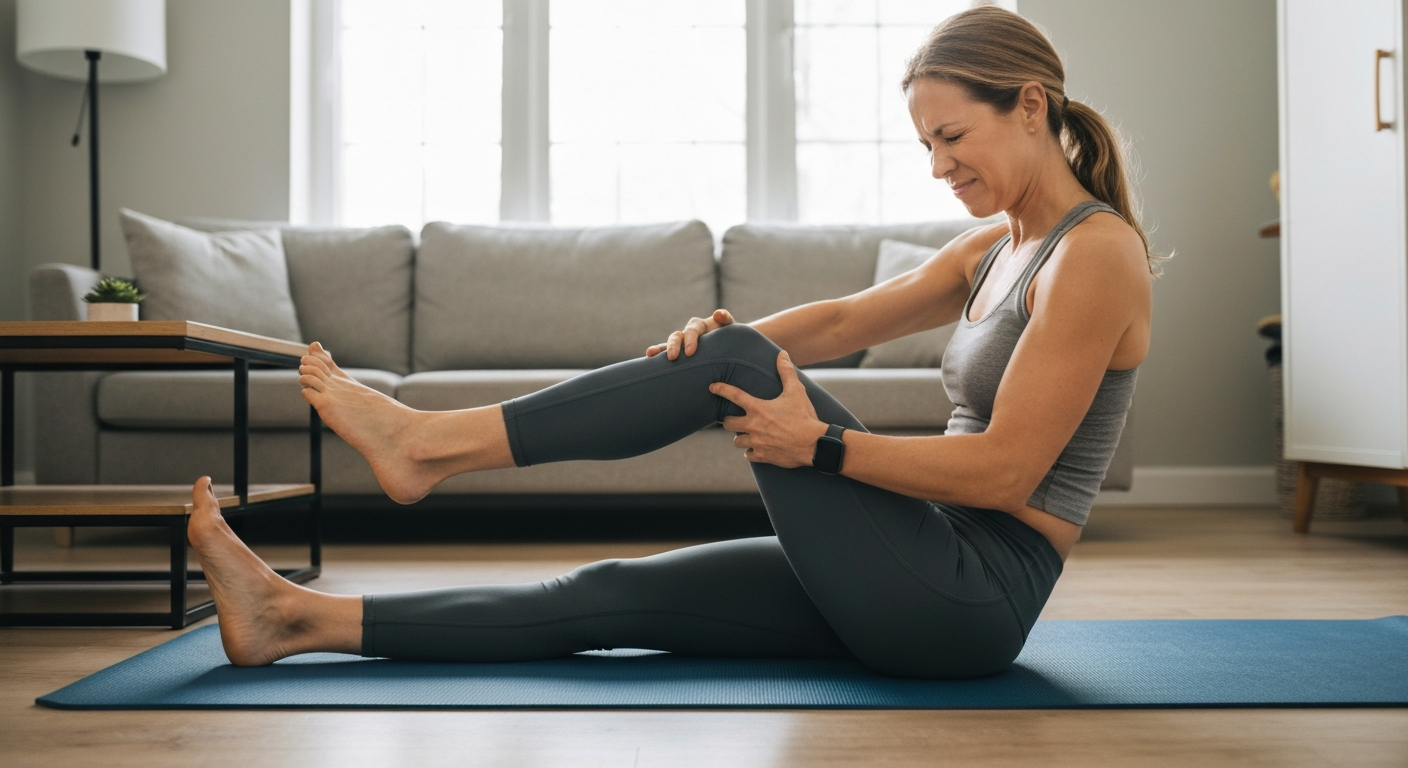

Your hamstring feels tight because the muscle is either genuinely shortened from prolonged sitting and limited movement, or it's neurologically "guarding" to protect your pelvis, lower back, or hip joint from instability—and in most cases, stretching alone won't fix it because you're treating a symptom rather than the root cause.
Tight hamstrings are one of the most common complaints people bring to physical therapists, personal trainers, and massage therapists. You stretch and stretch, yet the tightness returns within hours. That's because hamstring tightness is rarely just a hamstring problem. Your body is a linked chain, and when one segment isn't doing its job—whether that's weak glutes, an anteriorly tilted pelvis, or a stiff thoracic spine—your hamstrings pick up the slack. Understanding why your hamstring is always tight is the first step toward finally getting lasting relief.
| ✓Quick Fix |
The First Thing Most People Try A fast first step before anything more expensive or time-consuming — worth a look right now. See on Amazon → |
Your hamstrings are three muscles—biceps femoris, semitendinosus, and semimembranosus—that cross both your hip and knee joints, making them uniquely vulnerable to tension from multiple directions.
These muscles originate at your ischial tuberosity (the "sit bones" you feel when you sit on a hard surface) and attach below the knee on the tibia and fibula. Because they span two joints, any change in hip position or knee position affects their length and tension. When you sit, your hips flex and your knees bend, placing the hamstrings in a shortened position for hours at a time. Over weeks and months, the muscles adapt to this position.
The hamstrings also work closely with your glutes and core to stabilize your pelvis during movement. When your glutes are weak or inhibited—a common consequence of desk work—your hamstrings compensate by working overtime. This overuse creates a sensation of tightness even when the muscles aren't actually shortened.
"Perceived hamstring tightness often reflects neural tension or protective guarding rather than true muscle shortness. The nervous system increases tone to create stability when it senses a lack of control elsewhere in the kinetic chain." — Dr. Stuart McGill, Professor Emeritus of Spine Biomechanics at the University of Waterloo
Chronic hamstring tightness typically stems from lifestyle factors, movement patterns, or compensations rather than the hamstring itself being "too short."
Yes. Sitting for 6–10 hours daily keeps your hamstrings in a shortened position and your hip flexors in a contracted state. Over time, your nervous system accepts this as your new "normal" resting length. The average American sits for over 7 hours per day, according to data from the Bureau of Labor Statistics, and this sedentary pattern is the leading contributor to hamstring tightness in otherwise healthy adults.
Absolutely. Anterior pelvic tilt (where your pelvis tips forward, creating an exaggerated lower back curve) stretches the hamstrings at their attachment point on the sit bones. Even though the muscles are already lengthened, they feel tight because they're under constant tension trying to pull your pelvis back to neutral. Stretching them further often makes the problem worse.
They do. Your glutes and hamstrings share hip extension duties. When your glutes are weak or "sleepy" from sitting, your hamstrings take over during activities like walking, running, and climbing stairs. This overuse leads to chronic tension and that familiar feeling of tightness that never seems to go away no matter how much you stretch.
Yes. Your hamstrings attach to your pelvis, which is stabilized by your core muscles. When your deep core stabilizers (transverse abdominis, multifidus) aren't doing their job, your hamstrings tighten up as a protective mechanism to create pelvic stability. This is neurological tightness—your nervous system increasing muscle tone to compensate for instability elsewhere.
It can. Your sciatic nerve runs directly through or under your hamstring muscles. When this nerve is irritated—whether from a bulging disc, piriformis syndrome, or simply prolonged sitting—it can create a sensation of hamstring tightness that's actually neural tension. Stretching in this case may irritate the nerve further.
Mild dehydration reduces blood flow to muscles and impairs their ability to contract and relax smoothly. The fascia surrounding your muscles also becomes less pliable when you're dehydrated. While dehydration alone rarely causes severe tightness, it can amplify existing issues.
Hamstring strains leave behind scar tissue that's less flexible than healthy muscle fiber. If you've ever pulled your hamstring—even years ago—that area may have healed with adhesions that limit full lengthening. Your nervous system may also maintain protective tension around the previously injured site.
| ✓Our Pick |
Foam roller and massage ball set for hamstring release Highly rated by thousands of buyers — this is one of the most effective solutions for this issue you can try at home. See on Amazon → |
A simple self-assessment can help you identify whether your hamstring tightness is muscular, neural, or a compensation for instability elsewhere.
| Test | How to Perform | What It Tells You |
|---|---|---|
| Passive Straight Leg Raise | Lie on your back, keep one leg flat, have someone lift your other leg with knee straight | If you feel pulling behind the knee or in the calf, suspect neural tension. If tightness is localized to the hamstring belly, it's likely muscular. |
| Active Straight Leg Raise | Same position, but lift your own leg | If significantly worse than passive, your core may not be stabilizing your pelvis properly. |
| Thomas Test | Lie on a table edge, pull one knee to chest, let other leg hang | If the hanging thigh rises or the knee straightens, you have tight hip flexors—a common cause of hamstring compensation. |
| Slump Test | Sit slumped, extend one knee, then flex your neck forward | Increased hamstring symptoms with neck flexion indicates sciatic nerve involvement. |
| Glute Strength Test | Single-leg bridge hold for 30 seconds | If your hamstring cramps or does most of the work, your glutes are weak. |
If your hamstrings feel tight but you can achieve good range of motion when someone else moves your leg, the issue is likely neuromuscular control rather than true muscle shortness.
Static stretching without addressing the underlying cause provides temporary relief at best and may reinforce the dysfunction at worst.
Research published in the Journal of Orthopaedic & Sports Physical Therapy has repeatedly shown that isolated hamstring stretching produces minimal long-term improvements in flexibility when the root cause is pelvic instability or neural tension. Your nervous system will simply re-tighten the muscle once you stop stretching because the underlying reason for the tightness hasn't been resolved.
"Flexibility gains from static stretching are largely neurological—you're increasing your tolerance to the stretch sensation, not actually lengthening muscle fibers. For lasting change, you need to address why the nervous system is creating that tension in the first place." — Dr. Andreo Spina, Creator of Functional Range Conditioning
If your tightness is caused by anterior pelvic tilt, stretching your already-lengthened hamstrings can actually increase the problem. If it's caused by neural tension, aggressive stretching can irritate the sciatic nerve. If it's caused by weak glutes, stretching without strengthening perpetuates the imbalance.
Also Read: Why Is My Bench So Weak? 9 Causes & How to Fix It
Lasting hamstring relief requires a combination of soft tissue work, neural glides, hip flexor stretching, glute activation, and core stability training—not just more hamstring stretches.
Use a foam roller or lacrosse ball on your hamstrings for 60–90 seconds per side before activity. Focus on any tender spots, but don't grind aggressively—moderate pressure held steadily is more effective than intense rolling.
If your self-assessment suggested neural involvement, perform gentle sciatic nerve glides: sit on a chair, slump your back, extend your knee, then point and flex your foot 10–15 times. The movement should be smooth and pain-free—you're mobilizing the nerve, not stretching it.
Tight hip flexors pull your pelvis into anterior tilt, which stretches your hamstrings at the top. Perform half-kneeling hip flexor stretches with a posterior pelvic tilt (tuck your tailbone under) for 60 seconds per side, 2–3 times daily.
Glute bridges, clamshells, and single-leg Romanian deadlifts teach your glutes to fire during hip extension so your hamstrings don't have to do everything. Start with 2–3 sets of 10–15 reps, focusing on feeling the contraction in your glutes rather than your hamstrings.
Dead bugs, bird dogs, and Pallof presses train your deep core to stabilize your pelvis without your hamstrings having to act as emergency stabilizers. Add these to your routine 3–4 times per week.
Even the best exercise routine can't overcome 10 hours of sitting. Set a timer to stand and walk for 2–3 minutes every hour. Consider a standing desk for part of your workday. Movement variety matters more than any single intervention.
Persistent hamstring tightness that doesn't respond to self-treatment, or tightness accompanied by pain, numbness, or weakness, warrants professional evaluation.
See a doctor or physical therapist if:
A skilled physical therapist can identify the root cause of your tightness through hands-on assessment and design a targeted treatment plan. In some cases, imaging may be needed to rule out disc issues or other structural problems.
Also Read: Why Is My Knee Swelling? 8 Causes & When to Worry
Hamstring tightness is usually a symptom of something else—prolonged sitting, anterior pelvic tilt, weak glutes, poor core stability, or neural tension—rather than a problem with the hamstring itself. Stretching provides temporary relief but rarely solves the underlying issue. For lasting results, you need to identify the root cause through self-assessment, then address it with a combination of soft tissue work, hip flexor mobility, glute strengthening, and core stability training. If your tightness persists despite consistent self-treatment or is accompanied by pain, numbness, or weakness, see a physical therapist for professional evaluation.
Daily stretching only addresses muscle length, but most chronic hamstring tightness is caused by neurological guarding or compensation for weakness elsewhere. Your nervous system tightens the hamstring to create stability when your glutes or core aren't doing their job. Until you strengthen those weak links, your hamstrings will keep tightening up regardless of how much you stretch.
Yes. Tight hamstrings pull on your pelvis, which can flatten your lower back curve and increase stress on your lumbar discs and joints. However, the relationship often works in reverse too—lower back issues can cause hamstring tightness as a protective response. Addressing both the hamstrings and the lower back together typically produces better results than treating either in isolation.
With consistent work addressing the root cause—not just stretching—most people notice meaningful improvement within 4–6 weeks. However, if you've had tight hamstrings for years, expect the process to take 2–3 months before the changes become permanent. The key is consistency: daily movement, regular strengthening, and breaking up prolonged sitting.
Yes. Hypermobile individuals can have hamstrings that feel tight despite having excessive range of motion. This "tight but long" sensation occurs because the nervous system is trying to create stability that the passive structures (ligaments, joint capsules) can't provide. For these people, strengthening is far more important than stretching.
Dynamic stretching (leg swings, walking lunges) before exercise prepares your hamstrings for activity without reducing muscle power. Save static stretching for after your workout when your muscles are warm. Research shows that static stretching before strength or power activities can temporarily reduce performance.
Reviewed and Updated on June 20, 2026 by George Wright