
Technology
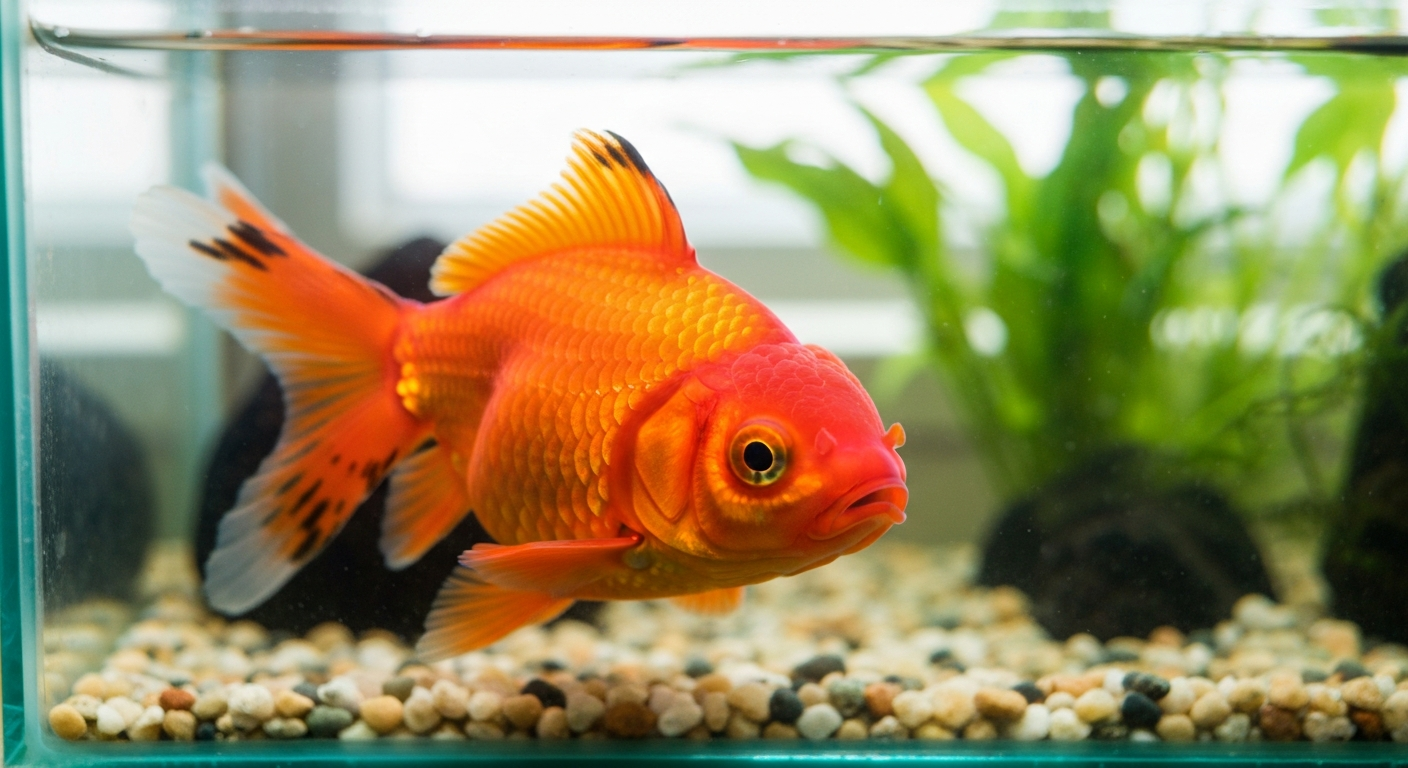

Goldfish turn black primarily due to ammonia burns healing, natural genetic color changes, or—less commonly—disease. The black patches you're seeing are usually a sign your fish is recovering from poor water quality, not getting sicker.
Noticing dark spots or streaks spreading across your goldfish can be alarming, but here's the reassuring truth: in most cases, black coloration means healing, not harm. When ammonia levels spike in a tank, it chemically burns a goldfish's skin and gills. As those burns heal, the damaged tissue turns black—similar to how a human bruise changes color as it fades. The blackening itself isn't dangerous; it's what happened before it that matters. Less often, the color change is simply your goldfish's genetics expressing themselves, or occasionally a sign of parasitic infection. This guide walks you through exactly how to identify the cause in your tank and what to do next.
Also Read: Why Is My Goldfish Turning White? 6 Causes & Color Fixes
| ✓Quick Fix |
The Go-To Fix for This Right Now One of the simplest things to try immediately — no appointment, no waiting. See on Amazon → |
The most common cause of goldfish turning black is ammonia poisoning—specifically, the healing phase after exposure to elevated ammonia levels in the tank water.
Ammonia is a toxic byproduct of fish waste, uneaten food, and decaying organic matter. Even concentrations as low as 0.02 ppm can stress goldfish, while levels above 0.05 ppm cause tissue damage. When ammonia burns the delicate skin and gill tissue, the body responds by producing extra melanin (dark pigment) as part of the healing process. This is why black patches often appear days or weeks after a water quality problem—not during it.
"Ammonia burn is one of the most common causes of black patches in goldfish. The darkening of the skin is actually a sign of healing, similar to a scab forming over a wound." — Dr. Jessie Sanders, DVM, Aquatic Veterinary Services
Understanding this distinction is crucial: if your goldfish is turning black and otherwise behaving normally—eating, swimming actively, no clamped fins—it's likely recovering from a past water quality issue rather than currently suffering.
If your goldfish developed black patches after a tank cycling issue, missed water change, or new tank setup, ammonia burn is almost certainly the cause.
Ammonia builds up in aquarium water when the beneficial bacteria that convert it to less harmful compounds (nitrite, then nitrate) can't keep pace with waste production. This happens most often in:
The burn itself is invisible at first. Your goldfish may gasp at the surface, become lethargic, or develop red streaks on fins and gills. Days to weeks later, as the tissue heals, black pigmentation appears where the damage occurred.
Ammonia-related blackening typically shows these patterns:
| Pattern | What It Suggests |
|---|---|
| Black edges on fins | Mild ammonia exposure, healing fin tissue |
| Black patches on body, random placement | Moderate ammonia burn, recovering skin |
| Black around gills or mouth | Direct contact with high-ammonia water at the surface |
| Black spreading from one area outward | Healing progressing from the initial burn site |
Use a liquid test kit (not strips) to check your water parameters. The API Freshwater Master Test Kit is the standard recommendation. Your target readings should be:
If you detect ammonia now, it confirms your tank has a water quality issue. If ammonia reads zero but your fish has black patches, it suggests the exposure happened in the past and your fish is healing.
Some goldfish naturally develop black coloration as they mature—this is genetics, not disease, and requires no treatment.
Goldfish are selectively bred from wild carp, and their color genes can be unpredictable. Many juvenile goldfish start out bronze, brown, or even black before transitioning to their adult coloration (orange, white, red, or calico). However, the reverse also happens: some goldfish develop black patches or turn entirely black as they age.
| Variety | Typical Color Changes |
|---|---|
| Black Moor | Should stay black, but may fade to bronze with age |
| Telescope | Can develop black patches as pigment shifts |
| Fantail | Bronze juveniles often turn orange; some develop black markings |
| Common/Comet | May darken or lighten throughout life |
| Oranda | Color changes common, especially in calico varieties |
If your goldfish is under two years old and the black coloration appeared gradually without any behavioral changes, genetics is a strong possibility. Unlike ammonia burns, genetic color changes typically follow symmetrical patterns and don't appear suddenly.
Black spot disease (diplopstomiasis) causes raised black cysts on the skin, but it's rare in aquarium goldfish and almost never the cause of blackening in indoor tanks.
Black spot disease is caused by flatworm larvae that burrow into a fish's skin and form dark cysts. However, this requires a specific lifecycle involving snails and fish-eating birds—a chain that rarely exists in home aquariums.
| Feature | Ammonia Burns | Black Spot Disease |
|---|---|---|
| Texture | Flat, same as surrounding skin | Raised bumps or cysts |
| Pattern | Random patches, often on fins first | Small, uniform dots scattered across body |
| Tank history | Recent water quality issues | Outdoor pond or wild-caught fish |
| Other symptoms | May have red streaks, lethargy during exposure | Fish may flash (rub against objects) |
If you keep your goldfish indoors and haven't added wild-caught fish or pond water, black spot disease is extremely unlikely. The raised, uniform dots are the key distinguishing feature—ammonia burns are flat discolorations, not bumps.
To identify the cause quickly, match your goldfish's symptoms and tank history to the most likely explanation.
| Your Situation | Most Likely Cause | Action Needed |
|---|---|---|
| New tank (under 8 weeks old) + black patches | Ammonia burn from incomplete cycle | Test water, do 25% water changes daily until ammonia reads 0 |
| Established tank + missed water changes + black patches | Ammonia burn | Test water, resume regular maintenance, consider adding beneficial bacteria |
| Gradual color change over months + fish acting normal | Genetic color change | None—this is natural |
| Raised black dots + outdoor pond or new wild fish | Black spot disease (rare) | Consult aquatic vet; typically self-limiting |
| Black patches + white fuzzy growth or red sores | Secondary infection after ammonia damage | May need medication; test water first |
"When diagnosing color changes in goldfish, always start with water quality testing. In my experience, 90% of health issues in aquarium fish trace back to water parameters." — Dr. Richmond Loh, DVM, The Fish Vet (Australia)
Treatment depends on the cause: for ammonia burns, focus on pristine water quality; for genetics, no treatment is needed; for disease, consult an aquatic vet.
The black coloration from ammonia burns will fade on its own over weeks to months as the tissue fully heals—your job is to prevent further damage:
Goldfish need 20 gallons for the first fish plus 10 gallons for each additional fish. Overcrowding is the number one cause of chronic ammonia problems.
If your water parameters are perfect (0 ammonia, 0 nitrite, nitrate under 40 ppm) and your goldfish is eating and swimming normally, the black color is either:
In both cases, maintain excellent water quality and observe. The black may fade, stay, or even spread slightly before receding—all normal during healing.
Seek professional help if your goldfish shows:
| 🐾Find a Vet |
Find a specialist vet near you VetClinic.info is a free directory of board-certified specialist vets across the US — find an orthopedic surgeon, oncologist, neurologist, or emergency clinic near you in seconds. Find Near You → |
Color changes in pets—whether fish, reptiles, or cats—often follow similar biological principles: melanin production responds to environment, health, and genetics.
If you're researching why your goldfish is turning black, you might also be curious about color changes in other animals. The underlying mechanisms share some similarities.
Bearded dragons darken their skin primarily for thermoregulation. Dark colors absorb more heat, so a beardie turning black under its basking lamp is simply warming up efficiently. They also darken when stressed, during breeding season, or if they're cold. Unlike goldfish, this is an intentional, rapid color change controlled by specialized skin cells called chromatophores—not a sign of damage or disease in most cases.
A black cat developing a rusty or brownish tint is usually experiencing one of three things: sun exposure (UV breaks down melanin in fur), a tyrosine deficiency (this amino acid is essential for melanin production), or aging. Some black cats also carry a gene that causes "rusting" when exposed to sunlight. Unlike fish, cats don't change color due to water quality—their color changes relate to diet, sun exposure, and genetics.
Beyond goldfish, other aquarium fish turn black for similar reasons: ammonia damage, genetic changes, or occasionally disease. Betta fish, for instance, may develop black patches from fin rot or ammonia exposure. Cichlids often darken when stressed or establishing dominance. The diagnostic approach remains the same: test water quality first, observe behavior, and rule out disease.
Consistent water quality maintenance is the single most effective way to prevent ammonia burns and the black coloration that follows.
Goldfish are heavy waste producers—they lack true stomachs and excrete ammonia constantly. A proactive maintenance schedule prevents the conditions that cause ammonia burns:
| Maintenance Task | Frequency | Why It Matters |
|---|---|---|
| Water testing | Weekly (more often in new tanks) | Catches ammonia spikes before damage occurs |
| Water changes | 25–30% weekly | Dilutes waste products and replenishes minerals |
| Filter cleaning | Monthly (rinse in tank water only) | Maintains beneficial bacteria while removing debris |
| Gravel vacuuming | Every 1–2 weeks | Removes decomposing food and waste trapped in substrate |
| Feeding | 2–3 small meals daily, no more than they eat in 2 minutes | Prevents uneaten food from rotting and spiking ammonia |
| ✓Our Pick |
Complete aquarium water quality test kit This is what many people find solves the problem quickly, without a costly professional visit. See on Amazon → |
Black coloration on a goldfish almost always indicates healing from ammonia burns—the damage happened in the past, and the dark patches are your fish recovering. Test your water immediately, maintain pristine conditions with regular water changes, and give your goldfish time to heal. If water parameters are perfect and behavior is normal, the blackening may simply be natural genetic color expression. True disease is rare in indoor tanks. Within 2–3 months of excellent care, most ammonia-related black patches fade significantly or disappear entirely.
Scale loss combined with blackening suggests more severe ammonia damage or a secondary bacterial infection. When ammonia burns are severe enough, they can cause tissue to die and scales to fall off. Test your water immediately—ammonia and nitrite should read zero. If you see red, inflamed areas where scales are missing, a bacterial infection may have taken hold in the damaged tissue. Perform daily 25% water changes, add aquarium salt (1 tablespoon per 5 gallons), and consider an antibacterial treatment if the fish doesn't improve within a week.
In most cases, yes. Black patches caused by ammonia burns typically fade over 4–12 weeks as the tissue fully regenerates. The speed of healing depends on how severe the burn was and how well you maintain water quality going forward. Some goldfish retain faint dark markings permanently, similar to scar tissue. If the blackening is genetic rather than from damage, it may stay, intensify, or spread—genetic color changes are unpredictable but harmless.
Goldfish don't change color rapidly from stress the way some fish do (like bettas or cichlids). However, chronic stress weakens their immune system, making them more susceptible to the conditions that cause blackening. A stressed goldfish in poor water quality will suffer worse ammonia burns than a healthy one. Stress also slows healing. Common stressors include overcrowding, aggressive tankmates, sudden temperature changes, and poor water quality—all of which should be addressed to support recovery.
Most goldfish show significant improvement in black coloration within 4–8 weeks of returning to clean water. Complete healing can take 2–3 months for moderate burns. Severe ammonia damage may leave permanent discoloration, though it often fades to a lighter gray over time. The key is patience and consistency—maintain 0 ammonia, 0 nitrite readings throughout the healing period. Avoid the temptation to medicate unnecessarily, as medications can stress a healing fish.
You generally don't need to isolate a goldfish with black patches unless it shows signs of contagious disease (which is rare) or is being bullied by tankmates. If the blackening is from ammonia burns, all fish in the tank were exposed to the same water quality issue—separating one won't help. However, if the black patches are accompanied by white fuzzy growth (fungus) or open sores (bacterial infection), moving the affected fish to a hospital tank for treatment prevents potential spread and allows for easier medication dosing.
Reviewed and Updated on June 20, 2026 by George Wright