Health
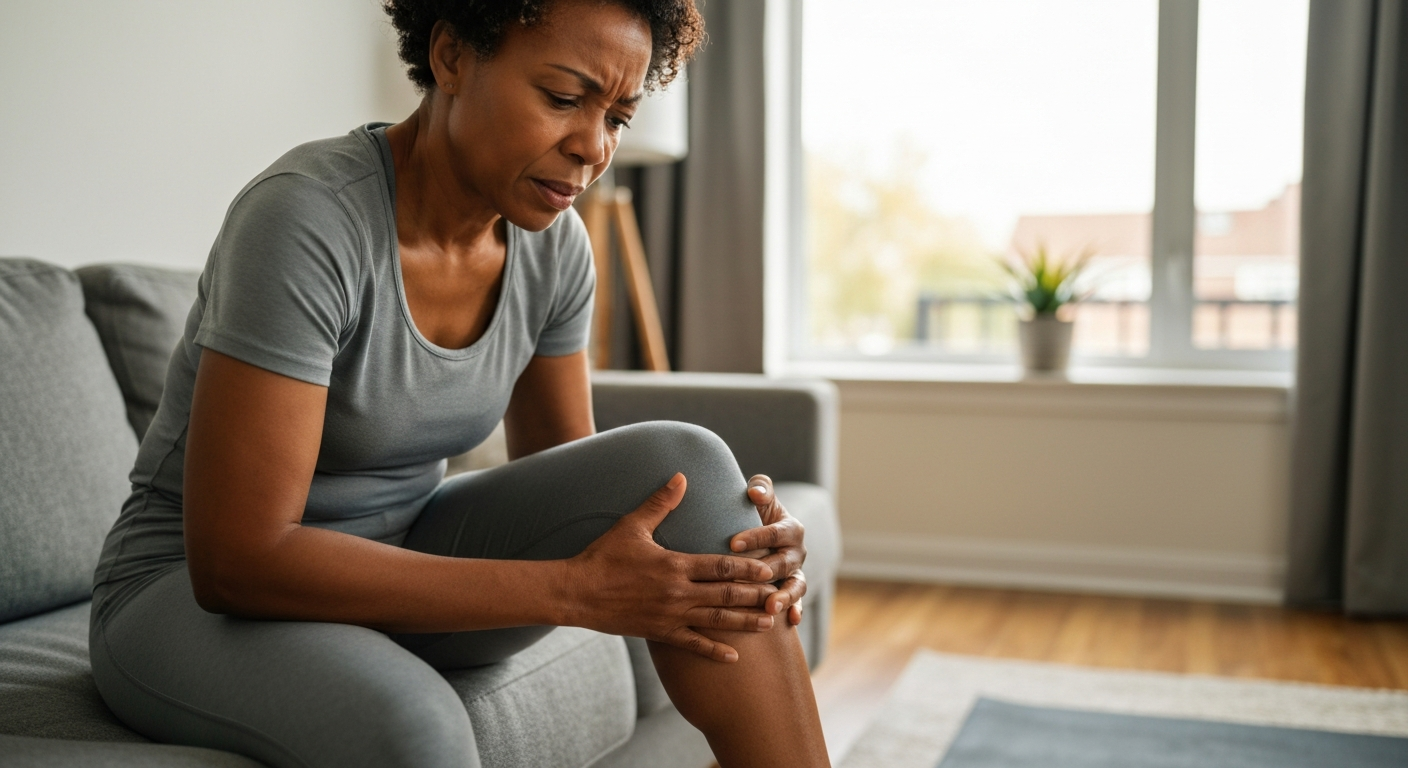

Your knee joint is hurting because of inflammation, cartilage wear, ligament strain, or mechanical stress on the structures inside the joint — the exact cause depends on whether the pain came on suddenly or gradually, where it's located, and what makes it worse.
Knee pain affects roughly 25% of adults at some point, and it can strike your left knee, right knee, or both knees seemingly out of nowhere. The good news is that most knee pain has identifiable causes and effective treatments. This article walks you through the 11 most common reasons your knee is aching, how to tell them apart, and when that pain signals something that needs professional attention.
Your knee is the largest and most complex joint in your body, which is precisely why so many things can go wrong with it.
The knee joint connects three bones: the femur (thighbone), tibia (shinbone), and patella (kneecap). Between these bones sits cartilage — smooth, slippery tissue that cushions impact and allows frictionless movement. Ligaments (tough bands connecting bone to bone) and tendons (connecting muscle to bone) hold everything together and control motion.
When any of these structures becomes irritated, damaged, or inflamed, you feel pain. The location and type of pain often points directly to which structure is involved:
| Pain Location | Common Structures Involved |
|---|---|
| Front of knee | Patella, patellar tendon, quadriceps tendon |
| Inside of knee | Medial meniscus, MCL (medial collateral ligament) |
| Outside of knee | Lateral meniscus, LCL, IT band |
| Behind knee | Baker's cyst, hamstring tendons, PCL |
| Deep inside joint | Cartilage, ACL, bone surfaces |
Osteoarthritis is the most common cause of chronic knee pain, especially if you're over 50 or have had previous knee injuries.
Osteoarthritis occurs when the protective cartilage covering your bone ends gradually wears away. Without that cushion, bone grinds against bone, causing pain, stiffness, and swelling. You'll typically notice this pain worsens with activity and improves with rest. Morning stiffness lasting less than 30 minutes is characteristic.
"Osteoarthritis of the knee is the most common type of arthritis and a leading cause of disability." — CDC
Risk factors include age, previous joint injuries, obesity, and genetics. If your knee aches when climbing stairs, getting up from a chair, or walking after sitting for a while, osteoarthritis is a likely culprit.
A meniscus tear can cause sudden knee pain even without an obvious injury — especially as you get older and the cartilage becomes more brittle.
Your knee contains two C-shaped pieces of cartilage called menisci that act as shock absorbers between your thighbone and shinbone. In younger people, tears usually result from twisting injuries during sports. But after age 40, the meniscus degenerates and can tear from something as simple as squatting or stepping off a curb.
Symptoms include pain along the joint line (inner or outer side of the knee), swelling, catching or locking sensations, and difficulty fully straightening the leg. You might feel like your knee is "giving way."
Bursitis — inflammation of the fluid-filled sacs that cushion your knee — causes localized pain and swelling, often from repetitive kneeling or pressure.
Bursae are small cushioning sacs throughout the knee. The most commonly affected is the prepatellar bursa, located directly over the kneecap. When inflamed, you'll notice swelling on top of the kneecap that may feel warm and tender.
Occupations requiring frequent kneeling (carpet installers, plumbers, gardeners) put people at higher risk. The condition is sometimes called "housemaid's knee" or "carpenter's knee" for this reason.
Also Read: Why Is My Jaw Sore? 7 Causes & How to Get Relief
Patellar tendinitis (jumper's knee) causes pain just below the kneecap and typically develops from repetitive stress on the patellar tendon.
This condition is common in athletes who do a lot of jumping — basketball players, volleyball players, track and field athletes. However, anyone who suddenly increases their activity level can develop it.
The pain usually starts as a dull ache below the kneecap that worsens with activity. Over time, it can progress to sharp pain that interferes with daily activities like climbing stairs or even sitting for long periods.
Every extra pound of body weight adds approximately four pounds of pressure to your knee joints during walking — making weight a significant factor in knee pain.
The knee bears tremendous force with every step. When walking on level ground, the knee experiences forces equal to 1.5 times your body weight. Climbing stairs increases this to 3-4 times body weight. Running can multiply forces to 7-8 times body weight.
"Research has shown that for every pound of weight lost, there is a 4-pound reduction in knee joint stress among overweight adults with osteoarthritis." — Arthritis Foundation
This explains why weight loss is one of the most effective treatments for knee pain, particularly osteoarthritis-related pain.
Ligament injuries — particularly to the ACL or MCL — typically cause immediate, severe pain accompanied by a popping sound and rapid swelling.
The knee has four main ligaments: ACL (anterior cruciate ligament), PCL (posterior cruciate ligament), MCL (medial collateral ligament), and LCL (lateral collateral ligament). ACL tears are the most common severe knee injury, often occurring during sports that involve sudden stops, direction changes, or landing from jumps.
MCL injuries frequently result from direct blows to the outside of the knee or falls that push the knee inward. While MCL injuries often heal without surgery, complete ACL tears typically require surgical reconstruction for active individuals.
Iliotibial band syndrome causes sharp pain on the outside of the knee and is particularly common in runners, cyclists, and hikers.
The iliotibial band is a thick band of connective tissue running from your hip down to your shinbone. When it becomes tight or inflamed, it rubs against the bony prominence on the outside of your knee, causing friction and pain.
This condition typically starts as a mild annoyance that worsens progressively. Pain usually begins after a consistent distance or duration of activity and can eventually occur even during short walks or climbing stairs.
Worn-out or unsupportive shoes alter your gait mechanics, placing abnormal stress on your knees and potentially causing or worsening pain.
Shoes that don't properly support your arch, have worn-down cushioning, or change your natural walking pattern can create misalignment forces that travel up to your knees. High heels, in particular, increase pressure on the kneecap by up to 26%.
Running shoes should be replaced every 300-500 miles. If the treads are worn unevenly or the midsole feels compressed, it's time for new footwear.
Hip problems, lower back issues, and even problems with the ankle can cause pain that feels like it's coming from your knee — this is called referred pain.
The nerves serving your knee also pass through your hip and lower back. When something irritates these nerves higher up, you may feel the pain in your knee even though the actual problem is elsewhere.
This explains why your knee might hurt "for no reason" — there may genuinely be nothing wrong with the knee itself. Hip arthritis, sciatica, and lower back problems commonly refer pain to the knee area.
Gout attacks cause sudden, intense knee pain (often starting at night) with dramatic swelling, redness, and warmth — the joint becomes exquisitely tender.
Gout occurs when uric acid crystals accumulate in a joint. While the big toe is the classic location, the knee is the second most common site. Attacks come on suddenly, often within hours, and cause severe pain that can make even the weight of a bedsheet unbearable.
Risk factors include diet (red meat, shellfish, alcohol), certain medications (diuretics), obesity, and kidney disease. Blood tests and joint fluid analysis confirm the diagnosis.
Weak quadriceps and hamstring muscles fail to properly stabilize the knee, leading to abnormal joint mechanics and pain over time.
Your muscles do more than move your leg — they actively stabilize the knee joint during every step. When the quadriceps (front thigh muscles) or hamstrings (back thigh muscles) are weak, the knee joint absorbs forces it wasn't designed to handle alone.
Sedentary lifestyles, prolonged sitting, and aging all contribute to muscle weakness. The good news is that strengthening these muscles often significantly reduces or eliminates knee pain, even in people with structural problems like osteoarthritis.
Pain isolated to one knee usually indicates a local problem — injury, overuse, or arthritis affecting that specific joint — rather than a systemic condition.
If only your left knee or right knee hurts, consider factors that affect that leg specifically:
- Do you favor one leg when standing?
- Did you injure that knee in the past?
- Do you do activities that stress one side more (driving, crossing legs)?
Pain in both knees simultaneously often suggests systemic causes like inflammatory arthritis, widespread osteoarthritis, or biomechanical issues affecting your entire gait pattern.
Seek immediate medical attention if your knee pain follows significant trauma, if you cannot bear weight, or if you notice severe swelling, redness, or fever.
Visit a healthcare provider soon if you experience:
- Pain lasting more than a few days without improvement
- Swelling that doesn't resolve within 2-3 days
- Knee buckling or giving way
- Clicking or locking sensations
- Visible deformity
- Inability to fully bend or straighten the knee
- Pain that disrupts sleep or daily activities
Also Read: Why Is My Stomach Hard When I Press on It? 10 Causes
The RICE protocol (Rest, Ice, Compression, Elevation) combined with over-the-counter anti-inflammatories provides effective relief for most minor knee pain.
For acute knee pain without signs of serious injury:
Over-the-counter NSAIDs (ibuprofen, naproxen) help reduce inflammation and pain. Acetaminophen addresses pain but not inflammation.
For ongoing knee issues, consider:
- Low-impact exercises (swimming, cycling, walking)
- Quadriceps strengthening exercises
- Hamstring and calf stretches
- Weight management if overweight
- Supportive, well-cushioned footwear
| ✓Our Pick |
Science-backed joint supplements for knee support Used by over 10,000 satisfied customers — an easy, affordable option you can start using today. Learn More → |
Knee joint pain stems from many possible causes — from cartilage wear and ligament strain to inflammation, referred pain, and muscle imbalances. The location of your pain, how it started, and what makes it better or worse all provide clues to the underlying cause. Most knee pain responds well to conservative treatment including rest, ice, anti-inflammatory medications, and targeted exercises, but persistent pain, significant swelling, or instability warrant professional evaluation to rule out conditions requiring specific treatment.
Sudden knee pain without an obvious injury often results from meniscus degeneration (common after age 40), a gout flare, bursitis from recent kneeling or pressure, or referred pain from the hip or lower back. Small tears in degenerating cartilage can occur with everyday movements like squatting or twisting. If the pain is severe, accompanied by swelling, or doesn't improve within a few days, see a healthcare provider.
When your knee hurts "for no reason," there's usually an underlying cause that isn't immediately obvious. Possibilities include early osteoarthritis, overuse from a recent increase in activity, muscle weakness causing joint instability, or referred pain from your hip or spine. Inflammatory conditions can also cause pain without obvious injury. Tracking when the pain occurs and what makes it better or worse helps identify the cause.
Pain isolated to your left or right knee typically indicates a localized problem like injury, overuse, or arthritis affecting that specific joint. Consider factors unique to that leg: past injuries, habitual leg crossing, asymmetric activities like driving, or favoring one leg when standing. When both knees hurt equally, systemic causes like inflammatory arthritis or overall biomechanical issues are more likely.
Cold weather can increase knee pain through several mechanisms. Lower barometric pressure may cause slight expansion of joint tissues, creating discomfort in arthritic joints. Cold temperatures also reduce blood flow and can stiffen synovial fluid (the joint's natural lubricant). Additionally, people tend to be less active in cold weather, which can worsen stiffness and pain.
See a doctor if your knee pain follows significant trauma, prevents you from bearing weight, involves severe swelling or redness, causes the knee to lock or give way, lasts more than a week without improvement, or is accompanied by fever. Visible deformity, inability to fully bend or straighten the knee, and pain that disrupts sleep also warrant professional evaluation.
Reviewed and Updated on May 30, 2026 by George Wright