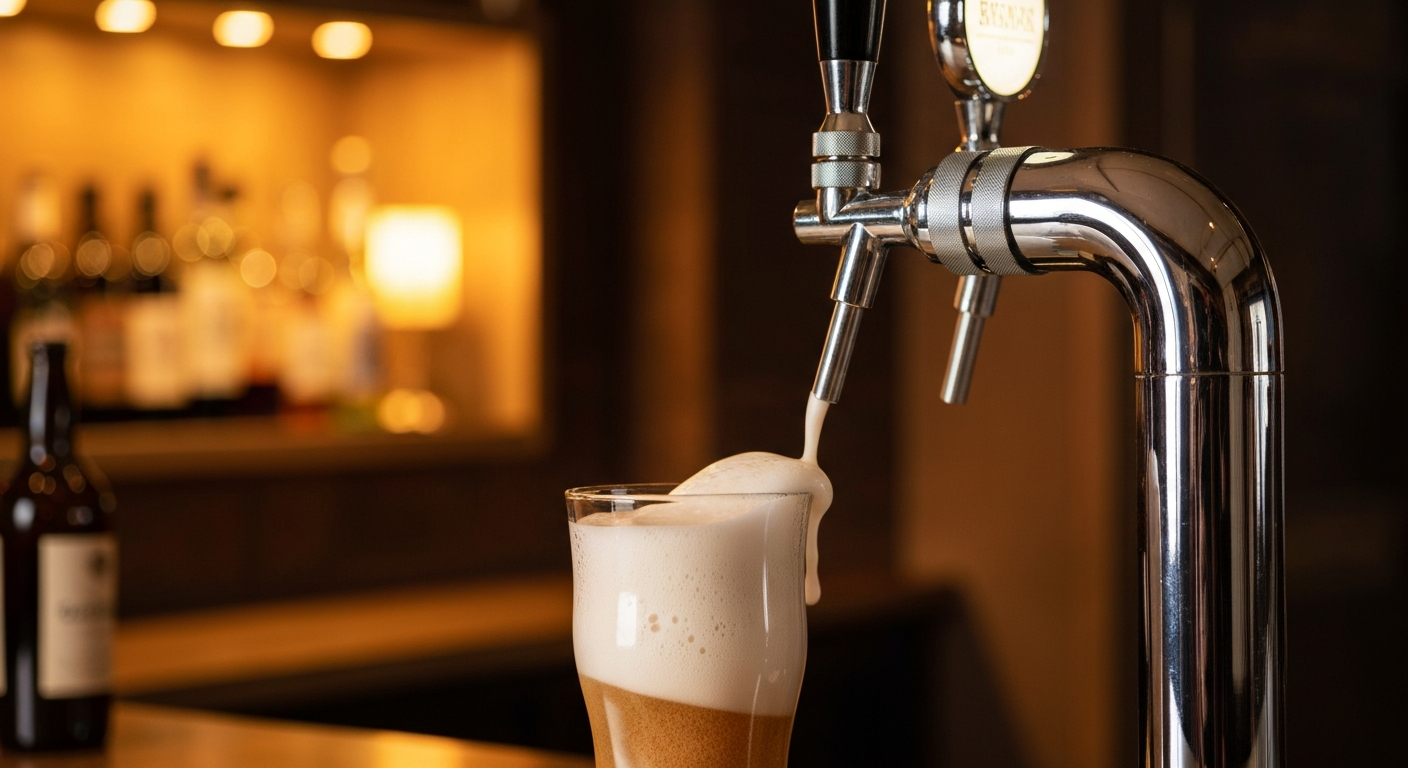
Your keg is foamy because the beer temperature is too warm, the CO2 pressure is set too high, the lines are dirty, or the keg was recently moved and hasn't settled. Get the temperature right first — almost every other foam problem is secondary to serving warm beer.
| ✓Our Pick |
Kegerator accessories, pressure gauges, and line cleaning kits Great value for money — this product tackles the root cause rather than just masking the symptoms. See on Amazon → |
7 Reasons Your Keg Is Pouring Foam
Draft beer foam is physics, not bad luck. CO2 is dissolved into beer under pressure. When anything disrupts the balance between temperature, pressure, and line resistance, that dissolved gas escapes before the beer hits your glass.
Temperature Is Too Warm
The single most common cause. CO2 solubility in beer is highly temperature-dependent — for every 2°F above the ideal serving temperature, the beer releases significantly more dissolved gas. A kegerator that should be at 38°F but is sitting at 44°F will pour foam on nearly every pull.
Target: 36–38°F (2.2–3.3°C) at the keg. If your kegerator has a thermostat, place a separate thermometer inside to verify the actual temperature rather than trusting the dial.
Fix: Lower the temperature and wait 12–24 hours before testing again. Don't adjust pressure at the same time — change one variable at a time.
CO2 Pressure Is Set Too High
Over-pressurizing forces more CO2 into solution than the beer can hold at serving temperature. When beer flows through the lines and faucet, the sudden pressure drop causes it to over-carbonate and foam explosively in the glass.
The correct pressure depends on three factors: serving temperature, line length, and line inner diameter. For standard 3/16-inch ID lines at 5–6 feet and a serving temperature of 38°F, 10–12 PSI is the correct baseline for most American ales and lagers.
"The key to serving draft beer without excess foam is balancing the CO2 pressure to the specific serving temperature and line resistance. A pressure that is perfect at 38°F will cause severe foaming if the temperature rises even a few degrees." — Brewers Association Draught Beer Quality Manual
Fix: Reduce pressure by 1–2 PSI, wait 30 minutes, and test. Repeat until foam normalizes.
Keg Was Recently Moved or Agitated
When a keg is moved, transported, or even tilted, the physical agitation disrupts the equilibrium between dissolved CO2 and the liquid. The gas comes out of solution temporarily, causing the first several pours to be almost pure foam.
Fix: Let the keg rest undisturbed at serving temperature for 24–48 hours before drawing any beer. This one rule eliminates most new-keg foam complaints.
Dirty Beer Lines
Beer line buildup — yeast residue, hop oils, beerstone, and microbial biofilm — creates nucleation sites inside the line. CO2 bubbles form on these rough surfaces the same way bubbles form on a scratch inside a glass. Even lines that look clean can have invisible biofilm causing significant foam.
According to the Brewers Association's Draught Beer Quality Manual, commercial lines should be cleaned weekly; home lines every two weeks minimum. The cleaning solution removes organic deposits that no amount of water flushing will reach.
Fix: Run a commercial beer line cleaner (e.g., BLC or similar caustic solution) through the full system. Rinse thoroughly with clean water before serving.
Glass Is Too Warm or Has Residue
A clean, properly chilled glass dramatically reduces foam at the pour point. Room-temperature glasses cause the cold beer to flash-carbonate on contact. Glasses with soap residue, sanitizer film, or lipstick create nucleation sites that release foam as fast as you pour.
Fix: Use a rinsed, cold glass. Run glasses under cold water for a few seconds before pouring, or store them in the kegerator if you have space. Avoid plastic glasses — they hold static electricity that also nucleates foam.
Coupler or Faucet Is Leaking
A small air leak at the keg coupler, CO2 connections, or faucet body introduces air bubbles into the beer stream. Air and CO2 mix unevenly, and the result is uneven, foamy pours. You may also notice a hissing sound or CO2 consumption higher than expected.
Fix: With the system pressurized, apply soapy water to all connections. Bubbles indicate a leak. Tighten the fitting or replace the gasket/O-ring at the leaking connection.
Wrong Line Length or Diameter for Your System
Beer line resistance — determined by length and inner diameter — must be balanced against your serving pressure and temperature. Lines that are too short or too wide offer insufficient resistance, allowing beer to travel at high velocity and arrive at the faucet over-carbonated.
The standard formula: 3/16-inch ID line at 10–12 PSI and 38°F needs 5–6 feet of line to balance correctly. For every 1 PSI above 12, add roughly 1 extra foot of line.
Also Read: Why Is My Sourdough Starter Not Rising? 7 Causes & Fixes
Keg Foam Troubleshooting by Symptom
| Symptom |
Most Likely Cause |
Fix |
| Foam from the first pull of the day |
Warm beer in lines overnight |
Purge line; insulate or cool lines |
| Foam on every pour, even when cold |
Pressure too high or dirty lines |
Reduce PSI; clean lines |
| Foam after moving the keg |
Agitation |
Rest 24–48 hours |
| Foam only on first keg tap |
Temperature too high at tap |
Lower kegerator temperature |
| Foam and hissing from connections |
CO2 leak |
Check O-rings and tighten fittings |
| Perfect pour, then foam increases over days |
Temperature drift |
Check thermostat with thermometer |
In Short
Foamy keg beer almost always comes down to temperature — get the kegerator to 36–38°F and let the keg rest for 24 hours before you change anything else. If temperature is correct and foam persists, reduce CO2 pressure by 1–2 PSI, then clean the beer lines. Those three steps resolve the vast majority of home kegerator foam problems without spending a dollar on new equipment.
What You Also May Want To Know
Why is my keg so foamy all of a sudden?
A sudden increase in foam usually means the temperature has risen, the CO2 pressure was accidentally increased, or the lines need cleaning. Check the kegerator temperature first — it should be 36–38°F.
What is the correct CO2 pressure for a keg?
Most American lagers and ales pour cleanly at 10–14 PSI when the beer lines are 3/16-inch inner diameter and 5–6 feet long. If pressure is correct but foam persists, line length and inner diameter need to be balanced to the specific serving temperature.
How long does it take for a new keg to stop being foamy?
A freshly tapped or recently moved keg needs 24–48 hours of undisturbed rest at proper serving temperature before it will pour cleanly.
Can dirty beer lines cause foam?
Yes. Organic residue and biofilm inside beer lines create nucleation sites where dissolved CO2 rapidly forms bubbles. Lines should be cleaned every 2 weeks for home use.
Why does the first pour from a keg always foam?
The first pour draws beer that has been sitting in the line at room temperature. Purge the line with a short burst before the first real pour of the day.
Reviewed and Updated on May 31, 2026 by Adelinda Manna