
Health
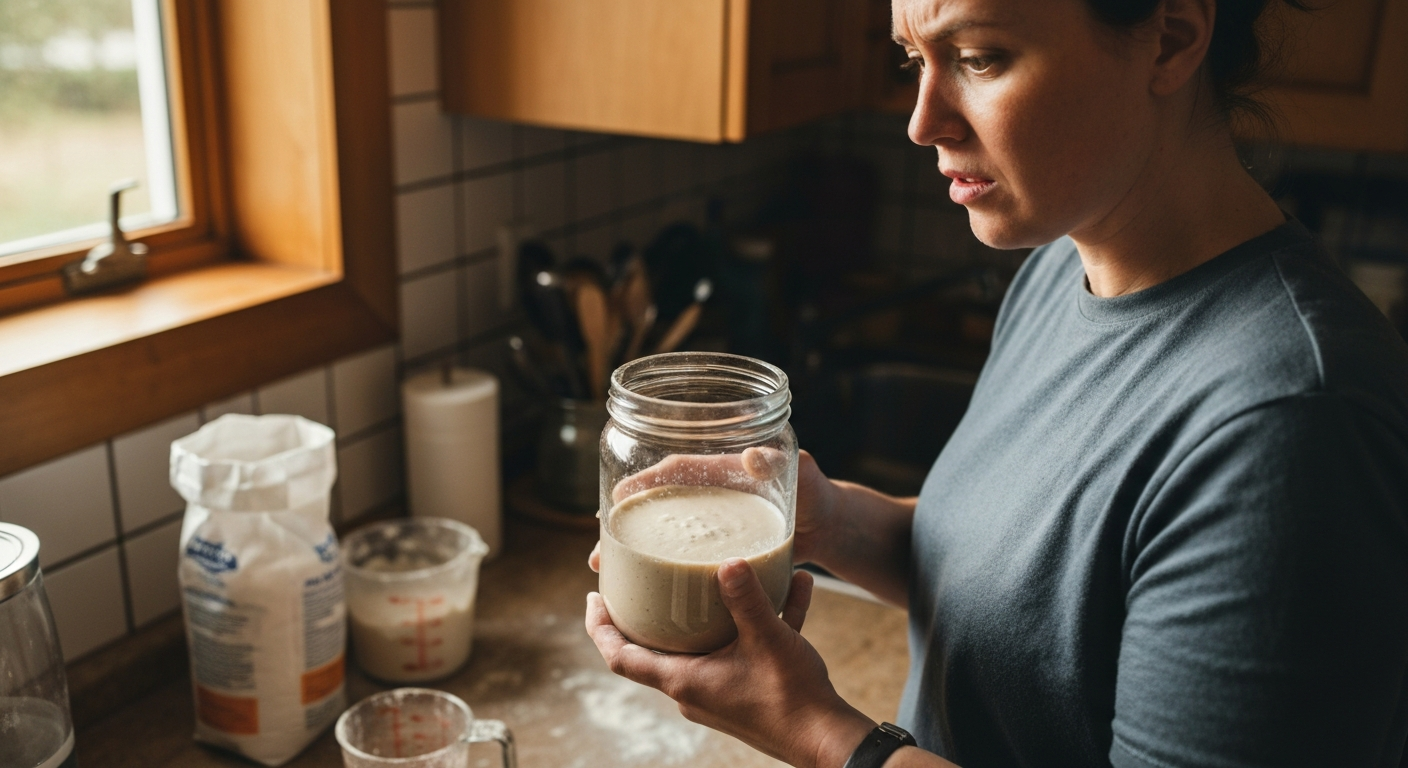

Your sourdough starter isn't rising because the yeast and bacteria colony hasn't established enough activity yet—most commonly due to incorrect temperature, an unfavorable feeding ratio, or using flour or water that inhibits fermentation. A healthy starter needs consistent warmth (75–82°F), the right balance of flour and water, and time to develop. The good news: a sluggish starter is almost always fixable once you identify the underlying issue.
| ✓Our Pick |
Top Rated Sourdough Starter Kits on Amazon No special skills required — straightforward to use and most orders ship quickly. See on Amazon → |
A sourdough starter rises when wild yeast produces carbon dioxide gas and lactic acid bacteria create the tangy flavor—but this symbiotic culture needs specific conditions to thrive.
Your starter is essentially a living ecosystem. Wild yeast (primarily Saccharomyces cerevisiae and Candida milleri) feeds on the sugars in flour and releases CO2 as a byproduct. That gas gets trapped in the gluten network, causing the starter to expand. Meanwhile, lactic acid bacteria (LAB) produce acids that give sourdough its characteristic tang and create an environment where harmful bacteria can't survive.
When any part of this delicate balance is off, fermentation slows or stops entirely. The result? A flat, lifeless starter that smells off or doesn't bubble at all.
"The optimal temperature for sourdough fermentation is between 75°F and 82°F. Below 70°F, yeast activity slows dramatically. Above 85°F, bacteria outpace yeast, creating an overly acidic environment." — Debra Wink at The Fresh Loaf
Temperature, feeding schedule, flour type, and water quality are the most common culprits—and each one has a straightforward fix.
Temperature is the number one reason starters fail to rise. Yeast activity drops sharply below 70°F and nearly stops below 60°F. If your kitchen runs cool (especially in winter), your starter may appear dead even though the culture is simply dormant.
Check your ambient temperature with a kitchen thermometer. Many home bakers assume their kitchen is warmer than it actually is. That "room temperature" spot on your counter might be 65°F in reality.
Not all flours support fermentation equally. Bleached all-purpose flour has been chemically treated, which can kill the wild yeast and bacteria your starter needs. Similarly, very old flour may have lost its microbial activity.
Whole grain flours (whole wheat, rye, spelt) contain more wild yeast and nutrients than refined white flour. If your starter is struggling, switching to whole wheat or rye—even temporarily—often jumpstarts activity.
Municipal tap water contains chlorine or chloramines specifically designed to kill microorganisms. That's great for drinking water but problematic for sourdough. Chlorine can suppress or kill the very yeast and bacteria you're trying to cultivate.
The fix is simple: use filtered water, let tap water sit uncovered for 24 hours (which allows chlorine to evaporate), or switch to bottled spring water. Note that chloramines don't evaporate like chlorine does—if your water supply uses chloramines, filtering or using bottled water is your best option.
A common beginner mistake is adding too little flour relative to the existing starter. If you're feeding with a 1:1:1 ratio (equal parts starter, flour, water by weight) but your starter is very mature or acidic, the yeast may consume all available food before you see a rise.
Try increasing to a 1:2:2 or even 1:3:3 ratio. More fresh flour means more food for the yeast, a less acidic environment, and a longer, more visible rise.
Timing matters. Feed too frequently and you dilute the yeast population before it multiplies enough. Feed too rarely and the starter over-ferments, becomes too acidic, and the yeast dies off.
During the initial creation phase (days 1–14), once-daily feeding is typically sufficient. For a mature starter kept at room temperature, twice-daily feeding maintains peak activity. Watch your starter's behavior: feed when it has risen and just started to fall, not on a rigid schedule.
Brand new starters often show zero activity for the first 2–5 days. This is normal. Then they may bubble dramatically around days 3–5 (often due to undesirable bacteria, not the yeast you want), then go flat again around days 6–10 before the correct microbial balance establishes.
"Most starters take 10–14 days to become reliably active. The early bubbling around day 3–4 is usually leuconostoc bacteria, not yeast. True yeast activity often doesn't establish until day 7 or later." — Maurizio Leo at The Perfect Loaf
Be patient. Many bakers abandon perfectly viable starters during this "quiet" period.
Your starter might actually be rising—you just weren't there to see it. If the ambient temperature is warm or your starter is very active, it may rise and fall completely between feedings.
Use a rubber band or tape to mark the level immediately after feeding. Check it every few hours, or set up a time-lapse camera. You may discover it doubled overnight and collapsed by morning.
Wide, shallow containers spread the starter thin, making it harder to observe vertical rise. Very narrow containers can restrict expansion. Containers that are too large may make a healthy rise look insignificant.
A clear glass jar that's 2–3 times taller than your starter volume works best. You want enough headroom for doubling but a narrow enough diameter to see obvious height changes.
| ✓Our Pick |
Wide-Mouth Glass Jars for Sourdough Starters Great value for money — this product tackles the root cause rather than just masking the symptoms. See on Amazon → |
The smell, texture, and appearance of your starter reveal exactly what's going wrong—use these diagnostic clues to pinpoint the issue.
| Symptom | Likely Cause | Solution |
|---|---|---|
| No bubbles, smells like wet flour | Too cold or too young | Move to warmer spot (75–80°F); wait if under 7 days old |
| Smells like nail polish remover (acetone) | Starving; needs more food | Feed immediately with 1:3:3 ratio; increase feeding frequency |
| Hooch (dark liquid) on top | Hungry and over-fermented | Pour off hooch, feed with higher ratio, feed more often |
| Smells rotten or like vomit | Contamination or wrong bacteria | Start over; use pineapple juice method for first 3 days |
| Rises then collapses quickly | Very active but fed too little | Increase flour in feeding ratio |
| Thick, pasty, no rise | Too dry; needs more hydration | Adjust to 100% hydration (equal weights flour and water) |
| Bubbles but doesn't rise | Weak gluten development or wrong flour | Switch to bread flour or add some wheat/rye flour |
If your starter has been sluggish for more than two weeks, this reset protocol works in about 5–7 days.
Follow these steps in order:
For the warmth requirement, try these spots: on top of your refrigerator, inside your oven with just the light on, near (not on) a heating vent, or in a proofing box. A seedling heat mat set to 78°F works exceptionally well.
| ✓Our Pick |
Bread Proofing Boxes and Dough Warmers A top-rated pick that works — readers who tried this reported noticeable improvement within days. See on Amazon → |
Sometimes a starter is too far gone—recognizing when to start fresh saves you time and frustration.
Start over if your starter:
A fresh start with quality ingredients takes about two weeks. That's faster than fighting a contaminated or severely compromised culture indefinitely.
"If you see any fuzzy growth—especially pink or orange—discard the entire starter and sterilize your container. Mold spores have likely spread throughout, even where you can't see them." — King Arthur Baking Company
Also Read: Why Is My House So Dusty? 8 Causes & Proven Fixes (2026)
The float test can indicate readiness, but it's not foolproof—here's when to trust it and when to ignore it.
To perform the test, drop a spoonful of starter into room-temperature water. If it floats, the starter has trapped enough gas to be buoyant, suggesting it's active and ready to leaven bread.
However, this test has limitations. A starter that just peaked will float, but so might one that peaked two hours ago and has started falling. Conversely, a very wet (high hydration) starter may not float even when active because the gluten structure can't trap gas effectively.
Use the float test as one data point, not the only one. A better indicator: your starter should roughly double in 4–8 hours at room temperature, with visible bubbles throughout and a pleasant tangy smell.
Whole grain flours feed starters faster and more reliably than refined white flour—here's how to choose.
| Flour Type | Fermentation Speed | Notes |
|---|---|---|
| Whole rye | Fastest | High enzyme activity; best for reviving sluggish starters |
| Whole wheat | Fast | Excellent all-purpose choice; more nutrients than white |
| Bread flour | Moderate | Good gluten development; fine for maintenance |
| All-purpose (unbleached) | Moderate | Works well; avoid bleached varieties |
| All-purpose (bleached) | Slow/unreliable | Chemical treatment inhibits wild yeast |
Many experienced bakers maintain their starter with a mix: 50% bread flour and 50% whole wheat provides both strong gluten and abundant nutrients.
| ✓Our Pick |
Best Bread Flour for Sourdough Baking Save yourself the frustration — a proven solution with consistently positive feedback from real buyers. See on Amazon → |
A sourdough starter that won't rise is almost always suffering from temperature issues, inadequate feeding, problematic water, or simply being too young. Check your kitchen temperature first—75–82°F is the sweet spot. Switch to filtered water if you're on municipal supply. Use unbleached flour, preferably with some whole grain content. Feed with at least a 1:2:2 ratio by weight, timing your feeds to when the starter has peaked. Give a new starter at least 14 days before concluding something is wrong. With consistent conditions and patience, even the most stubborn starter usually comes alive.
A healthy, mature starter typically doubles in volume within 4–8 hours at room temperature (around 75°F). Warmer environments speed this up; cooler temperatures slow it down. Brand new starters may take 10–14 days before showing reliable rising behavior, with significant activity fluctuations during the first week.
An acetone or nail polish remover smell means your starter is hungry and has shifted to producing acetic acid. The yeast has consumed available sugars and is stressed. Feed immediately with a higher ratio (1:3:3 or 1:4:4) to dilute the acidity and provide fresh food. The smell should improve within 1–2 feeding cycles.
Yes, in most cases. Even starters neglected for weeks in the refrigerator can often be revived. Discard all but a tablespoon, feed with a 1:3:3 ratio using whole grain flour, and keep warm. Repeat daily for 5–7 days. If you see no bubbles or improvement after 10 days of consistent feeding, start fresh.
Hooch is the dark liquid (ranging from gray to brown) that separates on top of an unfed starter. It's mostly alcohol and water—a byproduct of fermentation when the yeast runs out of food. It's not harmful. You can stir it back in for a more sour flavor or pour it off for a milder taste. Either way, the hooch signals your starter needs feeding.
The pineapple juice method helps during the first 3 days of creating a new starter. The acidity (around pH 3.5) inhibits leuconostoc bacteria that cause false early rises while favoring the yeast and lactobacillus you actually want. After day 3, switch to plain filtered water. This technique speeds up establishment of the correct microbial balance.
Reviewed and Updated on April 16, 2026 by George Wright