
Hair
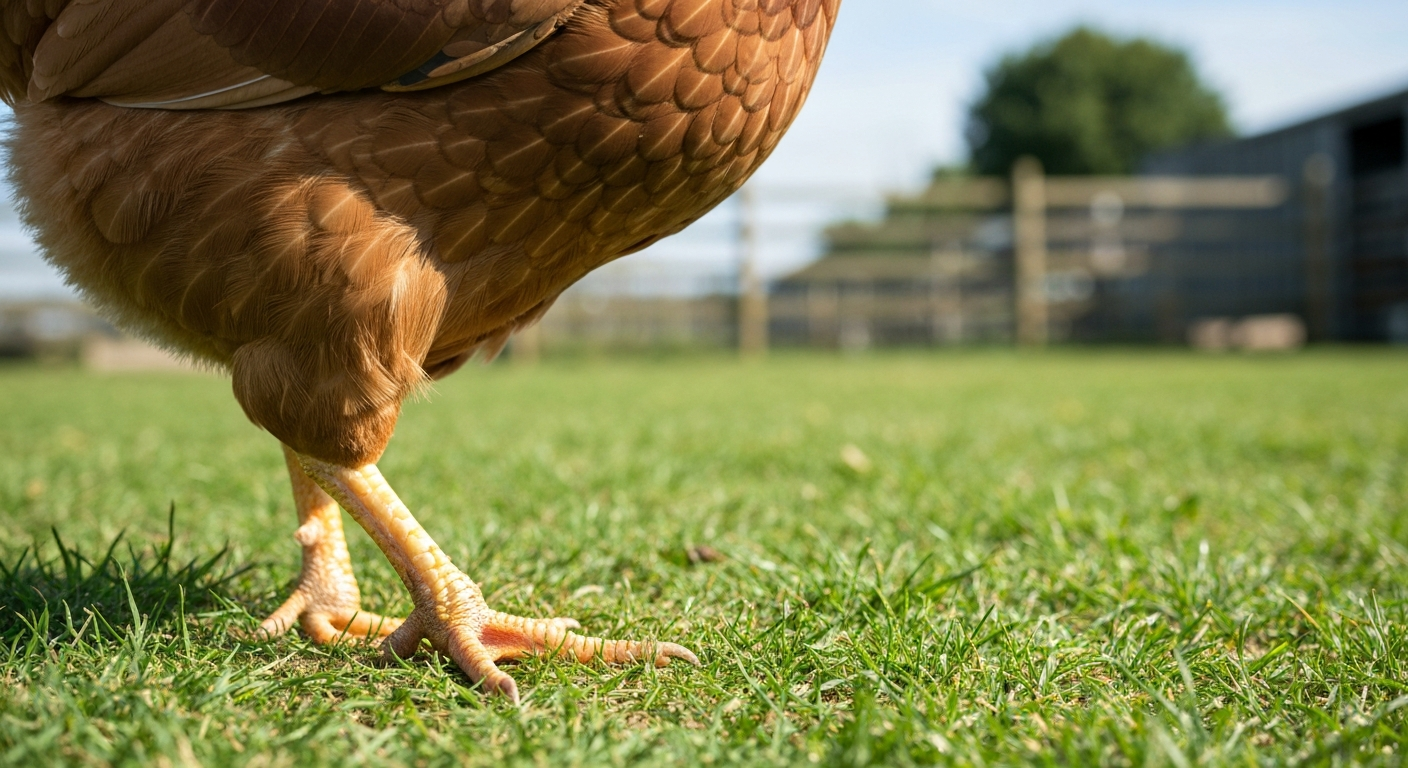

A limping hen is most commonly suffering from bumblefoot (a bacterial foot infection), a leg injury or sprain, Marek's disease, or external parasites like scaly leg mites — all of which are identifiable by examining the feet and legs closely, and most respond well to early treatment.
Lameness in laying hens can progress from a minor issue to a permanent disability or death if left untreated. The cause is almost always visible on inspection of the foot, leg, and joint — knowing what to look for allows you to act quickly.
Chickens are surprisingly stoic animals — they instinctively hide signs of illness or weakness from the flock, which means by the time a hen limps noticeably, the underlying problem is often more advanced than it appears. A hen that is resting apart from the flock, reluctant to leave the coop, or favoring one leg consistently needs to be caught and examined without delay.
According to veterinary extension resources from leading poultry science universities, lameness is one of the top welfare concerns in laying hens and the most common reason for early culling. Early intervention significantly improves outcomes.
"Leg health is one of the most important welfare indicators in poultry. Lameness causes pain, reduces feed and water intake, and can lead to rapid deterioration in body condition. Early identification and treatment are essential for recovery." — University of California Cooperative Extension at ucanr.edu
Eight conditions cause the vast majority of hen lameness. Bumblefoot is the most common by far in backyard flocks.
Bumblefoot (plantar pododermatitis) is the leading cause of limping in backyard hens. It is a bacterial infection — typically caused by Staphylococcus aureus — that enters through a small wound or rough skin on the underside of the foot. It begins as a superficial callus but progresses into a firm, scab-covered abscess. Advanced bumblefoot produces significant lameness because every step presses the abscess against the ground.
What to look for: a hard, dark scab (often round) on the bottom of the foot pad, swelling of the foot, and warmth on palpation.
Early-stage treatment: Clean the foot, apply an iodine solution (Betadine), and bandage with a soft pad to reduce pressure. Soaking the foot in warm Epsom salt water can soften the lesion. Mild cases caught early can resolve over 2–3 weeks with consistent care.
Advanced cases: A firm, large core or deep abscess typically requires surgical debridement — removing the abscess core — followed by antibiotic treatment. A poultry vet or experienced keeper can perform this procedure.
Prevention: Ensure perch heights are accessible without hard landings, use appropriate bedding depth, and maintain dry coop conditions to prevent the wet, rough floor surfaces that cause foot damage.
Chickens frequently sprain a leg from a jump gone wrong, a scuffle with another hen, or getting a leg tangled in bedding or wire. A sprain causes immediate-onset limping, often without visible swelling or heat in the foot. The hen will typically bear partial weight on the leg. Sprains in chickens resolve with rest and reduced-activity confinement (a separate small coop or brooder) over 7–10 days. Ensure food and water are close by.
Marek's disease is a highly contagious herpesvirus that causes tumors in the peripheral nerves, leading to progressive and often sudden paralysis or lameness — usually in young hens (under 20 weeks) but occasionally in older birds. Classic Marek's presents as one leg extended forward and the other backward (the "splits" position). Vaccinated flocks rarely develop severe Marek's disease, but the vaccine does not fully prevent all forms. There is no treatment for Marek's — supportive care can maintain quality of life for mild cases, but severely affected hens are typically humanely euthanized.
Also Read: Why Is My Rooster Attacking Me? What's Behind Chicken Aggression
Knemidocoptes mutans — scaly leg mites — burrow under the scales on the lower leg and feet, causing them to lift and become thickened, encrusted, and distorted. The resulting discomfort and physical deformity of the feet causes many hens to limp. Scaly legs are visually distinctive: the normally flat, overlapping leg scales become rough, raised, and honeycomb-textured. Treatment: apply petroleum jelly or vegetable oil to the legs 2–3 times per week for several weeks to suffocate the mites and soften the encrusted scales. Ivermectin (pour-on) is effective for severe infestations.
Mycoplasma synoviae and Staphylococcal joint infections cause visible swelling of the hock (ankle) joint, which is warm and painful on palpation. The hen limps and may have difficulty rising. Bacterial joint infections require veterinary diagnosis and antibiotic treatment (doxycycline, enrofloxacin, or similar). Chronic arthritis in older hens produces a gradual-onset progressive lameness without distinct joint swelling.
A fracture or dislocation produces sudden-onset severe lameness, typically after a traumatic event (predator attack, getting caught in wire, heavy landing). The leg may appear misaligned, hang loose, or the hen may refuse to put any weight on it. Fractures and dislocations require veterinary splinting. Without treatment, the bone may heal in a crooked position. Hens can survive and function with reduced-weight-bearing on a healed fracture but require appropriate splinting during healing.
Visceral and articular gout — caused by uric acid crystal deposition in joints — produces swollen, painful toe joints and can cause severe lameness. Gout is most common in older hens or hens fed high-protein diets, or as a secondary effect of kidney disease. Affected joints feel gritty and are visibly enlarged. Treatment focuses on dietary correction (reducing protein and increasing water intake) and supportive care.
Vitamin B2 (riboflavin) deficiency produces a characteristic curling of the toes and progressive leg weakness. Vitamin D3 and calcium deficiency can cause soft, deformed bones in young birds (rickets) or generalized skeletal weakness. These deficiencies are uncommon in hens fed a complete layer pellet but can occur in birds fed primarily scratch grains or a homemade diet without supplementation.
| ✓Our Pick |
Shop chicken and poultry health care and coop supplies One of the highest-rated products in its category — a reliable fix used by thousands of people. See on Amazon → |
| What You See | Most Likely Cause | Action |
|---|---|---|
| Dark scab on foot pad, swelling | Bumblefoot | Soaking, bandaging; vet if large core |
| One leg extended forward or backward | Marek's disease | Supportive care; consult vet |
| Raised, encrusted leg scales | Scaly leg mites | Petroleum jelly or ivermectin treatment |
| Swollen hot hock joint | Infectious synovitis | Veterinary antibiotics |
| Limping after jump or scuffle, no lesion | Sprain | Rest and confined recovery |
| Sudden non-weight-bearing after event | Fracture | Emergency vet visit |
Bumblefoot is the most likely cause of hen limping in a backyard flock and is highly treatable when caught early. Examine the foot pad for any dark scab or swelling. Quarantine the limping hen to allow rest and prevent the other hens from bullying her. For anything beyond a mild sprain or early-stage bumblefoot, a vet with poultry experience will provide the most accurate diagnosis and treatment.
A mild sprain can resolve on its own with rest. Bumblefoot, however, progresses if untreated and becomes increasingly painful — an untreated abscess can spread infection to the bone and joints, eventually becoming fatal. Marek's disease does not recover, but progression can be slowed. Any limping hen that is not improving within 3–4 days needs hands-on evaluation.
Keep the coop floor dry and clean, use soft bedding (wood shavings or straw), lower perch heights to reduce the impact of landing, and regularly check feet — especially in heavier breeds. Rough-textured roosts and concrete floors significantly increase bumblefoot risk. Inspect your flock's feet every 4–6 weeks as part of routine care.
Yes. A limping hen is a target for pecking and bullying from the rest of the flock, which slows recovery and can lead to serious injury. Isolate her in a clean, comfortable space with easy access to food and water. Rejoin the flock only after she is fully weight-bearing again.
Yes. A hen that is egg-bound (unable to pass an egg) can appear to walk stiffly, strain, or have a penguin-like gait with tail pointing downward. This is a medical emergency that worsens rapidly — if you suspect an egg-bound hen, warm soaking, lubrication, and prompt veterinary care are needed.
Reviewed and Updated on June 5, 2026 by George Wright