
DIY
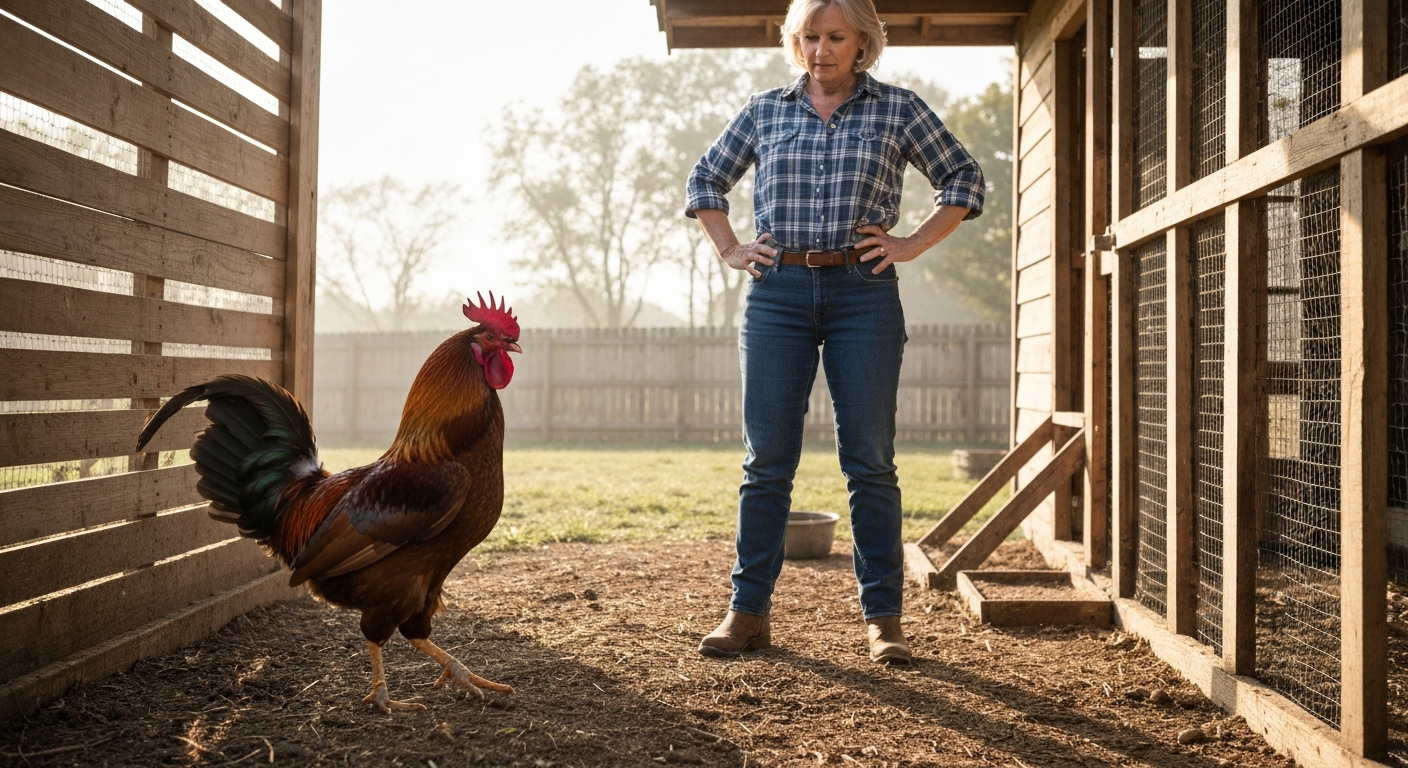

A sudden rooster attack usually means he sees you as a threat to his flock or a rival to his dominance—hormonal surges, breeding season, a perceived invasion of his territory, or a recent change in the pecking order are the most common triggers in 2026.
Roosters don't flip a switch from docile to aggressive without reason. Something in his environment, his hormones, or your behavior (even unintentionally) has signaled to him that you need to be challenged. The good news: once you understand the cause, you can almost always fix it.
Roosters are hardwired to protect their hens and defend their territory—when something disrupts their sense of security or status, aggression is their default response.
A rooster's job description is simple: guard the flock, mate with the hens, and keep other males away. Every interaction with you gets filtered through this lens. When he suddenly starts attacking, he's not being mean for the sake of it. He's responding to a perceived threat that you may not even realize you're creating.
Hormones are the most common culprit behind sudden rooster aggression. As roosters mature (typically between 4 and 8 months old), testosterone levels spike dramatically. A once-friendly cockerel can transform into a chest-puffing, spur-flying defender overnight.
Spring and early summer intensify this behavior. Longer daylight hours trigger increased hormone production, making roosters more territorial and protective. If your rooster's aggression started in March through June, breeding season is likely amplifying his instincts.
"Roosters are naturally protective of their flock and may exhibit aggressive behavior, especially during breeding season when hormones are elevated." — Dr. Jacquie Jacob at University of Kentucky Poultry Extension
From a rooster's perspective, any approach toward his hens is a potential threat. Actions you consider harmless—collecting eggs, refilling feeders, picking up a hen to check for mites—look very different through his eyes.
Common triggers include:
- Reaching toward or handling hens in his presence
- Moving quickly through the coop or run
- Wearing bright colors or patterns that weren't part of your usual routine
- Carrying unfamiliar objects (buckets, rakes, phones)
- Bending down, which puts you at his eye level and signals challenge
Roosters are acutely sensitive to social dynamics. If you've recently added or removed birds, someone in the hierarchy has shifted. A new hen might make him extra vigilant. Losing a hen could make him feel his flock is vulnerable. Adding a second rooster—even a young one—forces him to prove his dominance constantly.
| Change | Why It Triggers Aggression |
|---|---|
| New hens added | Must establish dominance over new flock members |
| Hens removed or lost | Feels flock is weakened and under threat |
| Second rooster present | Direct territorial and mating competition |
| Chicks maturing | Young cockerels becoming visible rivals |
| Predator incident | Heightened alert mode, sees all movement as threat |
This is the most common reason for sudden attacks on owners specifically. If a rooster begins to see you as competition rather than the leader, you become a target.
Signs he's testing your dominance:
- Lowering his head and circling you
- Raising his hackle feathers when you approach
- Doing the "wing dance" (dropping one wing and shuffling sideways) in your direction
- Charging at your feet or legs
- Crowing loudly and repeatedly when you're nearby
Ironically, behaviors meant to calm him often backfire. Backing away, running, or showing fear confirms to him that he's the dominant one. Feeding him treats to "make friends" can also be misinterpreted—in rooster logic, the subordinate eats last.
Understanding the specific trigger helps you choose the right response—hormones, fear, pain, and social disruption all require different handling strategies.
Cockerels raised from chicks often seem friendly until hormones kick in around 4 to 8 months. The sweet bird that followed you around suddenly views you as competition. This is the most common age for "sudden" aggression that isn't sudden at all—it's puberty.
Even mature roosters become more aggressive in spring. The combination of longer days, increased hormone production, and heightened mating drive creates a perfect storm of territorial behavior.
A scared rooster attacks. New predators in the area (dogs, hawks, raccoons), loud noises, construction, or even a change in your appearance (new hat, different jacket) can trigger fear-based aggression.
A rooster in pain is a rooster on edge. Check for:
- Bumblefoot (swelling or scab on foot pad)
- Mites or lice causing irritation
- Injuries from fighting with other birds
- Impacted crop
- Respiratory issues making him feel vulnerable
If your hens are broody or you have chicks in the flock, expect elevated aggression. Roosters take their protective role seriously, and anything near vulnerable flock members gets challenged.
This sounds backward, but it's common. If you've ever backed away when he charged, given him treats to distract him from attacking, or let him "win" encounters, you've reinforced the behavior. He learned that aggression works.
The key is establishing yourself as the flock leader without escalating into a fight—roosters respect confidence and consistency, not punishment.
Never run, kick, or hit an aggressive rooster. Physical retaliation often increases aggression because it confirms you're a threat worth fighting. Instead, use these proven strategies:
When he charges, don't retreat. Plant your feet, face him directly, and make yourself tall. Carry a long stick, broom, or flat board to block his approach without striking him. The goal is to occupy space, not inflict pain.
Some experienced chicken keepers swear by calmly picking up the aggressive rooster and carrying him around for 15 to 20 minutes while doing chores. This is humiliating in rooster terms—only subordinate birds get carried. Do this daily for a week or two.
Never let him eat before the hens. Never give treats directly to him. You eat in front of him (or pretend to) before distributing food. In flock dynamics, the dominant bird eats first—that should be you.
A brief separation (a few days to a week) resets his brain. When reintroduced, he's no longer the confident ruler. He has to re-establish his position, and you can use that transition period to reassert your dominance.
Walk through the coop or run regularly, slowly, and with purpose. Don't skirt around him or avoid his area. The dominant animal goes where it wants. If he challenges you, stand tall and don't move until he backs down.
| ✓Our Pick |
Petcube Emergency Fund — 24/7 vet access for your flock Save yourself the frustration — a proven solution with consistently positive feedback from real buyers. Learn More → |
Some roosters remain dangerous despite consistent training—knowing when to make a hard decision protects both you and your flock.
If you've applied dominance techniques consistently for 4 to 6 weeks with no improvement, or if the rooster is injuring people (especially children), it's time for a difficult conversation.
Rehoming an aggressive rooster is ethically complicated. You're passing the problem to someone else unless they specifically want a "project bird" or a rooster for meat. Be honest about his behavior if you rehome him.
Culling is a valid choice for backyard flocks. A rooster whose aggression makes daily chores dangerous isn't fulfilling his purpose. Many experienced poultry keepers consider it part of responsible flock management.
"Aggressive behavior in roosters can be managed through consistent behavioral techniques, but some individuals may remain dangerous regardless of intervention." — Dr. Richard Fulton at Purdue University Extension
Also Read: Why Is My Stomach Hard When I Press on It? 10 Causes
A rooster attacking you suddenly has a reason—hormones, breeding season, perceived threats to his hens, changes in flock dynamics, or viewing you as a rival. Address the underlying cause, establish yourself as the flock leader through confident behavior, and give consistent training 4 to 6 weeks before considering rehoming or culling. Most rooster aggression is manageable once you understand you're dealing with instinct, not malice.
Sudden cat aggression often stems from pain, fear, redirected aggression (seeing another cat outside), or territorial stress from household changes. Medical causes like hyperthyroidism, dental pain, or arthritis should be ruled out first. Unlike roosters, cats don't have a dominance hierarchy with humans—their aggression is usually defensive or pain-related rather than a challenge for status.
Kittens attack primarily during play—they're practicing hunting behaviors and haven't learned bite inhibition yet. Redirect attacks to toys rather than hands. Kittens who were weaned too early or lacked littermates often play too rough because they missed lessons about appropriate force. This typically improves with age and consistent redirection.
Seemingly random cat attacks are rarely random. Common triggers include overstimulation during petting (watch for tail flicking and ear rotation), redirected aggression from something they saw outside, or subtle cues you didn't notice. Some cats also experience episodes related to feline hyperesthesia syndrome, which causes sudden skin twitching and aggressive outbursts.
Some roosters calm down with consistent dominance training, especially if the aggression was recent or triggered by a specific change. Roosters who were human-raised and over-handled as chicks are actually harder to rehabilitate because they never learned to see humans as separate from the flock. Success depends on the individual bird, consistency of training, and how long the aggression has been reinforced.
Consider rehoming or culling if the rooster remains dangerous after 4 to 6 weeks of consistent training, if children or elderly family members can't safely access the coop, or if he's causing injuries requiring medical attention. A rooster's primary job is protecting the flock—if he's making your life dangerous, he's not fulfilling that role effectively.
Reviewed and Updated on May 30, 2026 by George Wright