DIY
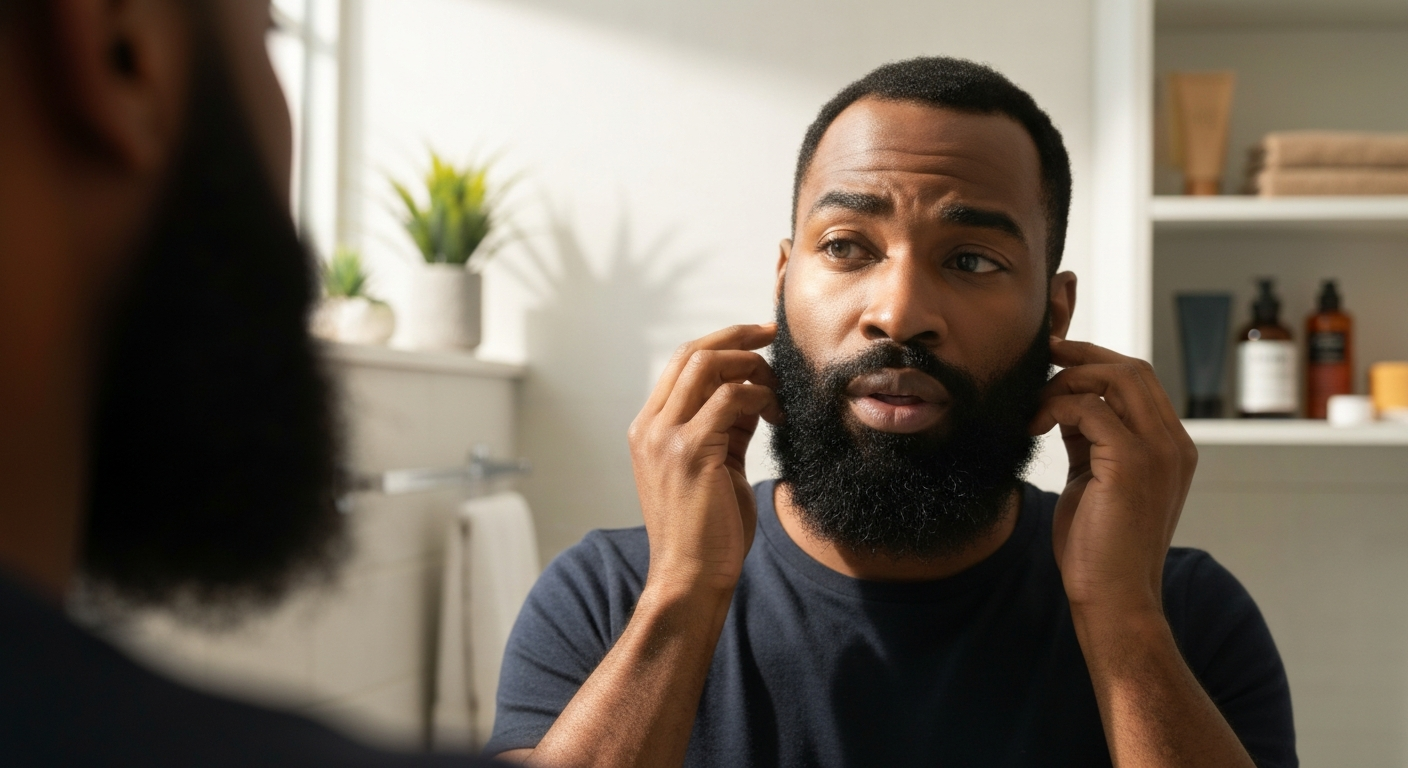

A dry beard is almost always caused by washing too frequently with the wrong products, insufficient moisturizing, dry indoor or outdoor climate, or an underlying skin condition like seborrheic dermatitis — all of which are readily fixable with a consistent care routine.
Beard hair is naturally drier than scalp hair because sebaceous glands (the skin's oil-producing glands) are less dense along the jawline, especially further from the follicle opening. The longer the beard, the more it relies on external moisturizing to maintain its condition.
Facial skin and beard hair are anatomically distinct from scalp skin. The sebaceous glands under the beard produce an oil called sebum — the same substance that keeps scalp hair and skin hydrated. But two factors work against beard moisture: the glands are less numerous on the lower face than the scalp, and the distance from follicle to beard tip increases with length, meaning longer hairs receive less sebum per unit of length. Add in daily washing with face wash or body soap (designed to strip oil), cold dry winters, and indoor heating, and chronically dry beard hair is the predictable result.
"Facial hair follicles have a lower sebaceous gland density than scalp follicles, which explains why beards become drier and more prone to brittleness relative to head hair of the same length. External moisturization is necessary to compensate for reduced natural oil distribution." — American Academy of Dermatology Association at aad.org
Seven causes explain the vast majority of dry, brittle, or frizzy beards. The first three are the most addressable and most commonly overlooked.
This is the single most common cause of a dry beard. Washing the beard daily — especially with regular face wash, shampoo, or body wash — strips the sebum that naturally coats the hair and skin. These products are designed to remove oil, and they do so efficiently. When the sebum is removed multiple times a week before the skin can replenish it, the beard and underlying skin become chronically dry, itchy, and flaky.
Fix: Wash the beard no more than 2–3 times per week. Use a dedicated beard wash or a very mild, sulfate-free shampoo specifically formulated for beard hair. On non-wash days, rinse with warm water only.
Beard oil is the direct replacement for the sebum your skin is not producing in sufficient quantity. It typically contains a carrier oil (jojoba, argan, sweet almond, or coconut oil) that mimics the molecular structure of natural sebum, combined with optional fragrance. Beard balm provides similar conditioning with added hold via beeswax.
Skipping beard oil — particularly on a beard longer than 1–2 inches — means the hair has no external moisture source to compensate for limited sebum reach. The result is the exact dryness, brittleness, and frizz you are experiencing.
Fix: Apply beard oil daily or every other day, working it from skin to tips. For longer beards (3+ inches), follow with a beard balm to seal in moisture.
Also Read: Why Is My Part So Wide? Hair Loss Causes & Fixes
Cold winter air holds very little moisture, and low humidity (whether from outdoor cold or indoor heating) pulls moisture from both skin and hair continuously. Dry climate environments — desert regions, arid climates, or homes with forced-air heating — are particularly harsh on beard hair because the moisture gradient between the dry air and the hair causes constant water loss from the hair shaft.
Fix: Use a humidifier indoors during winter months (target 40–50% relative humidity). Apply beard oil more frequently during cold weather and after showers.
Hot water is more effective than warm water at removing oil from hair — a fact exploited by dish soap but less appreciated in the shower. A hot shower temporarily strips the beard of natural oils. Combined with the drying effect of hot air on the surrounding skin, regular hot showers contribute meaningfully to beard dryness.
Fix: Lower the temperature for your face and beard during washing. Cool or lukewarm rinses after conditioning are a common hair care technique that preserves moisture by slightly contracting the hair cuticle.
Seborrheic dermatitis is a common skin condition caused by an overgrowth of Malassezia yeast on oily skin, which triggers an inflammatory response. On the scalp it causes dandruff; on the beard area it causes dry, flaky skin under the beard (often called "beard dandruff"), along with redness and sometimes itching. Importantly, the skin under an affected beard looks dry but is not lacking moisture — the inflammation is disrupting the skin barrier.
Fix: Use a beard wash containing ketoconazole or zinc pyrithione 2–3 times per week. Medicated dandruff shampoos (like Head & Shoulders or Nizoral) used directly on the beard area are often effective.
Hair and skin hydration are influenced by internal nutrition. Deficiencies in essential fatty acids (omega-3s), vitamin E, and zinc reduce the quality of sebum produced and impair the skin's lipid barrier. A diet very low in healthy fats — or one that is protein-deficient — produces hair that is more prone to dryness and breakage. Adequate water intake is also foundational — dehydrated skin produces less sebum and heals more slowly.
Frequent electric trimming with a dull blade, harsh towel rubbing after washing, or repeated heat styling (straightening, blow-drying on high heat) can damage the cuticle of beard hairs, leaving them dry and prone to frizz. A damaged cuticle cannot retain moisture effectively regardless of how much oil you apply.
Fix: Pat (do not rub) the beard dry. Use a sharp blade and replace trimmer guards regularly. Apply beard oil before using heat styling tools.
| ✓Our Pick |
Try Zlike Hair growth serum for thicker, healthier beard hair This is what many people find solves the problem quickly, without a costly professional visit. Learn More → |
"External moisturizing agents applied to facial hair — particularly those containing jojoba oil, argan oil, or shea butter — have been shown to reduce water loss from the hair shaft and improve tactile smoothness. Daily application produces measurable improvement in hair moisture retention within two to four weeks." — International Journal of Cosmetic Science via PubMed Central
| Cause | Quick Fix | Long-Term Fix |
|---|---|---|
| Over-washing with harsh products | Switch to beard wash 2–3x/week | Sulfate-free dedicated beard cleanser |
| No beard oil | Apply daily (skin to tips) | Build consistent AM care routine |
| Dry climate / indoor heating | Humidifier; more frequent oiling | Year-round moisturizing habit |
| Hot water | Cooler rinse during beard washing | Lower shower temp overall |
| Seborrheic dermatitis | Medicated dandruff shampoo on beard | Ketoconazole or zinc pyrithione wash |
| Poor diet / dehydration | Increase water; add omega-3s | Diet quality improvement |
Most dry beards are fixed by two changes: switching to a beard-specific cleanser used only 2–3 times a week, and applying beard oil daily. These two steps address the two root causes — stripping oil faster than it is produced, and not replacing what is stripped. If you also have flaky skin under the beard, add a medicated dandruff shampoo to the routine. Most men see clear improvement within two weeks of consistent care.
Yes, consistently. Studies on topical oil treatments for hair show measurable reduction in water loss from the hair shaft and improvement in cuticle smoothness with daily application over 2–4 weeks. Jojoba oil is particularly well-studied because its molecular structure closely resembles natural sebum. Apply to towel-dried (not soaking wet) beard hair for best absorption.
Scalp hair has a significantly higher sebaceous gland density and the hair follicles are located at the top of your head where oil distribution to hair length is more efficient. Beard follicles are less dense in sebaceous glands, and gravity works against oil traveling down a longer beard. This anatomical difference means scalp hair can self-moisturize better than beard hair of equivalent length.
Yes. Beard itch — particularly in the first few weeks of growing a new beard — is primarily caused by dry skin irritated by the sharp-cut ends of newly growing hairs. As the beard grows longer, the hairs curve back and reduce skin irritation. Beard oil applied to the skin (not just the hair) addresses the dryness component and significantly reduces itch.
Coconut oil is a popular and inexpensive option with genuine moisturizing properties. It penetrates the hair shaft more effectively than most oils due to its small molecular size, reducing protein loss from the hair. The downside is that it is somewhat comedogenic (pore-clogging) for some skin types — if you are acne-prone, argan or jojoba oil is a better choice for the skin-contact layer.
Reviewed and Updated on June 5, 2026 by George Wright