Sleep
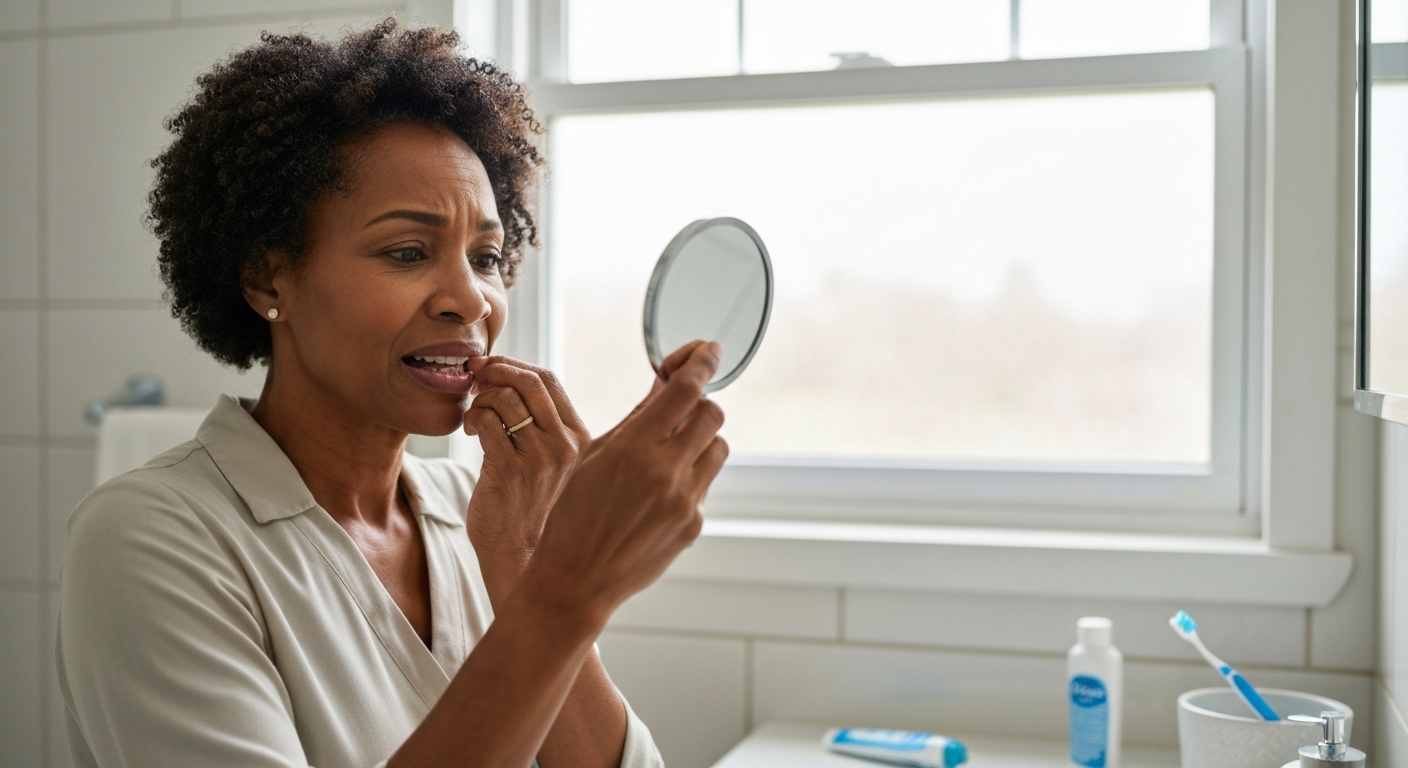

Gum skin peeling is usually caused by a chemical burn from whitening products, an allergic reaction to toothpaste or mouthwash, or tissue trauma from aggressive brushing—most cases heal within 7 to 14 days once you remove the irritant and switch to gentler oral care.
When the thin, delicate tissue lining your gums starts sloughing off in white or grayish sheets, it looks alarming, but it's rarely a sign of serious disease. The mucosa inside your mouth regenerates faster than almost any other tissue in your body, so once you identify what's stripping it away, recovery is usually straightforward. Below, you'll find the most common causes of peeling gum skin, when purple or discolored gums around a tooth signal something deeper, and exactly how to help your mouth heal.
| ✓Our Pick |
Gentle SLS-free toothpaste for sensitive gums Used by over 10,000 satisfied customers — an easy, affordable option you can start using today. See on Amazon → |
| ✓Our Pick |
 |
SNOW whitening system — sensitive-safe formula, 5 shades whiter, trusted by 2.4M+ customers Great value for money — this product tackles the root cause rather than just masking the symptoms. Learn More → |
Gum tissue peels when something damages or irritates the outer layer of cells faster than your mouth can repair them—common culprits include chemical irritants, physical trauma, infections, and systemic conditions.
The lining of your gums is called oral mucosa, and it's only about 0.2 to 0.3 millimeters thick in most areas. That's thin enough that a single harsh ingredient or a few days of aggressive brushing can cause visible sloughing. Understanding which category your trigger falls into helps you fix the problem at its source.
Yes, and it's one of the most frequent causes dentists see in 2026. Whitening toothpastes and over-the-counter bleaching strips contain hydrogen peroxide or carbamide peroxide. When these chemicals sit against soft tissue for too long—or when concentrations are higher than your gums can tolerate—they cause a chemical burn that makes the top layer of cells slough off.
"Peroxide-based bleaching agents can cause transient tissue sloughing and sensitivity, particularly when products contact the gingiva for extended periods." — American Dental Association
If you've recently started a new whitening routine and your gums began peeling within a day or two, that's almost certainly the cause.
Alcohol-based mouthwashes dry out oral tissue and can strip away the protective mucus layer. Rinses containing sodium lauryl sulfate (SLS) or high concentrations of essential oils like eucalyptol and menthol can trigger contact irritation in sensitive individuals. The peeling often appears in areas where the rinse pools—along the lower gum line and inside the cheeks.
Some people develop allergic contact stomatitis to ingredients like cinnamon flavoring (cinnamaldehyde), propolis, or even the preservatives in dental products. Unlike a chemical burn, an allergic reaction may also produce redness, swelling, and a burning sensation that lingers after you stop using the product. If switching products doesn't resolve the peeling within two weeks, an allergy could be the underlying cause.
Hard-bristled toothbrushes and vigorous scrubbing physically abrade the gum surface. Over time, this causes micro-tears that peel and flake. You might also notice gum recession—where the tissue pulls back from the tooth—alongside the peeling. Switching to a soft-bristled brush and using gentle circular motions instead of sawing back and forth usually stops the damage.
Also Read: Why Is My Gum Detaching From My Tooth? 6 Causes & Fixes
Purple or dark discoloration around a single tooth usually indicates reduced blood flow, bruising, or an underlying infection—it's more concerning than generalized peeling because it often points to a localized problem that needs professional attention.
Healthy gum tissue is coral pink in lighter-skinned individuals and may have natural brown or darker pigmentation in people with more melanin. When gums turn purple, blue, or grayish around one specific tooth, the color change reflects something happening beneath the surface.
| Possible Cause | What It Looks Like | Other Symptoms | Urgency |
|---|---|---|---|
| Bruising from trauma | Localized purple or bluish area | Tenderness, recent injury | Low—heals in 1–2 weeks |
| Poor-fitting crown or restoration | Purple band at gum line around restoration | Pressure, mild pain | Moderate—see dentist within 2 weeks |
| Gum disease (periodontitis) | Dark red to purple, may bleed | Bad breath, recession, loose tooth | Moderate to high |
| Reduced blood supply | Grayish-purple, may feel cooler | Numbness, slow healing | High—see dentist promptly |
| Infection or abscess | Swollen, purple, possibly pus | Throbbing pain, fever | High—needs same-day care |
If the purple area is accompanied by peeling skin, you may be dealing with both tissue trauma and an irritant reaction. The combination warrants a dental visit to rule out infection.
"Cyanotic or purple gingival tissue can indicate vascular compromise or chronic inflammation and should be evaluated to rule out systemic causes." — Dr. Michael Glick, DMD, Editor of the Journal of the American Dental Association
Also Read: Why Is My Gum Black? 8 Causes & When to Worry
Beyond chemical and physical irritation, certain infections and systemic conditions can make gum tissue slough—these are less common but important to recognize.
Oral candidiasis (thrush) creates white patches that can peel or wipe off, leaving raw, red tissue underneath. It's more common in people who use inhaled corticosteroids, have diabetes, wear dentures, or have weakened immune systems. If your peeling is accompanied by a cottony feeling in your mouth and white plaques on your tongue or inner cheeks, thrush is a possibility.
Primary herpes simplex infection can cause widespread ulceration and tissue sloughing in the mouth, especially in children and young adults experiencing their first outbreak. Coxsackievirus (hand, foot, and mouth disease) and other viral infections can also cause blistering and peeling gum tissue.
Conditions like lichen planus, pemphigoid, and pemphigus can affect oral mucosa. These typically produce:
If your gum peeling has persisted for more than a month despite eliminating irritants, an autoimmune condition is worth discussing with your dentist or doctor.
Removing the irritant is the first and most effective step—most cases of peeling gum tissue resolve within one to two weeks once you eliminate the cause.
Look at every product that touches your mouth: toothpaste, mouthwash, whitening strips, denture adhesive, and even lip balm. Check for:
Switch to an SLS-free, peroxide-free toothpaste and an alcohol-free mouthwash for at least two weeks.
If you're using a medium or hard brush, replace it immediately. The American Dental Association recommends soft-bristled brushes for everyone, regardless of gum health. Brush gently at a 45-degree angle to the gum line using short, circular strokes.
Dissolve half a teaspoon of table salt in eight ounces of warm water. Swish gently for 30 seconds, then spit. This reduces bacteria and promotes healing without the harsh chemicals in commercial rinses. Repeat two to three times daily.
Oral mucosa regenerates quickly—the tissue lining your mouth completely replaces itself every 7 to 14 days. During this healing period:
Schedule an appointment if:
Also Read: Why Is My Gum White? 7 Causes & When to See a Dentist
A dentist can identify the underlying cause through examination and, if needed, biopsy—treatment depends on whether the peeling stems from irritation, infection, or a systemic condition.
During your visit, expect:
For chemical burns, your dentist may apply a protective coating to the area and recommend a bland diet while healing occurs. For infection, you'll receive targeted medication.
Once your gums heal, keeping them healthy requires gentle daily care and awareness of what products your mouth tolerates.
Also Read: Why Is My Gum Itchy? 7 Causes & How to Get Relief
Gum skin peeling is most often caused by whitening products, SLS-containing toothpaste, alcohol-based mouthwash, or brushing too hard. Purple discoloration around a tooth signals possible bruising, infection, or vascular problems and warrants a dental visit. Remove irritants, switch to gentle products, rinse with salt water, and give your gums one to two weeks to heal. If symptoms persist or worsen, see your dentist to rule out infection or autoimmune conditions.
Localized purple color usually means something specific is affecting that tooth—recent trauma, a poorly fitting crown, or an infection at the root. The rest of your gums remain normal because blood flow and tissue health aren't compromised there. Have your dentist examine the area to rule out abscess or vascular issues.
No, the damage from whitening strips is almost always temporary. Chemical burns from peroxide heal within one to two weeks once you stop using the product. However, repeated overuse can cause chronic sensitivity and recession, so always follow package directions and avoid letting strips overlap onto gum tissue.
Not usually. Gum disease (gingivitis and periodontitis) causes redness, swelling, bleeding, and eventually recession—but not the white, sloughing skin characteristic of chemical irritation or allergic reactions. If you have peeling plus bleeding and bad breath, you may have both irritation and underlying gum disease, so a dental checkup is wise.
No—stopping brushing allows bacteria to accumulate, which can make things worse. Instead, switch to a soft-bristled brush, use gentle pressure, and brush at the gum line with small circular motions. You want to keep plaque under control while letting irritated tissue heal.
Most cases heal within 7 to 14 days once you remove the irritant. Your oral mucosa regenerates faster than skin elsewhere on your body. If healing takes longer than two weeks, or if new peeling appears after you've eliminated known triggers, see your dentist for evaluation.
Reviewed and Updated on June 16, 2026 by George Wright