Sleep
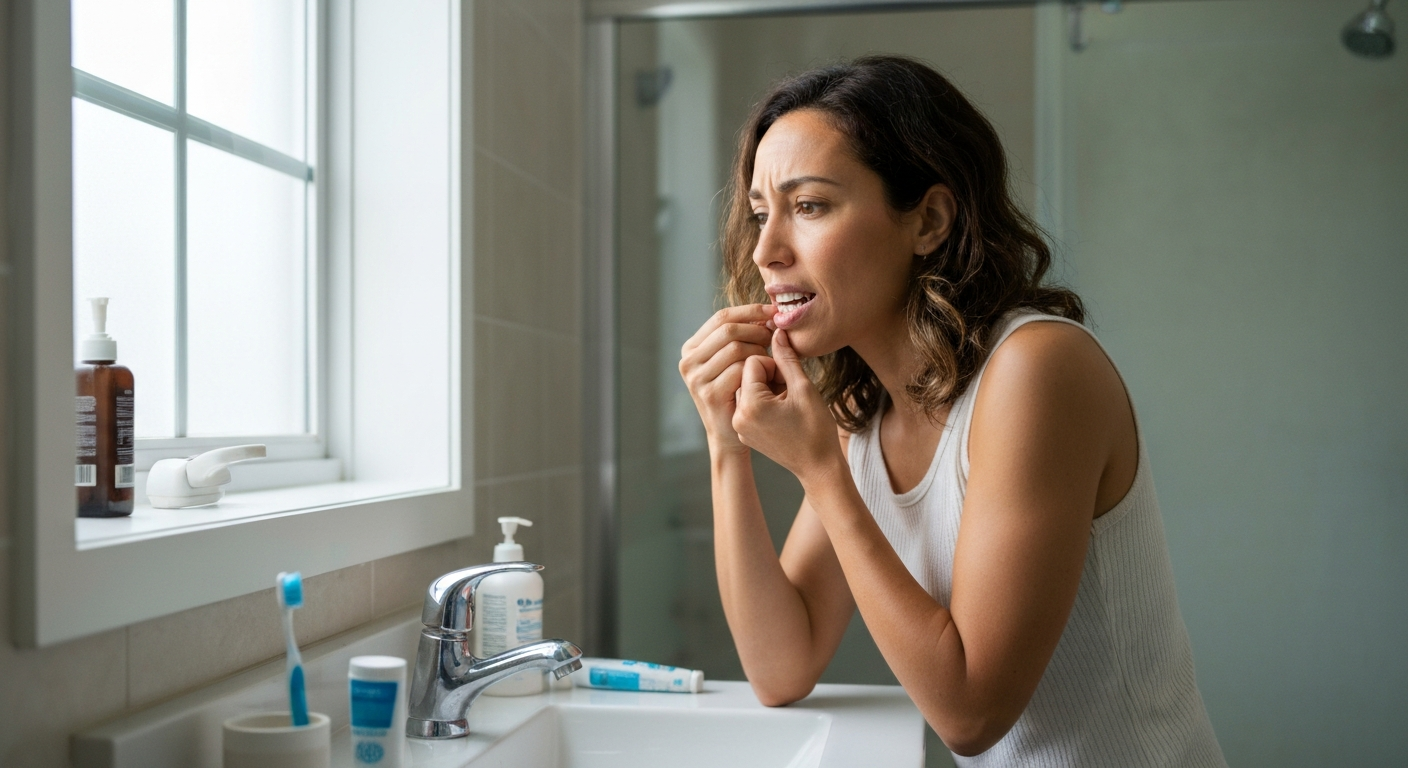

Gum peeling is most often caused by a chemical irritation from toothpaste, mouthwash, or whitening products — or by physical trauma like brushing too hard — and usually heals on its own within a week once you remove the trigger.
When you notice white or translucent tissue sloughing off the inside of your mouth, it looks alarming but rarely signals a serious condition. The medical term is oral epitheliolysis or tissue sloughing, and it happens when the delicate mucous membrane lining your gums gets irritated, damaged, or chemically burned. In most cases, switching products or adjusting your oral care routine is all it takes to stop the peeling. However, persistent peeling that lasts more than two weeks, comes with pain or bleeding, or appears alongside other symptoms warrants a dentist visit to rule out infection, allergic reaction, or underlying disease.
| ✓Our Pick |
Alcohol-free therapeutic mouthwash for sensitive gums A well-reviewed choice that delivers real results — worth every penny for anyone dealing with this. See on Amazon → |
| ✓Our Pick |
 |
SNOW whitening system — sensitive-safe formula, 5 shades whiter, trusted by 2.4M+ customers Great value for money — this product tackles the root cause rather than just masking the symptoms. Learn More → |
The outer layer of your gum tissue (epithelium) is only a few cells thick, so it reacts quickly to chemical irritants, physical damage, or systemic health changes — and peeling is how it sheds damaged cells.
Your gums renew themselves constantly. The epithelial cells that line your mouth turn over every 7 to 14 days under normal conditions. When something accelerates that cell death — an ingredient in your toothpaste, aggressive brushing, or even stress — you see the dead cells slough off as white, stringy tissue or thin sheets. This is different from the hard, flaky buildup of plaque; peeling gum tissue is soft, pliable, and pulls away easily.
"Desquamation of the oral mucosa is frequently caused by contact sensitivity to flavoring agents, preservatives, or surfactants in oral hygiene products." — Dr. Michael Lingen at the University of Chicago Medicine
The causes break down into three main categories: chemical irritation, physical trauma, and systemic or medical conditions. Let's look at each.
Ingredients in toothpaste, mouthwash, and whitening products are the most common culprits behind gum peeling — especially sodium lauryl sulfate (SLS) and high-concentration peroxide.
SLS is a foaming agent found in most mainstream toothpastes. It creates that satisfying lather but also strips natural oils from the mucous membrane. For people with sensitive tissue, this causes direct chemical irritation that leads to peeling, canker sores, or a raw feeling inside the mouth. Studies have shown that SLS can increase the frequency of aphthous ulcers (canker sores) in susceptible individuals.
If you've recently switched toothpaste brands and noticed peeling, check the ingredients list for sodium lauryl sulfate. Switching to an SLS-free toothpaste often resolves the issue within one to two weeks.
Hydrogen peroxide and carbamide peroxide — the active ingredients in whitening strips, gels, and professional treatments — can cause chemical burns on soft tissue. Over-the-counter whitening strips that slip onto gum tissue or whitening trays that overflow onto gums deliver concentrated peroxide directly to the epithelium. The result is white, peeling patches that look like a mild burn.
Professional whitening treatments use higher concentrations (up to 40% hydrogen peroxide), but dentists apply protective barriers to the gums first. At-home products at 10% to 22% carbamide peroxide can still cause peeling if they contact gum tissue for extended periods.
Alcohol-based mouthwashes are a frequent cause of tissue sloughing. Alcohol concentrations of 20% or higher (common in many antiseptic rinses) dry out and irritate the oral mucosa. Essential oils like eucalyptol, thymol, and menthol — while antimicrobial — can also trigger sensitivity reactions in some people.
If you notice peeling after using mouthwash, switch to an alcohol-free formula for two weeks and observe whether the peeling stops.
| Product Type | Problematic Ingredient | Alternative |
|---|---|---|
| Toothpaste | Sodium lauryl sulfate (SLS) | SLS-free toothpaste |
| Mouthwash | Alcohol (ethanol) | Alcohol-free mouthwash |
| Whitening strips | Hydrogen peroxide overflow | Properly fitted whitening trays |
| Whitening gel | Carbamide peroxide | Lower concentration or shorter application time |
Also Read: Why Is My Gum White? 7 Causes & When to See a Dentist
Brushing too hard, eating abrasive or acidic foods, or wearing ill-fitting dental appliances can physically damage gum tissue and cause peeling.
Yes. Hard-bristled toothbrushes and aggressive scrubbing create micro-tears in the gum epithelium. Over time, this leads to tissue sloughing, gum recession, and increased sensitivity. The American Dental Association recommends soft-bristled brushes and gentle, circular motions rather than back-and-forth scrubbing.
If your toothbrush bristles are splayed outward within a month of use, you're applying too much pressure. Electric toothbrushes with pressure sensors can help you develop lighter technique.
Extremely hot food or drinks can scald the oral mucosa, causing a burn that peels as it heals — similar to a sunburn peeling on skin. Spicy foods containing capsaicin don't technically burn tissue, but they can trigger inflammation and irritation in sensitive individuals, leading to temporary peeling.
Acidic foods like citrus fruits, tomatoes, and vinegar-based dressings can also erode the mucous membrane when consumed frequently. If you eat highly acidic foods daily and notice peeling, reducing your intake may help.
Dentures, retainers, night guards, and orthodontic aligners that don't fit properly create friction against gum tissue. This constant rubbing damages the epithelium and causes peeling at contact points. New dental appliances often need adjustments during the first few weeks as your mouth adapts.
If you wear a dental appliance and notice peeling in specific areas where the appliance rests, contact your dentist for a fit adjustment.
While most gum peeling is product-related, certain infections, autoimmune disorders, and allergic reactions can also cause your gum tissue to slough off.
Fungal infections — particularly oral thrush (candidiasis) — can cause white patches on the gums, tongue, and inner cheeks that peel or wipe away to reveal raw, red tissue underneath. Thrush is common in people with weakened immune systems, diabetes, or those taking antibiotics or inhaled corticosteroids.
Viral infections like herpes simplex can also cause tissue breakdown, though this usually presents as blisters rather than diffuse peeling.
"Oral candidiasis presents as white plaques that can be wiped away, leaving an erythematous, sometimes bleeding surface. It should be considered in any patient with unexplained oral mucosal changes." — National Institute of Dental and Craniofacial Research
Contact stomatitis — an allergic or irritant reaction inside the mouth — causes inflammation, redness, and tissue sloughing. Common triggers include:
If peeling started after introducing a new food, oral product, or dental restoration, an allergic reaction is possible. An allergist or oral medicine specialist can perform patch testing to identify the trigger.
Several autoimmune conditions affect the oral mucosa:
These conditions are uncommon but require medical treatment. If gum peeling is accompanied by blisters elsewhere in the mouth, persistent pain, or skin involvement, see a dentist or dermatologist promptly.
Also Read: Why Is My Gum Detaching From My Tooth? 6 Causes & Fixes
The fastest way to stop gum peeling is to eliminate the most common irritants systematically, starting with your toothpaste and mouthwash.
Replace your current toothpaste with an SLS-free formula for at least two weeks. Look for brands marketed for sensitive mouths or check the inactive ingredients list to confirm SLS is absent. Sensodyne Pronamel, Biotene, and several natural brands omit SLS.
Stop using any mouthwash containing alcohol (listed as "alcohol" or "ethanol" in ingredients). Switch to an alcohol-free therapeutic rinse or skip mouthwash entirely for two weeks to see if peeling resolves.
If you're using whitening strips, gels, or trays, stop completely until the peeling heals. When you resume, ensure whitening products don't contact gum tissue — custom-fitted trays from a dentist minimize overflow.
Switch to a soft-bristled brush if you aren't already using one. Brush with gentle pressure using small circular motions. Two minutes of gentle brushing cleans better than 30 seconds of aggressive scrubbing.
A warm saltwater rinse (1/2 teaspoon of salt in 8 ounces of warm water) soothes irritated tissue and promotes healing without adding chemicals. Rinse gently for 30 seconds, twice daily, until peeling resolves.
| ✓Our Pick |
Soft-bristled electric toothbrush with pressure sensor A top-rated pick that works — readers who tried this reported noticeable improvement within days. See on Amazon → |
If gum peeling persists beyond two weeks after removing common irritants, or if it's accompanied by pain, bleeding, or other symptoms, you need professional evaluation.
See a dentist or doctor promptly if you experience:
A dentist can examine your mouth under magnification, take a biopsy if needed, and refer you to an oral medicine specialist or dermatologist for autoimmune or systemic conditions.
Also Read: Why Is My Gum Swollen in One Spot? 6 Causes & Fixes
Gum peeling is usually a reaction to something in your toothpaste, mouthwash, or whitening products — most commonly sodium lauryl sulfate, alcohol, or peroxide. Switching to gentler, SLS-free and alcohol-free products typically stops the peeling within one to two weeks. Physical trauma from hard brushing or ill-fitting dental appliances is another frequent cause. While infections and autoimmune conditions can also cause tissue sloughing, they're much less common. If your gum peeling doesn't resolve after eliminating obvious irritants, or if it comes with pain, bleeding, or other symptoms, see your dentist to rule out underlying conditions.
Alcohol-based mouthwashes can dry out and chemically irritate the oral mucosa, causing the top layer of cells to slough off. Essential oils and strong flavoring agents like menthol or eucalyptol can also trigger sensitivity reactions. Switch to an alcohol-free mouthwash and avoid products with strong mint flavoring for two weeks to see if the peeling stops.
Yes. Sodium lauryl sulfate (SLS), the foaming agent in most toothpastes, is a known irritant that causes tissue sloughing in sensitive individuals. Whitening toothpastes with peroxide or abrasive particles can also irritate gums. Try an SLS-free, non-whitening toothpaste for two weeks and observe whether the peeling resolves.
Not typically. Gum disease (gingivitis and periodontitis) causes redness, swelling, bleeding, and recession — but not the white, stringy tissue sloughing characteristic of chemical irritation. However, severely inflamed gums can be more susceptible to irritation from products. If peeling accompanies bleeding, persistent bad breath, or loose teeth, see a dentist.
Once you remove the irritant, gum tissue typically heals within 7 to 14 days. The oral epithelium regenerates quickly under normal conditions. If peeling continues beyond two weeks despite eliminating suspected triggers, consult a dentist to investigate other causes.
In most cases, no. White peeling tissue is usually dead epithelial cells sloughing off due to chemical or physical irritation — a normal healing response. However, white patches that don't peel away, persistent sores, or peeling accompanied by pain or bleeding should be evaluated by a dentist to rule out fungal infection, lichen planus, or other conditions requiring treatment.
Reviewed and Updated on June 16, 2026 by George Wright