
Technology
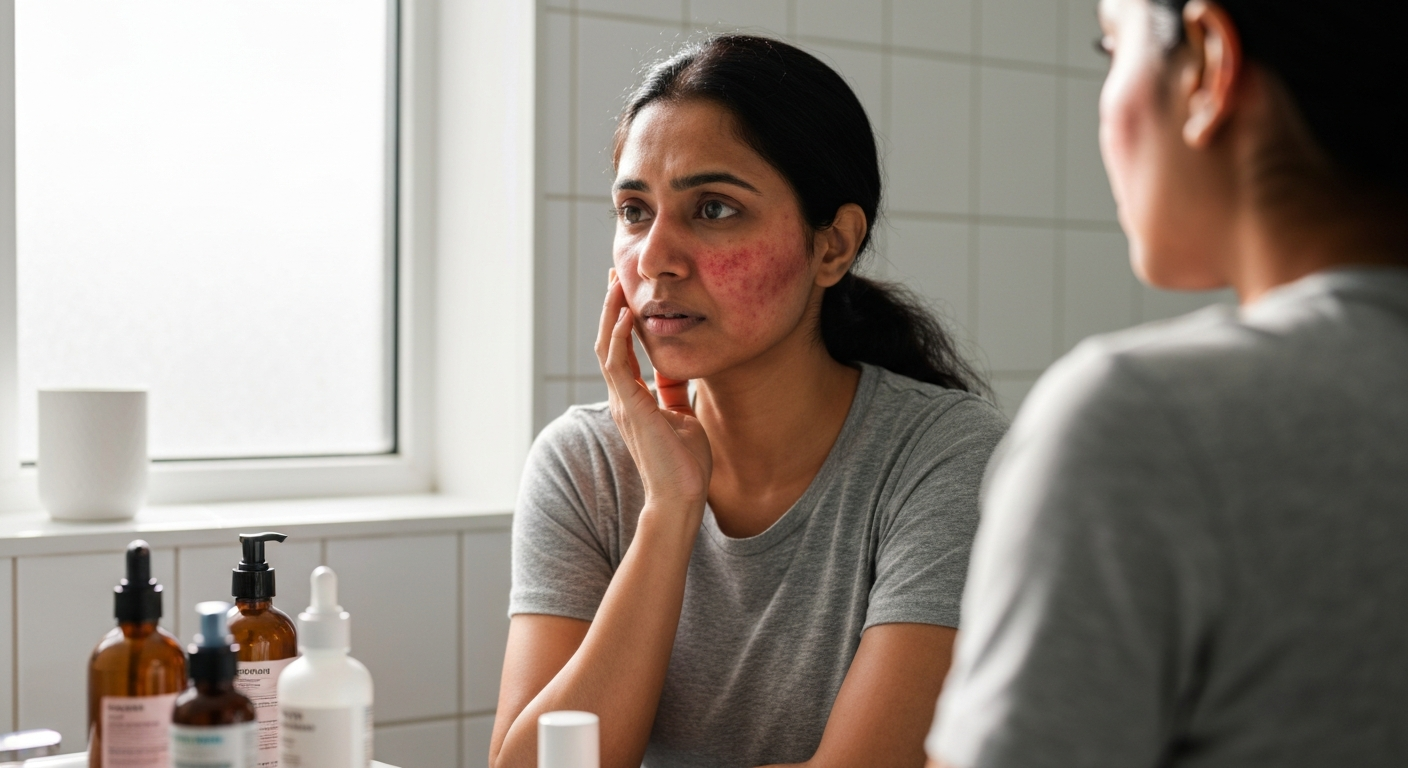

Your face is red and blotchy because something has triggered your blood vessels to dilate or your skin to become inflamed — the most common culprits include rosacea, contact dermatitis, temperature changes, emotional flushing, allergic reactions, or skincare products that irritate your skin barrier.
| ✓Our Pick |
Calming skincare sets for red, sensitive skin This is the go-to fix recommended by professionals — save time and money by getting it right the first time. See on Amazon → |
| ✓Our Pick |
Haloral LED teeth whitening kit + red light therapy skincare — science-backed at-home beauty devices Simple to use and genuinely effective — for many people this is all they ever needed. Learn More → |
Facial redness and blotchiness happen when blood vessels beneath your skin surface expand, allowing more blood flow to reach the outer layers — this can be triggered by internal factors like emotions and hormones, or external irritants like weather and products.
Your skin contains thousands of tiny capillaries just below the surface. When these vessels dilate (open wider), more blood rushes through them, creating that visible redness. In some cases, inflammation compounds the problem by damaging the skin barrier, leading to uneven patches, dryness, and sensitivity.
The pattern of your blotchiness often hints at the cause. Redness concentrated on your cheeks and nose suggests rosacea. Patches that follow the outline of where a product touched your skin point to contact dermatitis. Flushing that comes and goes with stress or temperature changes indicates reactive blood vessels.
| ✓Quick Fix |
The First Thing Most People Try A low-cost, no-commitment option to rule out before spending more on this problem. See on Amazon → |
Rosacea is one of the most common causes of persistent facial redness, affecting an estimated 16 million Americans. This chronic condition causes blood vessels in your face to become overly reactive, dilating easily and sometimes becoming permanently visible as thin red lines.
"Rosacea is a common skin condition that causes flushing or long-term redness on your face. It may also produce tiny pus-filled bumps." — National Institute of Arthritis and Musculoskeletal and Skin Diseases
You'll notice rosacea redness typically concentrates on your central face — cheeks, nose, chin, and forehead. Triggers include sun exposure, hot beverages, spicy foods, alcohol, stress, and extreme temperatures. If your redness persists for weeks and flares predictably, rosacea may be the cause.
Allergic contact dermatitis creates red, blotchy patches when your immune system reacts to something touching your skin. Common triggers include fragrances in skincare products, preservatives, nickel in jewelry, and certain plant compounds.
The reaction often appears 24 to 72 hours after exposure, which makes identifying the culprit tricky. You might switch to a new moisturizer on Monday and not see blotchy, irritated skin until Wednesday or Thursday. The affected areas typically itch, may swell slightly, and can develop tiny blisters.
Active ingredients like retinoids, alpha hydroxy acids (AHAs), benzoyl peroxide, and vitamin C can cause temporary redness and blotchiness — especially when you first introduce them or use concentrations that are too strong for your skin.
This is called irritant contact dermatitis, and unlike allergic reactions, it happens because the product is simply too harsh, not because your immune system is reacting. Signs include stinging upon application, dryness, flaking, and redness that appears within minutes to hours of using the product.
Also Read: Why Is My Skin So Textured? 9 Causes & Fixes
Extreme temperatures cause your facial blood vessels to expand and contract rapidly. Cold, dry winter air strips moisture from your skin while forcing blood vessels to dilate to warm your face. Hot, humid conditions trigger sweating and flushing.
Wind exposure compounds the problem by damaging your skin barrier — the outermost layer that holds moisture in and keeps irritants out. A compromised barrier leads to increased sensitivity, redness, and that blotchy, uneven appearance.
Emotional flushing is your body's stress response in action. When you feel embarrassed, anxious, or angry, your nervous system triggers the release of adrenaline, which causes blood vessels in your face and neck to dilate rapidly.
Some people are more prone to emotional flushing than others due to genetics and differences in their autonomic nervous system. If your redness appears suddenly during stressful situations and fades within minutes to hours, emotional triggers are likely involved.
Atopic dermatitis (eczema) can affect your face, causing red, scaly, itchy patches — particularly around your eyes, on your eyelids, and on your cheeks. Unlike rosacea, eczema patches tend to be dry and flaky rather than just flushed.
Facial eczema is more common in children but can persist or develop in adults. Triggers include dry air, harsh soaps, certain fabrics, dust mites, and stress. The skin often feels rough to the touch and may crack or weep in severe cases.
Seborrheic dermatitis causes red, scaly patches in oily areas of your face — particularly around your eyebrows, the sides of your nose, and your hairline. It's related to an overgrowth of a yeast that naturally lives on your skin.
You'll recognize seborrheic dermatitis by its greasy, yellowish scales on top of red patches. It often flares during stressful periods, in cold weather, or when you're run down. Dandruff on your scalp frequently accompanies facial symptoms.
Cumulative sun exposure damages the collagen and elastin in your skin while also affecting your blood vessels. Over time, this leads to broken capillaries (telangiectasias) that appear as persistent red marks, plus uneven pigmentation that creates a mottled, blotchy look.
"Photoaging is premature aging of the skin caused by repeated exposure to ultraviolet radiation, primarily from the sun. It is characterized by changes such as uneven pigmentation, roughness, and visible blood vessels." — American Academy of Dermatology Association
Sun damage is cumulative and often doesn't become visible until years after the exposure occurred. If your blotchiness has developed gradually over years and concentrates on sun-exposed areas, photoaging may be contributing.
Certain foods and beverages cause blood vessel dilation that shows up as facial redness. Alcohol is a major trigger — it directly affects blood vessel walls and also impairs your liver's ability to process histamines. Spicy foods containing capsaicin trigger a heat response. Hot beverages raise your core temperature.
Histamine-rich foods like aged cheeses, fermented products, and cured meats can also trigger flushing in sensitive individuals. If your blotchy skin appears predictably after eating or drinking certain things, keeping a food diary can help identify your personal triggers.
Also Read: Why Is My Skin So Oily All of a Sudden? 8 Causes & Fixes
Identifying your specific trigger requires examining the pattern, timing, and accompanying symptoms of your facial redness.
| Characteristic | What It May Indicate |
|---|---|
| Redness on cheeks, nose, chin that comes and goes | Rosacea |
| Patches that match where a product touched skin | Contact dermatitis |
| Redness with dry, flaky, itchy patches | Eczema |
| Greasy scales around nose and eyebrows | Seborrheic dermatitis |
| Sudden flushing during stress or embarrassment | Emotional flushing |
| Redness after eating, drinking, or temperature changes | Trigger-induced flushing |
| Gradual onset with visible broken capillaries | Sun damage or aging |
| Redness that appeared after starting new products | Product irritation |
Pay attention to when your blotchiness is worst. Morning redness that fades suggests nighttime product reactions or sleeping position. Afternoon flares might relate to stress, food, or sun exposure. Evening redness could indicate cumulative irritation from your daytime routine.
Strip your routine back to basics: a gentle, fragrance-free cleanser, a simple moisturizer with ceramides or hyaluronic acid, and broad-spectrum SPF 30 or higher sunscreen. Avoid foaming cleansers, which can strip your skin barrier.
Once your skin calms down (give it 2 to 4 weeks), you can slowly reintroduce active ingredients one at a time, waiting at least a week between additions to identify what your skin tolerates.
Look for products containing:
For persistent redness, a dermatologist can offer prescription options:
Also Read: Why Is My Forehead So Oily? 7 Causes & How to Fix It
See a dermatologist if your redness persists for more than 2 to 3 weeks despite gentle skincare, spreads or worsens rapidly, is accompanied by pain or fever, or significantly impacts your quality of life.
Red flags that warrant prompt medical attention include:
A dermatologist can distinguish between conditions that look similar and provide targeted treatment. Many people spend years trying over-the-counter remedies when a prescription medication could have resolved their redness quickly.
Small daily adjustments can significantly reduce how often your face flushes and how intense the redness becomes.
Red, blotchy facial skin results from dilated blood vessels or skin inflammation — common causes include rosacea, contact dermatitis, harsh skincare products, temperature extremes, emotional stress, eczema, seborrheic dermatitis, sun damage, and dietary triggers. Treatment starts with identifying your specific trigger, switching to a gentle skincare routine, and avoiding known irritants. Persistent redness lasting more than a few weeks warrants a dermatologist visit, as prescription treatments can be highly effective for conditions like rosacea.
Persistent blotchiness without obvious triggers often points to an underlying skin condition like rosacea, eczema, or seborrheic dermatitis. These conditions cause chronic inflammation that keeps blood vessels dilated even at rest. Sun damage accumulated over years can also create permanent blotchiness through broken capillaries and uneven pigmentation. If your skin is consistently blotchy regardless of temperature or emotional state, see a dermatologist for evaluation.
Most facial redness is caused by benign skin conditions or temporary triggers, but certain patterns warrant medical attention. Sudden facial swelling with redness could indicate an allergic reaction. A red, warm, spreading patch might signal a skin infection like cellulitis. Facial redness accompanied by joint pain or fatigue could be a sign of lupus or other autoimmune conditions. If your redness appears suddenly, spreads quickly, or comes with other symptoms, seek medical care.
It depends on the cause. Temporary flushing from heat, stress, or food typically resolves within minutes to hours. Irritation from skincare products usually improves within 1 to 2 weeks after stopping the offending product. However, chronic conditions like rosacea, eczema, and seborrheic dermatitis require ongoing management — they can be controlled but not cured. Sun damage and broken capillaries are permanent without professional treatment like laser therapy.
Common aggravating factors include sun exposure, hot showers and baths, spicy foods, alcohol, caffeine, extreme temperatures, wind, harsh skincare products, and stress. Over-exfoliating or using too many active ingredients simultaneously damages your skin barrier, increasing sensitivity and redness. Touching or rubbing your face spreads bacteria and causes mechanical irritation. Identifying your personal triggers through a symptom diary is one of the most effective ways to reduce flares.
Timeline varies significantly by cause. Allergic reactions may take 2 to 4 weeks to fully resolve after you eliminate the trigger. Irritation from skincare products typically improves within 1 to 2 weeks with a gentle routine. Rosacea and other chronic conditions can show improvement within 4 to 8 weeks of starting treatment but require ongoing management. Broken capillaries from sun damage need professional laser treatment and won't resolve on their own.
Reviewed and Updated on June 20, 2026 by George Wright