Women's Health
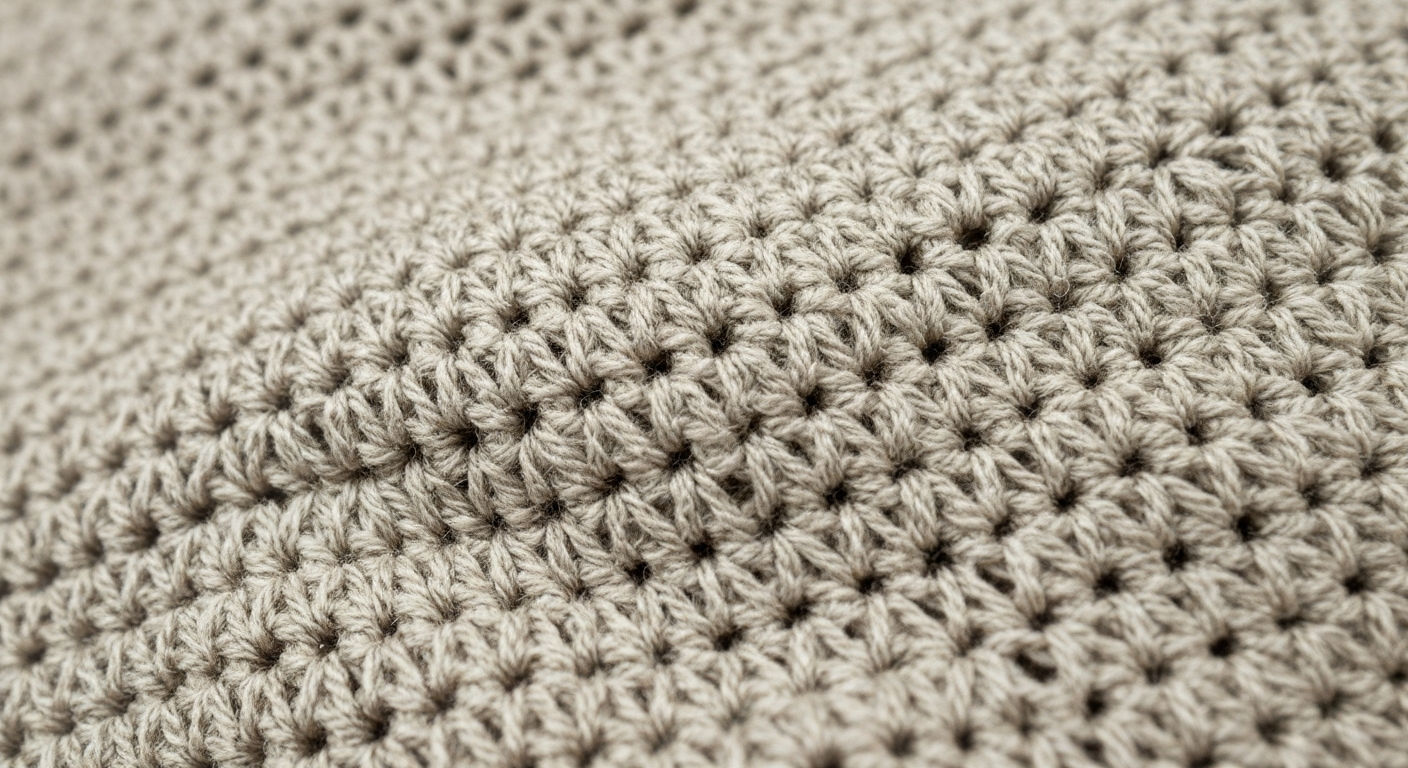

Your crochet is curling because of a tension mismatch—you're either working your stitches too tightly or too loosely for your hook size and yarn weight, or you're not adding enough stitches on turns and rounds to keep the fabric flat.
| ✓Our Pick |
Browse crochet hooks, yarn, and blocking supplies on Amazon Simple to use and genuinely effective — for many people this is all they ever needed. See on Amazon → |
Curling crochet is one of the most common frustrations crafters face, whether you're a beginner working your first granny square or an experienced maker tackling a new pattern. The good news? It's almost always fixable once you identify the root cause. This guide walks you through every reason your crochet might be curling and exactly how to flatten it out in 2026.
Crochet curls when the tension across your fabric isn't distributed evenly—some areas pull tighter than others, causing the edges or center to roll or cup.
Unlike knitting, which uses two needles to create interlocking loops, crochet builds stitches on top of each other in a way that naturally wants to spiral or twist. Every stitch you make pulls on the yarn in a specific direction. When those pulls aren't balanced—because of how tightly you're holding the yarn, the hook you're using, or the stitch pattern itself—the fabric responds by curving.
Think of it like a piece of paper: if you only wet one side, it curls toward the dry side because the fibers expand unevenly. Crochet fabric behaves similarly when tension varies across the piece.
Tight tension is the number one cause of curling crochet, especially for beginners who grip the yarn firmly out of nervousness.
When you pull your yarn too taut as you work, each stitch becomes smaller and denser than it should be. This compresses the fabric and forces it to curl inward, typically rolling toward you (the wrong side). You'll notice this most at the edges of flat pieces and around the entire circumference of projects worked in the round.
Signs your tension is too tight:
- Your hook struggles to slide through stitches
- The fabric feels stiff and inflexible
- Stitch counts are correct but the piece is smaller than the pattern gauge
- Edges roll persistently toward the back of the work
"Tension is the single most important factor in achieving a flat, professional-looking crochet fabric. Most curling issues resolve when crafters consciously relax their grip on the yarn." — Kathryn Vercillo, crochet author and educator at Crochet Concupiscence
Loose tension creates the opposite problem—floppy, wavy fabric that doesn't hold its shape and curls outward at the edges.
If you're working very loosely, your stitches become tall and open. The fabric loses structure and tends to ripple or wave rather than lie flat. This is less common than tight tension but happens frequently when crafters overcorrect after being told to "relax."
Signs your tension is too loose:
- Visible gaps between stitches
- Fabric feels limp and stretchy
- The finished piece is larger than pattern gauge
- Edges ripple or wave rather than roll
A hook that's too small for your yarn weight forces tight stitches; a hook that's too large creates loose, unstable fabric—both cause curling.
Yarn labels include a recommended hook size range for a reason. When your hook doesn't match your yarn, the resulting fabric can't balance properly. This is especially problematic when you substitute yarns in a pattern without checking gauge.
| Yarn Weight | Recommended Hook Size (US) | Recommended Hook Size (mm) |
|---|---|---|
| Lace (0) | Steel 6-8 / B-1 | 1.5–2.25 |
| Fingering (1) | B-1 to E-4 | 2.25–3.5 |
| Sport (2) | E-4 to 7 | 3.5–4.5 |
| DK (3) | 7 to I-9 | 4.5–5.5 |
| Worsted (4) | I-9 to K-10.5 | 5.5–6.5 |
| Bulky (5) | K-10.5 to M-13 | 6.5–9 |
| Super Bulky (6) | M-13 and larger | 9+ |
Also Read: Why Is My Nail Polish Not Drying? 7 Causes & Fast Fixes
Flat circles, squares, and other shapes need strategic increases to stay flat—skip them, and the edges curl up like a bowl.
When you crochet in the round, each row has a larger circumference than the one before it. Without adding stitches at regular intervals, you're forcing more fabric into less space, which makes the piece cup inward. The same principle applies to flat pieces worked in rows: if you're not accounting for the height of your turning chain, you lose stitches at the edges, pulling them in.
Common increase mistakes:
- Forgetting to work two stitches into corner stitches on granny squares
- Not counting the turning chain as a stitch when the pattern requires it
- Skipping the first or last stitch of a row consistently
- Using the wrong number of increases for your stitch pattern (single crochet circles need 6 increases per round; double crochet needs 12)
Some stitch patterns curl by nature—it's not your fault, it's the physics of how the stitches interlock.
Certain stitches create fabric with built-in curl because of their structure. Stockinette in knitting curls notoriously, and crochet has its own culprits. Single crochet worked in rows tends to curl more than double crochet because the shorter stitches create a denser, stiffer fabric. Front-post and back-post stitches can also introduce curl by pulling the fabric in different directions.
Stitch patterns prone to curling:
- Single crochet in rows (especially with tight tension)
- Tunisian simple stitch (curls dramatically without blocking)
- Cables and textured stitches using post stitches
- Any pattern alternating between very short and very tall stitches
A foundation chain worked more tightly than your subsequent rows creates a pulled, curling bottom edge that won't lie flat.
Many crafters grip the yarn tighter when starting a project, which makes the foundation chain the tightest row of the entire piece. Since this row anchors everything above it, a tight foundation pulls the bottom edge inward and creates a permanent curl that blocking may not fully correct.
You can test this by gently stretching your foundation chain—if it doesn't stretch as much as the rows above it, the chain is too tight.
Inserting your hook into only the front loop or back loop when the pattern calls for both loops changes the fabric structure and causes tilting or curling.
Each crochet stitch has two loops at the top—the front loop (closest to you) and the back loop (away from you). Working into both loops creates balanced, flat fabric. Working into only one loop creates a ridge on the other side and can make the fabric lean or curl in that direction.
Unless a pattern specifically calls for front loop only (FLO) or back loop only (BLO), always insert your hook under both loops.
The most effective fix happens while you're crocheting—consciously loosening or tightening your yarn hold to match gauge.
If your work is curling inward, you're likely crocheting too tightly. Focus on these adjustments:
If your work is rippling or curling outward, you need more tension:
"I recommend crocheting a gauge swatch before every project—not just to check size, but to see how the fabric behaves. If your swatch curls, you know to adjust before investing hours in the main piece." — Tamara Kelly, designer at Moogly Blog
Switching hook sizes is often the fastest way to correct consistent tension issues without changing your natural crocheting style.
If you crochet tightly and your fabric curls inward, move up one or two hook sizes. The larger hook forces you to make bigger stitches even if your grip doesn't change. If you crochet loosely and your fabric ripples, move down a hook size.
This is where making a gauge swatch before starting a project saves hours of frustration. Test your yarn with the recommended hook, then try one size up and one size down. Choose whichever produces flat, even fabric at the correct size.
Blocking—wetting and reshaping your crochet—can permanently eliminate mild to moderate curling, especially in natural fibers.
Blocking works by relaxing the yarn fibers and setting them in a new position as they dry. For curling crochet:
| Fiber Type | Blocking Method | Curl Correction |
|---|---|---|
| Cotton | Wet blocking | Excellent |
| Wool | Wet or steam blocking | Excellent |
| Acrylic | Steam blocking (kills the fibers) | Good, permanent |
| Blends | Depends on dominant fiber | Moderate to good |
Acrylic yarn doesn't absorb water, so wet blocking has limited effect. Instead, use steam from an iron held 1–2 inches above the fabric (never touch acrylic with a hot iron). This "kills" the acrylic fibers, making them permanently flat but also removing stretch.
A border worked in a stable stitch pattern—like single crochet or reverse single crochet—can counteract edge curling on blankets, scarves, and garments.
Borders work by adding weight and structure to edges that want to roll. For best results:
Also Read: Why Is My Leather Couch Peeling? 6 Causes & How to Fix
Foundation single crochet (FSC) creates a stretchy, even base row that matches the tension of subsequent rows—eliminating foundation curl entirely.
Instead of chaining and then working into the chain, foundation single crochet builds the chain and first row simultaneously. This creates a bottom edge with the same flexibility as the rest of your work.
To work foundation single crochet:
Sometimes the only real fix is frogging—unraveling your work—and starting again with corrected technique.
If curling is severe and you're only a few rows in, it's usually faster to start over than to fight the fabric. Before you begin again:
Some curling during the crocheting process is expected—the fabric often relaxes and flattens after blocking or seaming.
Not all curl is permanent. Crochet fabric frequently curls while you're working on it, especially:
If your curl is mild and limited to work-in-progress stages, finishing techniques like blocking, seaming, and adding borders will likely resolve it.
Crochet curls when tension is uneven—usually too tight, but sometimes too loose—or when hook size doesn't match yarn weight. Missing increases, tight foundation chains, and certain stitch patterns also cause curling. Fix it by adjusting your grip, changing hook size, blocking the finished piece, adding a stabilizing border, or switching to foundation stitches that match the flexibility of your rows. For severe curling, starting over with corrected technique is often the fastest path to a flat, professional result.
Blanket edges curl when you're working stitches too tightly at the turn, missing stitches at the end of rows, or not counting your turning chain consistently. Blankets are especially prone because small tension variations compound over hundreds of rows. Check your stitch count at each edge—you should have the same number every row. If counts are correct but edges still curl, you're likely tightening up unconsciously at the turns. Focus on keeping your last few stitches of each row as relaxed as your middle stitches.
A crocheting circle cups into a bowl when you're not adding enough increases per round. Flat circles need a specific number of increases based on the stitch type: single crochet circles need 6 increases per round (spaced evenly), while double crochet circles need 12. If you're following a pattern and still getting cupping, your personal tension is tighter than the designer's—try going up a hook size. The opposite problem (ruffling or wavy edges) means too many increases.
Yes, blocking is the primary way to fix curling after you've bound off. Soak the piece in water, pin it flat to the correct dimensions, and let it dry completely. For acrylic yarn, use steam blocking instead. If blocking doesn't fully correct the curl, adding a border in a stable stitch like single crochet or crab stitch can help weigh down the edges. Severe structural curl from consistently wrong stitch counts may not be fully correctable without partial or complete remaking.
Absolutely. Natural fibers like cotton and wool respond well to blocking and can be reshaped when wet. Acrylic resists wet blocking and may need steam treatment to set flat. Very slippery yarns (like bamboo or silk) can create tension inconsistencies because they slide through your fingers. Very sticky yarns (like mohair) can hide tension problems until the piece is finished. If you're prone to curling issues, try working with a smooth, non-slippery worsted-weight wool or cotton blend while you perfect your technique.
Washing can cause curl if the care method doesn't match the fiber.
Reviewed and Updated on June 12, 2026 by George Wright