Health
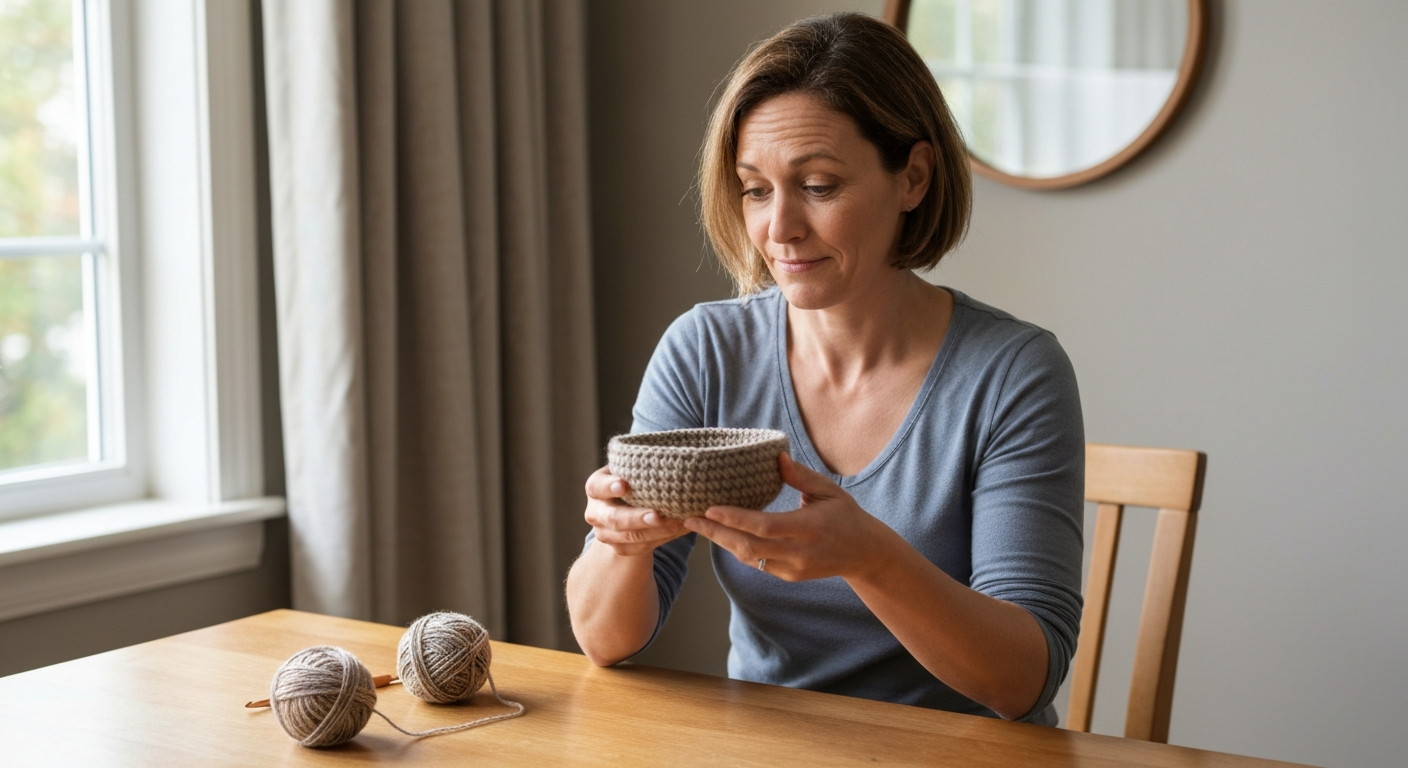

Your crochet circle is curling because you have too many or too few stitches for the round you're working — this creates either a ruffled dome (too many stitches) or a bowl shape (too few stitches), and fixing it requires understanding the math behind flat circles.
Crocheting a perfectly flat circle sounds simple until your work starts curling up like a bowl or ruffling like a potato chip. The frustrating truth is that flat circles depend entirely on stitch counts and increases following a precise mathematical pattern. Once you understand why curling happens and how to prevent it, you'll never have to frog another circle again.
A flat crochet circle requires a specific number of increases per round based on the stitch type you're using — deviate from this formula and curling is inevitable.
Every crochet stitch has a different height-to-width ratio, which determines how many stitches you need to add each round to keep your circle flat. Single crochet stitches are shorter and wider, so they need fewer increases per round than taller stitches like double crochet.
Here's the standard increase formula for flat circles:
| Stitch Type | Increases Per Round | Starting Chain |
|---|---|---|
| Single crochet (sc) | 6 | Magic ring with 6 sc |
| Half double crochet (hdc) | 8 | Magic ring with 8 hdc |
| Double crochet (dc) | 12 | Magic ring with 12 dc |
| Treble crochet (tr) | 16 | Magic ring with 16 tr |
The increase count stays consistent every round. For single crochet, you add 6 stitches each round (Round 1: 6 stitches, Round 2: 12 stitches, Round 3: 18 stitches, and so on). Miss a single increase and your circle starts pulling inward. Add an extra increase and it begins to ruffle.
"The relationship between stitch height and the number of increases needed is mathematical, not arbitrary. Taller stitches cover more vertical space, requiring more stitches around the circumference to maintain flatness." — Craft Yarn Council
Bowl-shaped curling happens when you have too few stitches in your rounds — your circle is essentially trying to become a sphere because there isn't enough fabric to lie flat.
This is the most common curling problem crocheters face. Your work pulls up at the edges because the circumference isn't large enough to stay flat against a surface. Think of it like trying to flatten a tennis ball — the edges naturally want to curve upward.
Several specific mistakes cause bowl curling:
The most frequent culprit is simply losing track of your increases. In the rhythm of crocheting, it's easy to accidentally skip an increase stitch, especially in rounds with many stitches. Using stitch markers at the beginning of each round and at each increase point helps prevent this.
Tight tension effectively shrinks each stitch, meaning your actual stitch count produces less fabric than the pattern expects. Even if you're hitting the right number of stitches, overly tight tension creates the same effect as missing increases. Your stitches are smaller, so your circle has less circumference than it needs.
If your foundation round has fewer stitches than required, every subsequent round will be off. A single crochet circle starting with 5 stitches instead of 6 will never lie flat no matter how carefully you follow the pattern afterward.
Also Read: Why Is My Crochet Curling? Causes & Fixes
Ruffling and doming occur when you have too many stitches — the excess fabric has nowhere to go except to bunch up into waves or push upward in the center.
This is the opposite problem of bowl curling but stems from the same root cause: incorrect stitch math. When a circle ruffles, it's telling you there's more fabric around the edge than can physically lie flat.
Double-checking your stitch counts at the end of each round catches accidental extra stitches before they compound. By round 10 of a single crochet circle, you should have exactly 60 stitches. Any more and ruffling becomes pronounced.
Loose tension creates larger stitches, effectively giving you more fabric than the pattern accounts for. Even with the correct stitch count, loose tension produces a circle that wants to ruffle because each stitch takes up more space than intended.
Using 12 increases per round with single crochet (when you should use 6) guarantees ruffling. This mistake often happens when following a pattern written for double crochet but substituting single crochet stitches.
| ✓Our Pick |
Search ergonomic crochet hooks on Amazon This is the go-to fix recommended by professionals — save time and money by getting it right the first time. See on Amazon → |
The fix depends on whether your circle is bowling (too few stitches) or ruffling (too many stitches) — and how far into the project you've gone.
If your circle is cupping inward, you need more stitches. You have three options:
Frog back to where the curling started. This is the cleanest fix. Identify the round where curling began and rip back to that point, then continue with correct increases.
Add extra increases in the next round. If you're only slightly off, adding 1–2 extra increases in your next round can compensate. Space them evenly around the circle.
Block aggressively. For minor curling, wet blocking or steam blocking can sometimes flatten a circle that's slightly off. Pin it flat, wet it thoroughly, and let it dry completely.
If your circle has too much fabric, you need fewer stitches:
Frog back and reduce increases. The most reliable fix. Go back to where the ruffling started and continue with the correct increase count.
Skip increases in the next round. For minor ruffling, omitting 1–2 increases in your next round can help. Distribute the skipped increases evenly.
Switch to a smaller hook. If loose tension is the issue, dropping down one hook size tightens your stitches and reduces the effective fabric per stitch.
Before frogging, try blocking. Wet your circle thoroughly, pin it flat to a blocking board in a true circle shape, and let it dry for 24 hours. Some curling — especially minor cases — corrects itself with blocking. If blocking doesn't work, you'll need to adjust your stitch counts.
Prevention is easier than fixing — count your stitches religiously, check your tension with a gauge swatch, and use stitch markers liberally.
Before starting any circle project, crochet a small flat swatch using your chosen yarn and hook. If your swatch stitches are significantly tighter or looser than the pattern specifies, adjust your hook size accordingly. Going up a hook size loosens tension; going down tightens it.
Get in the habit of counting stitches at the end of every single round. Yes, every round. It takes seconds and saves hours of frustration. Your stitch count should follow this progression for single crochet:
| Round | Total Stitches |
|---|---|
| 1 | 6 |
| 2 | 12 |
| 3 | 18 |
| 4 | 24 |
| 5 | 30 |
| 6 | 36 |
| 7 | 42 |
| 8 | 48 |
| 9 | 54 |
| 10 | 60 |
Place a marker at the beginning of each round and at each increase point. For a single crochet circle, that's 6 markers per round after the first. When you're working the round, each section between markers should have the same number of stitches.
Set your circle on a flat surface every 2–3 rounds. If it's starting to curl, you'll catch it early when it's easy to fix. Waiting until round 15 to notice a problem that started at round 4 means much more frogging.
Also Read: Why Is My Room So Stuffy? 6 Causes & Easy Fixes
Some projects intentionally use curling to create 3D shapes — bowls, hats, and amigurumi all rely on controlled curling.
Not every curled circle is a mistake. If you're making a basket, bowl, hat, or stuffed toy, curling is the goal. The same math that creates unwanted curling creates intentional shaping when you control it.
For bowl shapes, you deliberately use fewer increases than a flat circle requires. For hats, you start flat for the crown and then stop increasing to let the sides curve down. Understanding the math gives you control over both flat circles and shaped ones.
Your crochet circle curls because the stitch count doesn't match what's needed for flat fabric — too few stitches create a bowl, too many create ruffles. The fix is adjusting your increases to match the mathematical formula for your stitch type: 6 increases per round for single crochet, 8 for half double, 12 for double crochet. Count every round, check tension with a gauge swatch, and use stitch markers to catch problems early.
Your crochet circle turns into a bowl when you have too few stitches in your rounds. Each round needs a specific number of increases to maintain flat fabric — for single crochet, that's 6 new stitches every round. Missing increases, crocheting with overly tight tension, or starting with too few stitches in your foundation round all cause bowl-shaped curling. The circle is essentially trying to become a sphere because there isn't enough circumference to lie flat.
The stitch count depends on which round you're on and what stitch you're using. For single crochet, multiply the round number by 6. Round 1 has 6 stitches, round 5 has 30, round 10 has 60. For double crochet, multiply by 12 instead. Half double crochet uses 8 increases per round. Following this formula exactly is the key to flat circles — any deviation causes curling.
Blocking can fix minor curling but won't correct significant stitch-count errors. Wet your circle thoroughly, pin it flat in a true circle shape on a blocking mat, and let it dry completely for at least 24 hours. If the curling is caused by slightly tight tension, blocking often works. If you're missing multiple increases across several rounds, blocking won't overcome the structural problem and you'll need to frog back and recount.
Ruffling happens when your circle has too many stitches — the excess fabric bunches up into waves because it has nowhere else to go. Common causes include adding extra increases by mistake, using too many increases for your stitch type (like using 12 increases per round with single crochet instead of 6), or crocheting with very loose tension. Reducing increases in subsequent rounds or using a smaller hook can help correct it.
Yes, hook size directly affects curling through its impact on tension and stitch size. A smaller hook creates tighter, smaller stitches — making your circle more likely to bowl inward. A larger hook creates looser, bigger stitches — making ruffling more likely. If your circles consistently curl the same way despite correct stitch counts, try adjusting your hook size: go up for bowl curling, go down for ruffling.
Reviewed and Updated on June 12, 2026 by George Wright