
Hair
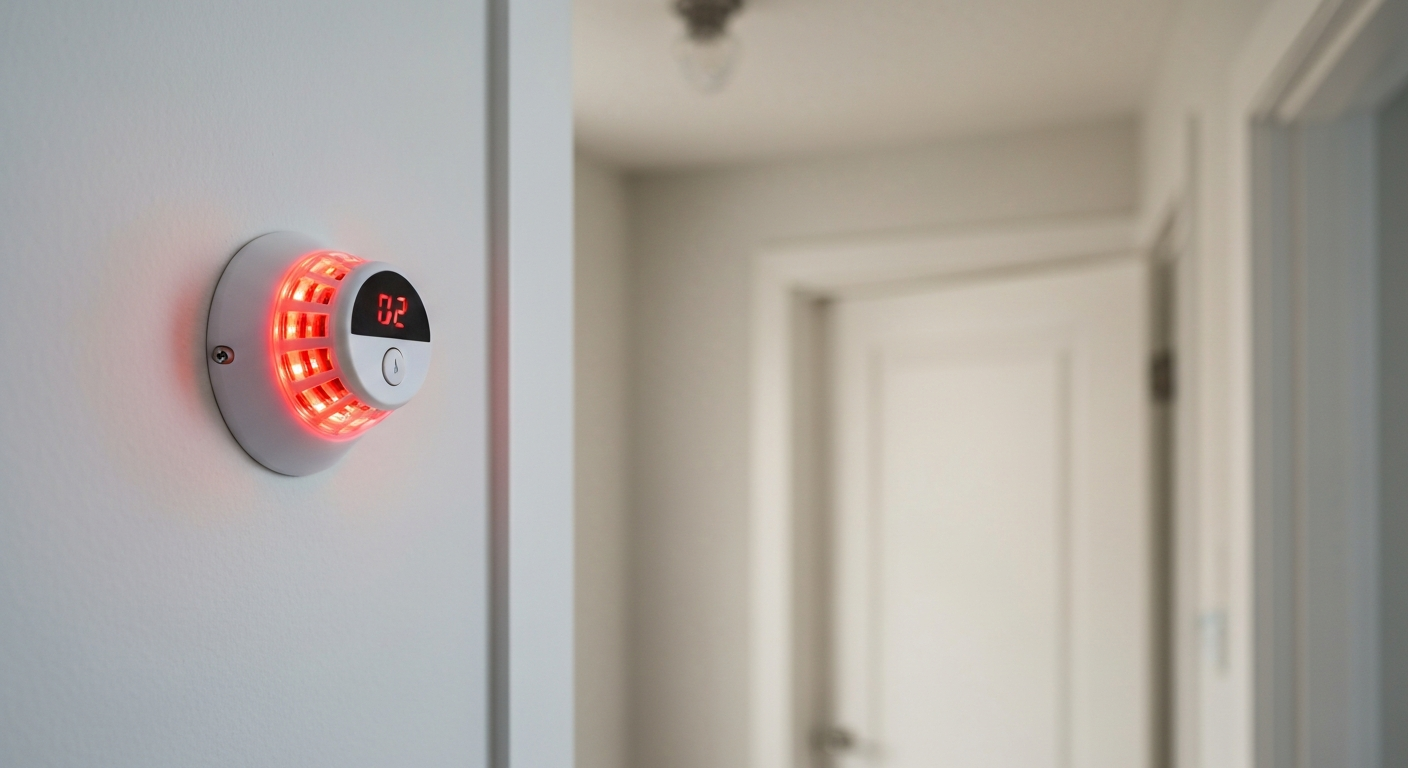

Your CO detector is beeping because the battery is low, the unit has reached end of life, or — the most serious case — it has detected carbon monoxide. One chirp every 30–60 seconds is a low battery. Four beeps in a pattern means CO is present: evacuate immediately and call 911. Do not ignore any beeping from a CO detector.
| ✓Our Pick |
Replacement carbon monoxide detectors and combo alarms Trusted by professionals and everyday users alike — a smart investment that pays for itself. See on Amazon → |
Before diving in: most residential detectors labeled "CO detector" or "CO/smoke alarm" detect carbon monoxide (CO) — a colorless, odorless gas produced by incomplete combustion. Carbon dioxide (CO2) detectors are used in commercial, agricultural, or laboratory settings and are rarely found in homes. If your home detector is beeping, it is almost certainly detecting CO or signaling a battery/device issue — not CO2.
Every CO detector beep pattern means something specific. The key is distinguishing between a chirp (maintenance signal) and an alarm (danger signal).
The most common cause of nighttime beeping. A single, intermittent chirp — not a sustained alarm — is the universal low-battery signal on virtually all CO detectors. It's designed to wake you up because a CO detector without power is useless.
Fix: Replace the battery. Most detectors use a standard 9V alkaline battery; some use two AA or two AAA cells. The battery type is printed on the back of the unit. After replacing, press the test button to confirm normal operation.
The NFPA 72 standard emergency signal for CO detection is four beeps, a pause, then four beeps again, on repeat. If you hear this pattern:
"Carbon monoxide is the leading cause of poisoning deaths in the United States. CO is produced by incomplete combustion from gas appliances, fireplaces, furnaces, and vehicle exhaust. Because it is colorless and odorless, a functioning CO detector is the only reliable warning system." — Centers for Disease Control and Prevention
The CDC estimates over 400 Americans die from unintentional CO poisoning each year, with thousands more hospitalized.
CO detectors have a rated lifespan of 5–7 years. The electrochemical sensor inside degrades over time, eventually producing false signals or failing to detect real CO. When a unit reaches end of life, it may chirp continuously, alarm without detectable CO present, or simply stop working without any indication.
The manufacture date is stamped on the back of every listed detector. Replace the entire unit once it reaches its expiry date — a fresh battery does not extend the sensor's life.
"Consumers should replace CO alarms according to the manufacturer's instructions or when the alarm signals that it has reached the end of its useful life, as defined by the manufacturer. Most CO alarms have a lifespan of 5 to 7 years." — Consumer Product Safety Commission
Certain household chemicals can trigger false CO alarms. Products containing hydrogen, ammonia, or propane near the detector — including some cleaning products, paint strippers, adhesives, and even certain air fresheners — can temporarily saturate the sensor.
Fix: If the alarm occurs after using chemicals in the area and there's no other evidence of a CO source, ventilate the room, temporarily relocate the detector, and test it after 24 hours in clean air.
A CO detector installed too close to a gas stove, furnace, or attached garage can trigger low-level alarms from normal transient combustion products that briefly exceed the detector's threshold — even without a dangerous CO buildup.
NFPA guidelines recommend placing CO detectors at least 5 feet from cooking appliances, not in the same room as a gas furnace, and not directly above fuel-burning equipment.
Fix: Relocate the detector to a central hallway or bedroom area at least 5 feet from any fuel-burning appliance.
In multi-unit buildings, apartments, or townhomes, CO from a neighbor's faulty appliance, attached garage, or shared mechanical room can migrate through walls, vents, or pipe chases and trigger your detector.
If your alarm goes off and you have no CO sources in your own unit, treat it as a real alarm. Evacuate, call 911, and let the fire department investigate the source.
After physical damage, flooding, or exposure to extreme temperatures, CO detector electronics can fail and produce random beeping. A detector that chirps in random patterns not matching the low-battery or alarm pattern should be replaced regardless of its age.
| Pattern | Meaning | Action |
|---|---|---|
| 1 chirp every 30–60 seconds | Low battery | Replace battery |
| 4 beeps, pause, repeat | CO detected — ALARM | Evacuate, call 911 |
| Rapid continuous chirping | End of life | Replace unit |
| 3 beeps, pause, 3 beeps | Some models: CO alarm variant | Evacuate, call 911 |
| Single long beep, then silence | Test or malfunction | Press test button to check |
Also Read: Why Is My Hardwired Smoke Detector Beeping? 7 Causes & Fixes
An intermittent single chirp every 30–60 seconds means replace the battery. A continuous four-beep pattern means CO is detected and you must leave the building immediately. Check the manufacture date on the back of your detector — if it's older than 7 years, replace the whole unit regardless of beeping. CO detection is not a nuisance alarm; it is the only warning you get for a colorless, odorless gas that kills within hours at high concentrations.
Nighttime beeping is almost always a low-battery chirp — a single beep every 30–60 seconds. If it's a continuous alarm pattern (4 beeps, pause, 4 beeps), evacuate immediately and call 911.
Four beeps followed by a pause, repeated, is the standard CO alarm pattern. It means the detector has sensed carbon monoxide. Evacuate everyone from the home and call 911 from outside.
A single chirp every 30–60 seconds indicates a low battery. Replace the battery; if chirping continues, the unit is at end of life and needs replacing.
Most CO detectors have a rated lifespan of 5–7 years. The manufacture date is stamped on the back — replace the unit when it passes its expiry date.
No — CO2 and CO detectors measure different gases and are not interchangeable. Most residential detectors detect carbon monoxide (CO), not carbon dioxide (CO2).
Reviewed and Updated on May 31, 2026 by Adelinda Manna