
Health
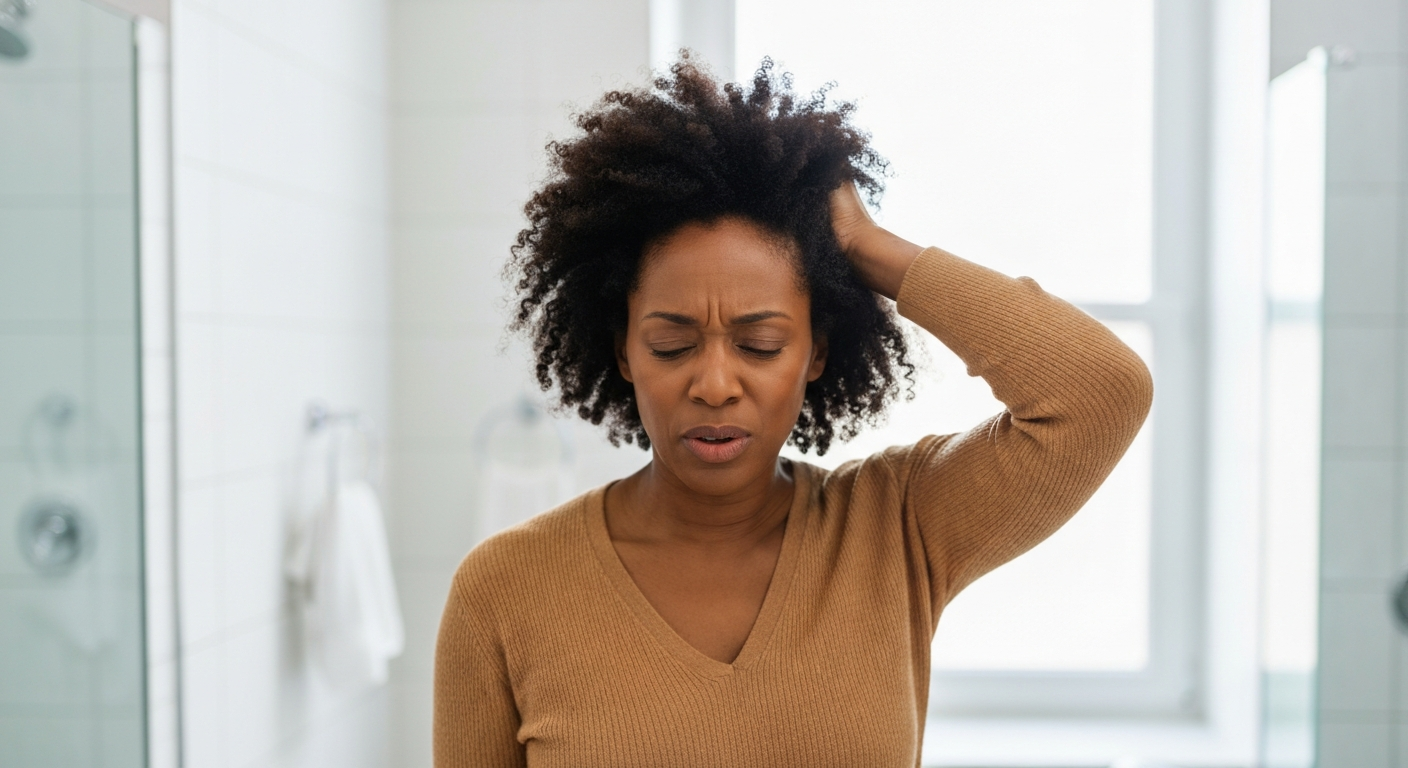

An itchy scalp without lice is most commonly dandruff (seborrheic dermatitis), a dry scalp, or contact dermatitis from shampoo, conditioner, or styling products. These three causes together account for the vast majority of scalp itching. Check for flakes and when the itch started to narrow it down fast.
| ✓Our Pick |
Scalp care treatment for itching and flaking This is what many people find solves the problem quickly, without a costly professional visit. Learn More → |
The scalp has one of the highest concentrations of sebaceous glands on the body — which makes it uniquely prone to oil-related conditions like dandruff and seborrheic dermatitis. Most scalp itching has a topical, treatable cause.
Dandruff is the most common reason for a persistently itchy scalp globally. It's caused by a yeast called Malassezia globosa that lives on everyone's scalp. In some people, the yeast feeds on scalp oils and produces oleic acid, which triggers an inflammatory response — itching, flaking, and in seborrheic dermatitis, visible red patches.
Signs of dandruff: oily, yellowish flakes stuck to the scalp or falling on dark clothing.
Signs of dry scalp: small, white, powdery flakes, no oiliness, scalp feels tight.
"Seborrheic dermatitis affects up to 5% of the general population and up to 20% of people with HIV. The condition is caused by an inflammatory response to Malassezia yeast and is associated with flares during stress, cold weather, and immune suppression." — American Academy of Dermatology
Fix: Over-the-counter shampoos containing zinc pyrithione (Head & Shoulders), ketoconazole (Nizoral), or selenium sulfide (Selsun Blue) target Malassezia directly. Use 2–3 times per week, leaving the shampoo on for 2 minutes before rinsing.
A dry scalp lacks sufficient moisture and natural oil (sebum) to stay comfortable. Unlike dandruff, dry scalp isn't yeast-related — it's caused by overwashing, harsh shampoos, cold weather, low humidity, or aging skin. The itch is often worse in winter and after washing.
Fix: Switch to a sulfate-free, moisturizing shampoo. Reduce wash frequency if washing daily. Warm (not hot) water preserves scalp oils better than hot showers.
Shampoos, conditioners, hair dyes, dry shampoos, and styling products contain fragrances, preservatives, and surfactants that can cause allergic or irritant contact dermatitis on a sensitized scalp. The itch typically starts shortly after introducing a new product or after using a product for an extended period (sensitization builds over time).
Signs: itching concentrated at the hairline or ears (where products contact skin most), possibly with redness or small blisters.
Fix: Patch test new products and switch to fragrance-free, hypoallergenic formulas. The itch resolves within 1–2 weeks of removing the offending product.
Adult lice are very small (2–3 mm) and move fast — they're easy to miss on a quick visual inspection. The eggs (nits) look like dandruff but are glued to the hair shaft and don't flake off easily. If scalp itching started suddenly, especially in a school-aged household, use a fine-toothed lice comb through wet hair under bright light before ruling lice out completely.
Fix: Over-the-counter permethrin lotion (Nix) or pyrethrin shampoo (Rid), combined with thorough combing, is effective for most lice infestations.
Scalp psoriasis causes thick, silvery-white scales, intense itching, and sometimes bleeding when scales are removed. It extends beyond the hairline onto the forehead, ears, and neck. Unlike dandruff, psoriasis scales are very thick and silvery, not oily and yellow.
Fix: Medicated shampoos with coal tar or salicylic acid reduce scale buildup. Prescription-strength topical corticosteroids or biologics are used for moderate to severe cases. See a dermatologist if OTC options don't provide relief within 4 weeks.
Folliculitis is an infection of hair follicles, usually bacterial (Staphylococcus aureus). It appears as small red or white pustules around individual hair follicles and causes significant itching and tenderness. Tight ponytails, sweating under hats, or sharing combs/brushes increases risk.
Fix: Antibacterial shampoo (containing benzoyl peroxide or chlorhexidine) for mild cases. A doctor may prescribe topical or oral antibiotics for more extensive folliculitis.
Dry shampoo, hairspray, and silicone-heavy conditioners accumulate on the scalp over time, clogging follicles and creating an itchy, dull film that regular shampooing doesn't remove. This is increasingly common as dry shampoo use has grown.
Fix: Use a clarifying shampoo once a week to remove buildup. Follow with a moisturizing conditioner on the lengths only (not the scalp).
Atopic dermatitis can affect the scalp and typically presents as intensely itchy, dry, inflamed patches. It often coexists with eczema elsewhere on the body. Eczema itching tends to be worse at night and in response to temperature changes and stress.
Fix: Medicated shampoos and topical calcineurin inhibitors (tacrolimus) are used for scalp eczema. A dermatologist can distinguish scalp eczema from seborrheic dermatitis, as treatment differs.
Chronic stress and anxiety lower the itch threshold — you perceive itching more intensely from stimuli that wouldn't bother you otherwise. Stress also exacerbates seborrheic dermatitis and psoriasis directly. Scalp itching that worsens during exam seasons, stressful work periods, or life events often has a significant stress component.
Also Read: Why Is My Head So Itchy at Night? 9 Causes & Relief
Itchy scalp without lice is almost always dandruff, dry scalp, or a reaction to a hair product. Start with a dandruff-formula shampoo (zinc pyrithione or ketoconazole) used 2–3 times per week. If post-shower itching is the pattern, your shampoo formula is likely the culprit — switch to something sulfate-free and fragrance-free. Psoriasis, folliculitis, and eczema don't respond to dandruff shampoo and need a dermatologist for correct diagnosis and prescription treatment.
The most common causes are dandruff (seborrheic dermatitis), dry scalp, and contact dermatitis from hair products. Check for flakes — large oily yellow flakes point to seborrheic dermatitis; small dry white flakes point to a dry scalp.
Post-shower scalp itching is almost always caused by residual shampoo not fully rinsed out, or by water that was too hot stripping scalp oils. Try rinsing with cooler water for 30 extra seconds and switching to a sulfate-free shampoo.
Yes. Stress elevates cortisol, which increases sebum production and can disrupt scalp microbiome balance, worsening dandruff and seborrheic dermatitis flares.
The fastest relief is an over-the-counter zinc pyrithione or ketoconazole shampoo left on the scalp for 2–3 minutes before rinsing. For contact dermatitis, simply switching your shampoo resolves itching within 1–2 washes.
Cold air holds less moisture and indoor heating dries the air further. A dry scalp loses moisture and itches. Seborrheic dermatitis also flares in cold weather. Using a humidifier and switching to a moisturizing scalp treatment helps.
Reviewed and Updated on May 31, 2026 by George Wright