
Mental Health
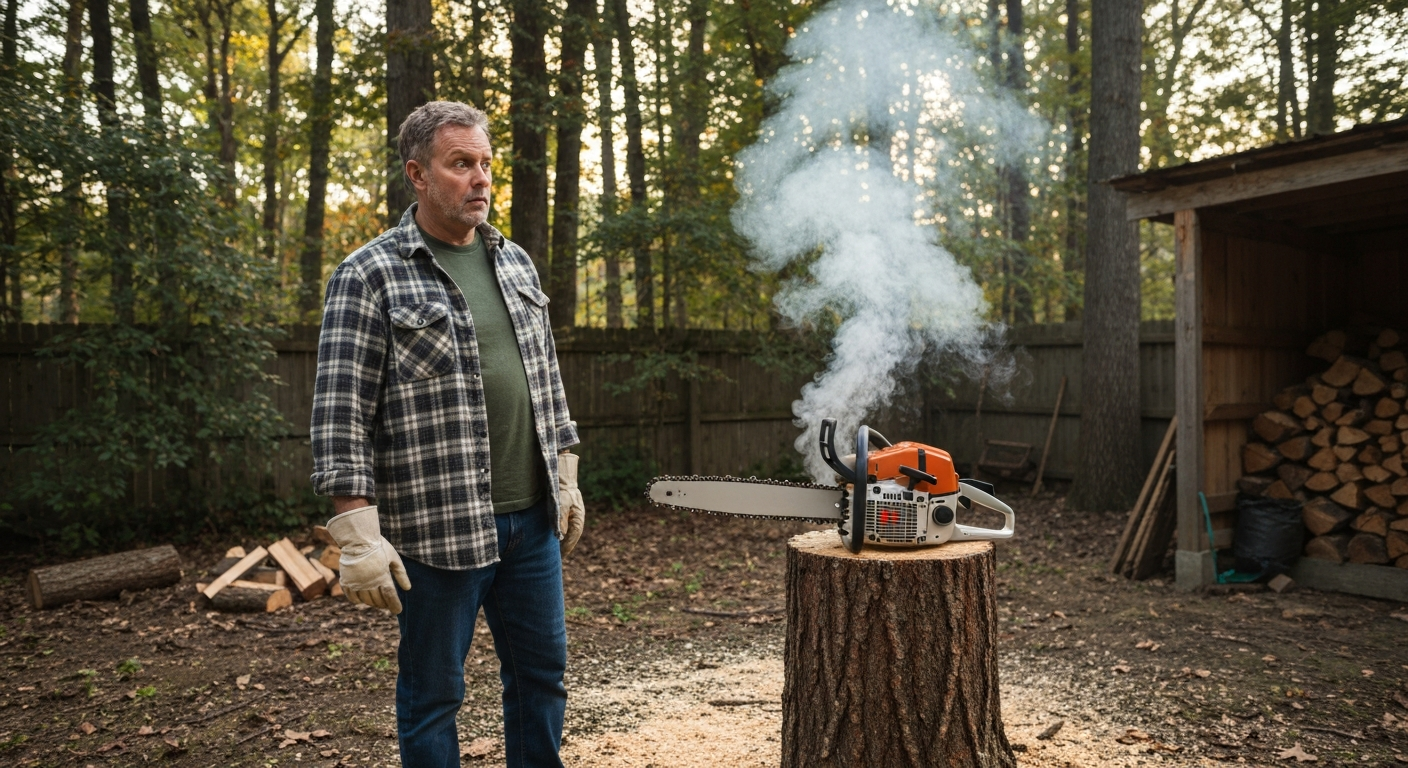

A smoking chainsaw typically signals one of five issues: an incorrect fuel-to-oil ratio, a clogged air filter, a dull or improperly tensioned chain, inadequate bar oil, or engine problems like worn piston rings — identifying the smoke color (white, blue, or black) tells you exactly where to look first.
Seeing smoke pour from your chainsaw mid-cut is alarming, but it's your saw's way of telling you something needs attention. White smoke usually points to fuel mixture problems, blue smoke indicates burning oil where it shouldn't be, and black smoke means the engine is running too rich. The good news: most causes are straightforward fixes you can handle yourself with basic tools and a few minutes of troubleshooting. Let's break down each cause, how to diagnose it, and what to do next.
| ✓Our Pick |
Search chainsaw parts, air filters, and bar oil on Amazon You'll wonder why you didn't try this sooner — practical, well-reviewed, and easy to get started. See on Amazon → |
The color of the smoke is your most reliable diagnostic clue — white, blue, and black smoke each point to different systems in your chainsaw.
Before diving into fixes, take a moment to observe the smoke carefully. Where is it coming from? The exhaust, the bar and chain area, or the engine housing? What color is it? This 30-second observation will save you significant troubleshooting time.
| Smoke Color | Primary Location | Most Likely Cause | Urgency |
|---|---|---|---|
| White/gray | Exhaust | Incorrect fuel mix, water in fuel, cold start | Low to medium |
| Blue | Exhaust | Oil burning in combustion chamber | Medium to high |
| Black | Exhaust | Rich fuel mixture, clogged air filter | Medium |
| White/gray | Bar and chain | Insufficient bar oil, dull chain | High — stop immediately |
Smoke from the bar and chain area is different from exhaust smoke and requires immediate attention to prevent permanent damage to your guide bar.
Two-stroke chainsaws require a precise fuel-to-oil mix — too much oil causes white or blue exhaust smoke, while too little oil causes serious engine damage.
Chainsaws run on a mixture of gasoline and two-stroke oil, and the ratio matters enormously. Most modern chainsaws require a 50:1 ratio (2.6 oz of oil per gallon of gas), though some older models need 40:1. Getting this wrong is one of the most common causes of chainsaw smoke.
Too much oil in the mix produces excessive white or bluish smoke from the exhaust. The engine will still run, but you'll notice reduced power, fouled spark plugs, and carbon buildup over time. Too little oil is far more dangerous — you may not see smoke immediately, but you're starving the engine of lubrication, which leads to scoring on the cylinder walls and eventual seizure.
How to fix it:
- Drain the fuel tank completely
- Mix fresh fuel using the exact ratio specified in your owner's manual
- Use quality two-stroke oil designed for air-cooled engines
- Never use automotive oil or marine two-stroke oil
- Mix only what you'll use within 30 days — old fuel causes problems
"Pre-mixed fuel eliminates ratio guesswork and stays fresh far longer than pump gas mixtures. For occasional users, it's worth the extra cost." — Greg Munson, Senior Editor at Popular Mechanics
A dirty or clogged air filter restricts airflow to the carburetor, creating a rich fuel condition that produces black smoke and poor performance.
Your chainsaw's air filter prevents sawdust, dirt, and debris from entering the carburetor and engine. Over time — especially if you're cutting frequently or working in dusty conditions — this filter becomes clogged. When airflow is restricted, the fuel-to-air ratio shifts too rich, meaning there's more fuel than can be properly combusted.
The result is black, sooty smoke from the exhaust, along with sluggish performance, difficulty starting, and increased fuel consumption. In severe cases, the engine may stall repeatedly or refuse to reach full throttle.
How to diagnose and fix:
1. Remove the air filter cover (usually one or two screws or a twist-off cap)
2. Inspect the filter — hold it up to light; if you can't see through it, it's too dirty
3. For foam filters: wash with warm soapy water, rinse thoroughly, let dry completely, then apply a light coat of filter oil
4. For paper filters: tap out loose debris or replace entirely (paper filters aren't washable)
5. Clean the filter housing before reinstalling
Check your air filter every 5–10 hours of use, or more frequently in dusty conditions. A clean filter costs a few dollars; engine repairs cost hundreds.
Also Read: Why Is My Wood Stove Smoking? 7 Causes & How to Fix It
A dull chain or incorrect chain tension creates friction against the guide bar, producing smoke and heat from the bar area — not the exhaust.
If the smoke is rising from your guide bar rather than the exhaust, you're dealing with a friction problem. This is a "stop cutting immediately" situation because continued use can permanently warp your guide bar or destroy the chain.
A dull chain can't bite into wood effectively. Instead of cutting, it rubs and generates heat through friction. You'll notice fine sawdust (rather than chips), the saw pulling to one side, and the need to force the saw through cuts. All that friction produces smoke and can cause the bar to glow red if you persist.
Chain tension matters too. An overtightened chain increases friction against the bar rails. An undertightened chain can jump off the bar or wear unevenly. The correct tension allows you to pull the chain slightly away from the bar (about 1/8 inch) while the drive links stay engaged in the groove.
Signs your chain needs sharpening:
- Producing sawdust instead of chips
- Needing to push hard to make cuts
- Saw pulling to the left or right
- Smoke or burning smell from the bar
- Chainsaw bouncing or chattering
How to fix:
- Sharpen the chain using a round file matched to your chain's pitch (check your manual)
- File each cutter at the correct angle (typically 30°)
- Maintain consistent file strokes on each tooth
- Check and adjust depth gauges with a flat file and gauge tool
- Adjust tension with the bar tensioning screw — follow your model's procedure
If the chain has been run dull for extended periods, it may be damaged beyond sharpening and need replacement.
Insufficient bar and chain oil causes metal-on-metal friction, producing white smoke from the guide bar and potentially ruining both the bar and chain in minutes.
Chainsaws have a separate oiling system that continuously lubricates the bar groove and chain as you cut. This system is completely independent from the fuel mixture — it's a dedicated oil tank and pump. When this system fails or runs dry, friction builds rapidly.
Common causes of bar oil problems include:
- Empty oil tank — the most obvious cause, easily overlooked
- Clogged oil ports — sawdust and resin can block the oil outlet hole on the bar
- Failed oil pump — the automatic oiler may have failed
- Wrong oil viscosity — using motor oil or other substitutes that don't flow correctly
- Blocked oil channel — debris in the chainsaw body preventing oil from reaching the bar
How to diagnose:
1. With the chainsaw running, hold the bar tip a few inches above a piece of cardboard or light-colored wood
2. Rev the engine for a few seconds
3. You should see a line of oil spray from the chain — if not, the oiling system isn't working
How to fix:
- Refill the bar oil tank with proper bar and chain oil
- Clean the oil outlet hole on the guide bar with a small wire or pick
- Clean the oil channel in the chainsaw body
- If the pump has failed, it will need replacement
"Bar and chain oil is specifically formulated to be 'tacky' — it sticks to the chain at high speed rather than flinging off immediately. Regular motor oil lacks this property and won't protect your equipment properly." — Stihl Technical Support
Blue smoke from the exhaust — especially in a saw with correct fuel mix — often indicates worn piston rings, scored cylinders, or damaged crankshaft seals allowing oil into the combustion chamber.
If you've verified your fuel mixture is correct but still see blue, oily smoke, internal engine wear is the likely culprit. Two-stroke engines are lubricated by oil mixed with fuel, but that oil is supposed to burn off during combustion. When internal seals or rings fail, extra oil enters the combustion chamber and produces excessive blue smoke.
Common internal causes:
- Worn piston rings — allow oil past the piston into the combustion chamber
- Scored cylinder walls — usually from running with insufficient oil in the past
- Damaged crankshaft seals — allow air leaks that disrupt the fuel-air mixture
These repairs are generally not DIY-friendly and often cost more than the saw is worth. A compression test can help determine if internal damage is the issue — a healthy chainsaw should show 120–180 PSI of compression.
If your saw is relatively new and under warranty, contact the manufacturer. If it's an older, well-used saw showing these symptoms, it may be time to consider replacement.
Follow this systematic approach to identify and fix your smoking chainsaw efficiently.
| Step | Check This | What to Look For | Action |
|---|---|---|---|
| 1 | Smoke location | Bar area vs. exhaust | Bar smoke = lubrication/chain issue; exhaust smoke = fuel/engine issue |
| 2 | Smoke color | White, blue, or black | White = fuel mix; blue = oil burning; black = rich mixture |
| 3 | Bar oil level | Tank level and oil spray test | Refill and clean oil ports if needed |
| 4 | Chain condition | Sharpness and tension | Sharpen or replace chain; adjust tension |
| 5 | Air filter | Cleanliness | Clean or replace filter |
| 6 | Fuel mixture | Age and ratio | Drain and mix fresh fuel at correct ratio |
| 7 | Compression | PSI reading | Low compression indicates internal damage |
Work through these steps in order — the first few checks take seconds and catch the most common problems.
Also Read: Why Is My Hyundai Sonata Not Starting? 9 Causes & Fixes
Some chainsaw problems require professional repair — know when to stop troubleshooting and take the saw to a dealer.
Not every smoking chainsaw can be fixed with simple maintenance. Here are signs you should stop using the saw and consult a professional:
For high-quality saws (Stihl, Husqvarna, Echo), professional repair may be worthwhile. For budget saws or older units, the repair cost often exceeds replacement cost.
A smoking chainsaw is almost always fixable if you catch the problem early — identify the smoke color and location, then work through fuel mixture, air filter, chain condition, and bar lubrication before assuming the worst. Most issues are simple maintenance problems that take minutes to resolve, but ignoring bar-area smoke can destroy your equipment in a single cutting session.
Bar smoke (as opposed to exhaust smoke) indicates a friction problem between the chain and guide bar. The most common causes are insufficient bar oil, a dull chain that rubs instead of cuts, or an overtightened chain creating excess drag. Stop cutting immediately, check your oil tank level, test oil flow with the cardboard spray test, and inspect your chain for sharpness and correct tension.
While motor oil will technically lubricate, it's not recommended. Bar and chain oil contains tackifiers that help it cling to the chain at high speeds. Motor oil flings off too easily, leaving the bar and chain under-lubricated. It also doesn't have the same viscosity characteristics in varying temperatures. Using the wrong oil may void your warranty and will definitely shorten your equipment's lifespan.
Hardwood requires more effort from your saw, which generates more heat. A slightly dull chain that performs adequately on softwood may produce smoke when cutting dense hardwoods like oak or hickory. The chain can't bite as effectively, creating friction. Make sure your chain is freshly sharpened and your bar oil tank is full before tackling hardwood projects.
White smoke from the exhaust typically indicates excess oil in the fuel mixture or moisture in the fuel — neither is immediately dangerous, but both should be corrected. White smoke from the bar area is more concerning as it indicates friction that can damage your equipment. The smoke itself isn't toxic beyond normal exhaust fumes, but you should work in ventilated areas regardless.
As a general rule, sharpen your chain after every 2–3 hours of active cutting, or whenever you notice fine sawdust instead of chips, increased cutting effort, or the saw pulling to one side. Cutting dirty wood, hitting the ground, or contacting rocks or metal will dull your chain almost instantly and require immediate sharpening.
Reviewed and Updated on June 12, 2026 by George Wright