
Health
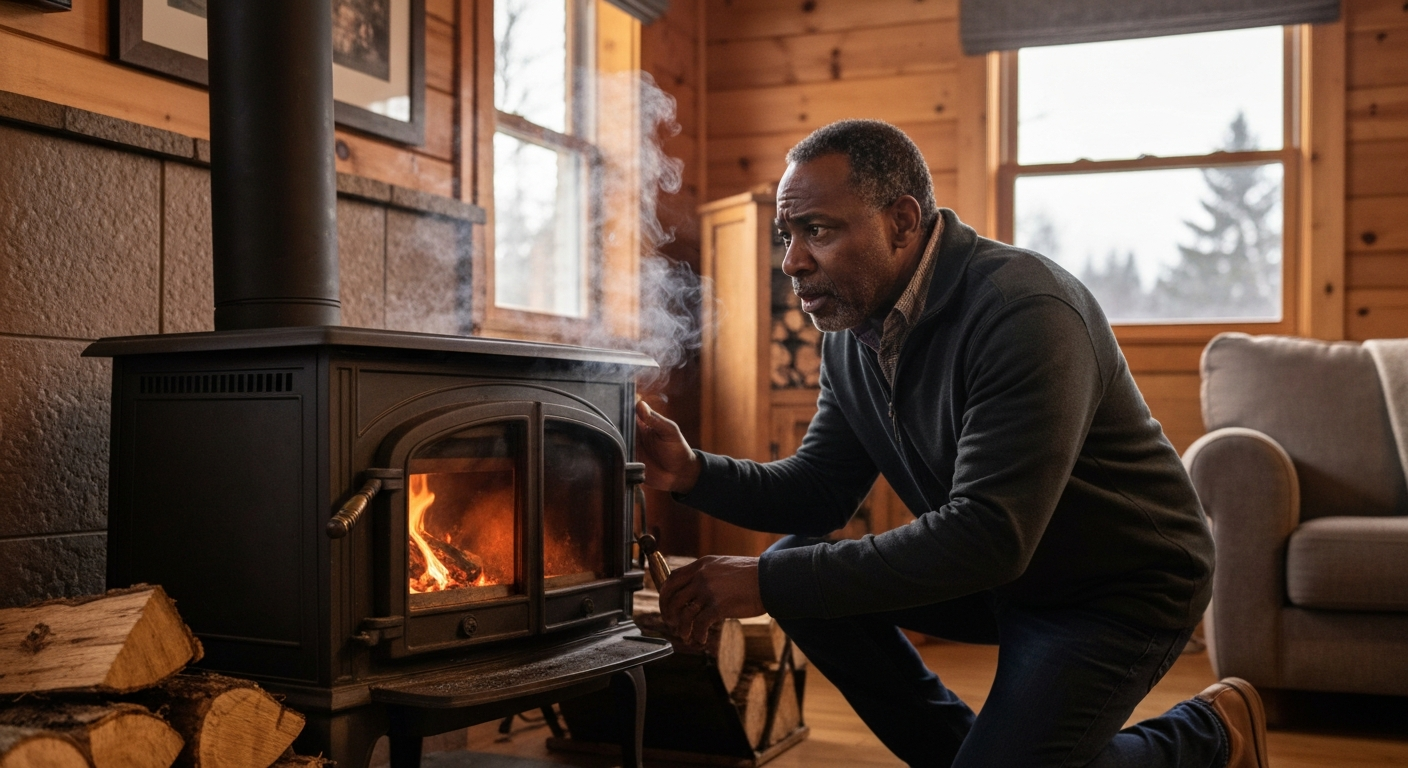

A smoking wood stove is almost always caused by insufficient draft—the chimney isn't pulling air upward strongly enough to carry smoke out of your home, so it spills back into the room through the door, vents, or gaps in the stove body.
The most common culprits behind poor draft include a cold chimney that hasn't warmed up yet, a blocked or dirty flue, wet or unseasoned firewood, negative air pressure inside your home, and an improperly sized or installed chimney. The good news: most of these problems have straightforward fixes you can handle yourself, and identifying the root cause is half the battle.
Draft is the invisible engine of your wood stove—it's the upward flow of air created when hot gases rise through the chimney, pulling fresh oxygen into the firebox and carrying smoke safely outside.
When you light a fire, the combustion process heats the air inside the stove. Hot air is less dense than cold air, so it rises naturally. As this hot air travels up the chimney, it creates a low-pressure zone inside the firebox, which pulls fresh air in through the stove's air intake. This continuous cycle keeps the fire burning and the smoke flowing in the right direction—up and out.
Draft fails when something disrupts this cycle. If the chimney is cold, the air inside it is heavy and resists rising. If the flue is blocked, smoke has nowhere to go. If your house is sealed too tightly, there's not enough makeup air to replace what the chimney is trying to pull out. Understanding this basic physics helps you troubleshoot systematically rather than guessing.
"A properly functioning chimney should produce a draft of at least 0.04 to 0.06 inches of water column when the stove is operating at normal temperatures." — Chimney Safety Institute of America
Most wood stove smoke-back problems trace to one of seven root causes—identify which one applies to your situation, and you're halfway to solving it.
A cold chimney is the number-one reason wood stoves smoke when you first light them. The column of cold, dense air sitting in an unheated flue acts like a plug, blocking the warm smoke from rising. This is especially common in exterior chimneys (those running up the outside of your house), which lose heat rapidly in winter, and in chimneys that haven't been used in several days.
The solution is to warm the flue before building your main fire. Hold a lit piece of newspaper or a small propane torch near the flue opening for 60 to 90 seconds. You'll feel the draft reverse as the warm air begins to rise. Only then should you light your kindling.
Wood with high moisture content produces excessive smoke because the fire spends energy evaporating water instead of generating heat. Properly seasoned firewood should have a moisture content below 20 percent. Fresh-cut "green" wood can contain 50 percent moisture or more—it hisses, steams, and smokes heavily.
Test your wood with a moisture meter (inexpensive and available at any hardware store) or check for these signs of dry wood: cracks radiating from the center of the log ends, bark that peels off easily, and a hollow sound when you knock two pieces together. If your wood is wet, the only real fix is to let it dry for another 6 to 12 months under cover.
Creosote buildup, bird nests, leaves, and even collapsed liner sections can partially or fully obstruct your chimney. A partial blockage restricts airflow enough to cause smoke spillage, especially during startup. A complete blockage is a fire hazard and will fill your home with smoke almost immediately.
The National Fire Protection Association recommends annual chimney inspections and cleaning. If you haven't had your chimney swept in the past 12 months—or if you burn frequently—schedule a professional inspection. You can also shine a flashlight up the flue with the damper open; you should see daylight (or stars) at the top.
Modern homes are built tighter than ever for energy efficiency, but this creates a problem for wood stoves. Exhaust fans (kitchen range hoods, bathroom fans), clothes dryers, and even furnaces all push air out of your home. If there's no easy path for replacement air to enter, your house develops negative pressure—and the path of least resistance for makeup air becomes your chimney.
When this happens, air flows down the chimney instead of up, pushing smoke into your living space. The fix is to crack a window near the stove (within six feet) when you first light it, or to install a dedicated makeup air vent that brings outside air directly to the stove area.
Also Read: Why Is My Fireplace Smoking? 7 Causes & Fixes
Chimney height and position relative to your roofline directly affect draft performance. The general rule is that your chimney should extend at least three feet above the point where it penetrates the roof and be at least two feet taller than any structure within ten feet (this is called the 3-2-10 rule).
A chimney that's too short doesn't generate enough natural draft. A chimney near a taller roof section, dormer, or neighboring building can experience downdrafts when wind hits those structures and pushes air downward. If you suspect this issue, consult a certified chimney professional—adding height with an extension or relocating the termination cap may be necessary.
This sounds obvious, but it's worth checking: is your stove's damper fully open? Some stoves have multiple dampers (a throat damper near the firebox and a top damper at the chimney cap), and if either is closed or stuck, smoke can't escape properly.
Dampers can warp from heat over time or become jammed with creosote deposits. Inspect yours visually and operate it by hand to ensure it moves freely through its full range. A damper that only opens 50 percent restricts draft by more than 50 percent because airflow follows exponential rather than linear rules.
The rope gasket around your stove door creates an airtight seal that forces combustion air to enter only through the designated air intake. When this seal deteriorates, cracks, or pulls away from the door, air leaks in uncontrollably—and smoke leaks out.
Check your door seal by sliding a dollar bill between the door and the stove body with the door latched. Pull the bill out; you should feel significant resistance. If it slides out easily, the gasket needs replacing. This is a DIY-friendly repair: peel off the old gasket, clean the channel with a wire brush, and press new fiberglass rope gasket into place with high-temperature adhesive.
| Symptom | Most Likely Cause | First Fix to Try |
|---|---|---|
| Smoke only when first lighting | Cold chimney | Warm the flue with newspaper before lighting |
| Smoke with hissing, steaming wood | Wet/unseasoned firewood | Check moisture content; switch to dry wood |
| Smoke worse on windy days | Downdraft from roof/structures | Install a wind-resistant chimney cap |
| Smoke when kitchen fan runs | Negative house pressure | Crack a window near the stove |
| Constant light smoke from door edges | Failed door gasket | Replace fiberglass rope seal |
| Heavy smoke, poor combustion | Blocked or dirty flue | Schedule professional chimney sweep |
| Smoke backs up when damper "open" | Stuck or warped damper | Inspect and repair/replace damper |
Start with the simplest fixes first—most smoking problems resolve with basic adjustments rather than expensive repairs.
Warm the flue before lighting. Roll a newspaper sheet into a loose tube, light one end, and hold it near the flue collar for 60 to 90 seconds. You'll feel the draft establish as warm air begins rising.
Check your firewood moisture. Use a moisture meter on a freshly split surface (not the outside of the log). Target readings below 20 percent. If your wood is wet, set it aside and source properly seasoned fuel.
Open a nearby window. Before and during startup, crack a window within six feet of the stove to supply makeup air. Once the fire is established and drawing well, you can close it.
Verify the damper position. Locate every damper in your system (stove damper, flue damper, chimney cap damper) and confirm each is fully open. Operate them by hand to check for sticking.
Inspect the door seal. Run your hand around the closed door's perimeter while the stove is cold. Feel for gaps or spots where the gasket is compressed flat. Replace if needed.
Schedule a chimney inspection. If the above steps don't solve the problem, hire a CSIA-certified chimney sweep to inspect for blockages, liner damage, or sizing issues.
| ✓Our Pick |
Search wood stove accessories and replacement parts Backed by strong customer feedback — the most recommended solution in forums and Q&A communities. See on Amazon → |
Prevention is cheaper and easier than troubleshooting—these habits keep your wood stove drafting cleanly all season.
"Creosote, a byproduct of wood combustion, accumulates in chimneys and is highly flammable. The NFPA recommends chimneys be inspected at least once a year." — National Fire Protection Association
Some smoking issues point to installation or structural problems that require expert assessment—don't ignore persistent symptoms.
Call a certified chimney professional if:
Chimney relining, height extensions, and makeup air systems are all viable solutions for stubborn cases—but they require professional diagnosis first. A CSIA-certified sweep can measure actual draft with a manometer and pinpoint exactly where the system is failing.
Also Read: Why Is My Fireplace Smoking? 7 Causes & Fixes
A smoking wood stove nearly always comes down to draft problems—the chimney isn't pulling smoke up and out effectively. The most common causes are a cold flue, wet firewood, blocked chimney, negative house pressure, insufficient chimney height, closed dampers, or a failed door seal. Start troubleshooting by warming the flue before lighting, checking your wood's moisture content, and cracking a window. If basic fixes don't work, schedule a professional chimney inspection to check for blockages or structural issues. With proper maintenance and burning habits, your wood stove should provide smoke-free heat all winter.
Opening the door disrupts the carefully balanced airflow inside your stove. If you swing it open quickly, room air rushes in faster than the chimney can compensate, momentarily reversing the draft and pushing smoke into your home. The fix is simple: before opening the door, fully open the air intake for 30 seconds to increase draft strength, then crack the door slightly and pause for a few seconds before opening it fully. This gradual approach lets the chimney adjust.
Wind creates turbulence at the top of your chimney, and if the chimney terminates near a roofline, dormer, or tree, wind can be deflected downward directly into the flue. This is called wind-induced downdraft. The solution is a wind-resistant chimney cap designed to block horizontal wind while still allowing smoke to escape vertically. Vacu-Stack and similar designs work well for chronically windy locations.
Yes. If your stove is significantly undersized for your chimney's diameter, the stove may not generate enough heat to create adequate draft velocity. The flue gases cool too quickly as they rise through an oversized chimney, losing buoyancy and potentially condensing as creosote. A chimney professional can assess whether a flue liner of reduced diameter would improve performance.
Temperature differentials drive draft—the greater the difference between indoor flue temperature and outdoor air temperature, the stronger the draft. In mild weather (spring and fall), outdoor temperatures may be 50°F to 60°F, providing much less natural draft than a 20°F winter day. You may need to warm the flue more aggressively and burn slightly hotter fires during shoulder seasons.
Signs of a blocked chimney include smoke filling the room immediately upon lighting, a fire that won't stay lit despite dry wood and open dampers, visible debris falling into the firebox, and unusual odors (animal waste from nests). Shine a flashlight up the flue with the damper open—you should see a clear path to daylight. If you see obstructions or aren't sure, schedule a professional inspection immediately.
Reviewed and Updated on June 11, 2026 by George Wright