Sleep
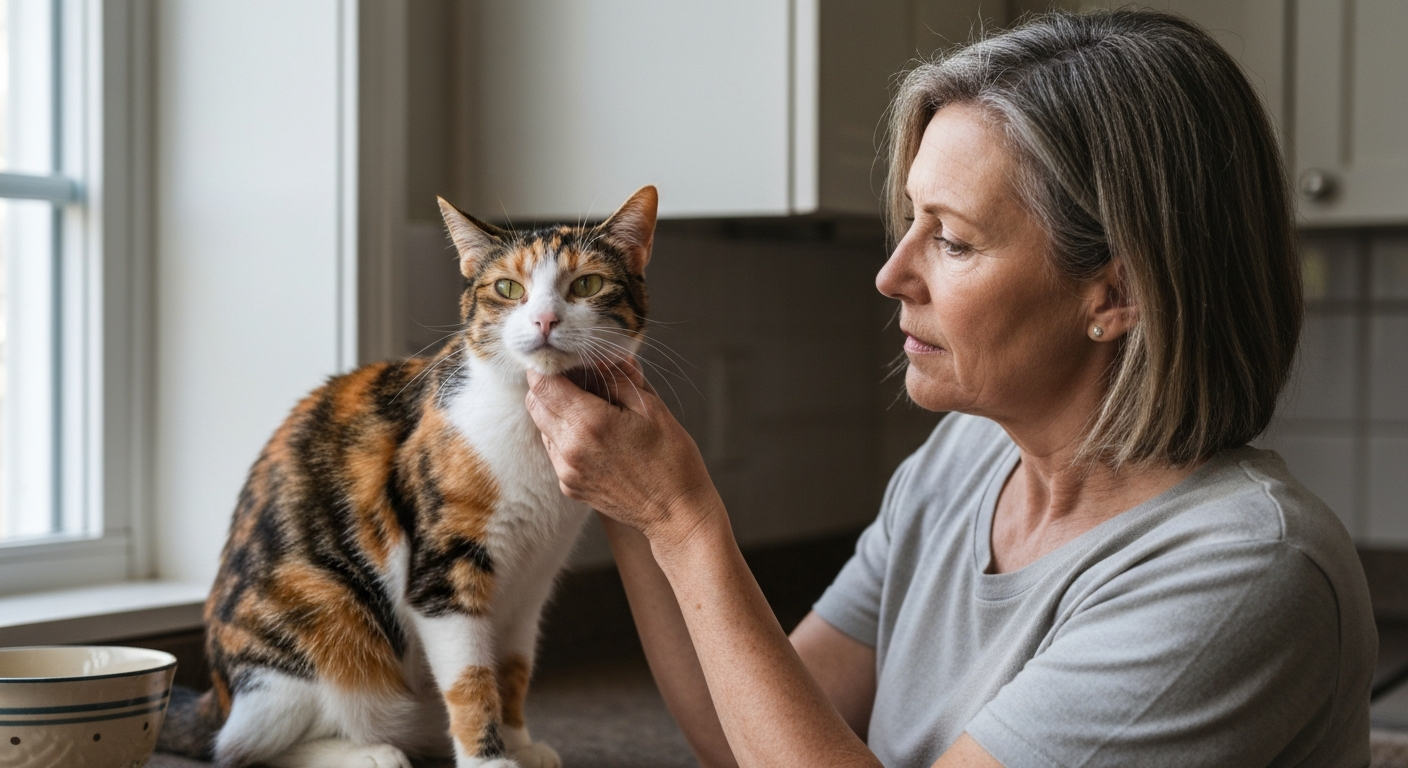

A swollen bottom lip on a cat usually signals an allergic reaction, a condition called eosinophilic granuloma complex, an insect sting, a dental abscess, a cut or bite wound, or—less commonly—a tumor, and you should contact your vet within 24 to 48 hours if the swelling doesn't go down on its own.
When you notice your cat's lip is swollen, your first instinct is probably to worry—and that's understandable. The good news is that most causes are treatable, especially when caught early. Below, you'll find the most common reasons for a puffy lower lip, how to tell them apart at home, and clear guidance on when a vet visit can't wait.
| ✓Our Pick |
Emergency vet fund with 24/7 online vet access for cats Consistently earns five-star reviews — reliable, well-supported, and genuinely effective. Learn More → |
The swelling is almost always caused by inflammation, and that inflammation has a trigger—whether it's an allergen, an infection, trauma, or abnormal cell growth.
Cats don't swell "for no reason." Their immune system is responding to something. Understanding the six most likely causes helps you narrow down what's happening with your cat.
Allergies are the single most common reason for lip swelling in cats. The allergen could be environmental (pollen, dust mites, mold), food-based (proteins in chicken, beef, fish, or dairy), or contact-related (plastic food bowls, cleaning products, certain fabrics).
Plastic food bowls deserve special attention. Many cats develop a condition informally called "plastic dish dermatitis" or "feline chin acne" from repeated contact with plastic. The material harbors bacteria and can leach chemicals that irritate sensitive feline skin. Switching to stainless steel or ceramic bowls often resolves the problem within two to three weeks.
Food allergies typically cause lip swelling alongside other symptoms: itchy ears, overgrooming, digestive upset, or small scabs around the head and neck. If your cat's lip swells repeatedly and you haven't changed anything in the environment, a food elimination trial may be the next step.
Eosinophilic granuloma complex (EGC) is a group of inflammatory skin conditions specific to cats. The lip form—often called a "rodent ulcer" or indolent ulcer—causes a distinctive raised, reddish-brown lesion, usually on the upper lip but sometimes the lower lip. The swelling can look alarming, almost crater-like.
"Eosinophilic granuloma complex is one of the most common causes of lip and oral lesions in cats. It is not contagious and is believed to be linked to allergic or immune-mediated reactions." — Cornell University College of Veterinary Medicine
EGC happens when a type of white blood cell (eosinophils) accumulates abnormally in the tissue. The underlying cause is often an allergy—most commonly to flea bites, but also to food or environmental triggers. Treatment typically involves corticosteroids or other immunosuppressive medications, and identifying the allergen prevents recurrence.
Bee stings, wasp stings, and spider bites cause rapid, localized swelling. If your cat was outside or near an open window and the swelling appeared suddenly—within minutes to a few hours—an insect is a likely culprit.
Insect-related swelling is usually soft, warm to the touch, and may be tender. You might see a small puncture wound at the center. Most stings resolve on their own within 24 to 48 hours. However, if you notice facial swelling spreading to the eyes or throat, difficulty breathing, vomiting, or collapse, this is an emergency—anaphylaxis in cats is rare but life-threatening.
An abscessed tooth can cause swelling that appears on the lip, chin, or jaw. The infection originates deep in the tooth root and creates a pocket of pus that pushes outward.
Signs that point to a dental cause include bad breath, drooling, reluctance to eat (especially hard food), pawing at the mouth, and visible redness or swelling in the gums. You may also notice your cat chewing on one side only. Dental abscesses require veterinary treatment—usually antibiotics and extraction of the affected tooth.
Cats are curious creatures. They investigate with their faces. A swollen lip can result from a cat fight bite, a scratch from another animal, a thorn, a sharp piece of kibble, or even bumping into furniture during a late-night sprint.
Bite wounds are particularly concerning because they often appear small on the surface but inject bacteria deep into the tissue. Within a day or two, an abscess can form. If the swelling is warm, increasing in size, or you see discharge, infection has likely set in.
Oral tumors in cats—both benign and malignant—can cause lip swelling. Squamous cell carcinoma is the most common oral cancer in cats and can appear as a mass on the lip, gum, or tongue.
Tumor-related swelling tends to grow slowly over weeks or months, doesn't respond to antihistamines or antibiotics, and may ulcerate or bleed. White cats and cats with sun exposure on their faces are at higher risk. Any unexplained mass that persists beyond two weeks warrants a biopsy.
A gentle at-home exam can help you gather useful information before you call the vet—but never force your cat or put yourself at risk of a bite.
Start when your cat is calm, perhaps after a nap or meal. Approach slowly and speak softly. Here's what to look for:
| What to Check | What You're Looking For | What It Might Mean |
|---|---|---|
| Color of the swelling | Pink, red, purple, or normal skin tone | Red or purple suggests inflammation or infection |
| Texture | Soft and squishy vs. firm and hard | Soft = fluid or allergic swelling; firm = abscess or mass |
| Temperature | Warm or hot vs. normal | Warmth indicates infection or active inflammation |
| Surface | Intact skin, open wound, ulcer, or crust | Wounds need cleaning; ulcers may be EGC |
| Discharge | Clear fluid, pus, blood, or none | Pus = infection; blood = trauma or tumor |
| Symmetry | One side only or both sides | One-sided = localized cause; both sides = systemic reaction |
| Pain response | Does your cat flinch or pull away? | Pain suggests abscess, injury, or dental issue |
Document what you find with photos and notes. Your vet will appreciate the information, especially if the swelling changes before your appointment.
Also Read: Why Is My Cat Sneezing Blood but Acting Normal? 7 Causes
| ✓Our Pick | ||
 | ||
Nextrition Pet — Premium Science-Backed Dog & Cat Food High-quality nutrition to support digestion, coat health, and energy.
|
Some symptoms alongside a swollen lip indicate an emergency that needs same-day attention—don't wait if you see any of the red flags below.
| 🐾Find a Vet |
Find a specialist vet near you VetClinic.info is a free directory of board-certified specialist vets across the US — find an orthopedic surgeon, oncologist, neurologist, or emergency clinic near you in seconds. Find Near You → |
Call your vet immediately or head to an emergency clinic if your cat shows:
"Facial swelling that progresses rapidly or is accompanied by respiratory distress should be treated as a medical emergency. Anaphylactic reactions, though uncommon in cats, can be fatal without prompt treatment." — American Association of Feline Practitioners
For non-emergency swelling that's stable and your cat is eating, drinking, and behaving normally, monitoring for 24 to 48 hours is usually reasonable. If the swelling hasn't improved—or has worsened—by then, schedule a vet visit.
Your vet will use a combination of physical exam, history, and diagnostic tests to pinpoint the exact cause—treatment depends on the diagnosis.
Expect your vet to ask about recent changes: new food, new litter, outdoor access, flea prevention status, contact with other animals, and how quickly the swelling appeared. From there, they may recommend:
| Diagnostic Test | What It Reveals |
|---|---|
| Fine needle aspirate (FNA) | Cells from the swelling—identifies infection, EGC, or tumor cells |
| Biopsy | Tissue sample for definitive diagnosis of masses or atypical lesions |
| Blood work | Overall health, infection markers, organ function |
| Allergy testing | Identifies environmental or food allergens (usually after ruling out other causes) |
| Dental X-rays | Tooth root abscesses, bone loss, or hidden dental disease |
| Culture and sensitivity | Identifies bacteria in infected wounds and which antibiotics will work |
The cost of these diagnostics varies widely by location and clinic, but budgeting $150 to $400 for an initial workup is realistic. Complex cases involving biopsies or specialist referrals can run higher.
Treatment matches the cause—allergies need allergen removal and antihistamines, infections need antibiotics, EGC needs steroids, and tumors need surgery or oncology referral.
Here's what treatment typically looks like for each cause:
Allergic reaction: Remove the suspected allergen (switch bowls, change food, increase flea prevention). Antihistamines like diphenhydramine may help, but always confirm the dose with your vet first—cat dosing is not the same as human dosing. Severe allergies may require a short course of corticosteroids.
Eosinophilic granuloma complex: Steroids (prednisolone) are the first-line treatment. Stubborn cases may need cyclosporine or other immunomodulators. Identifying and eliminating the underlying allergen—often fleas—prevents recurrence.
Insect stings: Most resolve without treatment. A cold compress (wrapped in cloth, applied for 5 minutes at a time) can reduce swelling. If the reaction is severe, your vet may give an injectable antihistamine or steroid.
Dental abscess: Antibiotics alone rarely cure an abscess. The infected tooth usually needs extraction. Pain medication and soft food help during recovery.
Bite wounds or trauma: Clean minor wounds with saline or diluted chlorhexidine. Deeper wounds or abscesses need veterinary drainage and antibiotics. Your cat may need an Elizabethan collar to prevent licking.
Tumors: Benign masses may be monitored or surgically removed. Malignant tumors require staging (to check for spread) and may involve surgery, radiation, or palliative care depending on the type and location.
Also Read: Why Is My Kitten Sneezing With Watery Eyes? 6 Causes & Fixes
Prevention focuses on reducing allergen exposure, maintaining dental health, and keeping your cat safe from bites and stings.
You can't prevent every cause, but these habits lower the risk:
A swollen bottom lip on your cat is usually caused by an allergic reaction, eosinophilic granuloma complex, an insect sting, a dental abscess, a wound, or a tumor. Most cases are treatable, especially with early intervention. Check your cat's lip gently at home, note the swelling's size and texture, and contact your vet within 24 to 48 hours if it doesn't improve. Seek emergency care immediately if swelling spreads rapidly, your cat has trouble breathing, or other serious symptoms appear.
One-sided swelling usually points to a localized cause—an insect sting, a bite wound, a dental abscess on that side of the mouth, or a mass. It's less likely to be a systemic allergic reaction, which tends to cause more symmetrical swelling. A one-sided lump that persists for more than a week should be examined by a vet.
Diphenhydramine (the active ingredient in Benadryl) is sometimes used in cats for allergic reactions, but the dose is different from the human dose, and some formulations contain xylitol or other ingredients toxic to cats. Never give any medication without calling your vet first to confirm the correct product and dose for your cat's weight.
It depends on the cause. Insect stings and mild allergic reactions often resolve within 24 to 72 hours. Eosinophilic granuloma lesions may take one to three weeks to improve with treatment. Abscesses need veterinary drainage and antibiotics; swelling decreases within a few days once treated. Tumors won't resolve on their own.
No. The most common causes—allergies, EGC, stings, and dental disease—are not contagious. If the swelling is due to a bacterial abscess from a bite wound, the infection itself isn't transmissible through casual contact, though bite wounds between cats can spread bacteria. Always wash your hands after handling any wound.
Intermittent swelling strongly suggests an allergic cause. Your cat is likely encountering the allergen periodically—this could be a seasonal pollen, a particular food ingredient, or contact with something in the environment. Keeping a journal of when swelling appears can help you and your vet identify the trigger.
Reviewed and Updated on June 16, 2026 by George Wright