Sleep

Your kitten is likely sneezing with a watery eye because of an upper respiratory infection (URI), which is the most common cause in young cats and typically involves viruses like feline herpesvirus or calicivirus that inflame the nasal passages and tear ducts simultaneously.
| ✓Our Pick |
Emergency vet fund for sudden kitten illness — $3,000 coverage + 24/7 online vet Save yourself the frustration — a proven solution with consistently positive feedback from real buyers. Learn More → |
Kittens have immature immune systems, which makes them especially vulnerable to infections that adult cats might fight off more easily. When you notice your kitten sneezing a lot alongside watery or gunky eyes, the symptoms are usually connected — the same pathogens that irritate the nasal passages also affect the eyes and surrounding tissues. While most cases resolve with proper care, some require veterinary attention to prevent complications like chronic eye damage or pneumonia.
The combination of sneezing and watery eyes in kittens almost always points to an infectious or environmental cause affecting both the respiratory tract and the eyes at once.
Kittens adopted from shelters, pet stores, or multi-cat households are at highest risk because these pathogens spread rapidly in close quarters. Understanding the specific cause helps you know whether home care is enough or a vet visit is urgent.
Feline herpesvirus type 1 is the single most common cause of sneezing and eye discharge in kittens. This virus specifically targets the upper respiratory tract and the conjunctiva (the membrane lining the eyelids and covering the white of the eye). Once infected, cats carry the virus for life, though most remain healthy after the initial illness passes.
"Feline herpesvirus type 1 (FHV-1) is the most common cause of upper respiratory disease and ocular disease in cats, and most cats are exposed to FHV-1 at some point in their lives." — Cornell Feline Health Center
Symptoms of FHV-1 include frequent sneezing, clear or cloudy eye discharge that may become crusty, squinting, redness around the eyes, and sometimes fever or loss of appetite. Kittens may develop corneal ulcers (open sores on the eye surface) if the infection is severe, which requires immediate veterinary treatment.
Feline calicivirus (FCV) is the second most common respiratory pathogen in cats. It causes similar symptoms to herpesvirus but often includes mouth ulcers on the tongue or gums, which can make eating painful. Calicivirus tends to cause more respiratory symptoms than eye symptoms, but watery eyes still occur in many cases.
You might notice your kitten drooling, refusing food, or pawing at her mouth alongside the sneezing and eye discharge. The virus spreads through direct contact, shared food bowls, and contaminated surfaces.
Bacterial infections often occur alongside viral infections, making symptoms worse and prolonging illness. Chlamydia felis and Bordetella bronchiseptica are two bacteria commonly found in kittens with respiratory symptoms. Chlamydia felis in particular causes severe eye inflammation with thick, yellowish discharge and swollen eyelids.
"Chlamydophila felis (formerly known as Chlamydia psittaci var felis) is a major cause of conjunctivitis and upper respiratory infection in cats." — UC Davis Koret Shelter Medicine Program
Bacterial infections typically require antibiotic treatment — either eye drops, oral medication, or both — so a vet visit becomes necessary if discharge turns thick, green, or yellow.
Yes, but allergies are far less common in kittens than infections. Environmental allergens like dust, pollen, mold spores, scented litter, air fresheners, or cigarette smoke can irritate a kitten's sensitive airways and eyes. Allergies typically cause:
If your kitten acts completely normal aside from the sneezing and clear eye watering, and the symptoms started after a change in environment (new litter, cleaning products, home renovation), allergies are possible. However, infections should be ruled out first, especially in kittens under six months old.
Foreign objects like dust particles, carpet fibers, or grass blades can lodge in a kitten's nasal passages or under an eyelid. This typically causes sudden-onset symptoms affecting one side only — one runny eye, sneezing with one nostril appearing blocked, or pawing at one side of the face.
If symptoms are one-sided and started abruptly after outdoor play or exploration, gently examine the eye for visible debris. Do not attempt to remove anything embedded in the eye yourself — this requires a vet.
Distinguishing between causes requires looking at the type of discharge, whether symptoms are one-sided or both sides, and what other symptoms accompany the sneezing and watery eyes.
| Symptom | Likely Cause | Action |
|---|---|---|
| Clear, watery discharge from both eyes + sneezing | Early viral infection or allergies | Monitor for 24–48 hours, keep kitten comfortable |
| Thick, yellow/green discharge from eyes | Bacterial infection (secondary or primary) | Vet visit within 24 hours for antibiotics |
| One eye affected, sudden onset | Foreign body or injury | Vet visit same day |
| Mouth ulcers + sneezing + eye discharge | Calicivirus | Vet visit within 24 hours |
| Severe swelling, eye held shut | Severe infection or corneal ulcer | Emergency vet visit |
| Sneezing without eye symptoms | Mild irritant or very early infection | Monitor closely |
| Fever, lethargy, not eating | Systemic infection | Vet visit same day |
Most mild upper respiratory infections in kittens resolve within 7–14 days with supportive care, but you need to keep airways clear, encourage eating, and watch for worsening symptoms.
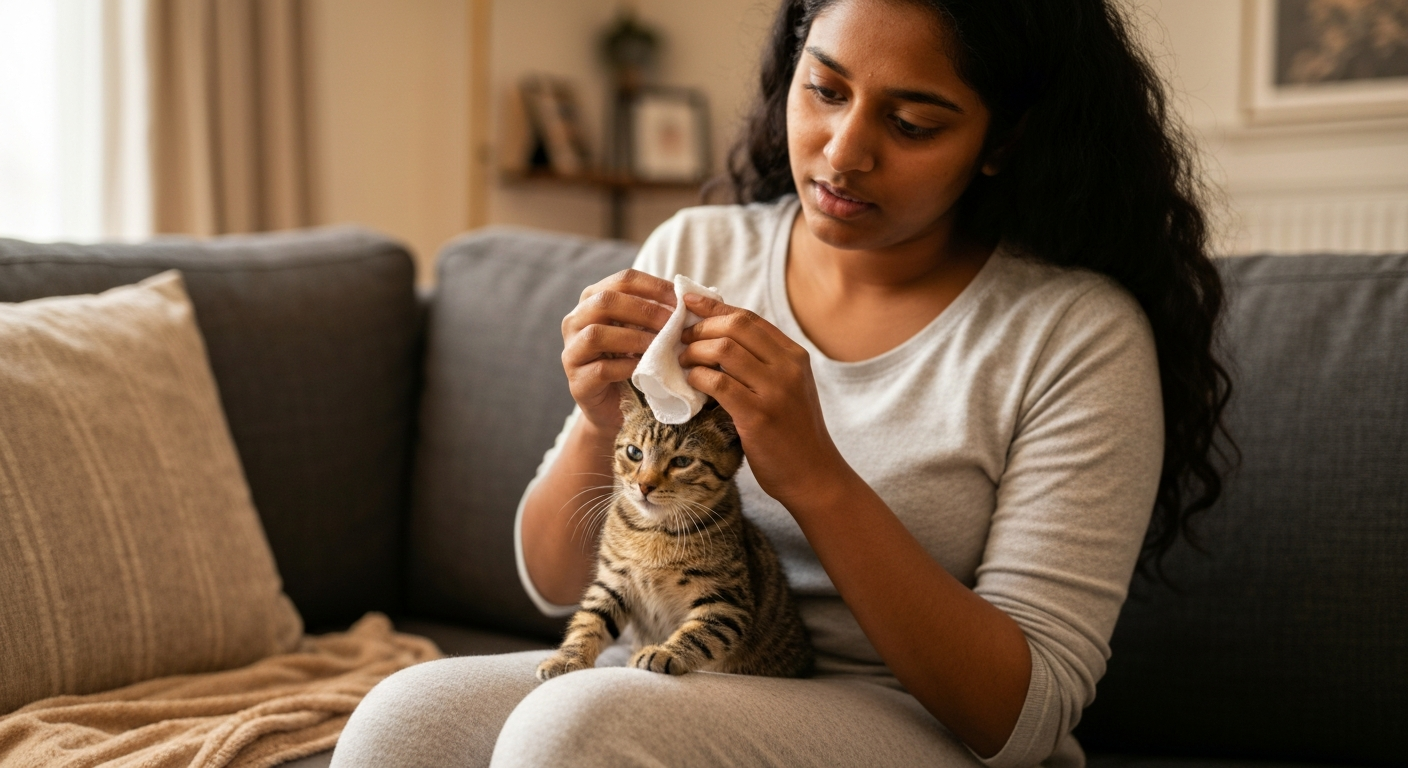
Gently wipe away discharge from your kitten's eyes and nose several times daily using a warm, damp cotton ball or soft cloth. Use a separate cloth for each eye to avoid spreading infection between them. Crusty buildup blocks the tear ducts and makes breathing difficult, so staying on top of this helps your kitten recover faster.
Running a cool-mist humidifier in the room where your kitten rests helps loosen nasal congestion. Alternatively, bring your kitten into the bathroom while you run a hot shower for 10–15 minutes (do not put the kitten in the shower). The steam helps open airways.
Congested kittens cannot smell their food well, which kills their appetite. Warm up wet food slightly in the microwave (test the temperature first) to release aromas that entice eating. Offer strong-smelling foods like plain cooked chicken or baby food without onion or garlic. Dehydration worsens illness, so ensure fresh water is always available, and consider adding low-sodium chicken broth to their water bowl.
Also Read: Why Is My Pregnant Cat Bleeding? 7 Causes & When to Act
If you have other cats in the household, keep your sick kitten in a separate room with their own food bowls, water, and litter box. Wash your hands thoroughly after handling the sick kitten before touching other pets. Most feline respiratory pathogens spread through direct contact and sneeze droplets.
Never give your kitten over-the-counter cold medicines, decongestants, or eye drops meant for humans. Many common human medications are toxic to cats. Only use medications prescribed or recommended by your veterinarian.
While mild sneezing with clear watery eyes can often be managed at home initially, certain symptoms require professional veterinary care within 24 hours or sooner.
| 🐾Find a Vet |
Find a specialist vet near you VetClinic.info is a free directory of board-certified specialist vets across the US — find an orthopedic surgeon, oncologist, neurologist, or emergency clinic near you in seconds. Find Near You → |
Take your kitten to the vet if you notice:
| ✓Our Pick | ||
 | ||
Premium science-backed kitten food for immune support A well-reviewed choice that delivers real results — worth every penny for anyone dealing with this.
|
Very young kittens (under 8 weeks) have minimal immune reserves and can decline rapidly, so any respiratory symptoms in neonatal kittens warrant same-day veterinary attention.
Your veterinarian will examine your kitten's eyes, nose, mouth, and chest to determine the cause and severity of infection, then prescribe appropriate treatment.
Expect the vet to:
Most kittens recover fully with appropriate treatment. Severe cases may require hospitalization for IV fluids, oxygen support, or intensive nursing care.
Vaccination, good hygiene, and minimizing stress are the three pillars of preventing upper respiratory infections in kittens.
The FVRCP vaccine protects against feline herpesvirus, calicivirus, and panleukopenia. Kittens typically receive this vaccine at 6–8 weeks, 10–12 weeks, and 14–16 weeks of age, with boosters throughout life. Vaccination doesn't completely prevent infection but significantly reduces severity and duration of illness.
Stress weakens the immune system and can trigger flare-ups in cats carrying herpesvirus. Provide a quiet, safe space for your kitten, especially during transitions like adoption or moving. Use pheromone diffusers (like Feliway) to help calm anxious kittens.
Regularly clean food and water bowls, wash bedding weekly, and scoop litter boxes daily. Good ventilation and moderate humidity help maintain healthy airways. Avoid smoking indoors and minimize use of heavily scented products around your kitten.
Kittens sneezing with watery eyes almost always have an upper respiratory infection caused by feline herpesvirus or calicivirus, often complicated by secondary bacterial infection. Mild cases with clear discharge can be managed at home with supportive care — keeping eyes and nose clean, encouraging eating, and adding humidity. However, thick or colored discharge, eye swelling, difficulty breathing, or refusal to eat requires prompt veterinary attention. Most kittens recover fully within 1–2 weeks with proper care, and completing the FVRCP vaccine series helps prevent future infections or reduces their severity.
Frequent sneezing without other symptoms often indicates a mild viral infection in its early stages or environmental irritation from dust, litter, or scents. If your kitten is eating, drinking, playing, and has clear (not thick) discharge, you can monitor at home for a few days. However, kittens can decline quickly, so watch for changes in appetite, energy level, or the color and consistency of any discharge.
A watery eye without redness or swelling usually indicates early-stage infection, mild irritation, or a partially blocked tear duct. Kittens sometimes have narrow tear ducts that cause overflow tearing without actual infection. If the discharge remains clear and your kitten shows no other symptoms, it may resolve on its own. Persistent watering for more than a week warrants a vet check to rule out duct abnormalities.
Feline respiratory viruses like herpesvirus and calicivirus do not infect humans — they are species-specific. However, some bacteria that cause respiratory symptoms in cats, like Bordetella bronchiseptica, can theoretically infect immunocompromised people in rare cases. Practice good hand hygiene after handling a sick kitten, but there's no need to isolate yourself from your pet.
Most uncomplicated upper respiratory infections resolve within 7–14 days with supportive care. Secondary bacterial infections may extend this timeframe. If symptoms persist beyond two weeks or worsen at any point, your kitten likely needs veterinary treatment. Kittens who develop chronic sneezing after an initial infection may carry herpesvirus and experience occasional flare-ups throughout life.
If your kitten is sneezing but otherwise healthy — eating well, playing normally, with clear discharge — you can monitor at home for 24–48 hours. However, kittens under 8 weeks old, kittens with thick or colored discharge, difficulty breathing, loss of appetite, lethargy, or eye abnormalities should see a vet promptly. When in doubt, a phone call to your vet can help you decide whether an appointment is needed.
Reviewed and Updated on June 16, 2026 by George Wright