Health
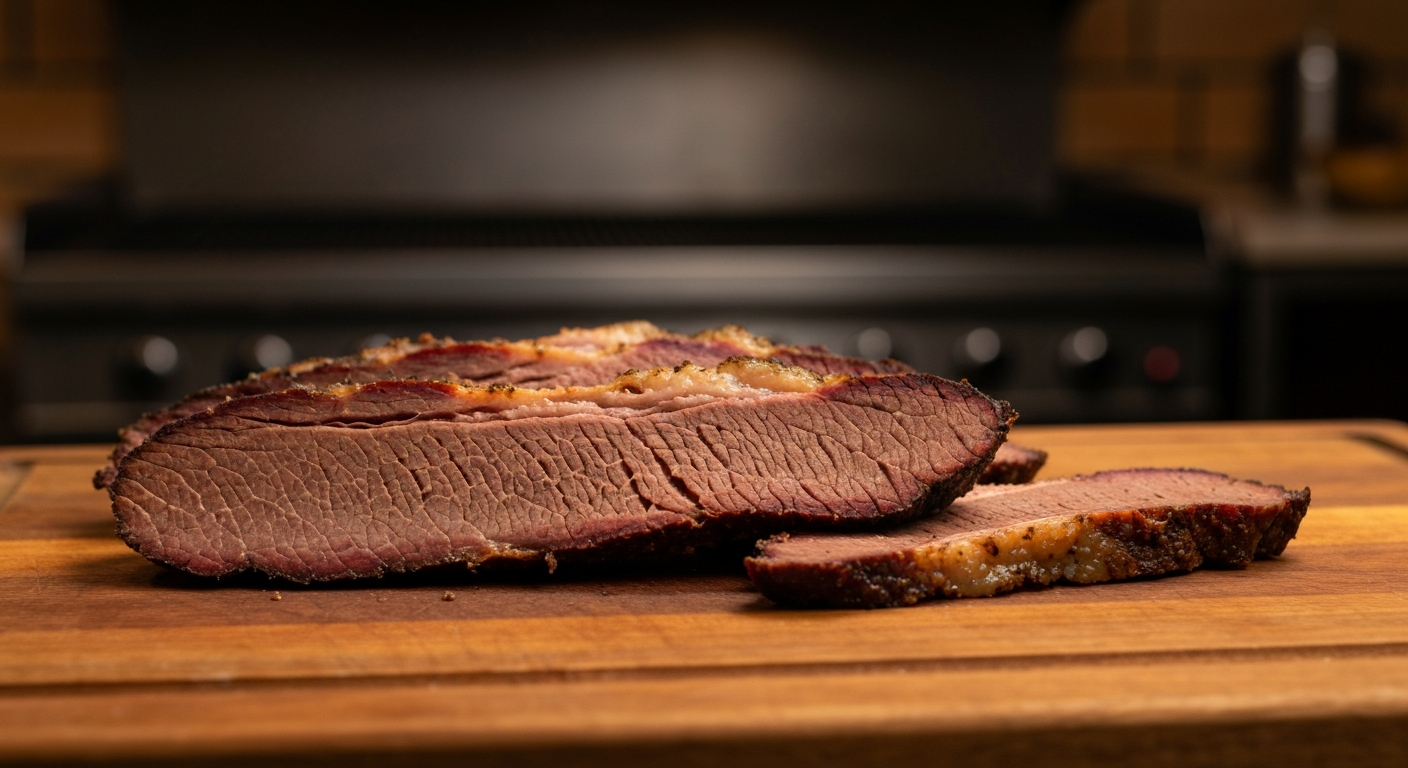

Dry brisket usually comes from one of three problems: using the lean flat cut instead of a full packer brisket, not wrapping through the stall to retain moisture, or not resting long enough before slicing. Temperature alone doesn't tell you when it's done — probe tenderness does.
| ✓Our Pick |
Instant-read meat thermometer for brisket and BBQ You'll wonder why you didn't try this sooner — practical, well-reviewed, and easy to get started. See on Amazon → |
Brisket is one of the hardest beef cuts to cook well because the flat muscle has minimal marbling — all the work falls on converting collagen to gelatin through long, low heat. Rush any part of that process or use the wrong cut, and you get dry, stringy meat.
A full packer brisket includes both the flat (the lean, rectangular muscle) and the point (the thick, heavily marbled deckle end). Many grocery stores sell only the flat — 4–6 lb portions that look tidy and manageable. The problem: the flat has minimal intramuscular fat. Without the point to baste it from within and without careful moisture management, flat-only briskets dry out.
Fix: Source a whole packer brisket (8–16 lbs) from a butcher or warehouse store. The higher price per pound is offset by significantly more forgiving results.
The fat cap on a brisket is the primary moisture protection layer. During a long smoke, the fat slowly renders and bastes the meat below. Trimming the fat cap below 1/4 inch removes this protection; trimming it completely guarantees a dry surface on the flat.
Fix: Trim to exactly 1/4 inch all over. Leave the thick fat pocket between the flat and point largely intact — it acts as an insulating moisture buffer throughout the cook.
The "stall" occurs around 160–170°F when evaporative cooling exactly offsets the heat entering the brisket, and the internal temperature stops rising for 2–6 hours. Many cooks panic and increase temperature. Others wait it out unwrapped. Both lead to moisture loss.
Wrapping in butcher paper or aluminum foil at the stall traps the moisture and fat that have been collecting on the meat's surface, turning the remaining cook into a gentle braise rather than a dry smoke.
Fix: Wrap tightly in pink butcher paper (for a firmer bark) or two layers of foil (for a softer, juicier result) when the internal temperature stalls. Don't open the wrap until the probe test passes.
Brisket cooked at 300°F+ can reach target temperature faster but doesn't give collagen time to fully convert to gelatin. The muscle fibers contract and wring out moisture faster than the collagen structure can soften to compensate. The result: meat that hits 200°F but is dry and crumbly, not moist and tender.
"Collagen conversion to gelatin is a time-and-temperature dependent process. At higher temperatures, muscle fiber contraction outpaces gelatin formation, squeezing moisture from the meat before the connective tissue has fully softened." — USDA Agricultural Research Service, Food and Nutrition Research
Fix: Keep pit temperature between 225–250°F throughout the cook. Higher temperatures work if you're using a hot-and-fast method (275–300°F with heavy wrapping), but this requires tight moisture management.
Brisket internal temperature varies based on the specific brisket, fat content, starting temperature, and smoker humidity. Two briskets cooked identically can be done at 198°F and 210°F respectively. Pulling a brisket at exactly 200°F because "that's the target" can produce dry, dense meat if the collagen hasn't converted.
Fix: Probe the thickest part of the flat with a toothpick or probe. It should feel like sliding into warm butter — almost no resistance. If you feel any firmness, the brisket isn't done regardless of what the thermometer says.
Brisket comes off the smoker with muscle fibers contracted from heat and juices forced to the center of the cut. Resting allows the fibers to relax and juices to redistribute. Slice immediately after pulling and most of those juices run onto the cutting board, not into the meat.
Fix: Wrap the brisket in foil, then in towels, and rest in a cooler (no ice) for a minimum of 1 hour. Competition pitmasters rest brisket 2–4 hours. The internal temperature holds above 145°F safely for several hours in this setup.
USDA Select brisket has significantly less marbling than USDA Choice, which has less than USDA Prime. Less marbling means the flat has less fat to compensate for moisture loss. If you've done everything right technically but the brisket is still dry, the beef grade may be the limiting factor.
Fix: Source USDA Choice or Prime brisket for smoking. The price difference is worthwhile for a 12+ hour cook.
If the damage is already done, here's how to salvage it:
Also Read: Why Is My Sourdough Starter Not Rising? 7 Causes & Fixes
Dry brisket comes down to four fixable problems: using flat-only instead of packer, not wrapping through the stall, pulling by temperature instead of by feel, and not resting before slicing. Wrap tightly in butcher paper at the stall, cook low and slow at 225–250°F, probe to a butter-soft feel rather than a specific number, and rest a minimum of one hour before cutting. Those four steps eliminate dry brisket on every cook.
Dry brisket from a low-and-slow cook is almost always caused by cooking past the stall without adding moisture, using the lean flat cut instead of the full packer, not resting the meat long enough, or trimming too much fat cap.
Brisket is done when it probes tender like soft butter — typically between 195°F and 210°F, but temperature alone is unreliable. Cook to feel, not just temperature.
Yes, partially. Slice and place in a roasting pan with beef broth, cover with foil, and warm at 275°F for 45–60 minutes. The steam rehydrates the surface fibers.
Yes — wrapping in butcher paper or foil around the stall traps steam and fat runoff, significantly reducing moisture loss compared to cooking unwrapped throughout.
The point has heavy marbling; the flat is lean with minimal fat. If you bought a flat-only brisket, dryness is almost unavoidable without careful moisture management. Full packer briskets are much more forgiving.
Reviewed and Updated on May 31, 2026 by Adelinda Manna