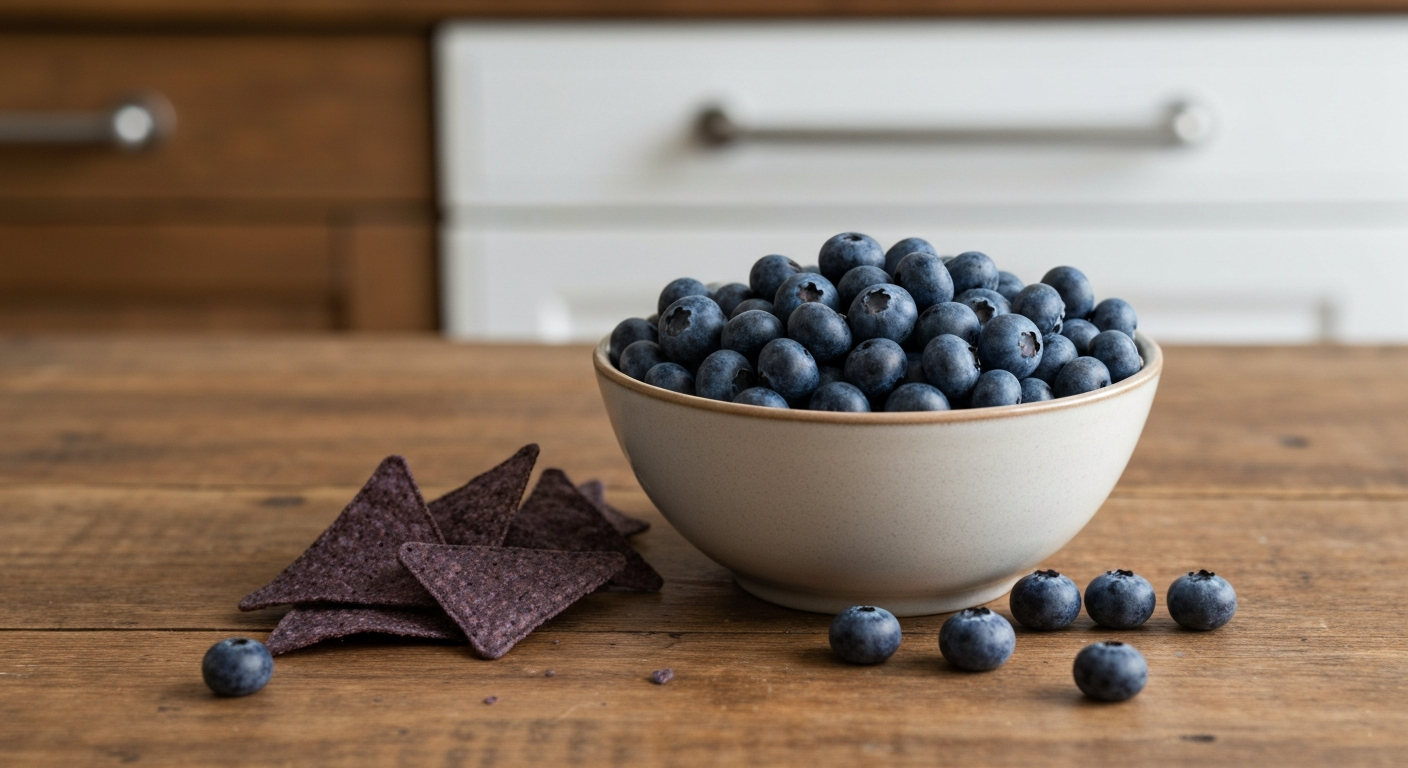
Blue poop is almost always caused by something you ate: blueberries, blackberries, blue or purple food dye, Grape Slurpees, or blue corn products. The pigment passes through the digestive tract unabsorbed and exits with the stool. It resolves in 1–2 days. The only exception that warrants concern is tarry, sticky black-blue stool — which indicates digested blood, not food coloring.
6 Reasons Your Poop Is Blue
Your colon is a pigment transfer system. Whatever enters that the body can't break down — including food dyes and natural fruit anthocyanins — exits with the waste and tints the stool. Most blue poop is a simple dye story.
Blueberries, Blackberries, and Acai
The most common cause. These fruits are packed with anthocyanins — water-soluble pigments that give them their deep blue-purple color. The human digestive system absorbs some anthocyanins in the small intestine but a significant portion passes through intact, exiting in the stool.
Blue or purple-tinted stool after a large serving of blueberries, a smoothie bowl, or acai is entirely normal. The effect is dose-dependent — a handful of blueberries may have no visible effect; a full cup with cereal and yogurt can produce unmistakably blue-green stool.
Resolves: Within 24–48 hours of stopping consumption.
Food Dyes (FD&C Blue No. 1 and No. 2)
Artificial food colorings are among the least-absorbed compounds in the human diet. FD&C Blue No. 1 (Brilliant Blue FCF), used in blue-frosted cupcakes, sports drinks, blue Gatorade, blue-flavored candies, and some medications, passes through the GI tract almost entirely unchanged.
A blue Slurpee, blue raspberry candy, or an electric-blue birthday cake can produce dramatically blue stool within 12–18 hours.
"Food dyes are generally recognized as safe by the FDA. However, some artificial colorants — including FD&C Blue No. 1 — are poorly absorbed and may be excreted in urine and feces, temporarily discoloring them." — FDA Color Additives Overview
Resolves: 24–48 hours.
Blue Corn Products
Blue corn tortillas, blue corn chips, and blue corn masa contain natural blue-purple pigments from the corn variety (a variety of anthocyanin). Unlike artificial dyes, blue corn pigment is a whole-food anthocyanin — same mechanism as blueberries.
Resolves: 24–48 hours.
Grape-Flavored Drinks and Candy
Grape-flavored products — particularly artificially colored grape soda, candy, popsicles, and Kool-Aid — use a combination of red and blue dyes that, when combined with bile in the digestive tract, can produce a blue-green stool color.
Resolves: 24–48 hours.
Fast Intestinal Transit + Green or Blue Foods
Normal stool is brown because bile (which starts out yellow-green) has time to oxidize and react with gut bacteria as food moves through the colon. When food moves too fast — from diarrhea, IBS, food intolerance, or a very high-fiber meal — bile doesn't fully convert, leaving stool greenish or yellowish-green. If that fast-moving stool also contains blue food pigment, the result is blue-green.
According to the National Library of Medicine, stool transit time normally ranges from 24–72 hours. Transit under 24 hours (diarrhea) commonly causes green or blue-green stool regardless of diet.
"The color of stool reflects the transit time and bile pigment composition. Rapid transit prevents complete bile conversion from green to brown, resulting in green or yellow-green stool." — NIH MedlinePlus
Bismuth Subsalicylate + Iron or Trace Minerals
Pepto-Bismol (bismuth subsalicylate) reacts with trace amounts of sulfur in the digestive tract to form bismuth sulfide — a dark compound that turns stool dark grey, greenish, or occasionally blue-black. This is harmless and common. Taking bismuth with high-iron foods or supplements amplifies the effect.
Resolves: 1–3 days after stopping Pepto-Bismol.
When to Worry: Blue Stool vs. Black-Tarry Stool
| Feature |
Harmless Blue Stool |
Concerning (Melena) |
| Color |
Bright blue or blue-green |
Dark blue-black, almost black |
| Consistency |
Normal |
Sticky, tarry, like tar |
| Smell |
Normal |
Distinctly foul |
| Cause |
Food dye or fruit pigment |
Digested blood (upper GI bleed) |
| Timeline |
Resolves 1–2 days |
Persists; worsens |
| Associated symptoms |
None |
Nausea, abdominal pain, weakness |
| Action |
No action needed |
ER immediately |
Also Read: Why Is My Stool Green? 8 Causes & When to Worry
In Short
Blue poop is almost always a food story. Blueberries, blackberries, blue food dye (blue sports drinks, frosting, candy), and blue corn products all produce blue or blue-green stool within 24 hours of eating them. The color resolves in 1–2 days. The one exception that requires emergency attention is tarry, sticky, black-blue stool — this is melena from digested blood and is unrelated to food coloring. Normal-consistency blue or blue-green stool after blue foods needs no medical attention.
What You Also May Want To Know
Why is my poop blue after eating blueberries?
Blueberries contain anthocyanins — natural pigments that aren't fully absorbed by the digestive tract. When unabsorbed pigment exits the colon, it stains stool blue or blue-green. This is harmless and resolves in 1–2 days.
What foods cause blue poop?
The most common causes: blueberries, blackberries, acai, blue and purple corn products, grape-flavored drinks and candy, and foods with FD&C Blue No. 1 dye — including blue sports drinks, blue frosting, and some cereals.
Is blue poop ever a sign of something serious?
Bright blue stool from food is harmless. Tarry, sticky black-blue stool that smells distinctly foul indicates digested blood from the upper GI tract and requires immediate emergency care.
Why is my poop blue-green?
Blue-green stool usually means rapid intestinal transit combined with blue pigment from food. Fast transit prevents bile from fully converting from green to brown, producing green stool that combines with food dye to create blue-green.
Should I see a doctor for blue poop?
No, if you ate blue or purple foods in the last 48 hours and the stool has normal consistency. Yes, if the stool is tarry and sticky, you have abdominal pain, or it persists beyond 3 days.
Reviewed and Updated on May 31, 2026 by George Wright