
Health
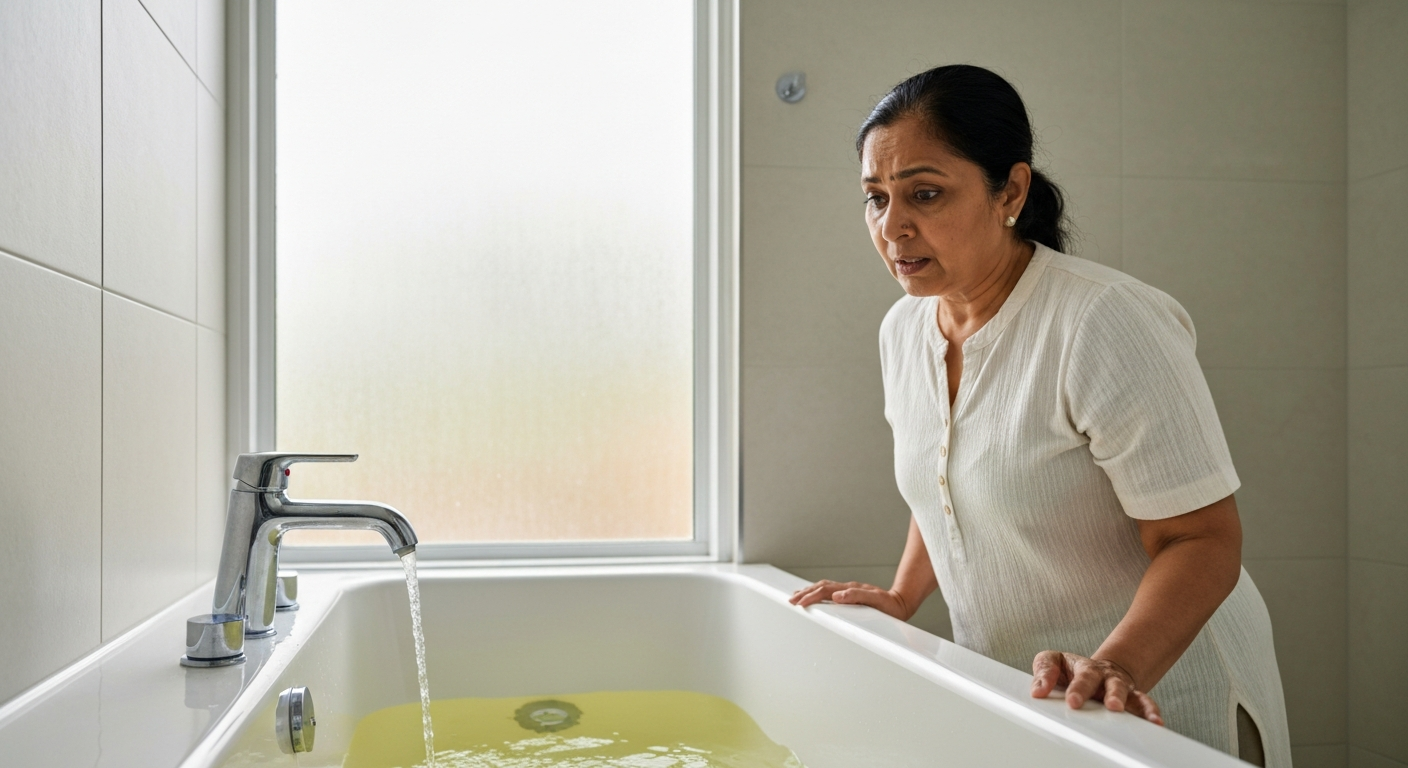

Yellow bathtub water is almost always caused by iron, rust, or sediment in your plumbing — and it's usually harmless to bathe in, though not ideal for drinking. The same discoloration can appear in hot tubs, fish tanks, and aquariums from similar sources or organic compounds.
The moment you turn on the faucet and see yellow or brown water flowing into your tub, your mind jumps to the worst possibilities. Is it sewage? Is it dangerous? The good news: in the vast majority of cases, discolored bath water comes from mineral buildup, corroding pipes, or your water heater — all fixable problems. This guide covers every scenario you might encounter, from bathtub water to aquarium water, and explains exactly what's happening and how to fix it.
Iron and rust particles dissolved in your water supply or breaking loose from aging pipes are the primary culprits behind yellow and brown bath water.
When water travels through your municipal supply lines or your home's plumbing, it picks up minerals and sediment along the way. The color you see depends on concentration: light yellow typically indicates dissolved iron, while darker yellow or brown suggests rust particles, disturbed sediment, or a combination of both.
Iron exists naturally in groundwater across much of the United States. When iron levels exceed 0.3 parts per million (ppm), water starts taking on a yellow, orange, or reddish tint. The Environmental Protection Agency considers iron a "secondary contaminant" — meaning it affects taste and appearance but isn't a health hazard at typical levels found in drinking water.
"Iron is mainly present in water in two forms: either the soluble ferrous iron or the insoluble ferric iron. Water containing ferrous iron is clear and colorless because the iron is completely dissolved. When exposed to air, ferrous iron oxidizes to the insoluble ferric form, producing the characteristic reddish-brown color." — World Health Organization
Galvanized steel pipes, common in homes built before the 1960s, corrode from the inside over time. The zinc coating that once protected the steel wears away, and rust forms on the interior walls. Every time you run water — especially after the plumbing sits idle overnight — you flush out rust particles that accumulated in the pipes.
Brown water specifically often means larger rust particles or disturbed sediment. This commonly happens after:
Also Read: Why Is My Fireplace Smoking? 7 Causes & Fixes
Hot tub water turns yellow primarily from dissolved metals, body oils, sunscreen residue, or imbalanced water chemistry — not the same pipe-related causes that affect your bathtub.
Hot tubs operate as closed-loop systems, recirculating the same water repeatedly. This creates unique conditions for discoloration that don't apply to your regular plumbing.
| Cause | Appearance | Solution |
|---|---|---|
| Dissolved metals (iron, copper, manganese) | Yellow to brown tint, often worsens after adding chlorine | Metal sequestrant, drain and refill |
| Body oils and lotions | Yellowish, may foam | Shock treatment, clean filters |
| Pollen and organic debris | Yellow-green, seasonal | Skim surface, shock, filter cleaning |
| Bromine/chlorine imbalance | Dull yellow | Test and adjust sanitizer levels |
| Tannins from wood decking | Tea-colored brown | Metal/tannin remover, improve drainage |
When you add chlorine or bromine to a hot tub containing dissolved metals, the sanitizer oxidizes those metals — turning clear water cloudy or yellow almost instantly. This is why many hot tub owners experience yellowing right after adding chemicals.
Start by testing your water's metal content with a home test kit. If metals are present, add a metal sequestrant product, which binds to the dissolved iron or copper and allows your filter to remove it. Run the jets for several hours, then clean your filter thoroughly.
If metals aren't the issue, the problem is likely organic. Shock the water with a non-chlorine oxidizer, which breaks down oils and organic compounds without adding more sanitizer. Allow the tub to circulate overnight, then test your chemical levels and adjust as needed.
Aquarium water turns yellow from tannins leaching out of driftwood, decaying organic matter, or insufficient filtration — and while it looks alarming, it's often not harmful to fish.
Fish keepers frequently panic when their tank water develops a yellow or brown tint, but this discoloration follows predictable patterns. Understanding whether your yellow tank water is a problem — or actually beneficial — depends on the source.
Driftwood, Indian almond leaves, peat moss, and certain seed pods release tannins into aquarium water. These organic compounds create a tea-colored tint ranging from light yellow to deep amber. Many fish species, particularly bettas, tetras, and South American cichlids, actually thrive in tannin-rich water because it mimics their natural blackwater habitats.
"Tannins have antibacterial and antifungal properties. In aquariums, they can help prevent infections, reduce stress in fish, and encourage natural behaviors including breeding." — Dr. Neale Monks, aquatic biologist at Practical Fishkeeping
If you prefer crystal-clear water, remove the tannin sources and add activated carbon to your filter. Carbon absorbs tannins within days, restoring water clarity. Replace the carbon monthly, as it becomes saturated.
Uneaten food sinks to the substrate and decomposes, releasing organic compounds that discolor water. Similarly, fish waste and dead plant matter contribute to a gradual yellowing if your filtration can't keep up with the biological load.
Signs that organic waste is your problem:
- Water smells musty or foul
- Ammonia or nitrite readings are elevated
- Surface has an oily film
- Substrate looks dirty when disturbed
The fix involves improving your maintenance routine: reduce feeding to what fish consume in two minutes, vacuum the substrate during water changes, and ensure your filter is appropriately sized for your tank's bioload.
Also Read: Why Is My Sago Palm Turning Yellow? 7 Causes & Fixes
Run the cold water tap for two to three minutes first — if it clears up, the issue is inside your home's plumbing. If it stays yellow, the problem is upstream in your municipal supply or well.
This simple test tells you exactly where to focus your troubleshooting efforts.
| Test Result | What It Means | Next Step |
|---|---|---|
| Cold water clears after running | Sediment or rust in your pipes | Flush all faucets, inspect water heater |
| Cold water stays yellow | Municipal issue or well problem | Contact water company, test well water |
| Only hot water is yellow | Water heater sediment or corroding anode | Drain and flush water heater |
| Yellow only in one bathroom | Localized pipe corrosion | Inspect and replace affected pipe section |
If the discoloration appears only when you run hot water, your water heater is the likely culprit. Sediment accumulates at the bottom of tank water heaters over time, and the sacrificial anode rod inside the tank corrodes to protect the tank walls — releasing metallic particles into your hot water supply.
Draining and flushing your water heater annually prevents sediment buildup. If your anode rod is severely corroded (check by unscrewing it from the top of the tank), replacing it costs $20–$50 for the part and restores your water heater's longevity.
Yellow water from iron, rust, or sediment is generally safe for bathing but not ideal for drinking — though you should test it if the discoloration persists or you notice other symptoms.
Iron-tinted water won't harm your skin during a bath, but it can stain fixtures, laundry, and hair over time. The greater concern is whether the discoloration indicates a deeper problem — corroding pipes that could eventually fail, or contamination that needs professional evaluation.
The EPA recommends testing your water if you notice:
- Persistent discoloration lasting more than 24 hours
- Unusual odors (rotten egg smell indicates hydrogen sulfide)
- Any illness symptoms after water exposure
- Recent changes to your water source or nearby construction
Home water test kits cost $15–$40 and screen for common contaminants including iron, lead, bacteria, and hardness. For comprehensive testing, send samples to a certified lab through your state health department.
Installing a whole-house sediment filter or iron filter eliminates yellow water at the source, preventing discoloration from reaching any faucet in your home.
Short-term fixes like flushing your pipes help immediately, but they don't address the root cause. For lasting results, consider these solutions based on your situation:
| Problem Source | Recommended Fix | Typical Cost |
|---|---|---|
| Municipal iron/sediment | Whole-house sediment filter | $150–$400 installed |
| High iron well water | Iron filter or water softener with iron removal | $800–$2,500 installed |
| Corroding galvanized pipes | Repipe with copper or PEX | $4,000–$15,000 |
| Water heater sediment | Drain, flush, replace anode rod | $0–$100 DIY |
| Isolated pipe section | Replace affected section | $150–$500 |
For homes with well water showing high iron levels, a dedicated iron filter uses oxidation and filtration media to remove iron before it enters your plumbing. These systems require periodic media replacement but provide years of clear water between services.
| ✓Our Pick |
Search whole-house water filtration systems on Amazon This is the go-to fix recommended by professionals — save time and money by getting it right the first time. See on Amazon → |
Yellow or brown water in your bathtub almost always comes from iron, rust, or sediment — either from your home's plumbing, your water heater, or your municipal supply. Hot tub yellowing stems from metals or organic buildup in the recirculating water, while fish tank discoloration typically comes from tannins or decaying matter. A quick cold-water test tells you whether the problem is inside your home or upstream. For lasting solutions, flush your water heater annually, replace corroded pipe sections, or install whole-house filtration to stop yellow water at the source.
Brown water indicates higher concentrations of rust particles or disturbed sediment compared to yellow water, which typically contains dissolved iron. Brown water commonly appears after municipal water main work, extended periods of non-use, or when old galvanized pipes begin shedding larger rust flakes. Run your cold water for several minutes to flush the lines — if it doesn't clear, contact your water utility.
Filters remove particulate matter but don't absorb dissolved tannins from driftwood, leaves, or peat. If your filter is working properly but water stays yellow, add activated carbon media to chemically absorb the tannins. Replace the carbon every three to four weeks, as it becomes saturated and stops working. Alternatively, embrace the tannins — many fish species prefer and thrive in naturally tinted water.
Yes. Iron-rich water deposits orange-brown stains on porcelain, fiberglass, and grout over time. Blond or gray hair can take on a brassy or orange tint with repeated exposure to high-iron water. A water softener with iron removal capabilities prevents staining, while products containing oxalic acid remove existing iron stains from fixtures.
Yellow hot tub water is usually safe but indicates an imbalance that should be corrected. If the yellowing comes from metals, the water won't harm you but may stain bathing suits. If it comes from organic buildup or sanitizer failure, bacteria could be present. Test your water, shock treat if needed, and don't use the hot tub until water chemistry returns to normal ranges.
Run cold water at full pressure for three to five minutes. If the water clears, the sediment was sitting in your home's pipes and has now flushed through. If it doesn't clear after five minutes, the source is outside your home — either the municipal supply or your well. Contact your water provider or test your well water to identify the cause.
Reviewed and Updated on June 11, 2026 by George Wright