
Technology
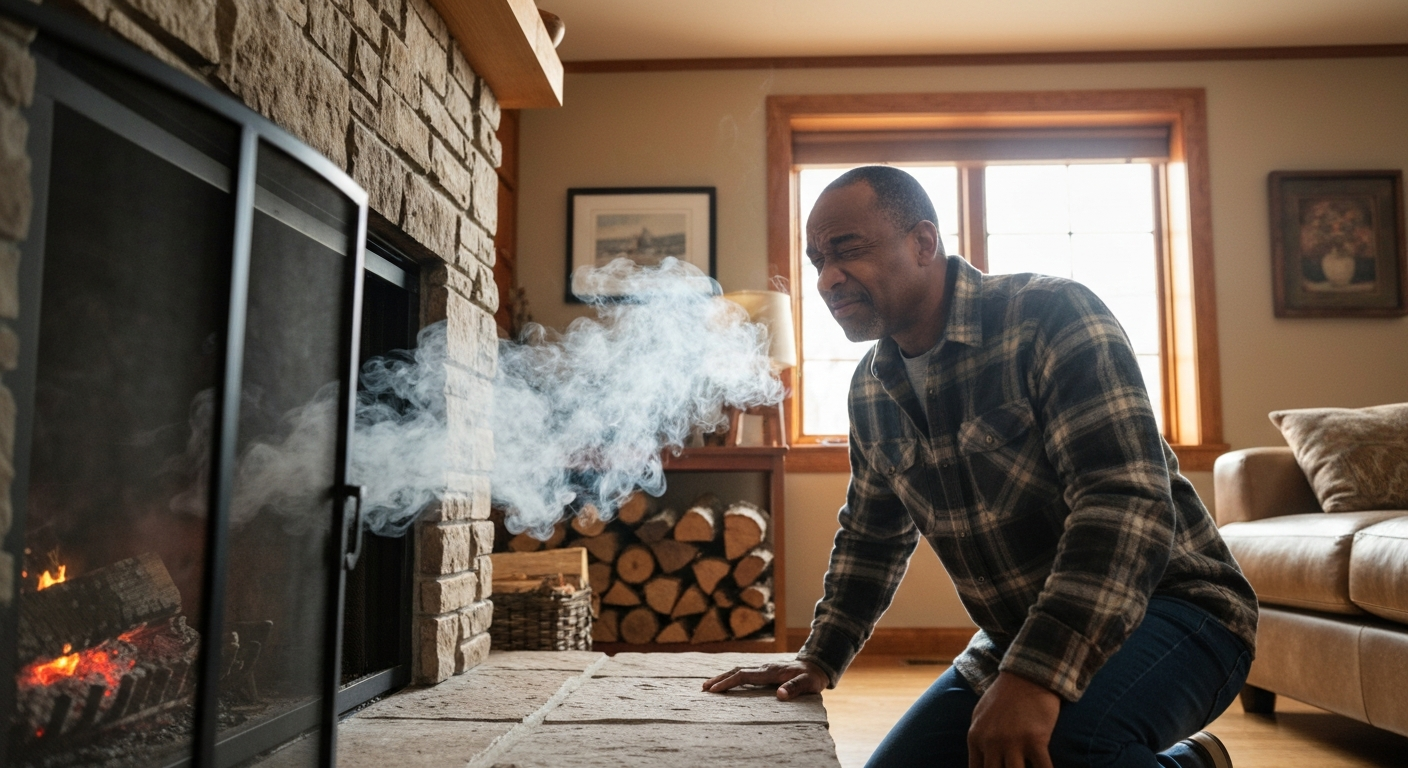

A smoking fireplace usually means one thing: smoke isn't being pulled up the chimney fast enough, so it spills back into your living room. The most common culprits are a closed or partially closed damper, a cold flue that hasn't warmed up yet, a dirty or blocked chimney, negative air pressure in your home, or burning unseasoned wood. The good news is that most of these issues are straightforward to diagnose and fix yourself—often in under an hour.
| ✓Our Pick |
Fireplace maintenance and repair essentials Highly rated by thousands of buyers — this is one of the most effective solutions for this issue you can try at home. See on Amazon → |
Smoke follows the path of least resistance—if your chimney isn't creating enough upward draft, that path leads right back into your living room.
Understanding why smoke behaves this way starts with basic physics. A working fireplace relies on the chimney effect: hot air rises, creating a pressure difference that pulls combustion gases up and out while drawing fresh air in from below. When this system breaks down at any point—whether from physical blockages, temperature issues, or air pressure problems—smoke has nowhere to go but back through the firebox opening.
The sections below walk through the seven most frequent causes of a smoking fireplace in 2026, from the simplest fixes (check your damper) to issues that require professional help.
A closed or partially open damper is the number-one reason fireplaces smoke, and it's the easiest fix on this list.
The damper is a metal plate inside your chimney, usually located just above the firebox or at the top of the flue. Its job is to seal the chimney when the fireplace isn't in use, preventing heated or cooled indoor air from escaping. When you light a fire, that damper needs to be fully open—not halfway, not mostly, but completely.
Many homeowners don't realize their damper has multiple positions. A traditional throat damper (located at the base of the chimney) typically has a lever or pull chain. A top-sealing damper (installed at the chimney crown) uses a cable or chain that hangs down into the firebox.
Here's how to check:
"The damper should be in the fully open position whenever a fire is burning. Even a partially closed damper can cause smoke spillage." — Chimney Safety Institute of America
Also Read: Why Is My Sunbeam Heating Blanket Blinking? 7 Causes & Fixes
A cold chimney creates a column of dense air that acts like a plug, preventing smoke from rising until the flue warms up.
This is especially common in exterior chimneys (built on an outside wall rather than running through the center of your home), during very cold weather, or if the fireplace hasn't been used in a while. The cold air inside the flue is heavier than the warm air in your home, so it actually pushes down into the room rather than drawing smoke up.
The solution is called "priming the flue"—you warm it up before lighting your main fire:
If your home has good insulation and an exterior chimney, you may need to prime the flue every single time you use the fireplace during winter months. This isn't a defect—it's just physics working against you.
A dirty chimney restricts airflow and can cause dangerous creosote buildup, leading to both smoke problems and increased fire risk.
Every wood fire produces creosote—a tar-like substance that condenses on the cooler walls of your chimney. Over time, this residue builds up, gradually narrowing the flue and reducing draft. In severe cases, creosote can almost completely block the chimney.
Other debris can cause problems too:
| Obstruction Type | Common Signs | Solution |
|---|---|---|
| Creosote buildup | Black, flaky or shiny residue visible above damper; smoky smell even when not in use | Professional chimney sweep |
| Animal nests | Twigs, leaves, or droppings in firebox; scratching sounds | Professional removal and cap installation |
| Collapsed flue liner | Chunks of clay or masite in firebox; sudden onset of smoking | Inspection and liner replacement |
| Fallen mortar/bricks | Debris in firebox; visible damage when looking up flue | Masonry repair |
The National Fire Protection Association recommends having your chimney inspected annually and cleaned as needed. The Chimney Safety Institute of America (CSIA) certifies chimney sweeps who follow standardized inspection and cleaning protocols.
"Chimneys should be inspected at least once a year for soundness, freedom from deposits, and correct clearances. Cleaning, maintenance, and repairs shall be done if necessary." — NFPA 211, Standard for Chimneys, Fireplaces, Vents, and Solid Fuel-Burning Appliances
Modern, tightly sealed homes can create negative pressure that overpowers your chimney's draft and sucks smoke back into the room.
Your fireplace needs a supply of air to function. As hot gases rise up the chimney, replacement air must flow into the house somewhere to balance the pressure. In older, draftier homes, air leaks around windows and doors provided this makeup air naturally.
Today's energy-efficient homes are sealed much tighter. When you run exhaust appliances—kitchen range hoods, bathroom fans, clothes dryers, or even a powerful central vacuum—they push air out of the house. If there's no easy path for replacement air to enter, the house develops negative pressure. Your chimney becomes the path of least resistance, and air (along with smoke) flows down instead of up.
Signs that negative pressure is your problem:
Solutions range from simple to involved:
Wet or unseasoned wood produces far more smoke than it should, overwhelming even a perfectly functioning chimney.
Freshly cut wood contains 60–80% moisture by weight. When you burn it, a huge amount of energy goes toward boiling off that water instead of producing heat. The result is a smoldering, smoky fire that doesn't generate enough heat to create a strong draft.
Properly seasoned firewood has been dried for 6–12 months and has a moisture content below 20%. Here's how to tell the difference:
| Characteristic | Unseasoned (Wet) Wood | Seasoned (Dry) Wood |
|---|---|---|
| Weight | Heavy | Noticeably lighter |
| Color | Bright, fresh | Gray or faded |
| Bark | Tight, difficult to peel | Loose or falling off |
| Ends | No cracks | Visible radial cracks |
| Sound when struck | Dull thud | Hollow ring |
| Smell | Strong sap/fresh wood smell | Little to no smell |
If you're not sure about your wood supply, invest in a moisture meter—they're inexpensive and eliminate the guesswork. Any reading above 20% means the wood needs more drying time.
Also avoid burning softwoods like pine or spruce as your primary fuel. They burn fast and cool, produce excessive creosote, and don't generate the sustained heat needed for a strong draft. Hardwoods like oak, maple, ash, and hickory are better choices.
A chimney that's too short relative to your roofline won't generate enough draft, especially on windy days.
Building codes specify minimum chimney heights for a reason. The general rule is that a chimney must extend at least 3 feet above the point where it passes through the roof and at least 2 feet higher than any part of the roof within 10 feet horizontally.
When a chimney doesn't meet these requirements—or when nearby trees, additions, or neighboring structures have changed the wind patterns around your roof—downdrafts can push smoke back into your home.
Warning signs of a height or location problem:
Solutions include extending the chimney height (a job for a professional mason) or installing a wind-directional chimney cap that blocks downdrafts while allowing smoke to escape.
When the fireplace opening is too big relative to the chimney flue, there isn't enough draft velocity to pull all the smoke out.
This is a design flaw that was more common in older homes, where fireplaces were sometimes built with aesthetics prioritized over function. The industry rule of thumb is that the flue cross-sectional area should be roughly 1/10th to 1/12th of the fireplace opening area (height × width).
If your fireplace has always smoked since you moved in, and you've ruled out the other causes above, an improper size ratio may be the culprit. A Certified Chimney Sweep can measure both dimensions and calculate whether you're dealing with a mismatch.
Fixes for an oversized opening:
A smoke guard is by far the simplest and least expensive option, often costing under $100 and installing in minutes.
Run through this diagnostic sequence before calling a professional—most smoking fireplaces can be fixed with one of these steps.
| Step | Check This | If Problem Found |
|---|---|---|
| 1 | Damper position | Open fully before lighting |
| 2 | Flue temperature | Prime with newspaper torch |
| 3 | Wood moisture | Switch to seasoned hardwood |
| 4 | Chimney cleanliness | Schedule professional sweep |
| 5 | Negative pressure | Open window or turn off exhaust fans |
| 6 | Chimney height and obstructions | Visual inspection from outside; call pro if issues found |
| 7 | Firebox-to-flue ratio | Install smoke guard or glass doors |
If you've worked through all seven steps and the fireplace still smokes, it's time to call a CSIA-certified chimney professional. They have specialized cameras and diagnostic tools to identify issues you can't see from below.
A smoking fireplace is almost always caused by inadequate draft—the chimney isn't pulling smoke up fast enough, so it spills into your room. Start by checking the obvious: make sure the damper is fully open and prime a cold flue with burning newspaper before lighting your main fire. If smoking persists, the issue is likely dirty flue, negative air pressure in a tightly sealed home, wet firewood, or a design mismatch between your firebox opening and flue size. Annual chimney inspections catch most problems before they start, and simple additions like a smoke guard or outside air kit can permanently solve chronic smoking in otherwise well-maintained fireplaces.
A cold flue causes this. When the chimney hasn't been used in a while, cold air settles inside and resists the rising smoke until the flue warms up. Prime the chimney by holding burning newspaper near the damper opening for 2–3 minutes before lighting your main fire. Once you feel the draft reverse direction, the flue is ready.
Yes. Strong winds can create downdrafts that push smoke back into your home, especially if your chimney is too short relative to nearby roof peaks or trees. A wind-directional chimney cap can help by blocking horizontal gusts while still allowing smoke to exit vertically. On extremely windy days, you may need to avoid using the fireplace entirely.
The National Fire Protection Association recommends an annual inspection, with cleaning done whenever significant creosote buildup is found. If you burn more than 2 cords of wood per season, you may need cleaning more frequently. A certified chimney sweep can assess your specific usage patterns and recommend a schedule.
Glass doors restrict the size of the firebox opening, which improves the ratio between opening area and flue size. If your fireplace only works properly with doors partially closed, the original design likely has an oversized opening. A smoke guard—a metal strip across the top of the opening—achieves the same effect permanently without needing to keep doors closed.
Gas fireplaces produce far less residue than wood-burning ones, but they still require annual inspection. The burner, gas connections, and venting system should be checked for proper operation and leaks. While creosote isn't a concern, debris and animal nests can still block the flue or B-vent of a gas unit.
Reviewed and Updated on June 10, 2026 by George Wright