Snoring occurs most frequently during Stage 2 NREM sleep and Stage 3 deep sleep (slow-wave sleep), when muscle tone in the throat and tongue is most relaxed. It can also occur during REM sleep, particularly in people with obstructive sleep apnea. Snoring is least likely during Stage 1, the lightest transition phase.
What Sleep Stage Causes Snoring?
Snoring is a physical event caused by airway narrowing and tissue vibration. The stage in which it occurs depends on how much muscle relaxation has set in — Stage 2 and Stage 3 NREM create the conditions most often associated with snoring.
Here is how snoring tracks across the four sleep stages:
Stage 1 NREM (Light Sleep)
Stage 1 is the transition from wakefulness to sleep, typically lasting 1–5 minutes per cycle. Muscle tone drops slightly but remains high enough that the airway stays mostly open. Snoring is rare at this stage. People can often hear sounds and be easily woken.
Stage 2 NREM (Light-to-Medium Sleep)
Stage 2 accounts for roughly 45–55% of total sleep time in adults. Muscle tone drops significantly more. The tongue and soft palate begin to relax toward the throat. For mild snorers, Stage 2 is often when snoring first begins, particularly when sleeping on the back.
"During NREM Stage 2 and slow-wave sleep, pharyngeal muscle activity is significantly reduced compared to wakefulness, leading to increased upper airway resistance and, in susceptible individuals, snoring or complete airway obstruction." — American Academy of Sleep Medicine at aasm.org
Stage 3 NREM (Deep or Slow-Wave Sleep)
Stage 3 is the deepest NREM stage, representing 15–20% of sleep in healthy adults. Muscle tone is at its lowest outside of REM sleep. Breathing slows significantly. Snoring is most intense during this stage because the airway walls are most likely to collapse inward.
This is the stage that matters most for snoring-related health effects — oxygen desaturation events during Stage 3 are more prolonged than in lighter sleep stages.
REM Sleep
REM sleep involves a state called REM atonia — almost complete paralysis of voluntary muscles. This includes the muscles that support the upper airway. In people with obstructive sleep apnea, the most severe breathing events often cluster during REM because of this extreme muscle relaxation.
Primary snorers without sleep apnea may snore less during REM than during Stage 3, because breathing is more irregular in REM (rapid eye movement sleep involves more variable respiration).
| ✓Our Pick |
SnoreMeds custom mouthpiece — repositions your jaw to stop snoring in any sleep stage This is the go-to fix recommended by professionals — save time and money by getting it right the first time. Learn More → |
Why Does Sleep Stage Affect Snoring Intensity?
The connection between sleep stage and snoring severity comes down to pharyngeal muscle tone. As you move from Stage 1 through Stage 3, the muscles of the upper airway become progressively more relaxed — allowing the soft palate, uvula, and tongue to fall closer to the airway wall.
When the airway narrows, the velocity of air through the narrowed passage increases (Bernoulli principle). The faster-moving air causes the surrounding soft tissues to flutter and vibrate — producing the snoring sound. The more the tissues relax, the narrower the airway and the louder the vibration.
Factors that make this worse:
- Alcohol and sedatives: Deepen muscle relaxation beyond normal, worsening snoring in all NREM stages
- Sleep deprivation: Increases slow-wave sleep on recovery nights, intensifying Stage 3 snoring
- Nasal congestion: Raises upstream resistance, increasing the pressure differential that causes tissue vibration
- Body position: Supine (back) sleeping allows gravity to pull the tongue directly backward, compounding Stage 2 and Stage 3 muscle relaxation effects
"Alcohol consumption before sleep increases sleep-disordered breathing events across all sleep stages by reducing pharyngeal muscle tone below its already-reduced sleep baseline." — National Institutes of Health at nih.gov
Can You Track Which Stage You Snore In?
Sleep stages can be measured at home using wearable devices that analyze heart rate variability (HRV), movement, and oxygen saturation.
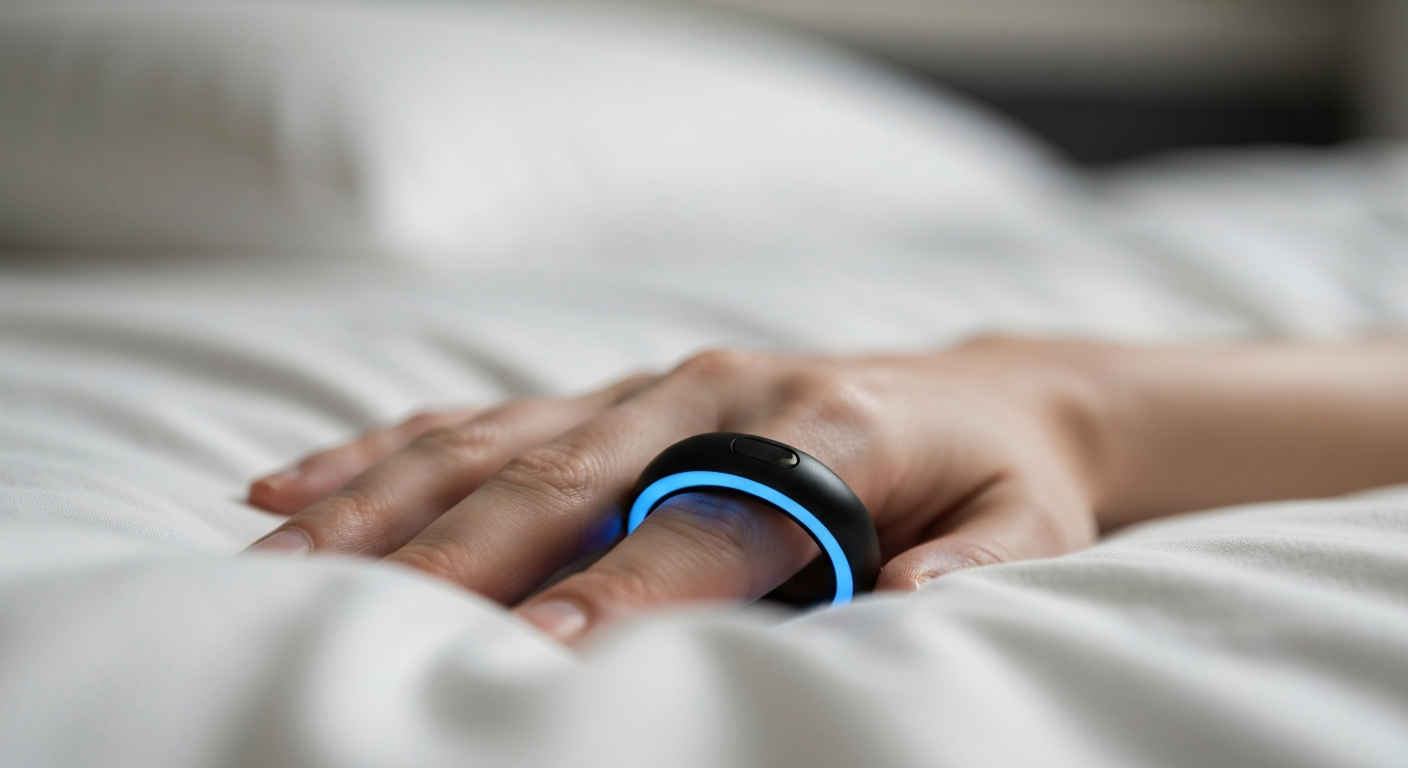
The Ultrahuman Ring AIR tracks sleep stages, HRV, and blood oxygen levels throughout the night. Pairing its stage data with a snore-detection app on your phone can show which sleep stages correspond to your worst snoring.
A formal polysomnography (sleep study) measures EEG brain waves, which is the only way to clinically identify sleep stages with high accuracy.
Also Read: Snores ICD 10: Code R06.83 Explained for Patients and Coders
Sleep Stage Snoring Summary
| Sleep Stage |
Typical Proportion |
Muscle Tone |
Snoring Likelihood |
| Stage 1 NREM |
5% |
High |
Low |
| Stage 2 NREM |
45–55% |
Reduced |
Moderate |
| Stage 3 NREM (slow-wave) |
15–20% |
Very low |
High |
| REM |
20–25% |
Minimal (atonia) |
High (especially with apnea) |
In Short
Snoring most commonly occurs during Stage 2 NREM and Stage 3 deep sleep, when muscle tone in the throat and tongue reaches its lowest point during non-REM sleep. REM sleep can also trigger or worsen snoring in people with sleep apnea due to REM atonia. Alcohol, sedatives, and back sleeping amplify snoring at every NREM stage by further reducing muscle tone below its normal sleep-state baseline.
What You Also May Want To Know
Do people snore in REM sleep?
Yes, particularly people with obstructive sleep apnea. REM sleep involves near-complete muscle paralysis (REM atonia), which can cause the airway to collapse more severely than in NREM sleep. Breathing events during REM tend to be longer and more oxygen-desaturating than events in NREM.
What sleep stage causes the loudest snoring?
Stage 3 slow-wave sleep typically produces the most intense snoring because muscle tone is lowest and the airway is most likely to narrow significantly. However, in people with sleep apnea, the most severe events often occur in REM.
Can you snore in Stage 1 sleep?
Rarely. Stage 1 is a light transitional phase where muscle tone remains relatively high. Most snoring begins in Stage 2 as deeper muscle relaxation sets in. Some people snore during Stage 1 if they have severe nasal obstruction or structural abnormalities in the upper airway.
Does snoring in deep sleep mean you have sleep apnea?
Not necessarily. Many people snore during deep sleep without having sleep apnea. Sleep apnea is diagnosed by the number of complete airway obstructions per hour (AHI). If your snoring is accompanied by witnessed breathing pauses, choking, or excessive daytime sleepiness, seek a sleep study evaluation.
Reviewed and Updated on June 16, 2026 by George Wright