
Sleep

Snoring and sore throat frequently occur together because both stem from the same underlying problem: airway obstruction during sleep that forces the mouth open, dries out the throat tissues, and causes repetitive vibration trauma to the soft palate and pharynx. Treating the snoring typically resolves the sore throat.
The connection between snoring and sore throat is mechanical: the same partial airway collapse that produces snoring also causes the mouth to fall open and the throat to experience hours of drying, vibrating, and turbulent airflow — all of which irritate and inflame pharyngeal tissue.
Three primary mechanisms connect snoring to sore throat:
1. Mouth breathing: When the nasal airway is partially blocked or when throat tissue narrows, the body compensates by opening the mouth to breathe. Mouth breathing bypasses the nasal passages, which normally warm, humidify, and filter incoming air. Cold, dry, unfiltered air passes directly over the throat tissue for 6–8 hours — causing dryness and inflammation.
2. Tissue vibration trauma: The repetitive vibration of the soft palate, uvula, and pharyngeal walls during snoring is physically damaging to those tissues over time. Heavy snorers experience hours of this vibration each night, leading to local inflammation that manifests as a sore throat on waking.
3. Air turbulence and drying: Even when some nasal breathing occurs, the turbulent, chaotic airflow associated with snoring creates localized drying in the pharynx. The posterior pharyngeal wall — the back of the throat — is especially exposed.
The result: many snorers wake up with a dry, scratchy, or genuinely sore throat that clears within an hour or two of drinking fluids and breathing normally.
According to the American Academy of Sleep Medicine, dry mouth and sore throat on waking are among the most commonly reported symptoms by people with sleep-disordered breathing, including habitual snorers.
"Morning dry mouth and throat discomfort are common symptoms associated with mouth breathing during sleep, particularly in people who snore or have sleep-disordered breathing." — American Academy of Sleep Medicine
Snoring-caused sore throat has a characteristic pattern that distinguishes it from illness-related throat pain.
| Feature | Snoring-Caused Sore Throat | Strep or Viral Sore Throat |
|---|---|---|
| When it appears | Present on waking, improves through morning | Present throughout the day, may worsen |
| Associated symptoms | Dryness, no fever, partner reports snoring | Fever possible, swollen lymph nodes, fatigue |
| Resolution | Clears within 30–60 min of drinking fluids | Persists for days; may require antibiotics |
| Recurrence pattern | Every morning after snoring | One-time episode with illness |
| Throat appearance | Slightly red and dry; no white patches | May show white patches (strep); generalized redness |
If your sore throat is worst first thing in the morning and largely resolves after breakfast and some water, snoring is the most likely cause. If the soreness persists through the day, worsens, or comes with fever, it's more likely an infection.
Beyond the core mouth-breathing mechanism, four specific contributors make some snorers' throats significantly more irritated than others.
| ✓Our Pick |
Custom-fit anti-snoring mouthpiece — prevents the mouth breathing that causes snoring sore throat You'll wonder why you didn't try this sooner — practical, well-reviewed, and easy to get started. Learn More → |
The uvula — the fleshy teardrop hanging at the back of the mouth — vibrates extensively during snoring. Chronic vibration can cause the uvula to swell, elongate, and become irritated. A swollen uvula contributes directly to the morning sore throat feeling and can itself cause the sensation of something stuck in the back of the throat.
Snoring-related pressure changes in the chest and throat during sleep can exacerbate gastroesophageal reflux (GERD) or laryngopharyngeal reflux (LPR). Acid that reaches the throat during sleep further irritates already-dry, vibration-damaged tissue. People with both snoring and reflux typically have more severe morning sore throat symptoms than those with snoring alone.
Sleeping in a room with low relative humidity (below 30–35%) significantly worsens the drying effect of nighttime mouth breathing. Winter heating typically drops indoor humidity to these levels. The combination of mouth breathing (from snoring) and dry air produces more severe throat irritation than either factor alone.
In obstructive sleep apnea (OSA), the airway doesn't just narrow — it fully collapses repeatedly. Each apnea event is followed by a partial arousal and often a gulp of air through the mouth. These repeated events produce significant throat irritation and can cause severe morning sore throat. If your morning throat pain is frequent, significant, or accompanied by fatigue, morning headaches, or gasping sounds at night, OSA should be ruled out.
Treating the snoring addresses the sore throat at its root. These strategies work on both simultaneously.
1. Use a mandibular advancement device (MAD). By holding the jaw forward and widening the airway, a MAD reduces or eliminates the snoring and the mouth-breathing that causes throat drying. A MAD also reduces the tissue vibration that directly damages pharyngeal tissue. Custom-fit devices are the most effective option.
2. Sleep on your side. Reduces airway collapse, reduces snoring intensity, and reduces the mouth-open sleeping position that dries the throat.
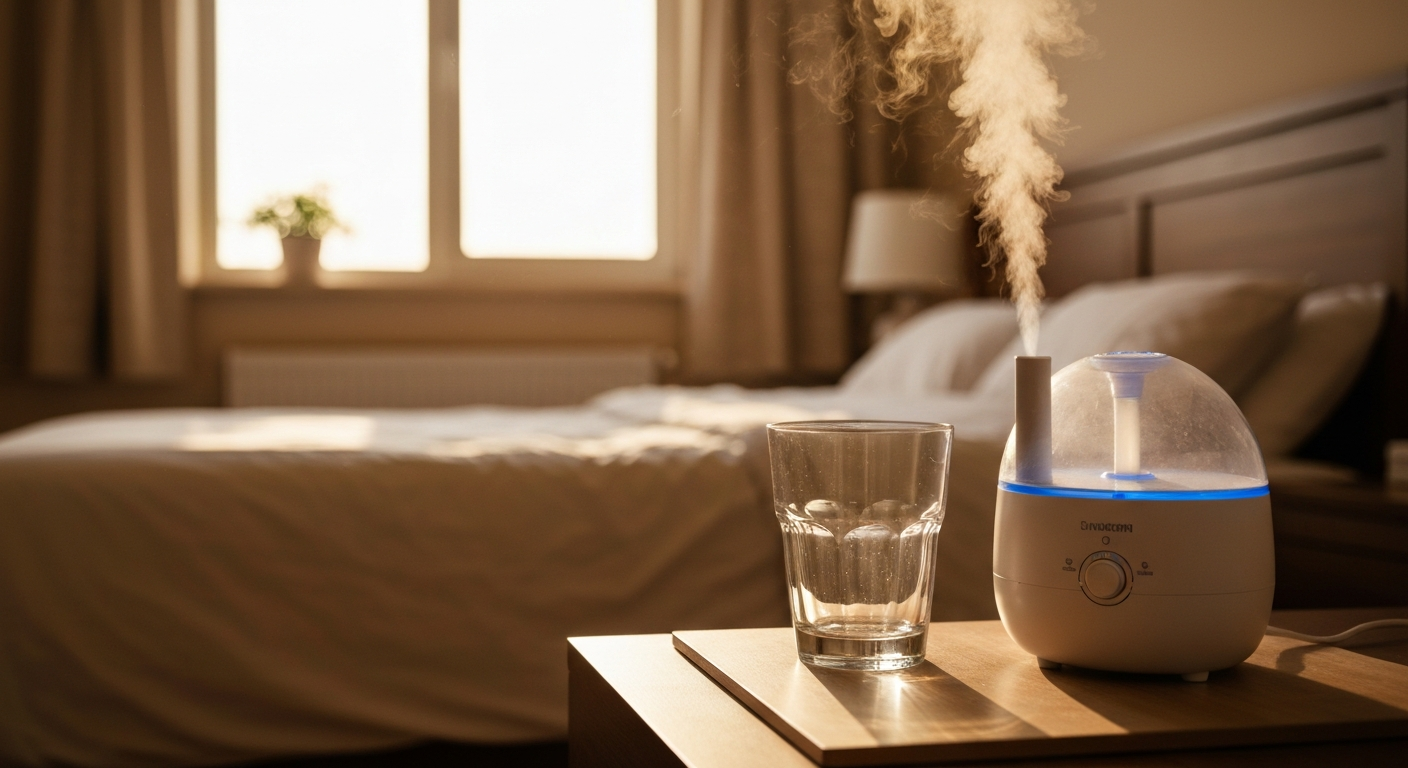
3. Run a humidifier. Maintaining 40–50% relative humidity in the bedroom significantly reduces drying of nasal and throat tissues overnight. A cool-mist ultrasonic humidifier placed within a few feet of the bed is most effective.
4. Treat nasal congestion. Saline rinse before bed, nasal steroid spray, or allergy treatment reduces mouth breathing and the throat drying that follows.
5. Try mouth taping (carefully). Medical-grade mouth tape (designed for this purpose) applied lightly over the lips before sleep encourages nasal breathing. This reduces throat drying in people who are otherwise nasal breathers when awake. Only use mouth tape if your nasal passages are reasonably clear; never tape the mouth shut if you have significant nasal obstruction.
For immediate morning relief:
- Drink warm water or herbal tea first thing to rehydrate the throat
- Use a warm salt water gargle (1/4 tsp salt in 8 oz warm water) for 30–60 seconds
- Run a saline nasal spray to clear any overnight mucosal accumulation
Also Read: Why Is My Nose Twitching? 7 Causes & How to Stop It
See a doctor if your snoring-associated sore throat:
- Persists throughout the day rather than clearing by mid-morning
- Is accompanied by fever, swollen lymph nodes, or white patches in the throat
- Comes with difficulty swallowing, significant pain, or ear pain
- Is associated with gasping or breathing pauses during sleep (sleep apnea screening)
- Has been present for weeks without improvement despite treating the snoring
A persistent sore throat that doesn't fit the classic "worst at waking, clears by morning" pattern may have a separate cause — infection, reflux, or other pathology — that needs its own evaluation.
Snoring and sore throat share the same root cause: upper airway obstruction during sleep that forces mouth breathing, dries throat tissue, and vibrates the soft palate for hours each night. The resulting sore throat is typically worst at waking and resolves within an hour of drinking fluids. Treating the snoring — with a mandibular advancement device, side sleeping, nasal congestion treatment, and a bedroom humidifier — addresses both problems simultaneously. Sore throat that persists through the day, comes with fever, or accompanies gasping symptoms warrants medical evaluation.
Snoring causes the mouth to fall open, drying the throat with hours of unhumidified airflow. The vibration of the soft palate and uvula during snoring also physically irritates pharyngeal tissue. The combination produces a morning sore throat that typically clears within 30–60 minutes of drinking fluids and breathing normally.
Immediate relief: drink warm water or herbal tea, gargle with warm salt water (1/4 tsp salt in 8 oz water), and use a saline nasal spray to clear any overnight buildup. For prevention: treat the snoring with a mandibular advancement device, run a bedroom humidifier at 40–50% humidity, and sleep on your side.
Chronic, severe snoring can cause progressive changes to the pharyngeal tissue over time, including uvular elongation and increased tissue laxity. Heavy snorers are also more likely to develop sleep apnea, which itself causes additional airway changes. These effects are real but develop slowly. Treating snoring effectively prevents further progression.
Not necessarily — a sore throat alone is more consistent with snoring or mouth breathing than with sleep apnea specifically. However, sleep apnea causes more severe and more frequent airway events that produce more significant throat irritation. If your morning sore throat is severe, comes with gasping sounds at night, or is accompanied by daytime fatigue, a sleep study is appropriate.
Reviewed and Updated on June 13, 2026 by George Wright