Health

Joe Rogan has spoken about using a mandibular advancement device (MAD) and nasal strips to stop snoring — and the science behind these devices is solid. The type of snore device Rogan describes is widely available, and custom-fit versions outperform generic ones significantly.
| ✓Our Pick |
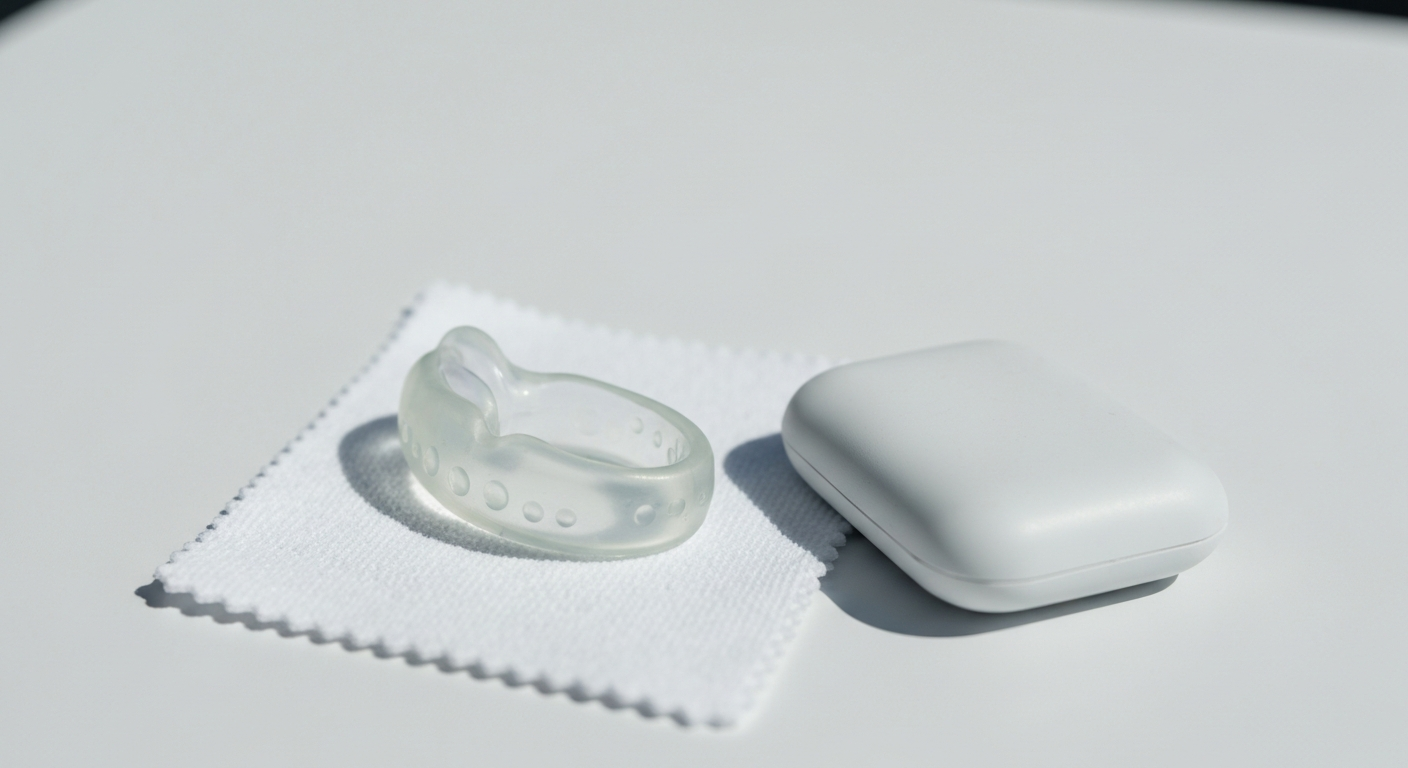
Custom-fit anti-snoring mouthpiece — the type Joe Rogan uses to stop snoring Great value for money — this product tackles the root cause rather than just masking the symptoms. Learn More → |
Joe Rogan has referenced mandibular advancement devices (MADs) — oral mouthpieces that hold the lower jaw forward during sleep — on the Joe Rogan Experience podcast. He's also mentioned nasal breathing and nasal strips as part of his sleep optimization routine.
Rogan is a well-documented health and biohacking enthusiast who has discussed sleep optimization extensively with guests including sleep scientist Dr. Matthew Walker (author of Why We Sleep) and various breathwork and health experts. His interest in snoring devices fits within his broader focus on recovery, sleep quality, and physical performance.
The key device category he references is the mandibular advancement device (MAD), sometimes called an anti-snoring mouthpiece. These are widely used and clinically validated tools — not supplements or gimmicks — and they work by repositioning the lower jaw forward during sleep to widen the upper airway.
A mandibular advancement device holds the lower jaw (mandible) in a slightly forward position throughout the night. This forward position keeps the tongue base pulled away from the throat wall, preventing the partial airway collapse that causes snoring.
Here's the chain of events the device prevents:
A MAD interrupts step 2. By holding the jaw forward by a few millimeters, it passively keeps the tongue from falling back. The airway stays wider, air flows more freely, and the vibration doesn't occur.
Clinical evidence: The American Academy of Sleep Medicine recognizes oral appliances (MADs) as an effective first-line treatment for snoring and mild-to-moderate obstructive sleep apnea, particularly for patients who prefer them over CPAP therapy.
"Oral appliances are recommended for the treatment of snoring and mild to moderate obstructive sleep apnea. They work by holding the jaw in a forward position to maintain airway patency during sleep." — American Academy of Sleep Medicine
There are two main categories of anti-snoring mouthpieces:
| Type | Cost | Fit | Effectiveness | Comfort |
|---|---|---|---|---|
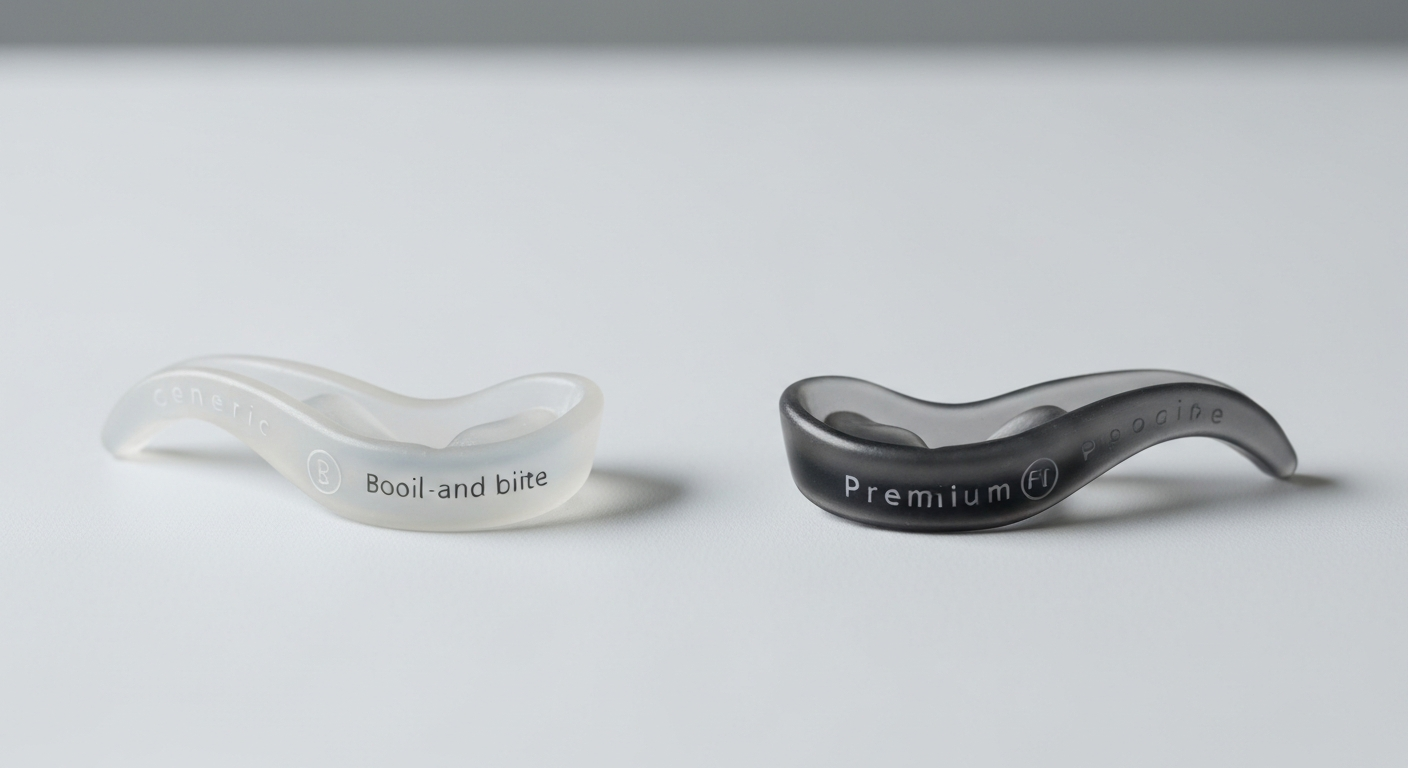
| Generic boil-and-bite | $20–$60 | Approximate | Lower | Often uncomfortable; slips |
| Custom-fit impression kit | $100–$200 | Exact | Higher | Significantly better |
| Dentist-made custom MAD | $1,000–$2,000 | Exact | Highest | Best |
Custom-fit devices — whether made through impression kits at home or by a dentist — hold the jaw at the correct position for your anatomy, stay in place through the night, and are significantly more comfortable. Boil-and-bite devices are an acceptable first step but often fail to stay in position and put uneven pressure on teeth.
SnoreMeds, for example, provides a custom-molded anti-snoring mouthpiece through an impression kit — a middle-ground option that delivers custom fit at a fraction of dentist pricing.
Yes. Rogan has discussed nasal breathing as a priority and mentioned nasal strips (Breathe Right type) as a simple, effective tool. This is consistent with the science: nasal strips mechanically widen the nostrils, reducing nasal resistance and making nasal breathing easier during sleep.
Nasal strips work best for:
- People who snore primarily through the nose
- Light snorers who don't need a full MAD
- Anyone with mild nasal congestion or a narrow nasal bridge
They don't address tongue-based or throat-based snoring, which is where the MAD is more relevant. Many people combine both — nasal strips for the nasal component and a MAD for the throat component.
Rogan's interest in sleep-quality optimization is well-placed. Sleep affects performance, recovery, and cognitive function — areas he discusses constantly. The snoring devices he references (MADs and nasal strips) are genuinely effective and endorsed by sleep medicine organizations.
What the research shows:
- MADs reduce snoring in approximately 75–85% of users
- Custom-fit MADs outperform generic versions in both comfort and effectiveness
- Nasal strips provide immediate, measurable airway opening for nasal snorers
- Combining a MAD with nasal strips addresses both pharyngeal and nasal contributors
What to watch for: If you also have symptoms of sleep apnea — gasping, extreme daytime sleepiness, morning headaches — a MAD or nasal strip isn't a substitute for a clinical evaluation. Sleep apnea requires a sleep study and, if confirmed, an appropriate treatment (CPAP or a custom oral appliance prescribed by a sleep dentist).
Beyond MADs and nasal strips, the snoring device market includes several other categories:
Also Read: Why Is My Phone Lagging? 9 Causes & Fixes for 2026
The snoring device Joe Rogan references is the mandibular advancement device (MAD) — an oral mouthpiece that holds the lower jaw forward during sleep to widen the airway. This is a clinically validated approach, endorsed by the American Academy of Sleep Medicine as a first-line treatment for snoring and mild-to-moderate sleep apnea. Custom-fit MADs outperform generic boil-and-bite versions in comfort and effectiveness. Nasal strips complement a MAD by addressing nasal airflow. Neither device replaces a clinical evaluation if sleep apnea symptoms are present.
Rogan has referenced mandibular advancement devices generally, along with nasal breathing tools and strips, on multiple podcast episodes. He hasn't specifically endorsed one single brand publicly as of 2026. The device category he describes — custom-fit oral mouthpieces that hold the jaw forward — is widely available through dental offices and impression-kit providers like SnoreMeds.
Yes, MADs are designed for nightly use. The main adjustment period is the first 1–2 weeks, when some users experience mild jaw soreness as the jaw adapts to the new position. This typically resolves. High-quality custom-fit devices minimize this effect through precise jaw positioning. Anyone with TMJ (jaw joint disorder) should consult a dentist before using a MAD.
Custom-fit MADs typically last 1–2 years with nightly use. Generic boil-and-bite versions often degrade in months. Dentist-made devices can last 3–5 years. Storage in a case, regular cleaning, and not clenching or grinding excessively extend device life.
Yes, for mild to moderate sleep apnea. Custom oral appliances prescribed by a sleep-qualified dentist are clinically validated for treating mild-to-moderate obstructive sleep apnea. They're not appropriate for severe sleep apnea, which requires CPAP. An at-home impression kit device like SnoreMeds is appropriate for snoring; for sleep apnea treatment, a dentist-prescribed device is recommended after a sleep study.
Reviewed and Updated on June 13, 2026 by George Wright