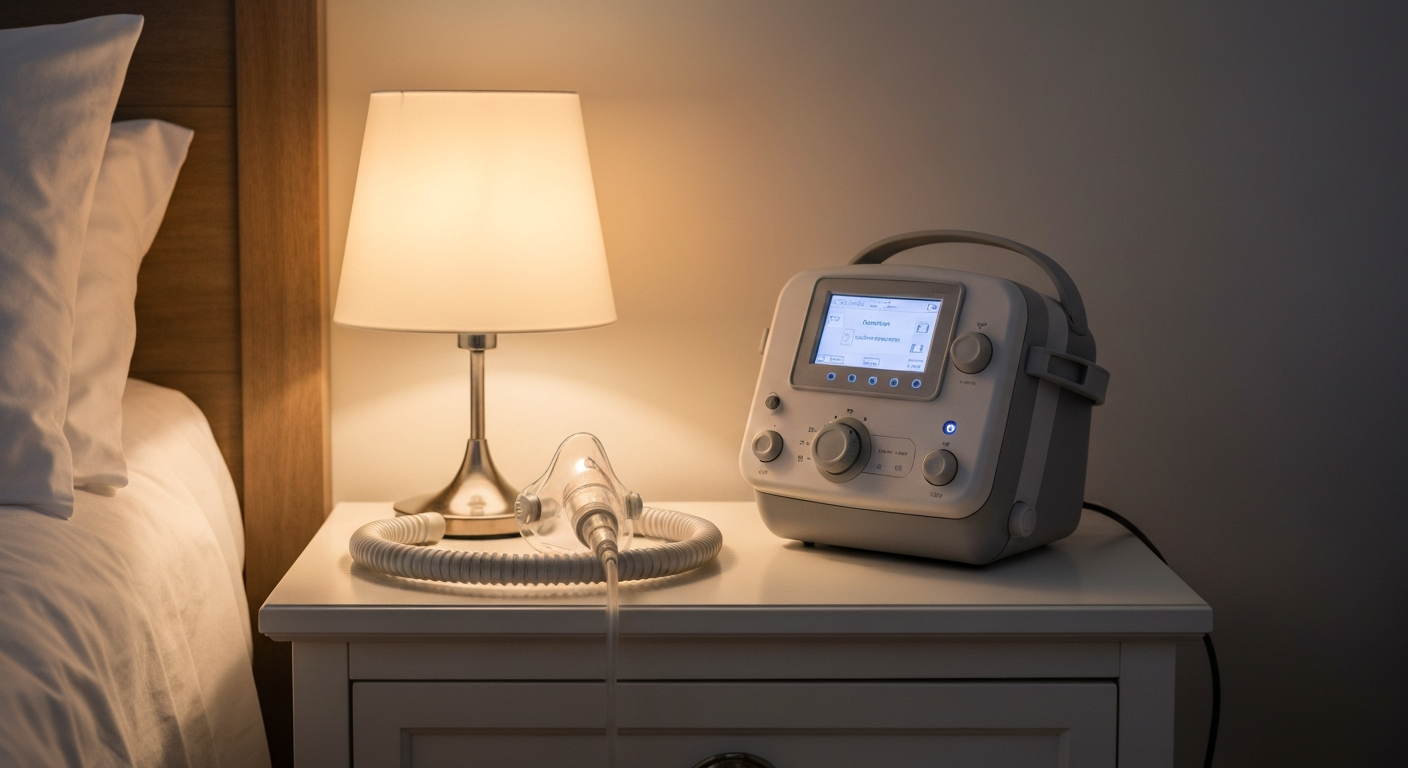
Weight gain is one of the best-documented contributors to snoring because extra tissue around the neck and throat physically narrows the airway — it's a medical link, not a judgment, and it's also one of the more changeable causes of snoring. If your wife's snoring has gotten louder alongside weight changes, the connection is real, but how you approach it together matters as much as the science behind it.
Why Weight and Snoring Are Connected
Extra soft tissue around the neck and throat takes up space that the airway needs, so even a modest amount of weight gain can measurably increase snoring.
"Having extra tissue in the neck can lead to a smaller airway size and an increased susceptibility to airway collapse." — Alexa Fry, Senior Health Editor, medically reviewed by Heather Wright, MD, at Sleep Foundation
This is why snoring often appears or worsens gradually rather than overnight — it tends to track alongside weight changes over months or years rather than showing up as a sudden switch.
Why This Is Common in Women Specifically
Weight isn't the only factor at play for women — hormonal shifts compound the effect, especially around midlife.
"Snoring increases during and after menopause. This could be due to a decrease in estrogen and progesterone." — Danielle Pacheco, Contributing Writer, medically reviewed by Abhinav Singh, MD, MPH, FAASM, at Sleep Foundation
That means weight and hormones can be working together rather than separately, which is worth knowing before assuming weight is the only variable in play.
Also Read: Is It Bad to Snore? When Snoring Becomes a Health Risk
Bringing It Up Without It Becoming a Fight
The topic of weight and snoring sits at the intersection of two sensitive subjects, so how it's raised matters. Framing it around shared sleep quality ("we both keep waking up") rather than her body specifically tends to land better than a direct comment about weight. Suggesting a joint approach — better sleep position, an oral appliance to try together, or a casual mention to her doctor at a routine visit — keeps it collaborative instead of pointed.
| ✓Our Pick |
Custom-fit mouthpiece that repositions your jaw to stop snoring Save yourself the frustration — a proven solution with consistently positive feedback from real buyers. Learn More → |
A fitted mouthpiece is often the easiest first step to suggest, since it addresses the snoring directly and immediately without requiring a conversation about weight loss timelines, which can take much longer to show results even with real effort.
What Actually Helps, Starting Tonight
| Approach |
Why it helps |
| Side-sleeping |
Reduces gravity's pull on neck tissue regardless of weight |
| Oral appliance (mouthpiece) |
Repositions the jaw to keep the airway open immediately |
| Gradual weight management |
Reduces neck tissue over time, but works on a longer timeline |
| Doctor visit if gasping/pauses occur |
Rules out obstructive sleep apnea, which needs separate evaluation |
In Short
Weight gain is a well-documented, legitimate contributor to snoring because extra neck tissue narrows the airway, and for women that effect can compound with hormonal changes around menopause. An oral appliance or side-sleeping setup can quiet things down immediately while any longer-term weight or health conversation happens at its own pace — and if snoring comes with gasping or breathing pauses, that's worth a doctor's attention regardless of weight.
What You Also May Want To Know
Is it fair to blame snoring entirely on weight?
No — weight is one contributor among several, including sleep position, alcohol use, nasal congestion, and hormonal changes, so it's rarely the only factor even when it plays a role.
Will losing weight definitely stop the snoring?
Weight loss often reduces snoring meaningfully, but it doesn't guarantee it stops completely, especially if other factors like sleep position or nasal congestion are also contributing.
What's a tactful way to suggest a solution without bringing up weight directly?
Framing it around shared sleep quality, like both of you waking up tired, and suggesting a side-sleeping setup or oral appliance to try together tends to feel more collaborative than a comment focused on her body.
Can a mouthpiece work even before any weight changes happen?
Yes. A fitted oral appliance repositions the jaw to keep the airway open regardless of current weight, so it can reduce snoring immediately while any longer-term changes happen separately.
When should snoring like this be brought to a doctor instead of handled at home?
If snoring is loud most nights and paired with gasping, choking sounds, or noticeable pauses in breathing, that combination is worth a doctor's evaluation for possible sleep apnea, regardless of weight.
Reviewed and Updated on June 20, 2026 by George Wright