Sleep

Snoring causes throat pain through two mechanisms working simultaneously: the mechanical vibration of pharyngeal tissue over hours of sleep, and the drying effect of mouth breathing that strips the throat lining of protective moisture. The pain is typically worst in the first 20–30 minutes after waking — a reliable sign that distinguishes snoring-caused throat pain from infection, which tends to worsen through the day.
Throat pain from snoring is not a minor side effect — it reflects real physical stress on the pharyngeal mucosa that accumulates across the night.
The pharynx (throat) is exposed to two distinct insults during a snoring night:
Vibration trauma. Snoring is produced when partially obstructed airflow makes the soft palate, uvula, and pharyngeal walls vibrate at 40–60 Hz — roughly the frequency of a diesel engine. This sustained vibration over 6–8 hours causes micro-abrasion of the mucosal lining, similar in mechanism to how prolonged friction produces a blister. The vibration also stimulates inflammatory mediators in the tissue, causing swelling and pain receptor sensitization. The result is waking pain that has both a mechanical (abrasive) and inflammatory component.
Dryness from mouth breathing. Snoring almost always involves mouth breathing, which bypasses the nose entirely. The nose's job is to filter, warm, and — critically — humidify air before it reaches the throat. Unfiltered dry air moving through the open mouth reaches the pharynx at near-ambient humidity (~30–40%), compared to the 95%+ humidity the nose delivers. Over a full night, this dehydrates the throat lining. Dehydrated mucosa is fragile, loses its protective mucus layer, and is more susceptible to pain from the simultaneous vibration.
"Habitual snorers show significantly higher rates of pharyngeal inflammation and mucosal damage than non-snorers, including elevated inflammatory cytokines in the pharyngeal epithelium. This correlates directly with snoring duration and intensity." — Sleep and Breathing, Springer Nature
Most snoring-caused throat pain is mild to moderate and transient. But the same symptom can signal something requiring medical attention.
| Severity / Pattern | Likely Cause | Action |
|---|---|---|
| Mild scratchiness, worst on waking, gone by mid-morning with fluids | Snoring-caused drying and vibration | Self-treat |
| Moderate soreness, worse at certain spots in the throat, clears in 1–2 hours | Snoring + mild pharyngeal inflammation | Self-treat; consider mouthpiece |
| Severe pain making swallowing difficult, or raw feeling | Possible sleep apnea severity; or infectious | See doctor if persists > 2 days |
| Any fever, swollen lymph nodes, or white patches | Bacterial (strep) or viral infection | See doctor |
| Throat pain alongside morning headaches, choking awake, extreme daytime fatigue | Possible obstructive sleep apnea | See doctor for sleep study |
The key distinguishing feature of snoring-caused throat pain is its pattern: it's worst immediately on waking, improves consistently over the morning as normal saliva production rehydrates the throat, and recurs on nights when snoring is heavier (alcohol, back sleeping, nasal congestion, dry air).
For immediate overnight and morning relief, address the two mechanisms causing the pain — dryness and vibration — as directly as possible.
Bedroom humidifier (most effective overnight fix). A humidifier set to 45–55% relative humidity raises the moisture of the air passing through the open mouth, directly combating the drying mechanism. A warm-mist or ultrasonic cool-mist humidifier placed 3–4 feet from the bed makes a noticeable difference after the first night.
Hydration before bed. Drinking 8–10 oz of water in the hour before sleep pre-moistens the throat lining. Avoid any alcohol — alcohol dehydrates and also intensifies snoring by relaxing pharyngeal muscles.
Saline spray or rinse. A nasal saline rinse (neti pot or squeeze bottle) before bed reduces nasal congestion, which often shifts some breathing from mouth to nose overnight. Saline throat spray applied just before sleep provides direct mucosal protection.
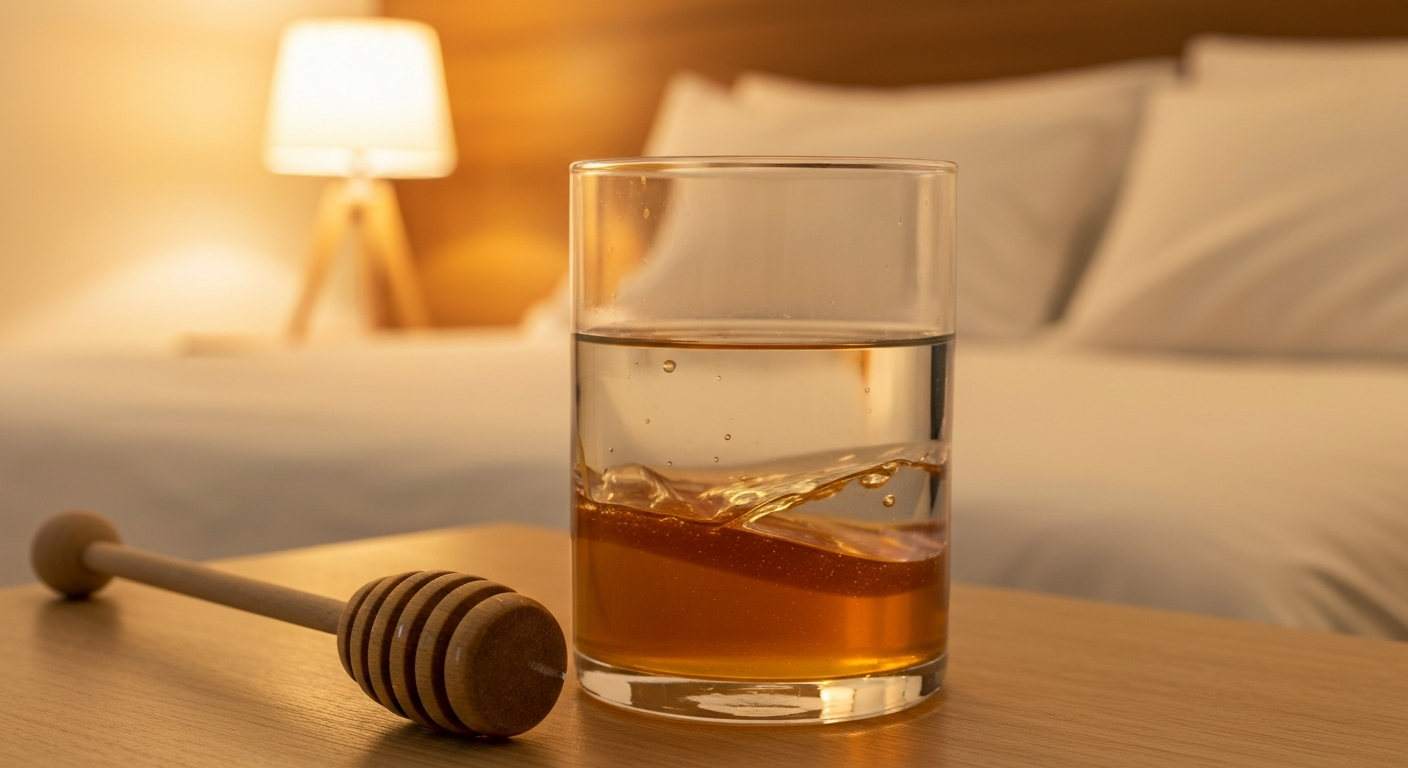
Honey and warm water. Mixing 1 teaspoon of raw honey in warm water and drinking slowly before bed coats the throat in a protective layer that persists for the first 1–2 hours of sleep. Honey's viscosity slows dehydration of the mucosal surface. This is a folk remedy with biological plausibility — the coating effect is real even if RCT evidence is thin.
OTC throat lozenges (sugar-free). Zinc gluconate or pectin-based lozenges taken immediately on waking help rehydrate the mucosa rapidly and reduce the pain duration.
"Humidification of the bedroom to 45–55% relative humidity significantly reduces subjective throat discomfort and mucosal drying in habitual snorers compared to unhumidified conditions." — Journal of Clinical Sleep Medicine
Relief measures manage the symptom; stopping the snoring removes the cause.
Snoring throat pain is a reliable diagnostic signal — it tells you snoring is severe enough to cause measurable tissue damage nightly. That severity warrants treating the snoring itself, not just the morning consequence.
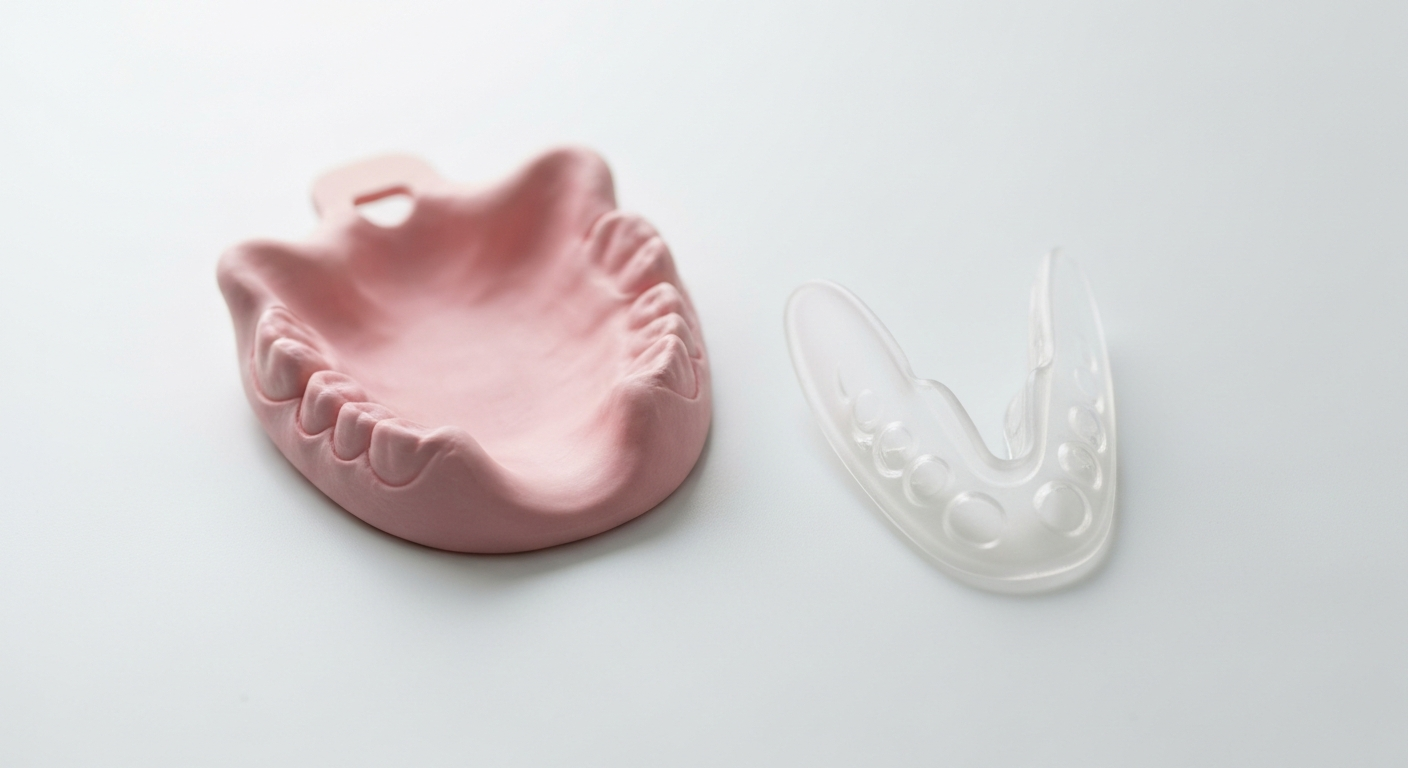
Mandibular advancement devices (MADs) are the most effective non-surgical intervention for the underlying cause. By moving the lower jaw forward, a MAD widens the airway opening, reduces the velocity of airflow through the narrowed passage, and decreases the intensity of pharyngeal vibration. For most anatomical snorers (the majority of habitual snorers), a MAD reduces snoring enough to eliminate or dramatically reduce the overnight throat trauma.
The pain from snoring typically resolves within a week of starting MAD use — because the vibration and drying mechanisms are substantially reduced from night one.
Other approach choices:
- Side sleeping: Reduces tongue-base collapse, often cutting snoring intensity by half for positional snorers.
- Nasal obstruction treatment: If nasal blockage is driving mouth breathing, treating it (antihistamines, nasal steroids, strips) shifts some breathing to the nose and reduces dry-air exposure.
- Alcohol and sedative avoidance: Removing the most modifiable intensifier of snoring vibration.
| ✓Our Pick |
SnoreMeds custom-fit mouthpiece — stops the vibration causing your throat pain A top-rated pick that works — readers who tried this reported noticeable improvement within days. Learn More → |
A few scenarios take snoring throat pain from "self-manageable" to "see a doctor":
Any throat pain that doesn't follow the snoring pattern (worst on waking, improving through morning) needs evaluation. Persistent pain through the day, fever, difficulty swallowing, ear pain referred from the throat, or visible changes in the throat (redness, swelling, white patches) point to infection or other pathology — not snoring.
Throat pain alongside loud snoring with witnessed apneas (breathing pauses), morning headaches, or extreme fatigue suggests obstructive sleep apnea. OSA causes more severe overnight pharyngeal trauma than simple snoring — complete airway closure creates stronger suction forces on the throat walls — and it carries cardiovascular risk beyond the throat pain. A sleep study can confirm OSA; CPAP and custom MADs are both effective treatments.
Also Read: Why Is My Throat Tight? 9 Causes & When to Worry
Snoring causes throat pain via two simultaneous mechanisms — vibrational micro-trauma to the pharyngeal mucosa and overnight drying from mouth breathing. The pain is characteristically worst immediately on waking and improves with hydration over the morning. For overnight relief: humidify the bedroom, hydrate before bed, and consider a saline spray. For lasting resolution, stop the snoring itself — a mandibular advancement device is the most effective non-surgical option. If throat pain doesn't match the waking-worst pattern, or comes with fever or difficulty swallowing, it's not snoring-caused — see a doctor.
The two causes — vibration damage and drying — both accumulate across the night and peak at the end of it. After 7–8 hours of snoring vibration and dry-air exposure, the throat is at maximum irritation. As you wake and begin swallowing normally, saliva production resumes, rehydrating and partially coating the damaged mucosa — which is why the pain improves over the morning.
For a given night, yes — the pain typically resolves within 1–2 hours of waking as rehydration occurs. But it recurs every night snoring continues. Without addressing the snoring, the damage also accumulates long-term: chronic snoring causes progressive pharyngeal changes including tissue thickening and reduced mucosal sensitivity.
The pain itself is not dangerous. The underlying snoring causing it may indicate obstructive sleep apnea if it's accompanied by witnessed apneas, gasping, or excessive daytime sleepiness. OSA does carry cardiovascular risk and should be treated. Snoring alone (without apnea) is not directly dangerous but warrants treatment for quality of life, throat health, and relationship impact.
Water (8–10 oz) is the foundation — it pre-hydrates the mucosa. Adding honey to warm water or herbal tea (chamomile, slippery elm) provides a coating effect. Avoid alcohol entirely — it intensifies both snoring and dehydration. Caffeinated drinks close to bed disrupt sleep staging, which can indirectly worsen snoring by altering time in deep sleep.
Reviewed and Updated on June 13, 2026 by George Wright