Health
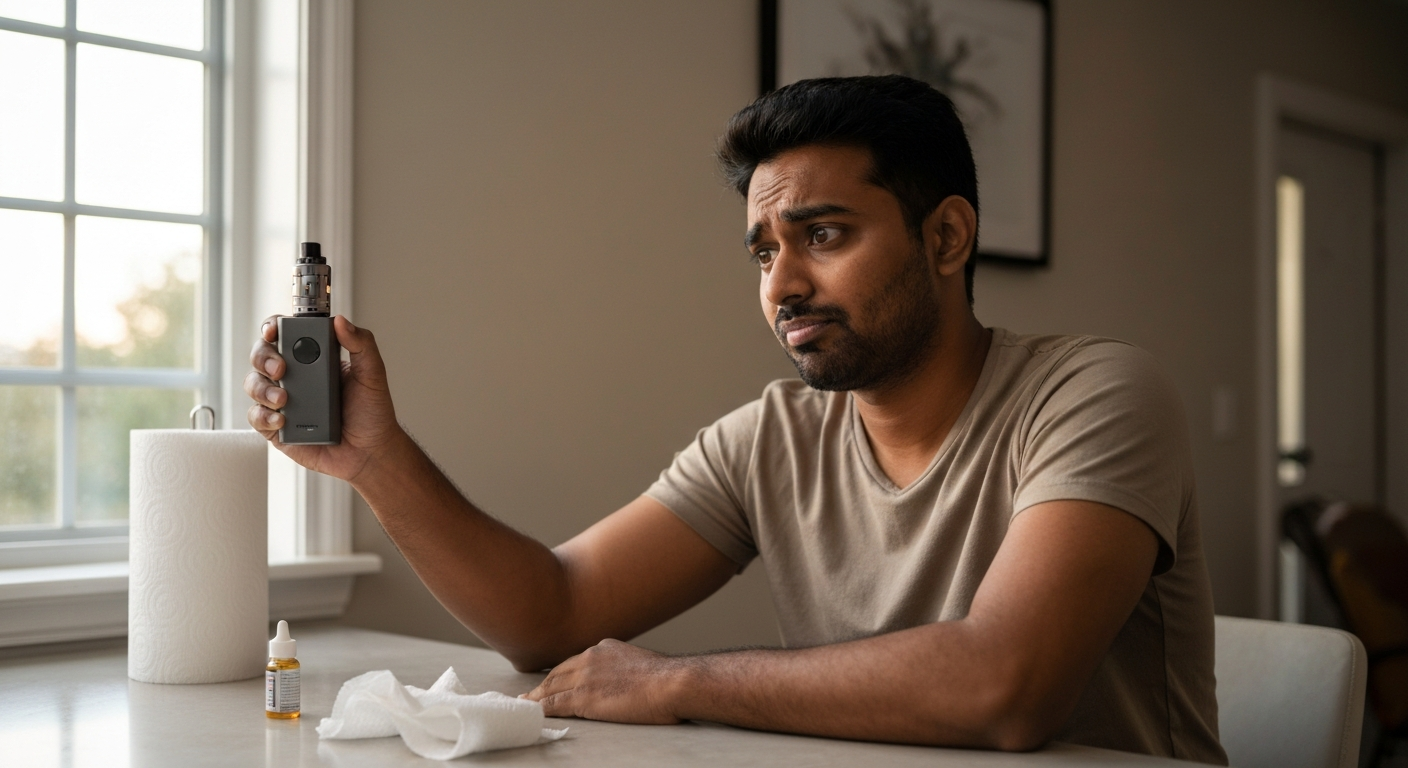

Your vape is bubbling because e-liquid has flooded the coil or seeped into the airflow system, creating a gurgling sound when you inhale — this is almost always caused by overfilling, a worn-out coil, or incorrect wattage settings.
Bubbling and gurgling are among the most common vape complaints, and the good news is that the fix is usually straightforward. The sound happens when excess liquid sits where air should flow freely, and your inhale forces vapor through that liquid. Below, you'll find the specific causes and step-by-step solutions to get your vape hitting smoothly again.
When e-liquid floods the atomizer chamber or saturates the coil beyond its capacity, air passing through creates that distinctive bubbling noise — essentially, you're hearing vapor forced through liquid rather than flowing cleanly.
The atomizer coil is designed to vaporize a specific amount of e-liquid at a time. When too much liquid accumulates in the chamber, airflow drags it upward before it can fully vaporize. This creates the gurgling sound you hear, often accompanied by spitback (hot droplets hitting your lips or tongue) and reduced vapor production.
Several factors can cause this flooding:
Understanding which factor is causing your specific issue will point you toward the right fix.
A flooded coil produces bubbling immediately after filling or after the device sits unused, while a worn coil tends to gurgle more as the day goes on and eventually delivers a burnt taste alongside the bubbling.
Flooded coils happen when liquid overwhelms the wicking material faster than it can vaporize. This is common right after refilling, especially if you prime the coil by adding drops directly to the cotton. It's also frequent when devices sit in warm environments — heat thins the liquid, allowing it to seep through more easily.
Worn coils, on the other hand, have degraded wicking material that can't absorb and hold e-liquid efficiently. The cotton becomes gunky, develops hot spots, or breaks down entirely. When this happens, liquid pools in the chamber rather than being drawn evenly to the heating element.
| Symptom | Flooded Coil | Worn Coil |
|---|---|---|
| Bubbling timing | Immediately after filling | Gets worse throughout the day |
| Flavor | Muted but normal | Burnt or off-tasting |
| Vapor production | Reduced, wet hits | Thin, wispy, or harsh |
| Visual check | Visible liquid in airflow | Dark, crusted coil |
| Solution | Clear the flood | Replace the coil |
To check your coil's condition, remove it from the tank and examine the cotton. Fresh coils have white or light-colored wicking material. If yours is dark brown, black, or visibly gunked up, replacement is overdue.
| ✓Our Pick |
Vape coil replacement kits on Amazon Highly rated by thousands of buyers — this is one of the most effective solutions for this issue you can try at home. See on Amazon → |
Every coil has a recommended wattage range printed on its side or packaging, and running below that range doesn't generate enough heat to vaporize e-liquid efficiently, causing it to pool and bubble.
This is one of the most overlooked causes of vape gurgling. When wattage is too low, the coil heats slowly and incompletely. E-liquid continues to flow into the chamber while the coil struggles to keep up, leading to flooding.
The fix is simple: check your coil's recommended range and adjust your device accordingly. For example, a coil rated for 40–60 watts will gurgle at 30 watts because it can't vaporize liquid fast enough. Setting it to 45–50 watts gives it enough power to work properly.
Conversely, wattage that's too high can burn the coil prematurely, which creates different problems — harsh hits and that unmistakable burnt cotton taste.
"Operating below the recommended wattage range leads to incomplete vaporization and liquid accumulation in the atomizer chamber." — Consumer Advocates for Smoke-free Alternatives Association
If you're using a pod system without adjustable wattage, this factor is handled automatically by the device. But if you're using a mod with variable settings, checking this should be your first troubleshooting step.
Overfilling past the tank's maximum line forces liquid into the central airflow tube, while inhaling too hard on certain devices pulls liquid faster than the coil can vaporize it.
Most tanks have a maximum fill line for good reason. The space above that line isn't empty — it's reserved for vacuum pressure that helps regulate liquid flow to the coil. Fill above it, and e-liquid has nowhere to go except into the airflow system.
Inhale technique matters too, and it depends on your device type:
If you recently switched device types, your old inhaling habit might be causing the bubbling. MTL users moving to DTL often inhale too softly, while DTL users switching to MTL frequently pull too hard.
Also Read: Why Is My Room So Stuffy? 6 Causes & Easy Fixes
E-liquid viscosity changes with temperature — warmer conditions make liquid thinner and more prone to flooding, which is why vapes often gurgle after sitting in a hot car or warm pocket.
The propylene glycol (PG) and vegetable glycerin (VG) in e-liquid both become less viscous when heated. A tank that works perfectly at room temperature can flood when exposed to heat because the thinner liquid flows through the wicking material faster than intended.
This is particularly common in summer months or for people who leave their vape in direct sunlight, near heating vents, or in pants pockets close to body heat.
To minimize temperature-related flooding:
"E-liquid viscosity is directly affected by ambient temperature. Higher temperatures reduce viscosity, potentially causing flooding in devices calibrated for thicker liquid consistency." — National Institute of Standards and Technology
Clear the existing flood first by removing the tank, blowing through the mouthpiece onto a paper towel, and wiping out any liquid — then address the underlying cause to prevent it from happening again.
Follow these steps to stop the bubbling:
If the bubbling returns immediately, the coil is likely the issue. If it returns after a few hours or days, look at your filling habits, storage temperature, or inhale technique.
For stubborn flooding, you can also try these additional steps:
Also Read: Why Is My Chainsaw Smoking? 5 Causes & How to Fix Them
If clearing the flood doesn't solve the problem, or if the bubbling returns within a day despite correct technique, the issue is likely hardware — either the coil needs replacing or the tank itself has a seal problem.
Coils are consumables. Depending on usage, most last 1–3 weeks before the cotton degrades enough to cause performance issues. Heavy users or those vaping sweetened e-liquids (which gunk up coils faster) may need to replace coils weekly.
Beyond coils, check these components:
If your device is more than a year old and the bubbling persists despite new coils and intact seals, the tank may have reached the end of its effective lifespan.
Vape bubbling is caused by excess e-liquid in the atomizer chamber, most commonly from overfilling, a worn coil, low wattage settings, or temperature changes that thin the liquid. Clear the flood by blowing through the mouthpiece, check that your wattage matches your coil's range, and replace coils every 1–3 weeks. If bubbling persists after these fixes, inspect O-rings and tank seals for damage.
Some crackling is normal — it's the sound of e-liquid vaporizing on the coil. However, excessive crackling paired with bubbling indicates flooding. The crackling intensifies when liquid is being heated rather than smoothly vaporized. If you're getting spitback (hot droplets hitting your mouth), that confirms too much liquid is reaching the coil at once.
You can, but it won't be pleasant. Bubbling typically means wet hits, reduced flavor, and potential spitback. Using a flooding vape also wastes e-liquid since much of it ends up in your mouth or airflow system rather than being vaporized. It's better to take two minutes to clear the flood first.
Yes. Higher-PG e-liquids are thinner and more prone to flooding than higher-VG liquids. If you're consistently having bubbling issues, try switching to a 70/30 or 80/20 VG/PG blend. Sweeter e-liquids also gunk up coils faster, which can contribute to flooding as the coil degrades.
Cold temperatures can cause condensation inside the tank and airflow system, which creates bubbling sounds even without a true flood. Additionally, pulling a vape from a cold environment into a warm one causes rapid temperature change that can thin the liquid suddenly. Let your device reach room temperature before using it after cold storage.
Most vapers need new coils every 1–2 weeks with moderate use. If you vape heavily or use sweetened e-liquids, weekly replacement is common. Signs it's time to change include muted flavor, reduced vapor, a burnt taste, or persistent bubbling that doesn't clear. Keeping spare coils on hand prevents being stuck with a gurgling vape.
Reviewed and Updated on June 12, 2026 by George Wright