
Cars
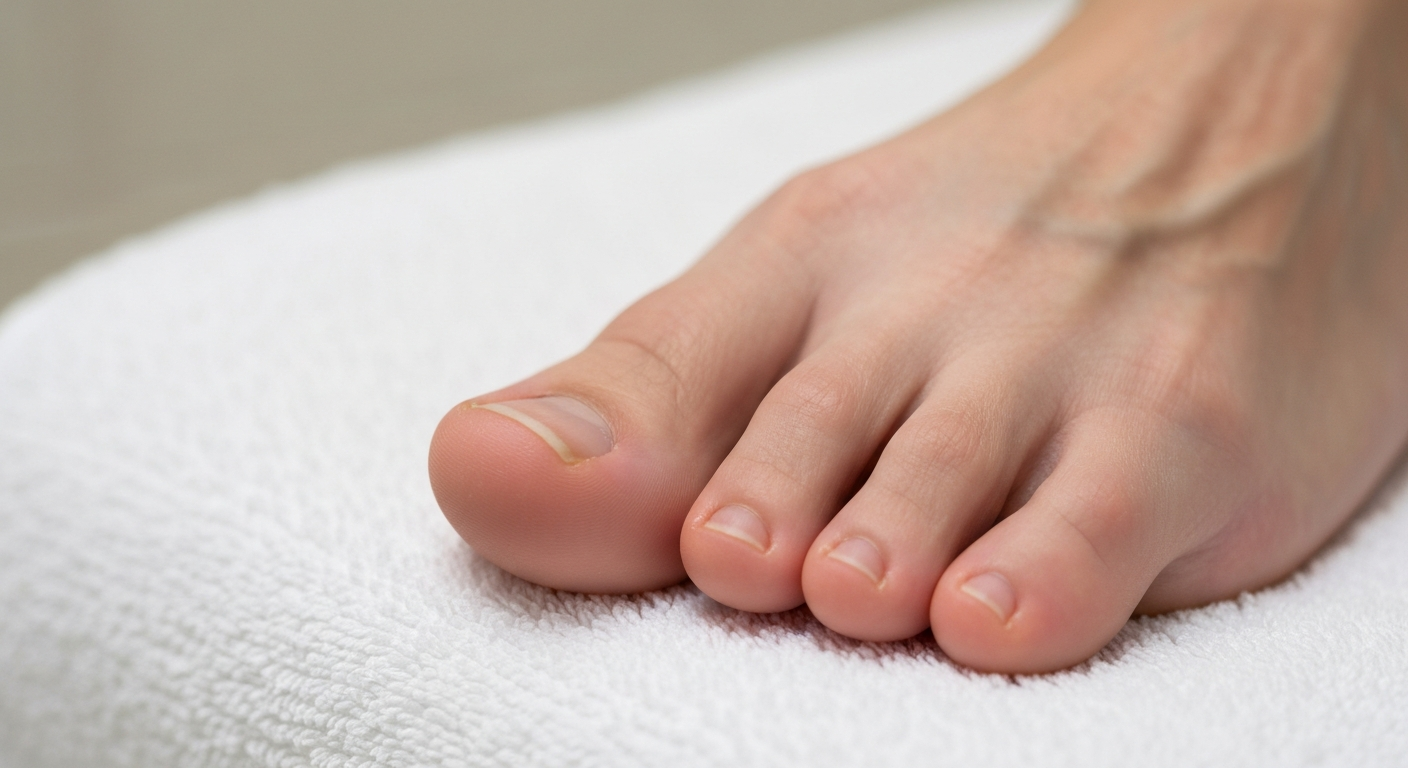

A toenail growing sideways, curving into the skin, or growing at an angle is almost always caused by improper trimming technique, ill-fitting footwear, nail trauma, or inherited nail shape — and the fix is almost always conservative unless the nail has already become ingrown and infected.
A toenail that grows sideways or curves downward at the edges is one of the most common foot complaints, and nearly always starts with either how the nail was trimmed or how much pressure the footwear places on the nail matrix (the root of the nail).
Yes. The single most common cause of a toenail that grows sideways or curves into the skin is cutting the nail with curved or tapered corners rather than straight across.
When the nail edge is curved or cut too short at the sides, the nail grows toward the skin rather than straight forward. The nail edge catches on soft tissue, is redirected sideways, and eventually embeds — this is the classic ingrown toenail (onychocryptosis) progression.
Correct toenail trimming:
1. Cut straight across — never round the corners
2. Leave a small white margin visible at the edge
3. Do not cut below the level of the toe's soft tissue at the sides
4. Use sharp nail clippers or a nail file, not scissors with curved blades
If the nail is already growing sideways, do not force it straight with clippers — this often worsens the angle. Soak the foot first to soften the nail, then trim straight across at a comfortable length.
Shoes that compress the toes — particularly tight toe boxes, high heels, or shoes that are too short — apply lateral pressure to the toenails. This chronic pressure on the sides of the nail redirects growth sideways over weeks and months.
This is particularly common in:
- Runners who wear shoes that are one size too small
- People who wear pointed-toe dress shoes or high heels for work
- People whose feet have widened with age but who continue wearing the same shoe size
Fix: Ensure shoes have at least a half-inch of space between the longest toe and the shoe tip. The toe box should allow the toes to spread naturally. If you have wide feet, choose shoes marketed for wide widths.
A toenail growing sideways that begins curving into the surrounding skin is an ingrown toenail. The big toe is the most commonly affected. Signs include:
- Pain and tenderness at the nail edge
- Redness and swelling of the surrounding skin
- Skin growing over the nail edge
- Discharge or pus if infected
Early-stage treatment (nail not yet infected):
1. Soak the foot in warm water for 15 minutes, 3–4 times per day
2. Gently lift the nail edge from the skin with a small piece of dental floss or cotton wick and secure it with a piece of tape — this encourages the nail to grow over the skin rather than into it
3. Wear open-toed footwear until resolved
Do not attempt to cut into the nail fold or dig out the ingrown portion yourself. This causes wounds and dramatically increases infection risk.
"Ingrown toenails affect an estimated 20 percent of individuals presenting with foot problems to primary care. Conservative management is effective in uncomplicated cases; surgical nail avulsion is indicated for recurrent or infected cases." — American Family Physician — Ingrown Toenail Management, American Academy of Family Physicians
Nail shape is strongly inherited. Some people have nails with a naturally pronounced curve (incurvated nails or pincer nails) that tend to roll inward regardless of trimming habits. Others have fan-shaped nails that spread sideways rather than growing forward.
If your toenails have always been unusually curved or sideways-growing even with correct trimming and well-fitted shoes, the nail matrix (the root) is positioned at a natural angle that produces a curved nail. This does not require treatment unless the nail causes discomfort, though periodic professional podiatry care helps maintain a manageable nail shape.
Trauma to a toenail — from dropping something heavy on the foot, from prolonged pressure (marathon runners losing toenails), or from a stubbing injury — can damage the nail matrix. A damaged matrix does not produce a uniform nail plate. Regrowth after nail injury often comes in thicker, ridged, curved, or sideways-growing.
This type of abnormal regrowth frequently resolves over several growth cycles as the matrix repairs, but significant matrix scarring can cause permanent nail deformity.
Onychomycosis (nail fungus) causes thickening, crumbling, and distortion of the nail plate. A fungally infected nail may appear to grow sideways because the thickened plate builds up at the sides and curves under pressure from footwear. Other signs include:
- Yellow or brownish discoloration
- Brittle, crumbly, or thickened nail
- White patches on the nail surface
- Debris under the nail
Fungal nail infections are treated with topical antifungal solutions (efinaconazole, ciclopirox) for mild cases or oral terbinafine for more extensive infection. Treatment takes months because the nail must grow out fully.
See a podiatrist if:
- The nail is ingrown and showing signs of infection (pus, significant swelling, red streaking)
- Conservative treatment has not resolved the ingrown nail within 2–3 weeks
- The nail recurs repeatedly after self-treatment
- You are diabetic or have peripheral neuropathy (foot injuries in these patients require professional management to prevent serious complications)
A podiatrist can perform a partial nail avulsion — removing the ingrown edge under local anesthetic — and optionally phenolize the nail matrix to prevent regrowth of that edge permanently.
"Recurrent ingrown toenails benefit from partial nail plate avulsion combined with chemical matricectomy using phenol, with reported recurrence rates below 10 percent compared to 50–80 percent for simple avulsion alone." — Journal of the American Podiatric Medical Association, American Podiatric Medical Association
| ✓Our Pick |
Shop nail clippers, ingrown toenail treatment kits, and foot care tools A top-rated pick that works — readers who tried this reported noticeable improvement within days. See on Amazon → |
A toenail growing sideways is caused by curved trimming, tight shoes, nail trauma, genetic nail shape, or fungal thickening. Trim straight across with a visible white margin, switch to footwear with a wide toe box, and soak the foot to encourage early ingrown nails to reverse. If the nail is infected or recurs repeatedly, a podiatrist can remove the ingrown edge permanently with a quick in-office procedure.
A pincer nail (also called trumpet nail or involuted nail) is a nail that curves inward from both sides, tightening around the soft tissue below. It is caused by genetic nail shape, psoriasis, osteoarthritis, or certain medications (beta-blockers, retinoids). Treatment ranges from conservative trimming and nail bracing (orthonyxia) to surgical matrix correction in severe cases.
Improper cutting technique during a pedicure — rounding the corners or cutting the sides too short — redirects nail growth toward the skin. If a pedicure was followed by a toenail that began growing crooked or inward, the nail was cut at an incorrect angle. Allow the nail to grow out while trimming straight across, and avoid shaped pedicure cuts on the big toenail.
For mild cases without signs of infection, yes. Soak the foot in warm water to soften the nail, trim straight across (not into the corners), gently place a small wick of cotton or dental floss under the nail edge to lift it from the skin, and switch to wider shoes. Most early sideways or ingrown toenails resolve with consistent conservative care over 2–4 weeks.
Recurrent ingrown toenails are usually caused by a persistently incorrect trimming habit, a narrow toe box that applies constant lateral pressure, or an inherited nail curvature that the nail matrix produces regardless of care. Permanent resolution typically requires either phenol matricectomy (destroying the portion of nail root producing the problematic edge) or a consistent long-term trimming and shoe protocol with podiatry follow-up.
Reviewed and Updated on June 6, 2026 by George Wright