Skin
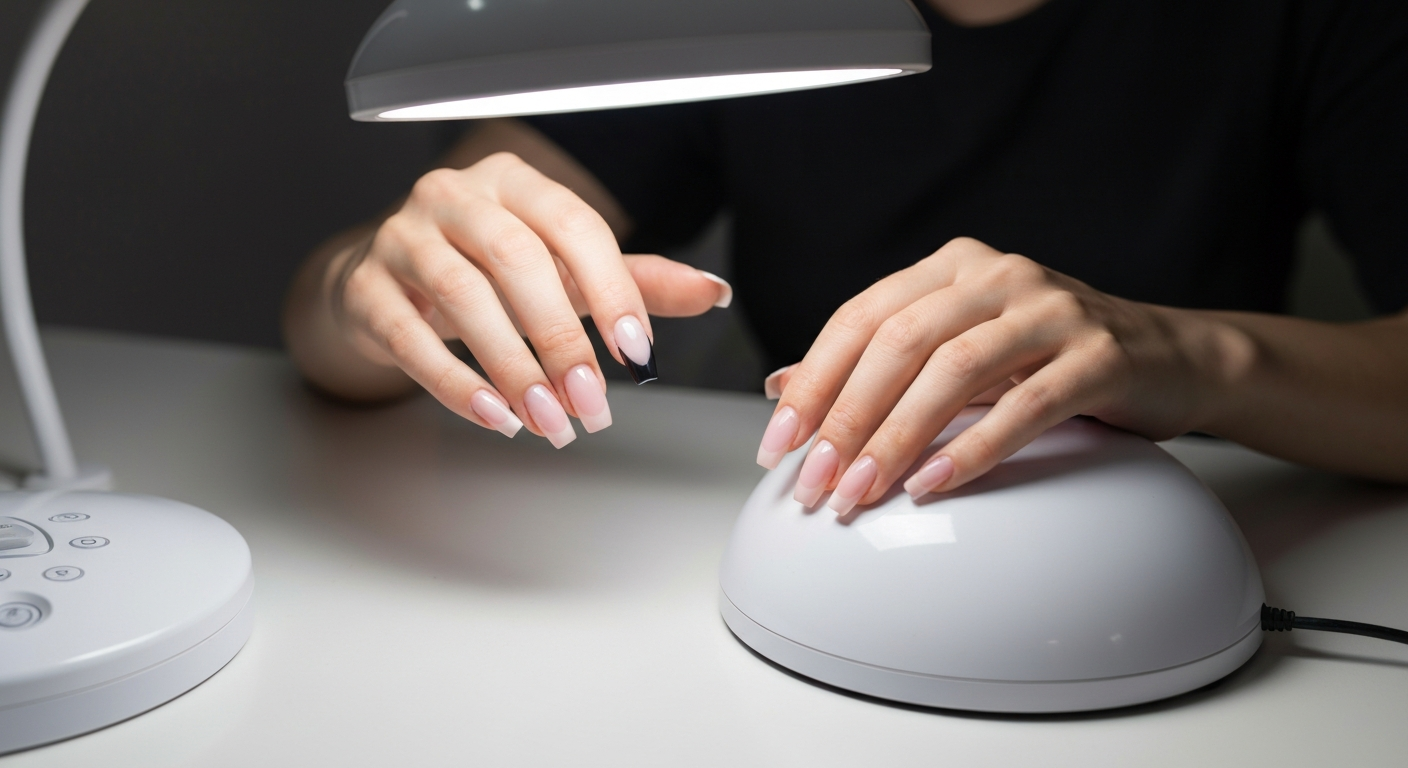

Builder gel that won't cure is almost always caused by an underpowered or degraded UV lamp, layers applied too thick, an incompatible gel-lamp combination, or gel that is past its shelf life — all diagnosable with a few quick checks before your next application.
Builder gel — whether BIAB (Builder in a Bottle) or traditional builder gel — is a photoinitiator-based polymer that hardens only when the correct wavelength of UV or LED light activates the photoinitiators inside the formula. When it fails to cure, one of these components is not functioning correctly.
This is the most common cause of builder gel cure failures, especially for DIY nail enthusiasts using budget LED lamps. Builder gel is thicker than standard gel polish and contains more photoinitiators — it requires more UV energy to cure all the way through.
Key lamp specifications to check:
- Wattage: Builder gel typically requires a minimum of 36W LED lamp. Lamps below 24W are insufficient for thicker gel formulas
- Wavelength: UV LED lamps output 365nm and/or 395nm. Most gel photoinitiators activate at 365–395nm. If your lamp is exclusively 395nm, some gel formulas designed for 365nm curing may undercure
- Brand compatibility: Some gel brands (Gelish, OPI GelColor, IBD) are specifically formulated for their own lamps. Using an off-brand lamp with a branded gel can cause incomplete curing even at adequate wattage
"Photoinitiator activation in UV-cured gel nails is wavelength-dependent. Builder gels typically require higher cumulative energy (measured in J/cm²) to achieve complete polymerization compared to thinner gel polish formulations." — Journal of the American Academy of Dermatology — UV Nail Lamp Safety and Efficacy, American Academy of Dermatology
UV and LED light can only penetrate gel to a certain depth. If you apply builder gel in a thick single layer — more than approximately 1–1.5mm — the bottom of the layer remains under-cured even as the surface hardens. You will notice:
- The top feels hard but the gel is bendy or soft underneath when pressed
- The gel lifts from the nail plate at the base (the uncured portion cannot bond)
- The finished nail feels slightly flexible rather than rigid
Fix: Apply builder gel in two thin-to-medium layers, fully curing each one (60–90 seconds in a 36W+ LED lamp or as directed by the manufacturer) before applying the next. Architectural shaping should happen on the first uncured layer, then cure, then build.
LED lamps degrade over time. The LED bulbs inside progressively lose output power after thousands of hours of use. Most consumer LED nail lamps are rated for 50,000–100,000 hours per LED, but the reflective coating inside the lamp casing can degrade much faster, reducing effective output.
Also: Gel residue, dust, and debris on the inside of the lamp diffuse the light before it reaches the nail. Clean the interior of your lamp with a lint-free pad dampened with isopropyl alcohol every 5–10 uses.
If your lamp is more than 3 years old and you use it regularly, consider replacing it — output degradation is not always visible but significantly affects curing.
Gel formulas have a shelf life — typically 24 months from manufacture for unopened product, 6–12 months once opened. The photoinitiators in gel degrade over time and with exposure to ambient light. Expired gel or gel that has been stored in sunlight or at warm temperatures will undercure because the photoinitiators have broken down.
Signs of expired or degraded gel:
- Gel that was previously curing fine now feels soft or sticky post-cure
- Color has shifted or the consistency has changed (thinner or lumpy)
- Strong chemical odor not present previously
Store gel in a cool, dark place (a drawer or a UV-blocking nail gel bag). Never leave the bottle in direct sunlight.
Builder gel does not cause curing failure from surface contamination — the photoinitiator still activates — but the gel may delaminate from the nail if applied over oil, lotion, or unscrubbed natural nail. If the gel separates from the nail plate after curing, the curing worked but the adhesion failed.
However, applying gel over acetone residue or a wipe-off gel top coat that was not fully removed can interfere with the adhesion of the builder gel base and cause lifting that resembles a cure failure.
Correct prep:
1. Push back and remove cuticles
2. Lightly buff the nail surface with a 180-grit file to create micro-texture
3. Apply a pH bond or nail dehydrator
4. Apply base coat or gel primer as recommended by the builder gel brand
All gel nail products experience an "inhibition layer" — a thin, sticky top layer that doesn't cure because oxygen in the air inhibits the polymerization reaction at the surface. This is normal. The inhibition layer is what allows subsequent gel layers to bond to previous ones. It is removed with an alcohol wipe after the final top coat cure.
Do not mistake the inhibition layer for a cure failure. If only the very surface is tacky but the gel underneath is solid and rigid, curing is complete and the tackiness is the expected inhibition layer.
Photoinitiator chemistry slows at low temperatures. Builder gel that is applied in a cold room (below 65°F) or directly from a cold bottle may cure more slowly and less completely than at room temperature.
Fix: Warm the gel bottle in your hands or briefly place it in a warm water bath (not hot — above 85°F can degrade the formula) before application. Ensure the room is at least 68°F during application and curing.
If your hand is not fully inside the lamp during curing, or the nails are elevated off the lamp's base at an angle, some nails will receive insufficient light exposure. This is particularly common with:
- Curved or cupped fingers that angle the nail away from the lamp's LED array
- Thumb position — the thumb often receives less light in traditional lamps because of its orientation
- Long nails that extend past the lamp's effective curing zone
Fix: Use a dedicated thumb position in the lamp if available, or cure the thumb separately. Flatten fingers as much as comfortable to maximize nail surface exposure to the LED array. Consider a 360-degree LED lamp (LEDs on all sides including the top) for more even curing.
| ✓Our Pick |
Shop professional UV/LED nail lamps for builder gel and gel nails Simple to use and genuinely effective — for many people this is all they ever needed. See on Amazon → |
| Symptom | Likely Cause | Fix |
|---|---|---|
| Soft/bendy throughout | Layer too thick | Apply in 2 thin layers |
| Tacky on top only | Normal inhibition layer | Wipe with alcohol wipe — this is expected |
| Cures at salon but not at home | Lamp underpowered | Upgrade to 36W+ LED lamp |
| Was curing fine, now doesn't | Degraded lamp or expired gel | Replace lamp or gel |
| Gel lifts from nail plate | Surface contamination | Improve nail prep (dehydrator + primer) |
| Only some nails not curing | Lamp positioning | Reposition hand, cure thumb separately |
The most common cause of builder gel not curing is an underpowered lamp combined with layers applied too thick. Use a 36W+ LED lamp, apply in two thin layers fully cured before the next, and check your gel's expiration date. The normal inhibition layer (surface tackiness) is not a cure failure — wipe it with an alcohol-soaked lint-free pad after the final top coat cure.
Lifting is an adhesion failure, not a cure failure. The gel hardened but did not bond to the nail plate. Common causes include cuticle or oil on the nail surface, skipping the pH bonder or primer, over-buffing (removing too much surface texture), or gel applied over a top coat that was not removed. Proper prep — dehydrate, prime, and buff — eliminates most lifting.
Most builder gel formulas are designed for 36W+ LED lamps with a 365/395nm output. Some professional gel brands specify their own lamps for warranty and performance guarantees. Off-brand lamps typically work if they meet the wattage and wavelength requirements, but output quality and LED distribution vary significantly at lower price points. For consistent results, use a lamp with verified specs rather than an unbranded unit.
Soft gel after a standard cure time indicates either the layer is too thick, the lamp is underpowered, or the gel formula has expired and the photoinitiators are no longer active. Try a thinner layer first. If it still does not cure, test the lamp with a different gel formula to determine whether the lamp or the gel is the variable.
Undercured gel has not fully polymerized and may be easier to file off than fully cured gel. Soak a foil wrap with acetone, wrap each nail, and leave for 15–20 minutes — undercured gel dissolves faster in acetone than fully cured gel. Avoid forceful peeling, which lifts the nail plate layers. After removal, apply cuticle oil and allow nails to rest for at least a week before reapplication.
Reviewed and Updated on June 6, 2026 by George Wright