
Skin
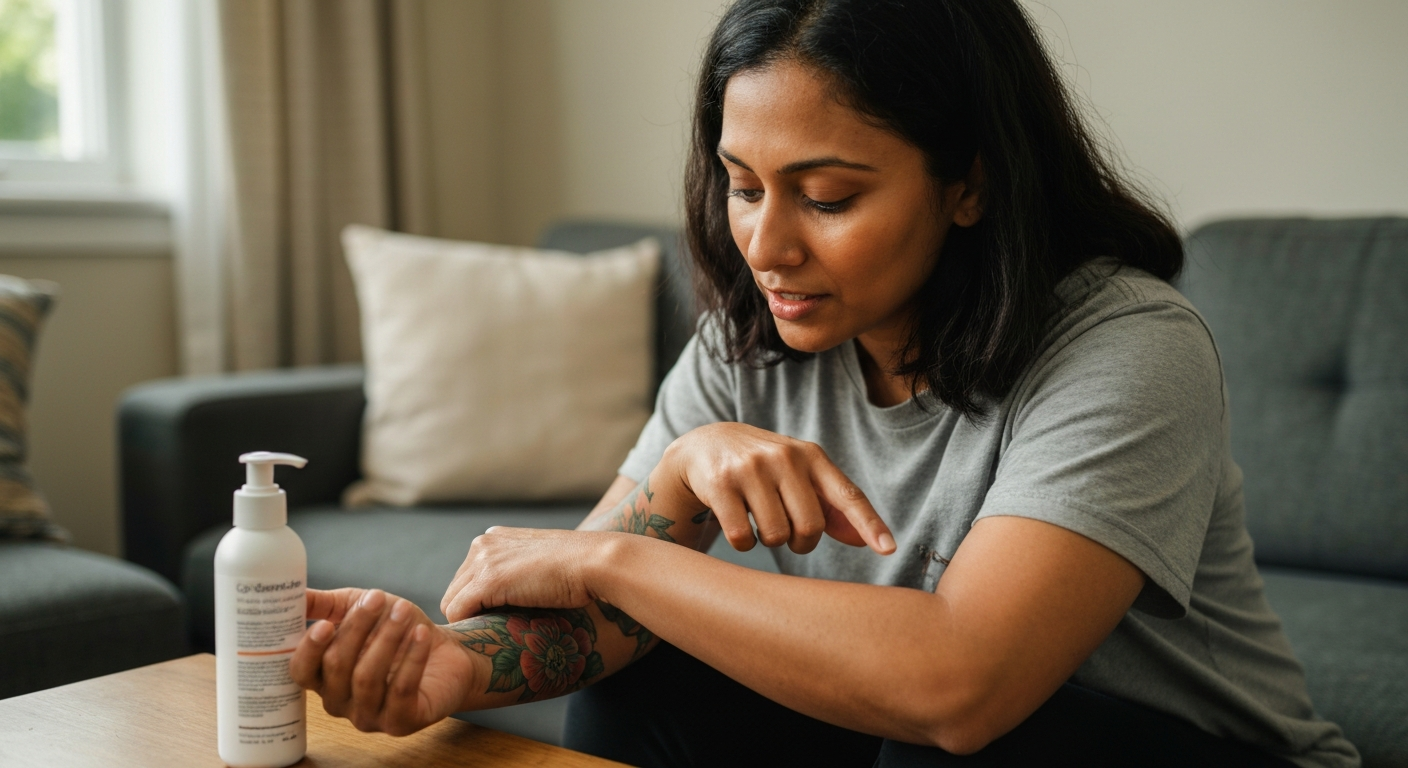

A tattoo that suddenly feels raised years after it fully healed is almost always a sign your immune system is reacting to something—weather changes, sun exposure, an allergic response, or an underlying skin condition—rather than a problem with the tattoo itself.
The good news: in most cases, the raised texture is temporary and harmless. Your body periodically "notices" the foreign ink particles embedded in your dermis and mounts a mild inflammatory response, causing the skin to puff up along the lines of your tattoo. Below, we'll cover the seven most common reasons this happens, when you should actually worry, and what you can do to calm your skin down.
Your tattoo sits in the dermis (the second layer of skin), where ink particles remain permanently surrounded by immune cells—and those cells can be reactivated by a variety of triggers years or even decades later.
When you first got your tattoo, your body treated the ink as a foreign substance. Macrophages (a type of white blood cell) rushed to the area, engulfed the ink particles, and essentially held them in place. This is why tattoos are permanent: the ink never leaves; it just gets locked inside these immune cells.
The catch is that your immune system never fully "forgets" the ink is there. Under certain conditions, it can flare up again, sending fresh inflammatory signals to the tattooed area. The result is swelling that follows the exact pattern of your tattoo—sometimes dramatically enough that you can feel every line with your fingertips.
"Tattoo reactions can occur at any time after tattooing, from days to decades later." — Dr. Sarah Chen, MD at the American Academy of Dermatology
This delayed reaction doesn't mean something is wrong with your tattoo or that your artist made a mistake. It's simply how your immune system works.
The most common triggers include weather and humidity changes, sun exposure, allergic reactions to ink pigments, eczema or psoriasis, scar tissue formation, weight fluctuations, and autoimmune flare-ups.
Temperature and humidity shifts are the number-one culprit behind temporarily raised tattoos. When the weather changes rapidly—especially during seasonal transitions—your skin expands and contracts. The dermis layer where your tattoo ink lives responds differently than surrounding tissue, which can cause visible swelling along tattoo lines.
Cold, dry winter air is particularly notorious for this. Low humidity pulls moisture from your skin, and the dermis compensates by triggering mild inflammation. Many people notice their tattoos become raised like clockwork every winter, then flatten out completely in spring.
Ultraviolet radiation penetrates deep enough to reach your tattoo ink, and certain pigments—especially red, yellow, and orange—can undergo photochemical reactions when exposed to sunlight. This triggers a localized immune response that manifests as raised, sometimes itchy skin.
Even years-old tattoos that never reacted before can suddenly start swelling after a sunburn or extended UV exposure. Black ink is generally the most stable, while lighter colors tend to be more reactive.
Yes—and this is more common than most people realize. Red ink, in particular, contains mercury sulfide (cinnabar) or other compounds that can trigger delayed hypersensitivity reactions. Your immune system might tolerate the ink for years before suddenly deciding to mount an allergic response.
Signs of a true allergic reaction include:
| Symptom | What It Looks Like |
|---|---|
| Raised, bumpy texture | Follows tattoo lines exactly |
| Persistent itching | Doesn't go away after a few days |
| Redness beyond the tattoo | Surrounding skin also inflamed |
| Scaling or flaking | Skin peels over the colored areas |
| Fluid-filled bumps | Small blisters in severe cases |
If your tattoo stays raised for more than two weeks with these symptoms, you may be dealing with an allergic reaction that needs medical attention.
Also Read: Why Is My Mouth Cracked at Corners? 7 Causes & Fixes
If you have eczema, psoriasis, or dermatitis, your tattooed skin is not immune to flare-ups. In fact, tattoos can become a focal point for these conditions due to something called the Koebner phenomenon—where skin trauma (including the original tattooing process) creates a site that's more susceptible to chronic skin conditions.
"The Koebner phenomenon occurs when new skin lesions appear on areas of previously traumatized skin." — National Psoriasis Foundation
People with psoriasis may notice plaques forming specifically along their tattoo lines. Those with eczema might experience intense itching and raising only in tattooed areas during flare-ups, while the rest of their skin remains calm.
Some tattoos develop raised scar tissue during the initial healing process, and this texture can become more noticeable over time. Hypertrophic scarring (raised scars that stay within the boundaries of the original wound) and keloid scarring (scars that grow beyond the original area) both cause permanent textural changes.
Scar tissue in tattoos typically results from:
Unlike inflammatory swelling, scar tissue doesn't come and go—it's constant. If your tattoo has always felt slightly raised since it healed, scarring is likely the cause.
Significant weight gain or loss changes the tension and thickness of your skin. When skin stretches or contracts, the dermis layer containing your tattoo ink shifts accordingly. This can cause certain areas of a tattoo to feel more raised than others, especially in spots where the skin has stretched and then partially rebounded.
Tattoos on areas prone to significant size changes—stomach, thighs, upper arms—are most likely to develop textural changes related to weight fluctuations.
People with autoimmune conditions like lupus, rheumatoid arthritis, or Hashimoto's thyroiditis sometimes experience tattoo reactions during disease flare-ups. When your immune system is already in overdrive attacking your own tissues, it may simultaneously ramp up its response to tattoo ink.
These reactions tend to correlate with other symptoms of autoimmune activity. If your tattoo raises up around the same time you're experiencing joint pain, fatigue, or other autoimmune symptoms, the two are likely connected.
Most raised tattoo reactions respond well to moisturizing, cooling, and avoiding triggers—but persistent or severe reactions need professional evaluation.
For occasional, mild raising:
Apply fragrance-free moisturizer — Keeping the skin hydrated reduces inflammation. Look for products with ceramides or hyaluronic acid.
Use a cold compress — Wrap ice in a cloth and apply for 10–15 minutes to reduce swelling.
Take an antihistamine — Over-the-counter options like cetirizine or loratadine can calm mild allergic responses.
Apply hydrocortisone cream — A 1% OTC hydrocortisone cream can reduce inflammation for short-term use (no more than 7 days without medical guidance).
Protect from sun — Use SPF 30+ sunscreen on tattooed skin whenever you're outdoors.
| Treatment | Best For | How Often |
|---|---|---|
| Fragrance-free moisturizer | Dryness, weather-related raising | 2–3 times daily |
| Cold compress | Acute swelling, itching | As needed, 15 min max |
| Antihistamine | Mild allergic symptoms | Once daily |
| Hydrocortisone 1% | Inflammation, itching | Twice daily, max 7 days |
| SPF 30+ sunscreen | Sun-triggered reactions | Every 2 hours outdoors |
Also Read: Why Is My Body Warm but Feet Are Cold? 8 Causes & Fixes
Seek professional evaluation if your raised tattoo is accompanied by pain, spreading redness, pus, fever, or symptoms lasting more than two weeks.
While most raised tattoos are harmless, certain signs indicate you need medical attention:
Signs of infection — Increasing redness, warmth, pus, or red streaks spreading from the tattoo require immediate care, though true infections years after healing are rare.
Granulomas — Hard, raised bumps that form around ink particles. These need professional treatment, sometimes including steroid injections.
Persistent allergic reaction — If antihistamines and hydrocortisone don't help after two weeks, you may need prescription-strength treatment or allergy testing.
Sarcoidosis — In rare cases, tattoo reactions can be the first sign of this systemic inflammatory disease. If you have raised tattoos along with unexplained cough, joint pain, or skin lesions elsewhere, mention this to your doctor.
A dermatologist can perform a skin biopsy if needed to determine exactly what's causing the reaction and prescribe appropriate treatment, which may include stronger topical steroids, steroid injections directly into the tattoo, or in severe allergy cases, laser removal of the reactive ink.
A raised tattoo years after healing is almost always caused by your immune system reacting to environmental triggers like weather changes, sun exposure, or allergens in certain ink pigments. Skin conditions like eczema and psoriasis can also target tattooed areas. Most reactions are temporary and respond well to moisturizer, antihistamines, and sun protection. See a dermatologist if symptoms persist beyond two weeks, worsen progressively, or include signs of infection.
Yes, occasional raising is completely normal and extremely common. The ink particles in your dermis are permanently surrounded by immune cells, and various triggers can reactivate mild inflammation. Many people notice their tattoos raise during seasonal changes, after sun exposure, or during times of stress or illness. As long as the raising comes and goes without other concerning symptoms, it's nothing to worry about.
Cold weather strips moisture from your skin, causing the dermis layer to become inflamed. Since tattoo ink sits in the dermis, this inflammation makes your tattoo swell along its lines. The itching comes from histamine release during this inflammatory response. Using a heavier moisturizer during winter months and running a humidifier indoors can significantly reduce cold-weather tattoo reactions.
Red ink is notorious for causing delayed allergic reactions, sometimes appearing years after the tattoo was done. Yellow, orange, and green inks also have higher reaction rates than black or blue. This is because lighter-colored inks often contain compounds like mercury sulfide, cadmium, or chromium that trigger immune responses. If only certain colored portions of your tattoo are raised, you're likely reacting to that specific pigment.
If your tattoo has been consistently raised for more than two weeks—especially with itching, scaling, or discomfort—you should see a dermatologist. Temporary raising from weather or minor irritation typically resolves within a few days. Prolonged elevation suggests a possible allergic reaction, granuloma formation, or an underlying skin condition that needs professional diagnosis and treatment.
In most cases, yes. Weather-related and minor inflammatory reactions typically resolve on their own within a few days to a couple of weeks. Allergic reactions may need treatment but often become manageable with proper care. The exception is scar tissue, which is permanent—if your tattoo has been raised since it initially healed, that texture won't change without medical intervention like steroid injections or laser treatment.
Reviewed and Updated on June 3, 2026 by George Wright