Health
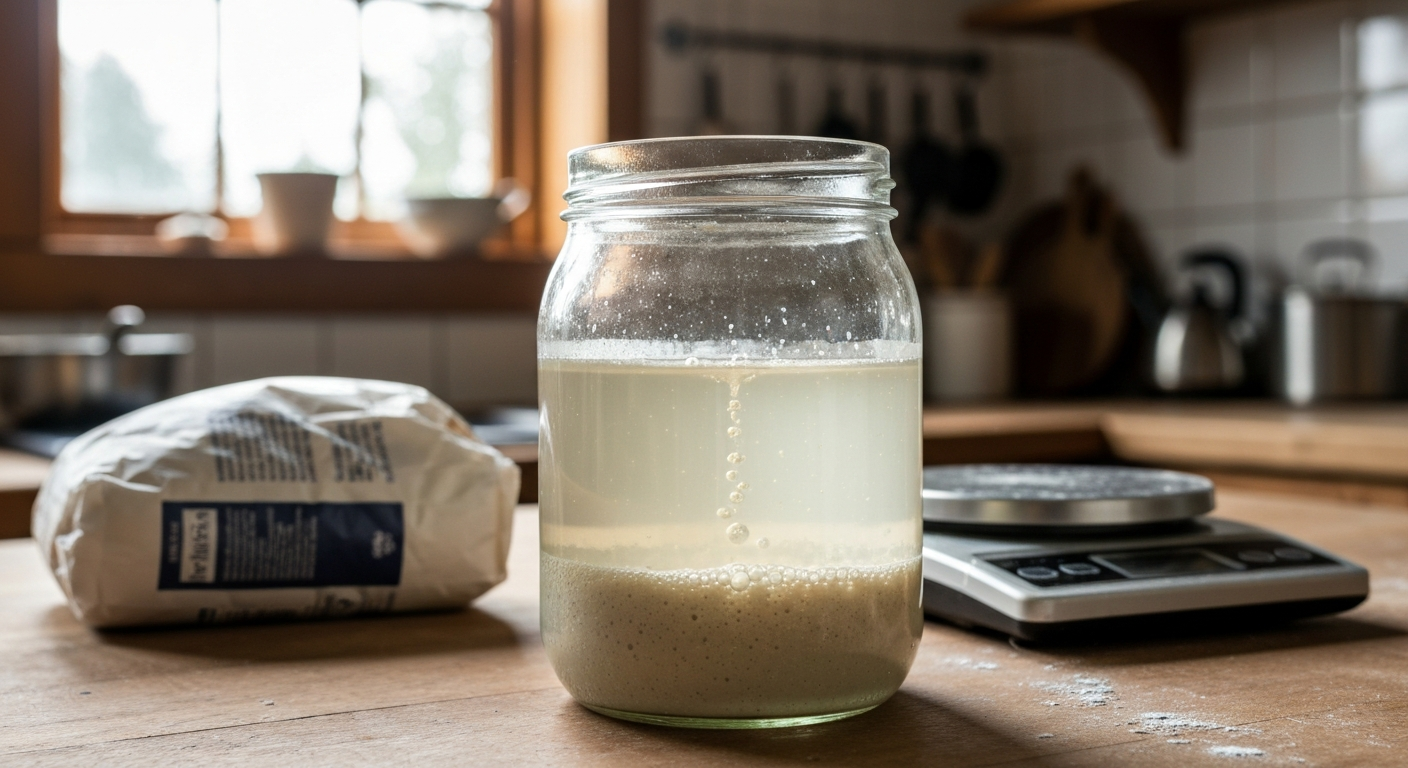

Your sourdough starter is watery because the flour-to-water ratio is off, fermentation has gone too long, or the wild yeast and bacteria haven't established themselves yet — all fixable problems that don't mean your starter is ruined.
A runny, watery sourdough starter is one of the most common frustrations for home bakers, whether you're nurturing a brand-new culture or maintaining one that's been reliable for months. The good news: that thin, almost pancake-batter consistency rarely signals a dead starter. Understanding what's happening inside that jar — and making a few simple adjustments — will get you back to thick, bubbly, bread-ready starter within a few feedings.
A well-fed, active sourdough starter has the consistency of thick pancake batter or a paste — it should mound slightly when you stir it and hold its shape briefly before slowly settling.
When your starter is at peak activity (usually 4–8 hours after feeding, depending on temperature), you'll see a domed surface covered in small bubbles, with larger bubbles visible through the glass. The texture should be stretchy and somewhat cohesive, not thin and pourable like water.
A healthy starter will roughly double in size at its peak, then gradually deflate as it exhausts its food supply. The smell should be pleasantly tangy — like yogurt or mild vinegar — not aggressively sour or like nail polish remover.
If your starter pours like heavy cream, separates into distinct layers, or has a pool of liquid sitting on top, something in the balance has shifted. Let's figure out exactly what's going on.
The most common causes of a runny starter are hydration imbalance, over-fermentation, temperature fluctuations, flour type, and an immature culture — each with its own telltale signs and straightforward fixes.
The single most frequent reason for a watery starter is too much water relative to flour. A standard 1:1:1 feeding ratio (equal parts starter, flour, and water by weight) typically produces a starter around 100% hydration — thick but stirrable.
If you're measuring by volume rather than weight, you're almost certainly adding too much water. A cup of water weighs about 236 grams, while a cup of all-purpose flour weighs only 120–130 grams. Eyeballing it leads to a much wetter mixture than intended.
"Measuring by weight is essential for consistent results. A kitchen scale removes the guesswork and ensures your starter maintains the proper hydration level feeding after feeding." — King Arthur Baking
Fix it: Invest in a digital kitchen scale (they're under $15) and weigh your ingredients. For a thicker starter, try reducing water to 80–90% of your flour weight.
When a starter exhausts its food supply, the structure breaks down and the mixture becomes thin and watery. You'll often see a layer of grayish liquid on top — this is "hooch," an alcohol byproduct of fermentation.
Over-fermentation happens when you wait too long between feedings, when room temperature is warmer than expected, or when your starter is more active than you realized. A starter that peaked hours ago will have consumed all its starch and begun to collapse.
Signs of over-fermentation:
- Hooch (liquid layer) on top or throughout
- Strong, sharp vinegar or alcohol smell
- Collapsed, deflated appearance
- Extremely thin, pourable consistency
Fix it: Pour off the hooch, discard most of the starter, and feed it at a higher ratio (1:2:2 or even 1:3:3) to give the yeast more food. Feed more frequently — every 8–12 hours in warm weather.
| ✓Our Pick |
Sourdough Bread Baking Supplies on Amazon Simple to use and genuinely effective — for many people this is all they ever needed. See on Amazon → |
Fermentation speed roughly doubles for every 15°F (8°C) increase in temperature. A starter that behaves perfectly at 68°F (20°C) will ferment much faster — and turn watery much sooner — at 78°F (26°C) or above.
Summer months, sunny countertops, and spots near ovens or dishwashers can all push your starter into overdrive. The yeast and bacteria consume their food supply rapidly, leading to the breakdown described above.
| Kitchen Temperature | Expected Peak Time | Feeding Frequency |
|---|---|---|
| 65–68°F (18–20°C) | 8–12 hours | Once daily |
| 70–75°F (21–24°C) | 6–8 hours | Once or twice daily |
| 76–80°F (24–27°C) | 4–6 hours | Twice daily |
| 81°F+ (27°C+) | 3–5 hours | Two to three times daily |
Fix it: Move your starter to a cooler spot (interior cabinet, basement, or refrigerator for storage). Alternatively, use cooler water for feedings and increase the flour-to-starter ratio.
Different flours absorb water at different rates. Whole wheat, rye, and high-protein bread flours absorb significantly more water than standard all-purpose flour. If you switch flour types without adjusting hydration, you'll end up with a runnier mixture.
Conversely, some highly processed all-purpose flours absorb less water, making your usual recipe seem too wet.
Fix it: When switching flours, start with less water and add gradually until you reach your desired consistency. Whole wheat typically needs 5–10% more water to reach the same consistency as all-purpose; if your starter was calibrated for whole wheat and you switch to AP, reduce water accordingly.
Brand-new starters (under 2–3 weeks old) haven't yet developed a stable population of wild yeast and lactic acid bacteria. During this establishment phase, consistency can be erratic — sometimes thick and bubbly, other times thin and inactive.
Young starters often go through a "false start" where they seem active for a day or two, then become sluggish and watery. This is normal. The initial activity comes from other microorganisms that eventually get outcompeted by the beneficial ones.
Fix it: Be patient. Continue feeding on schedule (every 12–24 hours) and give your starter 10–14 days to mature. Consistency stabilizes once the microbial community settles in.
Rescue a runny starter by adjusting your feeding ratio, switching to weight-based measurements, and controlling fermentation timing — most starters recover within 2–3 feedings.
Before making changes, observe your starter:
- Is there hooch on top? (Over-fermented)
- Does it smell like acetone or nail polish? (Severely over-fermented)
- Is it bubbly at all? (Still active vs. possibly dead)
- How long since the last feeding?
If your starter still has some bubbles and smells tangy (not like chemicals), it's absolutely salvageable.
For a watery starter, a higher feeding ratio gives the yeast more food and produces a thicker mixture:
| Situation | Recommended Ratio (Starter:Flour:Water) |
|---|---|
| Normal maintenance | 1:1:1 |
| Watery or over-fermented | 1:2:2 or 1:3:3 |
| Very active in warm weather | 1:4:4 or 1:5:5 |
Discard all but 20–30 grams of your watery starter, then feed with the higher ratio. The additional flour creates a stiffer mixture and provides more food for a longer, more controlled fermentation.
If you haven't already, start weighing ingredients:
- 30g mature starter
- 60g flour (for 1:2:2 ratio)
- 60g water (or 50g for a stiffer starter)
This precision eliminates the variability that volume measurements introduce.
Find a spot in your kitchen that stays between 68–72°F (20–22°C). Feed your starter when it has just passed its peak — when it's still domed but starting to show the first signs of deflation. Don't wait until it has collapsed and become watery.
Also Read: Why Is My Honey Solid? The Science & How to Fix It
Some liquid separation is normal for refrigerated starters, starters fed with certain flours, or healthy starters that have simply gone longer than usual between feedings.
If you store your starter in the refrigerator, a layer of hooch forming on top after a week or two is completely expected. This doesn't mean your starter is ruined — simply stir the hooch back in (it adds flavor) or pour it off (for a milder taste), then feed as usual.
Rye-based starters tend to be naturally looser and may appear more watery even when healthy. This is due to rye's lower gluten content and different starch composition.
Occasional wateriness after a long gap between feedings isn't cause for alarm — it's just your starter telling you it's hungry. One or two regular feedings will restore normal consistency.
A truly dead starter shows no activity whatsoever after 24–48 hours at room temperature, smells putrid (not just sour), or has visible mold growth.
Most "dead" starters are actually just dormant. Before giving up:
If you see even a few bubbles, your starter is alive. Continue feeding every 12 hours until activity builds.
True warning signs that require starting over:
- Pink, orange, or fuzzy mold growth
- Smell like rotting garbage (not vinegar or alcohol)
- Zero bubbles after 48 hours at warm room temperature with fresh feedings
"If you see pink or orange streaks, mold, or the starter smells truly putrid, it's best to discard it and begin again. These indicate harmful bacteria have taken over." — The Fresh Loaf
Consistent feeding schedules, proper hydration ratios, and temperature awareness prevent most watery starter problems before they start.
Many experienced bakers keep a "feeding log" for the first month or two, noting room temperature, feeding time, peak time, and consistency. This data helps you understand your specific starter's rhythm.
A watery sourdough starter is almost always caused by too much water, over-fermentation, warm temperatures, flour changes, or an immature culture — not a dead starter. Fix it by switching to weight-based measurements, increasing your flour ratio, and feeding before the starter fully collapses. Most runny starters recover within 2–3 proper feedings, so don't throw it out — feed it.
If your starter becomes runny immediately after feeding, you're using too much water relative to flour. Switch to weighing your ingredients — aim for equal weights of flour and water (100% hydration) rather than equal volumes. A cup of water weighs nearly twice as much as a cup of flour, so volume measurements always produce a wetter result.
That liquid is hooch — an alcohol byproduct that forms when your starter runs out of food and over-ferments. It's harmless and actually indicates your starter is alive and active. Stir it back in for a more complex flavor, or pour it off for a milder taste. Then feed your starter more frequently or use a higher flour ratio.
You can, but results may vary. A watery starter that's past its peak will have less leavening power and may produce a more sour, denser loaf. For best results, give your starter 1–2 feedings to restore normal consistency and activity before using it in a recipe. Use it when it's thick, bubbly, and has recently doubled.
A hungry starter will show at least some bubbles within 12–24 hours of feeding at room temperature. A dead starter shows zero activity, may have mold, or smells putrid (like garbage rather than vinegar). If you see any bubbles at all, your starter is alive — keep feeding it every 12 hours at a warm temperature until activity increases.
It's your choice. Stirring hooch back in adds a more pronounced sour flavor to your bread. Pouring it off produces a milder-tasting starter. Neither option is wrong — it depends on your flavor preference. What matters more is addressing the underlying over-fermentation by feeding more frequently or using a higher flour ratio.
Reviewed and Updated on June 1, 2026 by George Wright