
DIY
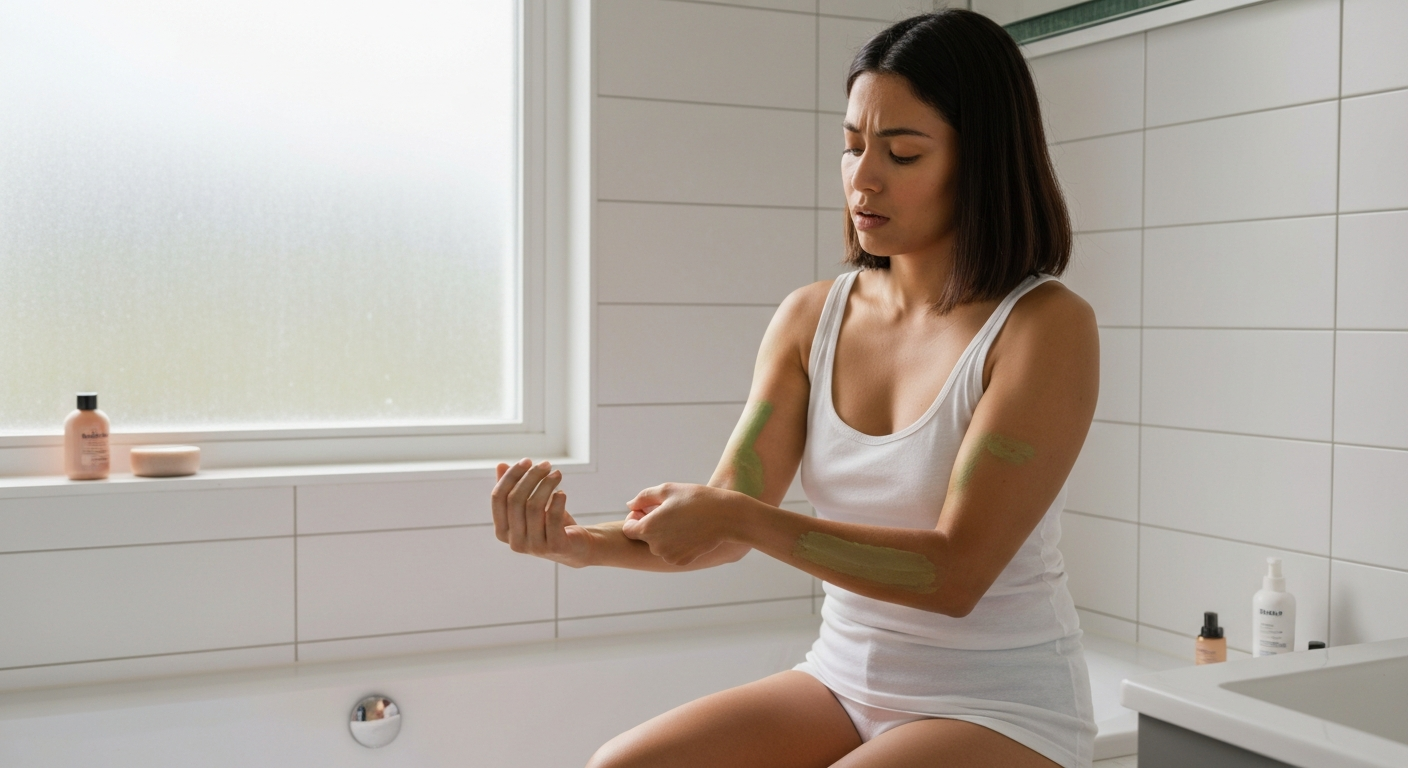

Your self tanner is turning green because of a chemical reaction between dihydroxyacetone (DHA) — the active tanning ingredient — and your skin's unique pH, amino acids, or residual skincare products, and this temporary green tint typically fades within 2–4 hours as the tan continues to develop.
| ✓Our Pick |
Search bronzing self tanner & color-correcting products You'll wonder why you didn't try this sooner — practical, well-reviewed, and easy to get started. See on Amazon → |
The green color comes from the early stages of the Maillard reaction — the same browning process that occurs when you toast bread — but on your skin's surface with specific amino acids creating intermediate compounds that appear greenish before turning brown.
DHA doesn't actually dye your skin. Instead, it reacts with amino acids in the outermost layer of your epidermis (the stratum corneum) to create pigments called melanoidins. The final color depends heavily on which amino acids DHA encounters first and the pH of your skin at application time.
When DHA interacts predominantly with certain amino acids like arginine or lysine at a higher pH level, the intermediate compounds can appear green, gray, or even slightly blue before the reaction completes. Think of it as catching the tan mid-development — you're seeing the "before" picture of what will eventually become brown.
"The Maillard reaction between DHA and skin proteins produces a range of colored compounds, with the final hue depending on skin pH, amino acid composition, and reaction time." — Journal of Cosmetic Science
Skin that leans alkaline (pH above 5.5) creates conditions where DHA reacts differently, producing more greenish undertones in the early development phase.
Your skin's natural pH hovers around 4.5 to 5.5 (slightly acidic). Soap-based cleansers, certain medications, and even your water supply can temporarily raise skin pH. When you apply self tanner to alkaline skin, the chemical reaction shifts toward producing those unwanted green pigments.
Layering self tanner over vitamin C serums, retinoids, AHAs, or BHAs changes the reaction environment and frequently causes green or gray undertones.
These active ingredients alter your skin's surface chemistry. Vitamin C in particular creates an acidic environment that can interfere with DHA oxidation. Retinoids speed up cell turnover, meaning the tan develops on unstable, rapidly-shedding skin. The result is often patchy, off-colored development.
DHA degrades when exposed to air, heat, or light, and oxidized DHA produces inconsistent colors including green, gray, and orange.
Most self tanners have a shelf life of 6–12 months after opening. If your bottle has been sitting in a humid bathroom cabinet for a year, the DHA has likely oxidized. You might notice the product itself has changed color in the bottle — a telltale sign it's past its prime.
Self tanners formulated with cool (olive or green) undertones will look green on fair or warm-toned skin during development.
Many brands create formulas targeted at specific skin tones. A product designed for olive complexions may contain color guides with green undertones. On pale or pink-toned skin, these guides show up prominently during the initial hours.
Low temperatures slow the Maillard reaction, extending the "green phase" and making intermediate colors more visible for longer periods.
The chemical reaction between DHA and amino acids is temperature-dependent. In cold rooms or during winter, the tan develops more slowly. This means you're stuck looking at those in-between colors for 4–6 hours instead of 2–3.
| Prevention Step | Why It Works | When to Do It |
|---|---|---|
| Use a pH-balancing toner | Brings skin to optimal 4.5–5.5 pH | 10 minutes before application |
| Exfoliate 24 hours prior | Removes dead cells and product buildup | Day before tanning |
| Skip actives for 48 hours | Prevents chemical interference | 2 days before tanning |
| Check expiration dates | Ensures DHA hasn't oxidized | Before purchasing/applying |
| Choose warm-undertone formulas | Reduces green guide colors | When selecting products |
| Apply in warm room (70°F+) | Speeds proper color development | During application |
Also Read: Why Is My Face So Asymmetrical? 7 Causes & What to Do
If your tan has already turned green, don't panic — the color will continue developing and typically corrects itself within 2–8 hours as the full Maillard reaction completes.
For immediate situations where you can't wait, try these fixes:
If you need to go out immediately, color-correcting makeup with pink or peach undertones can neutralize green temporarily.
Replace your self tanner if it's changed color in the bottle, smells different than when you bought it, has separated into layers, or has been open for more than 12 months.
| Sign | What It Means |
|---|---|
| Brown or dark liquid in bottle | DHA has oxidized significantly |
| Sour or chemical smell | Product breakdown has occurred |
| Separation that won't remix | Emulsion has destabilized |
| Inconsistent results | Active ingredients have degraded |
| Open 12+ months | Past recommended use-by period |
Storing your self tanner in a cool, dark place (not the bathroom) extends its life considerably. Some people even keep theirs in the refrigerator during summer months.
"Dihydroxyacetone begins to degrade when exposed to temperatures above 77°F and direct UV light, which is why proper storage significantly impacts product performance." — American Academy of Dermatology
DHA creates color through a non-enzymatic browning reaction with proteins — the same chemistry that browns food during cooking — and the specific color produced depends on reaction conditions.
The Maillard reaction involves several stages:
Your skin contains different concentrations of amino acids in different body areas. This explains why your knees might turn green while your stomach looks perfectly bronze — the amino acid profiles differ.
Interestingly, the erythrulose sometimes added to self tanners (a secondary tanning agent) reacts more slowly but produces warmer tones. Products containing both DHA and erythrulose often result in more natural-looking color with less green phase.
Also Read: Why Is My Body Warm but Feet Are Cold? 8 Causes & Fixes
| Formula Type | Green Risk | Why |
|---|---|---|
| Clear DHA only | Higher | No color guide to mask intermediate phase |
| Bronzing/tinted | Lower | Cosmetic bronzers hide green development |
| Gradual tanners | Lower | Lower DHA concentration, subtler reaction |
| Mousse formulas | Medium | Can dry quickly, uneven development |
| Drops (custom) | Variable | Depends on what you mix them with |
If you consistently experience green tones, switching to a bronzing formula with warm brown color guides can mask the intermediate phase entirely. The cosmetic color washes off while the DHA continues developing underneath.
Self tanner turns green due to the intermediate stage of the chemical reaction between DHA and your skin's amino acids — not because the product is faulty or you applied it wrong. The green tint almost always fades within 2–8 hours as your tan fully develops. To prevent it, prep your skin by balancing pH, avoiding active ingredients for 48 hours, and using fresh products stored properly. If you're prone to green undertones, choose bronzing formulas with warm color guides that camouflage the development phase.
Your face has different amino acid concentrations and oil production than your body, plus it's often treated with more active skincare products. The combination of higher pH from cleansers and residual vitamin C or retinol creates ideal conditions for green intermediate compounds. Using a face-specific self tanner and applying it after a pH-balancing toner helps considerably.
The green phase typically lasts 2–4 hours under normal conditions. In cold environments or on very dry skin, it can extend to 6–8 hours. If your tan still looks green after 12 hours, the DHA was likely oxidized, or there was significant chemical interference from skincare products.
Yes. Hard water is alkaline and leaves mineral deposits on skin that raise its pH. Showering with hard water right before applying self tanner creates conditions favorable for green color development. Rinsing with bottled water or using a pH-balancing toner after showering can help.
The green tint won't simply wash off because it's part of the chemical reaction happening in your skin's top layer — not a surface stain. However, the color will continue developing and browning even after you shower. Hot water and scrubbing can fade the overall tan but won't selectively remove the green.
Absolutely. The green color is just an intermediate chemical compound that will continue converting to brown melanoidin pigments. There's nothing harmful about the green phase — it's simply the tan mid-development. Unless the product smells off or has clearly expired, it's completely safe to leave on.
Reviewed and Updated on June 3, 2026 by George Wright