
DIY
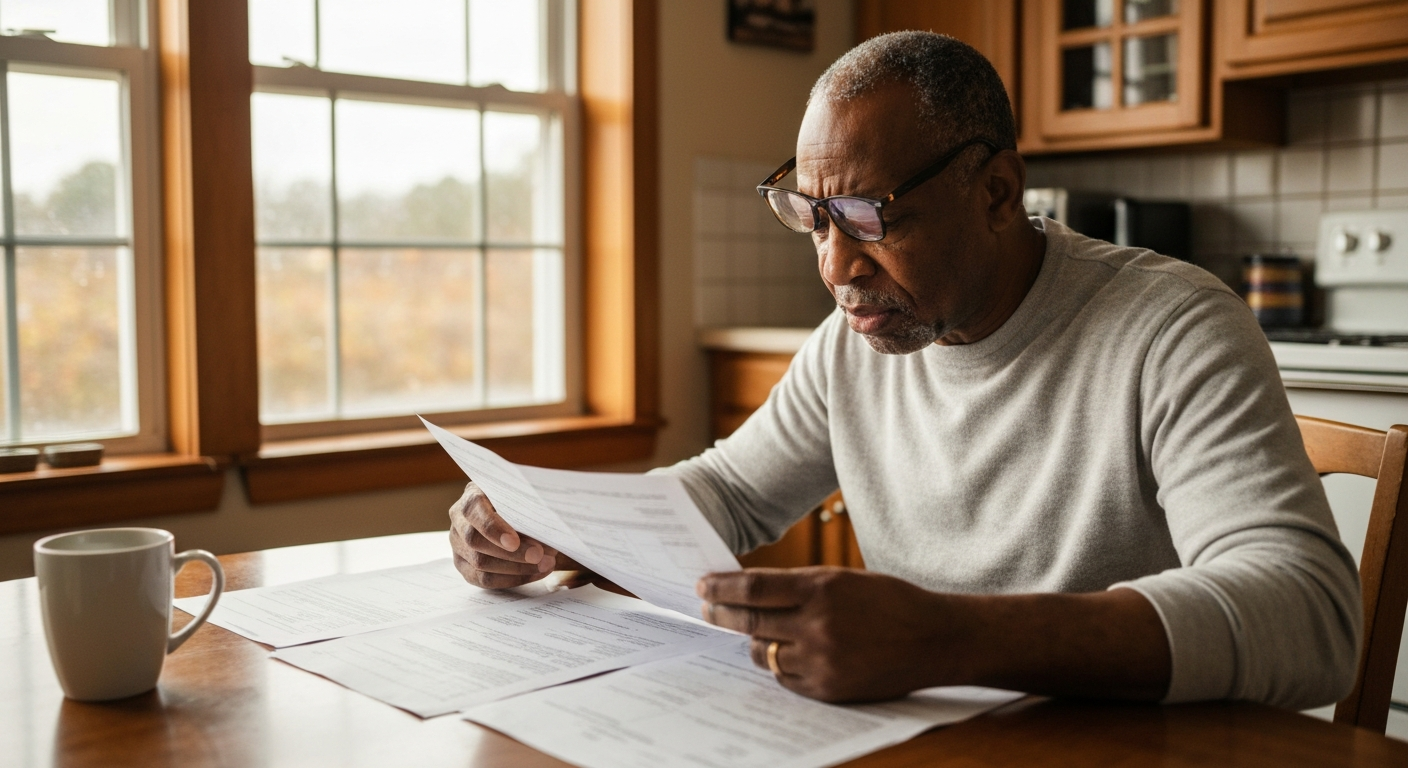

Your property tax is high because your local government has assigned a high assessed value to your home, your area has a high tax rate (mill rate), or both—and these figures may be inflated by recent reassessments, rising home values in your neighborhood, school district levies, special assessments, or errors on your property record card.
| ✓Our Pick |
Complete guide to organizing your financial documents Used by over 10,000 satisfied customers — an easy, affordable option you can start using today. See on Amazon → |
Property taxes fund local schools, emergency services, road maintenance, and municipal operations. Unlike income taxes with standardized federal rates, property taxes are hyper-local—your bill depends entirely on where you live and how your county assessor values your specific property. Understanding the mechanics behind your tax bill is the first step toward potentially lowering it.
Your property tax bill is the product of your home's assessed value multiplied by your local tax rate, minus any exemptions you qualify for.
The basic formula looks simple:
| Component | Definition | Example |
|---|---|---|
| Assessed Value | What the county says your property is worth for tax purposes | $350,000 |
| Assessment Ratio | Percentage of market value taxed (varies by state) | 80% |
| Taxable Value | Assessed value × assessment ratio | $280,000 |
| Mill Rate | Tax rate expressed per $1,000 of value | 25 mills |
| Gross Tax | Taxable value ÷ 1,000 × mill rate | $7,000 |
| Exemptions | Deductions for homestead, veterans, seniors, etc. | -$500 |
| Final Tax Bill | Gross tax minus exemptions | $6,500 |
The complexity enters when you realize that "assessed value" is a judgment call made by your county assessor, and "mill rate" is set by multiple overlapping taxing authorities—your city, county, school district, library district, fire district, and others each take a slice.
A sudden jump in your assessed value—often 20% to 50% in a single year—is the most common reason property taxes feel unexpectedly high.
Most counties reassess properties on a cycle—annually in some states, every two to four years in others. If your area just completed a reassessment cycle after years of rising home prices, your assessed value may have jumped dramatically to catch up with market conditions.
"Property values in many markets increased 30-40% between 2020 and 2023, but assessments often lagged. When reassessments finally occurred, homeowners saw sticker shock." — Lincoln Institute of Land Policy
Assessors use comparable sales—recent transactions of similar homes nearby—to estimate your property's market value. If your neighbor's house sold for $100,000 more than expected, that sale becomes evidence that your home is also worth more. A single high sale on your block can raise values for every surrounding property.
Building permits trigger reassessments. That new deck, finished basement, or kitchen renovation you completed may have added assessed value far exceeding the project cost. Even unpermitted work can be discovered through satellite imagery, neighbor reports, or routine inspections.
If homes in your town cost less than surrounding areas but property taxes are similar or higher, you're dealing with a high mill rate rather than a high assessed value.
Mill rates reflect local spending decisions divided by the total property tax base. A community with modest home values but strong public services (well-funded schools, professional fire department, maintained parks) must set higher rates to raise the same revenue. Conversely, wealthy suburbs with expensive homes can fund services at lower rates because the tax base is larger.
| Scenario | Median Home Value | Mill Rate | Typical Tax Bill |
|---|---|---|---|
| Wealthy suburb | $800,000 | 12 mills | $9,600 |
| Working-class city | $200,000 | 45 mills | $9,000 |
| Rural county | $150,000 | 30 mills | $4,500 |
School funding typically accounts for 50% to 70% of your total property tax bill. Districts with declining enrollment, older buildings, or ambitious programs often pass levies that add several mills to your rate. Check your tax bill breakdown—you may find school taxes alone exceed what you'd pay in total taxes elsewhere.
Also Read: Why Is My Credit Score Going Down for No Reason? 7 Causes
Assessor mistakes are surprisingly common—studies suggest 30% to 60% of property records contain at least one error that could affect valuation.
Your county maintains a property record card with details about your home: square footage, number of bedrooms and bathrooms, lot size, construction year, basement finish level, and more. Every error that overstates your home's features inflates your assessed value.
Common errors include:
You can usually view your property record card online through your county assessor's website. Compare every line item against reality. If your card says you have 2,400 square feet but your actual living space is 2,100, you're being taxed on a phantom 300 square feet.
Property tax exemptions reduce your taxable value—sometimes by $25,000 to $100,000—but you must apply for most of them.
| Exemption Type | Typical Savings | Who Qualifies |
|---|---|---|
| Homestead | $5,000–$50,000 off assessed value | Owner-occupants (primary residence) |
| Senior citizen | 10%–50% reduction | Homeowners 65+ (income limits may apply) |
| Veteran/disabled veteran | $5,000–full exemption | Veterans with service-connected disability |
| Disability | Varies by state | Homeowners with qualifying disabilities |
| Agricultural | 50%–90% reduction | Working farms meeting acreage/income thresholds |
| Solar/energy | 5–15 year exemption | Homes with solar panels or energy improvements |
Many homeowners miss the homestead exemption simply because they never filed the one-time application. Seniors often don't realize age-based exemptions exist until they've overpaid for years. Veterans may qualify for substantial discounts but assume the county automatically knows their status.
Contact your assessor's office and ask: "What exemptions am I currently receiving, and what exemptions might I qualify for?" They're required to tell you.
Special assessments are one-time or temporary charges that appear on your property tax bill but aren't technically property taxes—they fund specific infrastructure projects.
Your bill may include line items for:
These assessments can add hundreds or thousands of dollars annually, often for 10 to 20 years. They're typically voted on by affected property owners or approved by your city council. Unlike regular property taxes, special assessments often aren't reduced by exemptions and may not be deductible on federal taxes.
Bond measures for school construction, library expansion, or park improvements also add to your rate. When voters approve a bond, the cost is spread across all property owners in the jurisdiction, adding mills to your rate until the debt is repaid.
Also Read: Why Is My Gas Bill So High This Month? 9 Causes & Fixes
Filing a property tax appeal is free or low-cost in most jurisdictions and succeeds roughly 30% to 50% of the time when homeowners present solid evidence.
Request a copy from your county assessor. Review every detail for errors.
Find 3 to 5 recent sales of similar homes in your immediate area. Focus on homes with similar square footage, age, lot size, and condition. If comparables sold for less than your assessed value suggests, you have grounds for appeal.
Assessors may not know about your foundation cracks, outdated electrical, or flooding basement. Photos and repair estimates showing your home is worth less than comparable properties strengthen your case.
Deadlines are strict—often 30 to 90 days after your assessment notice arrives. Missing the deadline usually means waiting another year. Check your assessor's website for forms and instructions.
Most appeals start with an informal review by the assessor's office. If that fails, you proceed to a formal hearing before a board of review or tax tribunal. Bring your comparables, photos, and any professional appraisal you've obtained.
"Homeowners who appeal with documented comparable sales data succeed far more often than those who simply argue their taxes are too high. The burden is on you to prove the assessment is wrong." — International Association of Assessing Officers
Property tax consultants typically work on contingency—they take 25% to 50% of your first-year savings—so there's little risk in using one for high-value properties.
Consider professional help if:
For modest single-family homes, the DIY approach often works fine. The assessor's office will explain the appeals process, and you don't need legal training to present comparable sales and property defects.
| ✓Our Pick |
Home filing cabinet for property records and tax documents Highly rated by thousands of buyers — this is one of the most effective solutions for this issue you can try at home. See on Amazon → |
Property taxes are high when assessed values spike, mill rates are elevated, exemptions are missed, or special assessments pile on—and often, it's a combination of all four. Start by reviewing your property record card for errors, confirming you're receiving all exemptions you qualify for, and comparing your assessed value to recent sales of similar homes. If the numbers don't add up, file an appeal before the deadline—success rates are better than most homeowners expect.
Your property tax can increase even without renovations because assessed values track market conditions, not your actions. If home prices in your area rose—whether from low inventory, neighborhood improvements, or regional demand—your assessment rises accordingly. Your tax rate may also increase when local governments pass new levies or when existing bonds require higher payments. The combination of market-driven value increases and policy-driven rate increases can make taxes rise significantly between bills.
Yes, but with limits. The Tax Cuts and Jobs Act capped the state and local tax (SALT) deduction at $10,000 for individuals and married couples filing jointly. If your property taxes plus state income taxes exceed $10,000, you only deduct the first $10,000. This cap particularly impacts homeowners in high-tax states like New Jersey, New York, California, and Illinois. Consult a tax professional about whether itemizing still benefits you given current standard deduction amounts.
Unpaid property taxes accrue penalties and interest—typically 1% to 2% monthly. After a period ranging from one to five years depending on your state, the county can sell your property at a tax lien auction or tax deed sale. You may have a redemption period to pay the delinquent amount plus fees and reclaim ownership, but if you fail to act, you can lose your home entirely. Contact your county treasurer immediately if you're struggling—many offer payment plans or hardship programs.
Property tax rates are set independently by each taxing jurisdiction. Two towns a mile apart may have vastly different school systems, police departments, infrastructure needs, and voter preferences. A town with excellent schools funded by high taxes attracts families willing to pay; a neighboring town may prioritize low taxes and accept fewer services. The tax base matters too—a town with a large commercial or industrial sector can fund services with lower residential rates than a purely residential community.
For residential properties, hiring a lawyer is usually unnecessary and may not be cost-effective. The appeal process is designed for homeowners to navigate themselves, and assessor offices often provide guidance. Property tax attorneys make sense for commercial properties, complex cases involving multiple parcels, or situations where the potential savings justify legal fees. For a typical single-family home, a property tax consultant working on contingency or handling the appeal yourself are more practical options.
Reviewed and Updated on May 5, 2026 by Adelinda Manna