Technology
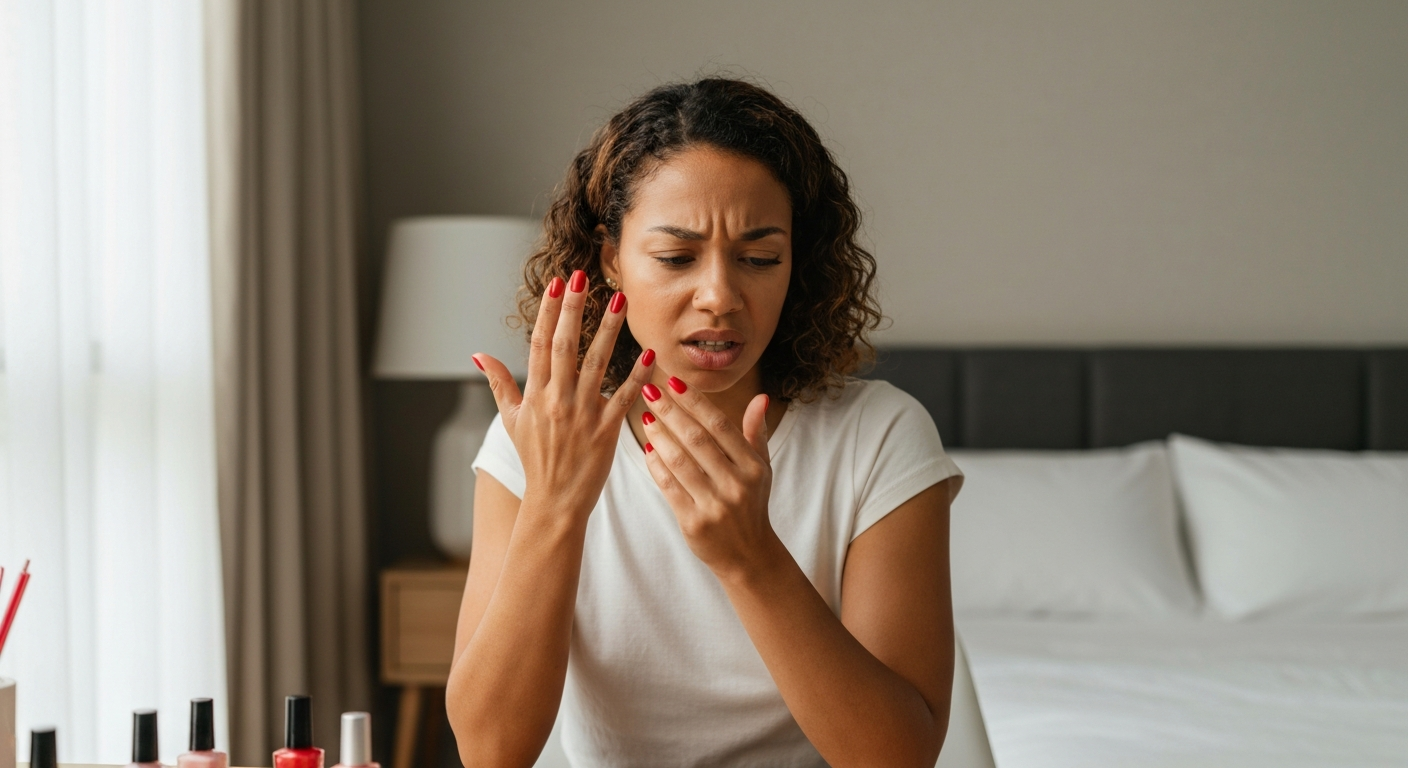

Nail polish bubbles up when tiny air pockets get trapped in the wet lacquer—usually because the polish was shaken before use, applied in thick coats, or painted over oily nails—then rise to the surface as the polish dries, leaving you with a bumpy, uneven finish.
| ✓Our Pick |
Bubble-free nail polish base coat for smooth manicures Save yourself the frustration — a proven solution with consistently positive feedback from real buyers. See on Amazon → |
Air gets whipped into the polish formula during shaking or fast brushstrokes, and those micro-bubbles become permanently trapped as the solvents evaporate—leaving raised bumps in the dried lacquer.
Nail polish is essentially a suspension of pigments and film-forming polymers dissolved in volatile solvents. When you apply it to your nail, those solvents begin evaporating immediately, causing the polish to thicken and harden. If air bubbles are present in the wet polish—or form during application—they can't escape once the surface starts to set. The result is a textured, bubbly finish that looks amateur even if your technique was otherwise flawless.
This same principle applies whether you're using traditional nail polish or gel polish, though gel formulas have their own bubble-forming quirks. Understanding why bubbles form is the first step to preventing them entirely.
| ✓Quick Fix |
The Fastest Fix People Try for This Many readers dealing with this exact issue start with something like this before trying anything else. See on Amazon → |
Yes—shaking is the single most common cause of bubbled polish.
When you shake a nail polish bottle vigorously, you introduce hundreds of tiny air bubbles into the formula. These bubbles don't have time to rise and escape before you dip your brush in and transfer them directly to your nail. Once on the nail, they expand slightly as the solvents evaporate, becoming more visible in the dried finish.
Instead of shaking, roll the bottle between your palms for 30–60 seconds. This remixes settled pigments without aerating the formula.
Thick polish layers trap air beneath the surface and prevent proper solvent evaporation, virtually guaranteeing bubbles.
A thick coat takes much longer to dry from the bottom up. The top surface skins over while the underlayer is still wet, trapping solvents and air beneath. As those solvents continue to evaporate, they push up through the partially-dried surface, creating bubbles and sometimes causing the polish to wrinkle or lift entirely.
Two or three thin coats will always look smoother and last longer than one thick coat.
Natural oils, lotions, and residue from cuticle products create a slippery base that prevents polish from adhering evenly—leading to bubbles and peeling.
Your nails produce natural oils throughout the day. If you apply polish without properly prepping the nail plate, those oils sit between your nail and the lacquer. The polish can't grip the surface properly, and tiny air channels form along the oil-polish boundary.
Always wipe nails with rubbing alcohol or nail polish remover immediately before painting.
Polish applied in humid or hot conditions dries unevenly, increasing the likelihood of trapped air and surface defects.
High humidity slows solvent evaporation, giving air bubbles more time to form and expand. Extreme heat has the opposite problem—the surface dries too quickly, trapping everything beneath it. The ideal application environment is 65–75°F with low to moderate humidity.
Avoid painting your nails in the bathroom right after a shower, near open windows on humid days, or in direct sunlight.
Polish that's past its prime becomes thick and stringy, making smooth application nearly impossible.
Nail polish has a shelf life of roughly 18–24 months once opened. Over time, solvents evaporate (even through a closed cap), leaving behind a concentrated, gloopy formula that drags across the nail and traps air.
If your polish has thickened but isn't expired, a few drops of nail polish thinner (not remover) can restore its consistency. However, if it smells off or has separated permanently, it's time to replace it.
Adding a new coat before the previous one is dry traps solvents and air between layers.
Each coat of polish needs adequate drying time—typically 2–3 minutes for traditional lacquer—before you apply the next. Rushing this process is one of the most common mistakes, especially when you're trying to fit a manicure into a busy schedule.
If you're short on time, use a quick-dry top coat or drops, but still give each color coat at least 90 seconds before proceeding.
Gel polish bubbles form when the formula is applied too thickly, when the bottle is shaken, or when the brush drags air into the uncured layer.
Gel polish cures under UV or LED light rather than air-drying, but it's still susceptible to air entrapment. Once you cure a bubbly gel layer, those bubbles are permanently locked in—you can't file them out without removing the gel entirely.
"When gel polish is applied in thick layers, solvents and air become trapped. The UV curing process then 'locks' these imperfections into the hardened gel." — Nails Magazine
Additional gel-specific causes include:
- Curing before the gel has had 30–60 seconds to self-level
- Using old or separated gel formula
- Not wiping the brush on the bottle neck to remove excess
A bubbly base coat will telegraph through every subsequent layer, so the problem may have started before you even reached for your color.
Base coats are formulated to be thin and fast-drying, but they're not immune to the same issues that affect color polish. If you shake your base coat, apply it too thickly, or use an expired formula, bubbles will form in that foundation layer and become more pronounced once you add color and top coat.
| Symptom | Likely Cause | Fix |
|---|---|---|
| Bubbles appear immediately after painting | Shaken bottle | Roll, don't shake |
| Bubbles form as polish dries | Thick coats or humid environment | Apply thinner coats; control room temp |
| Bubbles in gel polish after curing | Thick application or trapped air | Thinner layers; let gel self-level before curing |
| Polish bubbles and peels within hours | Oily nail surface | Prep with alcohol wipe |
| Bubbles appear in every layer | Old or thick polish | Replace or thin the formula |
Also Read: Why Is My Piercing Itchy? 7 Causes & How to Stop It
Following proper prep, application, and drying techniques eliminates bubbles in the vast majority of cases.
Start with clean, dry, oil-free nails. Remove any old polish completely, push back cuticles gently, and buff the nail surface lightly to create texture for the polish to grip. Finish by wiping each nail with a cotton pad soaked in rubbing alcohol or acetone.
Hold the polish bottle between both palms and roll it back and forth for 30–60 seconds. This redistributes settled pigments without introducing air. If you recently shook the bottle by accident, wait 15–20 minutes for bubbles to rise and dissipate before using.
Wipe excess polish from the brush against the bottle neck before applying. Use three strokes per nail—one down the center, one on each side—with light pressure. The coat should be thin enough to appear slightly sheer.
Allow each coat 2–3 minutes of drying time before applying the next. For gel polish, let the layer self-level for 30–60 seconds before curing under the lamp.
Paint your nails in a room with moderate temperature (65–75°F), low humidity, and good ventilation. Avoid fans blowing directly on wet nails, as this can cause uneven drying.
A good top coat seals in your color and provides a smooth, glossy finish. Apply it thinly—thick top coats can bubble just as easily as thick color coats.
Also Read: Why Is My Tattoo Fading After 3 Days? 7 Causes & Fixes
If you catch bubbles while the polish is still wet, you may be able to salvage the manicure—but fully dried bubbles require a do-over.
If you notice a bubble forming immediately after application, quickly dab the area with a clean brush dipped in polish remover, then smooth over with a thin layer of fresh polish. This only works within the first 30–60 seconds.
Unfortunately, once bubbles have set, there's no reliable fix beyond starting over. You can try gently buffing the affected area and applying a fresh top coat for minor texture issues, but significant bubbling usually means removing the manicure and reapplying.
For gel polish, you'll need to file off or soak off the bubbled layer entirely before reapplying.
Certain products are formulated specifically to minimize common manicure problems:
Avoid using acetone to thin polish—it will break down the formula and make the problem worse.
Nail polish bubbles are almost always caused by air trapped in the formula—from shaking the bottle, applying thick coats, painting over oily nails, or working in unfavorable conditions. The fix is prevention: roll (don't shake), apply thin coats, let each layer dry, prep your nails with alcohol, and paint in a temperature-controlled room. Gel polish follows the same rules, with the added step of letting each layer self-level before curing.
Gel polish bubbles after curing typically result from applying the gel too thickly, shaking the bottle before use, or curing before the gel has had time to self-level. Unlike traditional polish, gel locks in imperfections permanently once exposed to UV or LED light. The solution is to apply thinner layers, roll the bottle instead of shaking, and wait 30–60 seconds after application before curing.
Only if you catch it immediately. Within the first minute, you can dab the bubble with a remover-dipped brush and smooth over with fresh polish. Once the polish has fully dried or the gel has cured, bubbles are permanent—you'll need to remove that layer and reapply.
Cold polish can be thicker and harder to apply smoothly, which may contribute to bubbling. However, the bigger issue is temperature differential—cold polish applied in a warm room can form condensation that creates adhesion problems. Store your polish at room temperature and avoid refrigerating it unless the manufacturer specifically recommends it.
Wait 2–3 minutes between coats of traditional nail polish. For gel polish, allow 30–60 seconds for the layer to self-level before curing, then cure fully according to your lamp's specifications. Rushing this process is one of the most common causes of bubbling.
Top coat bubbles often result from applying it too thickly or over color that wasn't fully dry. Top coats are typically thinner formulas that require an even lighter touch than color polish. Apply a thin layer with minimal brush strokes, and ensure your final color coat has had at least 2–3 minutes to set before sealing.
Reviewed and Updated on June 20, 2026 by George Wright