
Skin
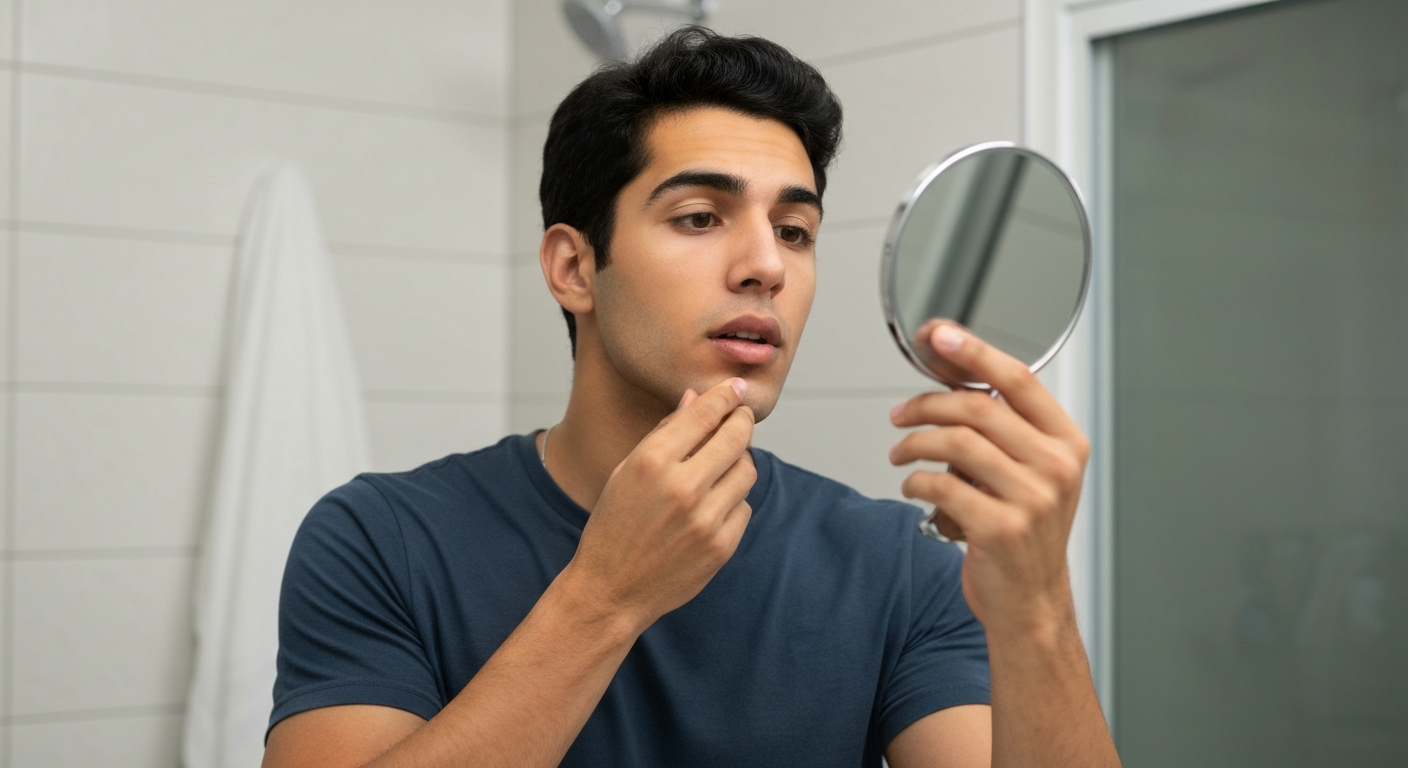

A thin mustache is most commonly caused by genetics, low testosterone, young age (the mustache fully matures in the mid-to-late 20s for most men), nutritional deficiencies, or stress — not poor grooming habits. Understanding the root cause tells you whether patience or action is the right response.
Facial hair growth is governed by androgens — primarily testosterone and dihydrotestosterone (DHT) — and by the density of androgen receptors in the hair follicles. A thin mustache means either low androgen levels, follicles that are less sensitive to androgens, or simply that the follicles have not yet been fully activated by age.
Each hair follicle in your upper lip area follows an independent growth cycle (anagen, catagen, telogen). How thick and dense the mustache grows depends on how many follicles exist, how sensitive those follicles are to DHT, and how long each follicle stays in its active growth (anagen) phase. All of these factors have a large genetic component — which is why some men have full mustaches at 18 and others are still waiting at 25.
"Androgen sensitivity of hair follicles varies considerably between individuals and is determined largely by genetic factors. Men with high facial androgen receptor density will grow thick beards and mustaches even at normal testosterone levels, while those with lower receptor density may have sparse facial hair despite normal hormone levels." — American Academy of Dermatology at aad.org
Eight factors explain most cases of thin or patchy mustaches. Genetics and age are the dominant causes; the others are modifiable.
Genetic predisposition determines the number of hair follicles in your upper lip, their sensitivity to DHT, and the thickness of each individual hair shaft. If your father, grandfather, or male relatives on both sides have thin or sparse mustaches, the pattern is almost certainly genetic. There is no topical product or exercise routine that overrides follicle density that was never there to begin with. Genetic mustache thinness is not a medical problem — it is an anatomical characteristic.
Most men's facial hair does not fully develop until their mid-to-late 20s, and for some men, even into their early 30s. The upper lip area tends to fill in later than the chin and sideburns. If you are under 25 and frustrated by your thin mustache, the honest answer is often: it is not done growing yet. The terminal (fully developed) version of your mustache may not be visible until several years from now.
Also Read: Why Is My Part So Wide? Hair Loss Causes & Fixes
While genetics determines androgen receptor sensitivity, absolute testosterone level still matters. Testosterone is converted to DHT (by the enzyme 5-alpha reductase) at the follicle level, and DHT is the primary driver of facial hair growth. Low testosterone — from stress, poor sleep, obesity, hypogonadism, or certain medications — reduces this conversion and can produce thinner or slower-growing facial hair alongside other symptoms like low energy, reduced libido, and difficulty building muscle.
If you suspect low testosterone, a blood test through your GP is the appropriate next step rather than over-the-counter testosterone supplements.
Several micronutrients directly support hair follicle function. Deficiencies in the following are associated with impaired facial hair growth:
A balanced diet with adequate protein (hair is almost entirely keratin), leafy greens, eggs, nuts, and lean meat covers most of these needs. Supplementing specific deficiencies — confirmed by blood test — can support improvement.
Chronic high stress elevates cortisol, which suppresses testosterone production and disrupts the hair follicle cycle. Telogen effluvium — stress-induced hair loss — is well-documented for scalp hair and can also affect facial hair, though the effect is less dramatic. If your mustache thinned noticeably following a period of extreme stress, burnout, or illness, this is a plausible contributing cause. The effect is reversible once the stressor resolves.
A common myth holds that shaving makes hair grow back thicker and faster. This is not true — shaving has no effect on follicle density or growth rate. However, very frequent grooming (particularly the use of aggressive razors or exfoliating scrubs) can cause folliculitis (inflammation of the follicle openings), which temporarily slows or disrupts growth in affected areas. If your mustache area is frequently red, bumpy, or irritated after grooming, this low-grade chronic inflammation may be limiting how well your follicles perform.
Alopecia areata is an autoimmune condition where the immune system attacks hair follicles, producing patchy hair loss on the scalp, beard, and mustache. The patches are typically well-defined, oval or circular, and appear suddenly. Unlike thinning from genetics or age, alopecia areata often leaves smooth, bald patches rather than an overall sparse appearance. A dermatologist can diagnose this via physical examination and, if confirmed, suggest treatment (topical steroids, minoxidil, or newer JAK inhibitor medications).
Minoxidil — originally a blood pressure medication, now widely available as a topical treatment (Rogaine) — has growing evidence for stimulating facial hair growth. It works by extending the anagen (growth) phase of the hair cycle and improving blood supply to the follicle. Applied twice daily to the mustache area at a 5% concentration, some men see meaningful improvement over 3–6 months. It is not FDA-approved specifically for facial hair but is used off-label for this purpose. Side effects include local skin irritation; systemic effects from topical application are minimal.
| ✓Our Pick |
Try Zlike Hair growth serum for thicker, healthier facial and scalp hair Backed by strong customer feedback — the most recommended solution in forums and Q&A communities. Learn More → |
"Topical minoxidil has been shown in multiple controlled trials to increase facial hair density in men with thin or incomplete beards. The mechanism is thought to involve prolongation of the anagen phase and increased dermal papilla cell activity." — Journal of the American Academy of Dermatology at jaad.org
| Factor | Changeable? | Action |
|---|---|---|
| Genetics (follicle density) | No | Accept or consider cosmetic options |
| Age (still maturing) | Time only | Wait until mid-to-late 20s |
| Low testosterone | Potentially | Blood test; lifestyle (sleep, exercise, diet) |
| Nutritional deficiency | Yes | Correct deficiency with diet or supplement |
| Chronic stress | Yes | Stress management; sleep quality improvement |
| Folliculitis from overgrooming | Yes | Gentler technique; antibacterial aftershave |
| Alopecia areata patches | With treatment | Dermatologist evaluation |
A thin mustache is most commonly genetic or a matter of age — neither of which a topical product can override. If you are under 25, wait. If you suspect hormonal or nutritional issues, a blood test is the right first step. For men who have ruled out other causes, topical minoxidil is the best-evidenced option for improving facial hair density over 3–6 months of consistent use.
No. Shaving removes hair at the surface but does not affect the hair follicle below the skin. The feeling of stubble being coarser after shaving is because the cut end of the hair (a blunt cross-section) is more noticeable than the tapered natural tip. Thickness is determined by the follicle, which shaving does not change.
Most men's facial hair reaches its full adult density between ages 25 and 30. The chin and upper lip are often the last areas to fully fill in, sometimes not reaching terminal thickness until the late 20s or early 30s. Expecting a full adult mustache at 17 or 18 is unrealistic for most men.
Yes, indirectly. Severe deficiencies in biotin, zinc, vitamin D, or iron impair the hair follicle cell cycle and keratin production. Correcting a documented deficiency can improve hair growth across the body, including facial hair. However, supplementing these nutrients beyond your body's needs produces no additional benefit — normal levels are the goal, not excess.
Yes. A patchy mustache has normal or near-normal density in some areas with absent or very sparse growth in distinct patches. This pattern often indicates alopecia areata or an uneven distribution of androgen receptors across the upper lip follicles. A uniformly thin mustache — where all hairs are present but fine — is more consistent with genetics, age, or androgen level.
Reviewed and Updated on June 5, 2026 by George Wright