
Health
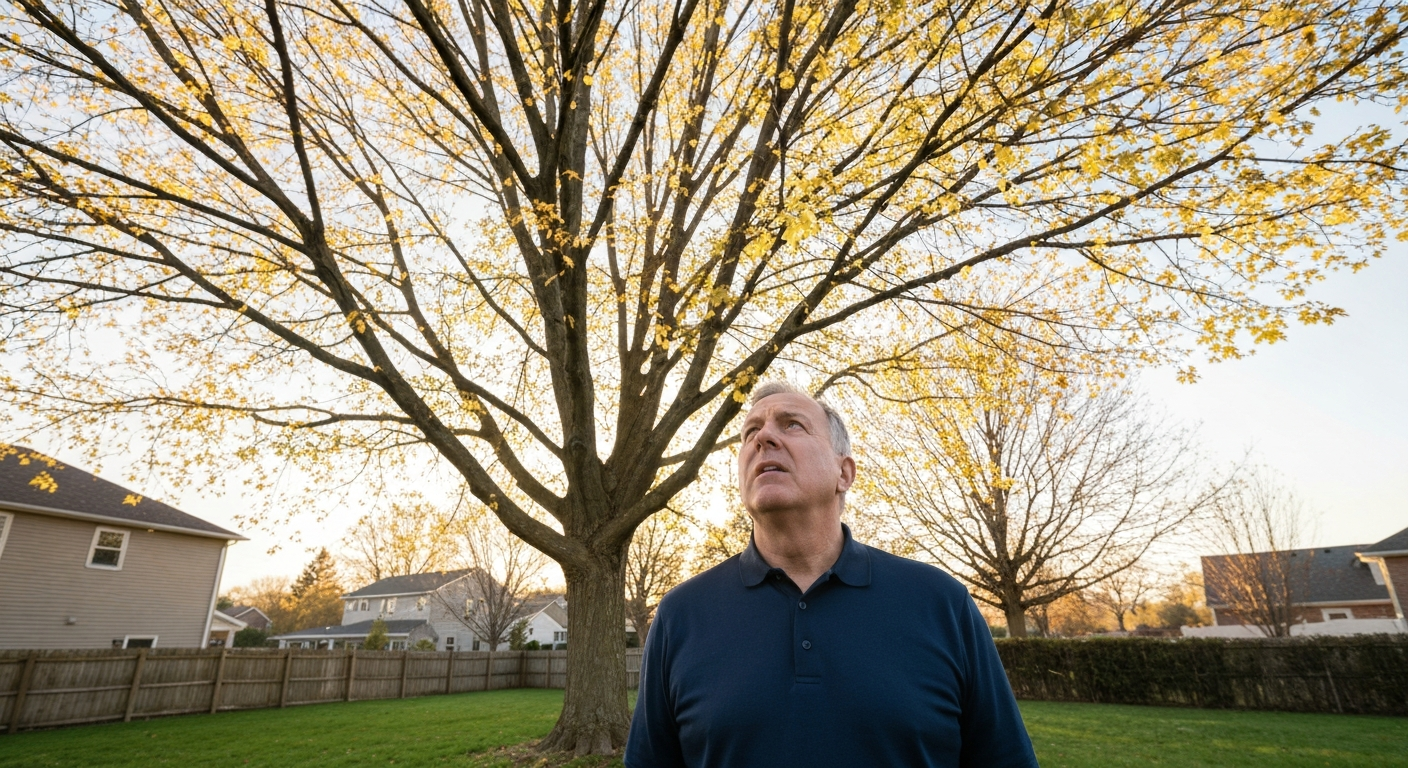

Your maple tree is most likely dying because of environmental stress, fungal disease, or root damage — the three culprits responsible for over 80% of maple decline in home landscapes. Whether you're noticing yellowing leaves, brown edges, bare branches, or sections that simply didn't leaf out this spring, the underlying cause usually falls into one of several identifiable categories that you can diagnose and often reverse with the right intervention.
Maples are resilient trees, but they're also sensitive to changes in their environment — particularly soil moisture, drainage, and compaction. When you see your tree struggling, it's sending distress signals that can help you pinpoint exactly what's going wrong. The same diagnostic approach applies whether you're dealing with a Japanese maple with scorched leaves, a cherry tree dropping foliage prematurely, or even an oak tree with mysterious branch dieback.
Before you can fix a dying tree, you need to read what it's telling you through its leaves, bark, and overall structure.
Trees don't die silently — they show progressive symptoms that indicate the type and severity of stress they're experiencing. Recognizing these signs early dramatically improves your chances of saving the tree.
| Symptom | What It Usually Indicates | Urgency Level |
|---|---|---|
| Yellowing leaves (chlorosis) | Nutrient deficiency, overwatering, or root problems | Moderate |
| Brown leaf edges (scorch) | Heat stress, underwatering, or salt damage | Moderate |
| Wilting despite wet soil | Root rot or girdling roots | High |
| Sparse canopy or bare branches | Serious decline — disease, pest damage, or root death | High |
| Peeling or cracked bark | Sunscald, frost cracks, or fungal infection | Varies |
| Black or oozing spots | Bacterial or fungal infection | High |
| Premature leaf drop | Stress response — environmental or disease | Moderate to High |
Many homeowners notice their palm tree leaves turning yellow, their fig tree leaves turning brown, or their hibiscus tree leaves yellowing — and the diagnostic process is surprisingly similar across species. The tree is communicating that something fundamental has changed in its environment or health.
Both overwatering and underwatering produce symptoms that look like disease but resolve once you correct the moisture balance.
Water stress is the single most common reason healthy-looking trees suddenly decline. Maples, like most landscape trees including rhododendrons, lilacs, and olive trees, need consistent moisture — but "consistent" doesn't mean "constant."
Overwatering fills the air pockets in soil that roots need to breathe. When roots can't access oxygen, they begin to suffocate and die. The tree responds by dropping leaves, developing yellow foliage, or showing wilting even though the soil is wet. This same mechanism explains why avocado tree leaves turn brown in containers with poor drainage and why lemon trees in soggy soil suddenly lose vigor.
Underwatering creates a different stress pattern. Leaves develop brown, crispy edges (scorch) starting at the tips and margins. The tree may drop leaves prematurely to conserve water for essential functions. Japanese maples are particularly susceptible to this in hot, dry summers — their delicate leaves can't handle extended drought.
To check your soil moisture, push a screwdriver or soil probe 6–8 inches into the ground near the tree's drip line (the outer edge of the canopy). If it slides in easily and comes out with soil clinging to it, moisture is adequate. If the soil is bone dry or the probe meets serious resistance, you're underwatering. If you hit waterlogged soil that smells sour, you're overwatering.
| ✓Our Pick |
Tree and plant soil moisture meter for accurate diagnosis Trusted by professionals and everyday users alike — a smart investment that pays for itself. See on Amazon → |
Fungal infections account for a significant portion of maple deaths, with verticillium wilt being the most devastating and difficult to treat.
Verticillium wilt is a soil-borne fungus that enters through the roots and clogs the tree's vascular system — essentially blocking the flow of water and nutrients to branches. You'll typically notice one section of the tree wilting or dying while others look healthy. The leaves on affected branches turn yellow, then brown, and the dieback progresses over weeks or months.
"Verticillium wilt can persist in soil for years and affects a wide range of ornamental and vegetable crops. There is no chemical control once a plant is infected." — Clemson Cooperative Extension
This same fungus attacks Japanese maples, hinoki cypress trees, and many other ornamentals. If you scratch the bark on a dying branch and see olive-brown streaking in the sapwood, verticillium is likely your culprit.
Other fungal diseases to watch for:
Peach trees with yellowing leaves and cherry trees with unexplained decline often suffer from fungal issues, particularly when drainage is poor or the canopy stays wet for extended periods.
Also Read: Why Is My Begonia Dying? 7 Causes & How to Save It
Girdling roots and root damage from construction or compaction kill more urban trees than any disease.
Girdling roots grow around the trunk instead of outward, slowly strangling the tree as both the root and trunk expand. This is extremely common in maples that were planted too deeply or left in containers too long before planting. Look at your tree's base — you should see a visible trunk flare where the trunk widens before entering the ground. If the trunk goes straight into the soil like a telephone pole, the tree is planted too deeply, and girdling roots are likely.
Construction damage is another hidden killer. When soil is compacted by vehicles or foot traffic, or when grade changes bury the root flare, roots lose access to oxygen and water. The tree may look fine for 2–3 years before suddenly declining — the delay makes it hard to connect the dots.
"Most tree roots exist in the top 12–18 inches of soil and extend far beyond the drip line. Damage to this root zone may not show symptoms for several years." — Morton Arboretum
This applies equally to oak trees showing mysterious dieback and lilac bushes dying after nearby landscaping work. If you've had construction, new paving, or significant soil disturbance within 20–30 feet of your tree in the past few years, root damage should be your top suspect.
Sudden temperature swings, salt exposure, and soil chemistry changes can push a healthy tree into decline rapidly.
Environmental stressors often affect specific species more than others. Japanese maples suffer badly from late spring frosts and extreme summer heat. Hinoki cypress trees turning brown may be responding to winter desiccation — cold, dry wind pulls moisture from foliage faster than frozen roots can replace it.
Common environmental stressors include:
Olive trees losing leaves and palm tree leaves turning yellow often respond to sudden cold snaps or temperature extremes outside their tolerance range. Even hardy trees have limits — a maple that thrived for decades can suddenly struggle if climate patterns shift or nearby buildings alter its microclimate.
A systematic approach eliminates guesswork and helps you identify whether your tree needs treatment, environmental changes, or professional intervention.
Start with these diagnostic steps:
If your tree has lost more than 50% of its canopy, large sections of deadwood, or significant bark damage, the prognosis is guarded regardless of cause. Trees can often recover from 20–30% decline if you correct the underlying problem quickly.
Treatment depends entirely on the diagnosis — generic treatments without identifying the cause usually waste time and money.
| Problem | Treatment Approach |
|---|---|
| Overwatering | Improve drainage, reduce irrigation frequency |
| Underwatering | Deep watering weekly during dry periods |
| Verticillium wilt | Prune dead branches, optimize tree health (no cure) |
| Girdling roots | Root collar excavation and root pruning by an arborist |
| Nutrient deficiency | Soil test, then targeted fertilization |
| Salt damage | Leach soil with heavy watering, add gypsum |
| Compacted soil | Radial aeration around root zone |
| Construction damage | Remove fill soil, decompact, water deeply |
For fungal diseases, focus on improving overall tree health rather than fungicides — healthy trees resist infection better. Remove and destroy fallen leaves to reduce fungal spore load. Avoid overhead irrigation that keeps foliage wet.
For pest issues (which cause similar symptoms to disease), proper identification is critical. Scale insects, borers, and aphids each require different treatments. If you see unusual insects or their damage signs (holes in bark, sticky residue, unusual growths), contact your local cooperative extension for identification.
Professional assessment is worth the cost when a valuable tree shows serious decline or when you can't identify the cause.
Call a certified arborist (look for ISA certification) if:
An arborist can perform resistograph testing to check internal decay, conduct soil and tissue analysis, and provide treatment options specific to your tree and site. The investment typically runs $75–200 for a consultation, considerably less than removing and replacing a mature tree.
Your maple tree's decline most likely stems from water stress, fungal disease, root problems, or environmental damage — and the good news is most of these are identifiable and often treatable if caught early. Start by checking soil moisture and examining the trunk flare for buried or girdling roots. Look for characteristic fungal signs like wilting on one side of the tree or brown streaking under the bark. Consider recent environmental changes including construction, chemical applications, or weather extremes. If your tree has lost more than half its canopy or shows extensive bark damage, consult a certified arborist for professional evaluation. The same diagnostic framework applies whether you're troubleshooting a Japanese maple, a dying oak, a struggling lemon tree, or a lilac bush that won't bounce back.
Japanese maples are highly susceptible to leaf scorch from hot, dry winds and intense afternoon sun. Their delicate leaves lose moisture faster than roots can replace it, especially in containers or restricted planting areas. Move potted Japanese maples to afternoon shade during heat waves, and ensure ground-planted specimens have consistent moisture and mulch to keep roots cool.
Top-down dieback in oak trees often indicates root damage, bacterial leaf scorch, or oak wilt disease. Oak wilt is particularly serious — it's caused by a fungus that blocks water transport and can kill a tree within weeks. If you notice rapid wilting starting at the branch tips with leaves turning bronze-brown, contact an arborist immediately as oak wilt spreads between trees through root grafts.
Citrus yellowing typically results from overwatering, nutrient deficiency (especially iron or nitrogen), or cold stress. Check that your lemon tree has excellent drainage — citrus roots rot quickly in soggy soil. In cooler climates, bring container citrus indoors before temperatures drop below 50°F. A slow-release citrus fertilizer corrects most nutrient deficiencies within one growing season.
Rhododendrons have shallow, fibrous root systems that are extremely sensitive to soil drainage and pH. They require acidic soil (pH 4.5–6.0) and excellent drainage — root rot from heavy clay soil kills more rhododendrons than underwatering. Test your soil pH, and if it's above 6.5, amend with sulfur and organic matter. Never mound mulch against the trunk.
Yellow leaves with brown spots on peach trees often indicate shot hole disease (a fungal infection) or bacterial leaf spot. Both conditions thrive in wet springs when rain splashes spores onto new foliage. Prune for better air circulation, remove fallen leaves, and apply copper fungicide at bud break and petal fall in future seasons to prevent recurrence.
Reviewed and Updated on May 30, 2026 by George Wright