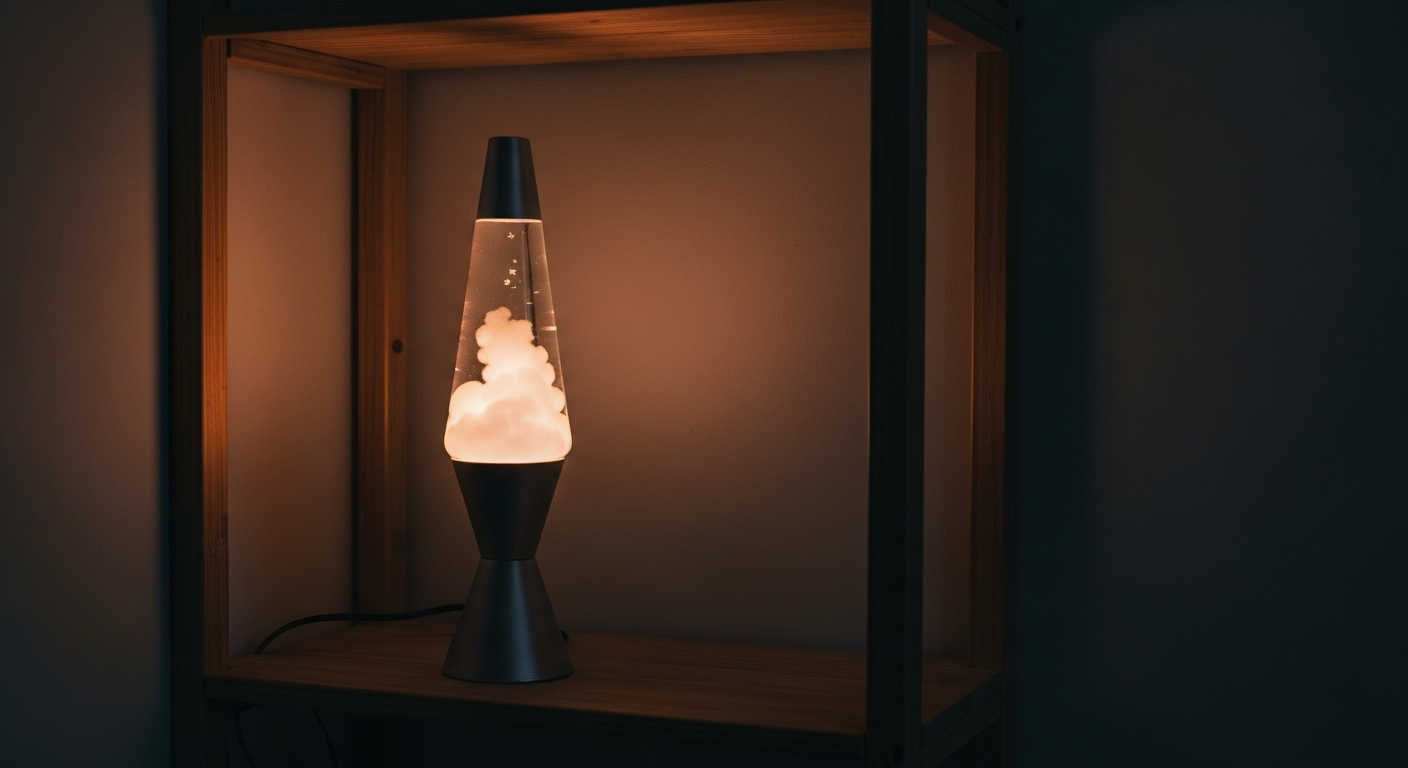
A cloudy lava lamp was almost always overheated — left on too long, run with the wrong bulb wattage, or placed in direct sunlight. The cloudiness comes from wax particles breaking apart in the fluid. Mild cases sometimes resolve after a 24-hour cooldown and a few fresh cycles; severe overheating is permanent.
| ✓Our Pick |
Replacement lava lamps and liquid kits Save yourself the frustration — a proven solution with consistently positive feedback from real buyers. See on Amazon → |
How a Lava Lamp Works (and Why Cloudiness Happens)
A lava lamp contains two substances — a translucent colored liquid and a colored wax — carefully formulated to have nearly identical densities at room temperature. The base bulb heats the wax just enough to make it slightly less dense than the liquid, causing it to rise. When the wax reaches the cooler top, it sinks again. This cycle depends on a precise density balance that's easily disrupted.
6 Reasons Your Lava Lamp Is Cloudy
Overheating (Left On Too Long)
The most common cause by far. Lava lamps are designed to run for a maximum of 8–10 hours at a time. After that, the internal temperature exceeds the design range — the wax becomes too liquid to maintain defined globs, the density balance shifts, and in many cases the wax breaks into microscopic particles that disperse into the fluid, creating permanent cloudiness.
Signs of overheating: the wax sits as a hazy cloud throughout the liquid rather than forming distinct globs; the fluid looks milky or murky rather than clear.
Fix: Turn the lamp off and let it cool undisturbed for at least 24 hours. Restart and run for one full cycle. Some mild cloudiness clears after several cycles; wax that has been emulsified from severe overheating will not recover.
Wrong Bulb Wattage
Lava lamp base bulbs are specified to generate a precise amount of heat. Installing a higher-wattage bulb than recommended generates too much heat, overheating the wax. A lower-wattage bulb doesn't produce enough heat to circulate the wax properly.
The correct wattage is printed on the lamp base. Most standard lava lamps use 25W incandescent bulbs; some larger models use 40W. LED replacements often don't generate enough heat to circulate the wax, even if their light output matches.
Fix: Install an incandescent bulb of the exact specified wattage. Do not substitute LED or CFL bulbs — they don't produce the same heat profile.
New Lamp Cloudiness (First 2–3 Hours)
New lava lamps are typically cloudy and sluggish for the first several heating cycles as the wax and fluid adjust to each other. The first use may look completely different from what you expect — the wax may appear as a flat sheet at the bottom, or the fluid may look hazy.
Fix: Run the lamp for 2–3 hours on first use without moving it. Many new lamps look perfect by the end of the first cycle; some take 3–5 cycles to "break in."
Agitation While Hot
Shaking, moving, or tilting a lava lamp while it is hot (or while the wax is in motion) disrupts the density balance and can cause the wax to emulsify into the fluid. Never move a lava lamp while it's running or while still warm.
Fix: Let the lamp cool completely before moving. If agitation caused cloudiness, apply the cool-and-restart method above.
Direct Sunlight Exposure
UV radiation from direct sunlight degrades the dye in both the fluid and the wax over time, causing fading and cloudiness. Lamps placed on windowsills or near south-facing windows deteriorate faster than those in interior positions.
Fix: Move the lamp away from direct sunlight. UV damage to the dye is irreversible, but removing the lamp from sunlight prevents further degradation.
Age and Natural Fluid Degradation
Lava lamp fluid naturally degrades over years of use. The surfactants that maintain the density balance between wax and fluid break down, causing the lamp to become permanently hazy or for the wax to stop flowing correctly. Most lava lamps have a functional lifespan of 2,000 hours of use or approximately 3–5 years of regular use.
Fix: Replacement fluid kits are available from the manufacturer for some models, but the formulation must exactly match the original. Generic water or store-bought solutions alter the density ratio and usually worsen the problem. For lamps older than 5 years, replacement is more practical than repair.
Lava Lamp Troubleshooting Quick Reference
| Symptom |
Most Likely Cause |
Fix |
| Cloudy, wax still flows |
Mild overheating |
Cool 24h, restart |
| Cloudy, wax stopped moving |
Severe overheating or age |
Cool 24h; may be permanent |
| Wax one large blob, no movement |
Too cold or wrong bulb |
Warm room, correct bulb wattage |
| Wax stuck at top |
Lamp too hot, wax too buoyant |
Turn off, cool, restart |
| Faded color, clarity OK |
UV/sunlight exposure |
Move away from sunlight |
| Cloudy from new |
Normal break-in |
Run 3–5 full cycles |
Also Read: Why Is My Candle Popping? 6 Causes & Easy Fixes
In Short
Lava lamp cloudiness is caused by overheating in the vast majority of cases. Never run your lamp for more than 8–10 hours continuously, never use the wrong bulb wattage, and never move it while hot. Mild cloudiness from brief overheating sometimes resolves after a 24-hour cooldown and a few fresh cycles. Severe cloudiness from extended overheating or years of use is permanent — the wax particles have been dispersed into the fluid and the density balance can't be restored without manufacturer-specific replacement fluid.
What You Also May Want To Know
Why is my lava lamp cloudy and not working?
Cloudiness combined with stopped movement almost always means the lamp was overheated. Let the lamp cool completely for at least 24 hours, then run it again. Minor cloudiness often clears; severe overheating is usually permanent.
Why is the wax in my lava lamp one big blob at the bottom?
A single large wax blob means the lamp isn't warm enough yet. Run it for 2–3 hours from a cold start. If the wax is still one large mass, the bulb may be underpowered or the room too cold.
How do I fix a cloudy lava lamp?
Turn off, cool for 24–48 hours, then run a full 2–3 hour cycle. Cloudiness from mild overheating sometimes clears over several cycles. Persistent cloudiness after 5–6 cycles is permanent.
Can I add water to a cloudy lava lamp?
No — adding water changes the fluid's density balance and will make the wax not flow correctly. Only manufacturer-specific replacement solution works.
How long should a lava lamp run at a time?
Never more than 8–10 hours continuously. Build in at least a 2-hour cooling period between sessions.
Reviewed and Updated on May 31, 2026 by Adelinda Manna