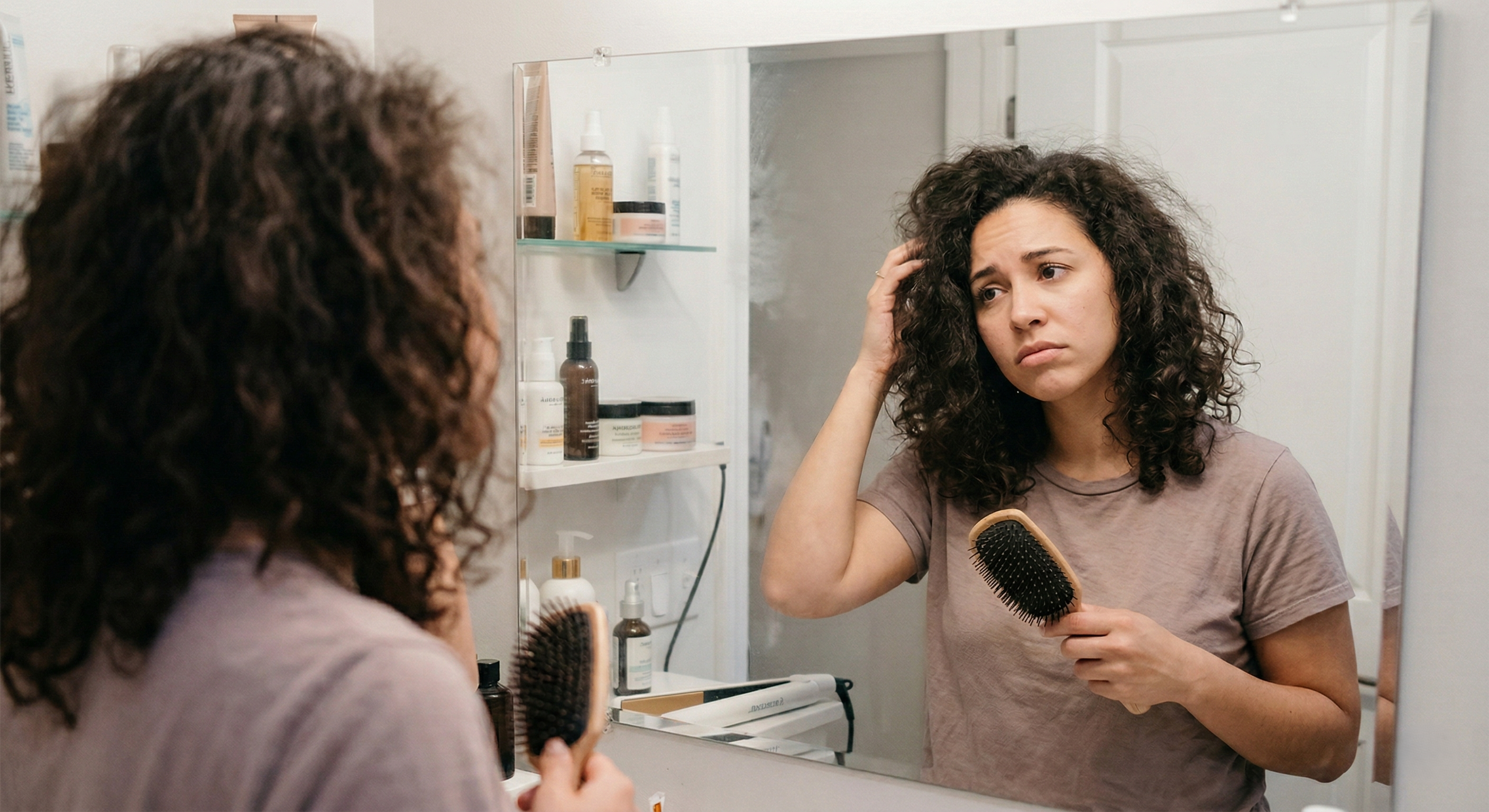
Welcome to the ultimate resource for understanding why your hair behaves like a magnet during the drier months. In this comprehensive guide updated for 2026, we explore the root causes of electrical charge in your strands and offer scientifically backed solutions to restore smoothness.Why is my hair staticky?
It comes down to a lack of moisture and an accumulation of electrical charge from friction. To fix it immediately, switch to a metal comb, use a lightweight leave-in conditioner, and increase the ambient humidity in your environment.
The Science Behind the Spark: Why Is My Hair Staticky?
Understanding the fundamental physics of your hair is the first step toward achieving a smooth, manageable mane. When your strands repel each other, it is a direct result of an imbalance in electron distribution caused by environmental triggers.
Friction and Environmental Factors
Your daily environment is filled with hidden static generators that quietly transfer electrons to your hair shaft. When your hair rubs against synthetic materials like winter hats or nylon jackets, friction causes these negatively charged electrons to build up rapidly.
"Electric charges don't flow through water, so atmospheres without any humidity will result in much more hair static," explains hairstylist Miko Branch.
Because like charges repel, your individual hair strands push away from one another, creating that infamous floating effect. This explains why winter is the prime season for static, as cold outdoor air and central indoor heating strip ambient moisture, dropping humidity levels below 30 percent.
Static Hair vs. Frizzy Hair
Many people confuse static with frizz, but treating them interchangeably will not solve your daily hair woes. Frizz requires sealing out excess moisture, while static requires actively introducing moisture to ground the electrical charge.
| Feature |
Static Hair |
Frizzy Hair |
| Primary Cause |
Electrical charge from friction and dry air |
Excess humidity swelling the hair cuticle |
| Environmental Trigger |
Low humidity, winter weather, indoor heating |
High humidity, summer weather, dampness |
| Physical Appearance |
Strands repel each other, floating away |
Strands curl, kink, and look puffy |
| Texture to the Touch |
Feels dry, weightless, and may crackle |
Feels coarse, rough, and expanded |
| Primary Solution |
Neutralize charge (metal combs, hydration) |
Seal the cuticle (anti-humectants, heavy oils) |
Immediate Solutions: How to Stop Staticky Hair Instantly
When you are about to step out the door and your hair decides to levitate, you need fast and highly effective remedies. Fortunately, there are several quick fixes that neutralize electrical charges and instantly restore your hair's natural drape.
Also Read: Stop the Spark with an Anti-Static Metal Comb
Hydration is Your Best Defense
Because dry hair acts as an insulator that traps negative charges, introducing water or moisturizing products instantly grounds the hair. A lightweight leave-in conditioner coats the hair cuticle, providing a barrier that locks in moisture while simultaneously reducing friction.
"Very simply put, static flyaways happen when the hair or the environment around the hair is dry, so moisture is the answer," states NYC salon owner Oscar Blandi.
If you are caught without your favorite styling products, even a tiny amount of water or hand lotion smoothed over your palms and gently pressed into the hair can instantly kill the electrical charge.
Ditch the Plastic for Better Tools
Your daily grooming tools heavily influence your hair's overall electrical balance. Plastic brushes and combs are insulators, meaning they generate and transfer a negative charge to your hair with every single stroke. Switching to a metal comb or a wooden brush helps conduct electricity, effectively removing the charged particles from your hair instead of adding to them.
Also Read: Why Is My Hair So Frizzy?
Building a Long-Term Anti-Static Hair Routine
Preventing flyaways requires a consistent, moisturizing hair care routine that fortifies the hair cuticle against environmental stressors. By adjusting your washing habits and styling methods, you can build long-term resistance to extreme winter dryness.
Adjust Your Wash Day Strategy
Overwashing your hair strips away the scalp's natural sebum, leaving your strands completely dehydrated and highly vulnerable to static electricity. To maintain optimal moisture levels, aim to wash your hair two to three times a week using a hydrating, sulfate-free shampoo.
"Because dry hair is more prone to static, highly moisturizing shampoos and conditioners are essential prevention measures," notes celebrity hairstylist Andrew Fitzsimons.
Implementing these long-term habits will keep your hair grounded and healthy:
- Invest in a Humidifier: Adding a humidifier to your bedroom restores indoor humidity levels to the ideal 40-50% range, preventing dry air from sapping moisture from your strands while you sleep.
- Upgrade Your Hair Dryer: Standard blow dryers emit hot air that aggressively dehydrates the hair. Ionic hair dryers emit negative ions that break down water molecules faster, reducing drying time and heat damage while sealing the hair cuticle for a static-free finish.
- Wear Natural Fibers: Synthetic materials like acrylic and polyester are notorious static generators. Swap your winter beanies and scarves for natural materials like cotton, wool, or silk, which cause significantly less friction.
Also Read: Why Is My Gum Swollen Around One Tooth?
You May Also Want To Know
Even with a solid hair care routine, you might still run into specific scenarios where static becomes a sudden nuisance. Here are some of the most common questions our readers ask regarding static electricity in their hair.
Why is my hair staticky right after washing it?
If your hair is staticky right after a wash, you are likely using a shampoo that contains harsh sulfates, which aggressively strip the hair of its natural oils. Additionally, vigorously rubbing your hair with a standard terry-cloth towel creates immense friction and charge; always opt to gently squeeze excess water out with a microfiber towel or cotton t-shirt instead.
Can dryer sheets really fix static hair?
Yes, this old laundry room trick is actually backed by science. Dryer sheets contain positively charged ingredients that immediately neutralize the negatively charged electrons on your hair. Simply running a clean dryer sheet gently over your hair or brushing it with a brush wrapped in a dryer sheet is an excellent quick fix for on-the-go touch-ups.
Does fine hair get more static than thick hair?
Absolutely, because fine hair is much lighter and lacks the density of coarser textures. Fine hair has less mass and weight, making it significantly easier for a built-up electrical charge to physically lift the strands into the air. People with fine hair need to be especially diligent with lightweight moisture, as heavy creams will weigh their delicate hair down.
Reviewed and Updated on April 3, 2026 by George Wright