


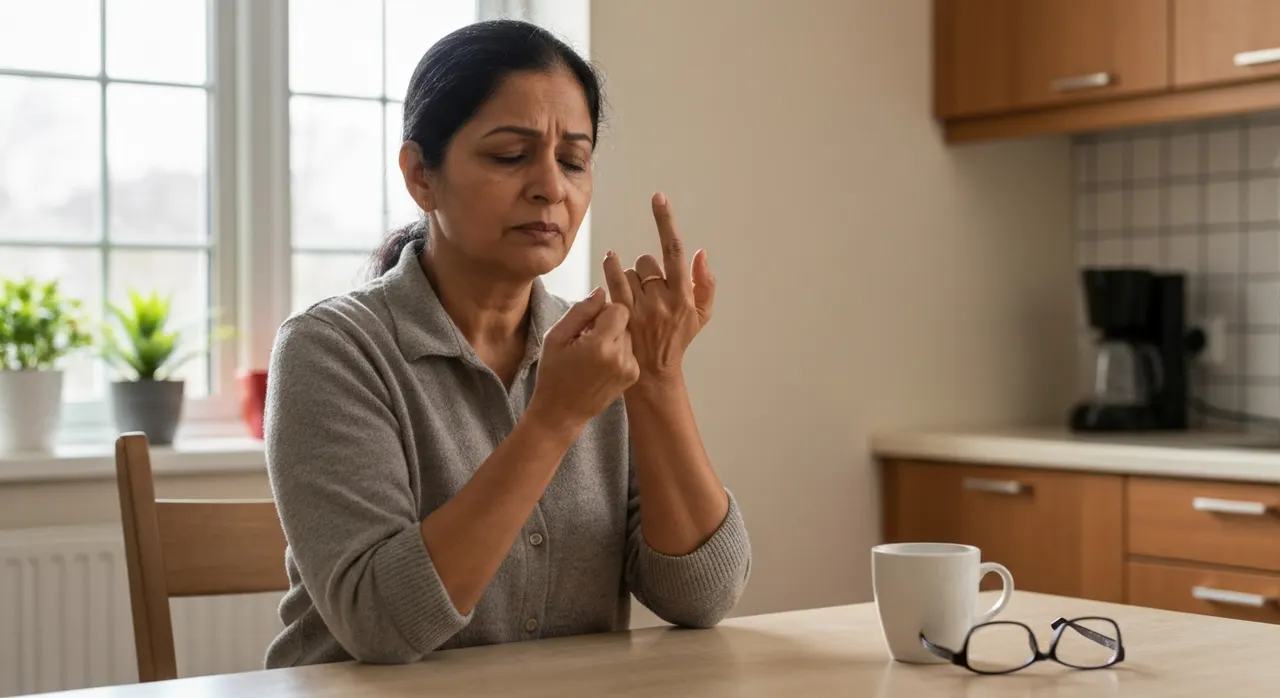
Your finger joint is painful because of inflammation, injury, or wear in the joint structures — most commonly from overuse, arthritis, or a recent strain. The pain signals that something is irritating the cartilage, tendons, ligaments, or bones that make up the joint. Whether your middle finger hurts after typing all day or your finger is aching for no obvious reason, the discomfort typically stems from one of six causes that range from minor and temporary to conditions requiring medical attention.
What Causes Finger Joint Pain? 6 Common Reasons in 2026
Finger joint pain develops when the structures inside or around the joint become damaged, inflamed, or compressed — and the specific cause determines how you should treat it.
Your finger joints are remarkably complex. Each finger (except the thumb) has three joints: the MCP joint at the knuckle, the PIP joint in the middle, and the DIP joint near the fingertip. These joints contain cartilage, synovial fluid, tendons, and ligaments that all work together. When any component is stressed or damaged, pain results.
Is It Osteoarthritis Wearing Down the Joint?
Osteoarthritis is the most common cause of chronic finger joint pain, especially if you're over 50. This happens when the cartilage cushioning your joint gradually wears away, allowing bones to rub together. You'll typically notice stiffness in the morning that improves with movement, aching that worsens after repetitive use, and possibly small bony bumps (called Heberden's nodes) forming near the DIP joints.
"Osteoarthritis of the hand affects approximately 50% of people over age 65, making it one of the most prevalent causes of finger and hand pain in older adults." — American Academy of Orthopaedic Surgeons
The middle finger is particularly susceptible because it's the longest and absorbs more force during gripping and pinching activities.
Could Rheumatoid Arthritis Be Causing Inflammation?
Unlike osteoarthritis, rheumatoid arthritis (RA) is an autoimmune condition where your immune system mistakenly attacks the joint lining. RA typically affects the same joints on both hands symmetrically and causes warmth, swelling, and morning stiffness lasting more than 30 minutes. If your finger hurting comes with fatigue, low-grade fever, or multiple swollen joints, this could be the culprit.
Did You Injure the Joint Without Realizing It?
Sometimes the simplest explanation is correct: you jammed, sprained, or strained your finger and forgot about it. A hard grip on a stubborn jar lid, catching a ball awkwardly, or even sleeping with your hand in an odd position can cause ligament sprains or joint capsule irritation that lingers for days or weeks.
Is Trigger Finger Locking the Joint?
Trigger finger (stenosing tenosynovitis) occurs when the tendon sheath becomes inflamed and the tendon can't glide smoothly. You'll feel pain at the base of the finger, and the finger may catch, click, or lock when you bend or straighten it. This is especially common after repetitive gripping motions.
Are You Experiencing Tendonitis From Overuse?
Repetitive strain from typing, texting, gaming, or manual work inflames the tendons around the joint. The pain typically worsens with activity and improves with rest. Your middle finger hurting after long hours at a keyboard is a classic presentation of extensor or flexor tendonitis.
Could Gout Be Affecting Your Finger?
Though gout more commonly strikes the big toe, it can attack any joint — including fingers. Gout causes sudden, severe pain with dramatic swelling and redness. The joint may feel hot to the touch. Attacks often start at night and are linked to dietary triggers like red meat, alcohol, and shellfish.
| ✓Our Pick |
Clinically backed joint and mobility supplements A well-reviewed choice that delivers real results — worth every penny for anyone dealing with this. Learn More → |
How to Tell Which Condition Is Causing Your Finger Pain
The pattern of your symptoms — when pain occurs, what makes it better or worse, and what the joint looks like — reveals the likely cause.
| Symptom Pattern | Most Likely Cause | Key Distinguishing Feature |
|---|---|---|
| Gradual onset, worse after use, bony bumps | Osteoarthritis | Affects DIP joints, improves with rest |
| Symmetric pain in both hands, morning stiffness >30 min | Rheumatoid arthritis | Warmth and swelling, systemic symptoms |
| Sudden severe pain, red and hot joint | Gout | Often wakes you at night, dietary triggers |
| Pain at base of finger, catching or locking | Trigger finger | Clicking sensation when bending |
| Pain worse with specific movements, improves with rest | Tendonitis | Direct link to repetitive activity |
| Pain after impact or awkward movement | Injury/Sprain | Can recall inciting event |
If you're unsure, keep a symptom diary for a week. Note when pain is worst, what activities aggravate it, and whether anti-inflammatory medication helps. This information is valuable for your doctor.
Also Read: Why Is My Knee Clicking and Painful? 6 Causes & Fixes
Home Remedies That Actually Help Finger Joint Pain
Most finger joint pain responds well to conservative home treatment within one to two weeks — rest, ice, gentle movement, and anti-inflammatory measures address the underlying inflammation.
Start with the RICE protocol: Rest the affected finger, Ice it for 15–20 minutes several times daily, Compress gently with a finger splint or buddy-taping, and Elevate your hand when possible. Over-the-counter NSAIDs like ibuprofen or naproxen reduce both pain and inflammation.
Gentle range-of-motion exercises prevent stiffness without aggravating the joint. Make a loose fist, then spread your fingers wide. Repeat 10 times, three times daily. Stop if any movement increases pain.
Topical treatments containing menthol, capsaicin, or diclofenac gel can provide localized relief without the gastrointestinal side effects of oral medications.
"For mild to moderate osteoarthritis of the hand, a combination of rest, exercises, and topical anti-inflammatory agents is often as effective as oral medications with fewer side effects." — Arthritis Foundation
Heat therapy helps chronic conditions like arthritis — warm water soaks or paraffin wax baths increase blood flow and reduce stiffness. Cold therapy works better for acute injuries or gout attacks.
| ✓Quick Fix |
The First Thing Most People Try Many readers dealing with this exact issue start with something like this before trying anything else. See on Amazon → |
When to See a Doctor for Finger Joint Pain
Seek medical evaluation if your pain persists beyond two weeks of home treatment, the joint appears deformed, you have fever alongside joint swelling, or the pain significantly limits daily activities.
Red flags requiring prompt attention include:
- Finger appears bent at an abnormal angle
- You can't bend or straighten the finger at all
- Numbness or tingling accompanies the pain
- The joint is hot, very swollen, and red (possible infection or acute gout)
- Pain started after a significant trauma
- Multiple joints are affected simultaneously
Your doctor will examine the joint, likely order X-rays to assess bone and cartilage damage, and may run blood tests if inflammatory arthritis is suspected. Treatment options beyond home care include corticosteroid injections, prescription medications, physical therapy, or in severe cases, surgical intervention.
How to Prevent Finger Joint Pain From Recurring
Protecting your finger joints long-term requires ergonomic adjustments, maintaining joint mobility, and addressing underlying conditions before they progress.
If repetitive work causes your pain, modify your technique. Use ergonomic keyboards and mice, take breaks every 30 minutes to stretch, and avoid gripping tools with excessive force. Padded grips on pens and utensils reduce strain.
Maintain a healthy weight — excess pounds increase systemic inflammation that affects all joints, including fingers. Stay active with exercises that don't stress finger joints, like walking or swimming.
For arthritis, consistency matters more than intensity. Daily gentle exercises maintain range of motion and strengthen the small muscles supporting the joints. A hand therapist can design a personalized program.
In Short
Finger joint pain most commonly results from osteoarthritis, overuse injuries, tendonitis, or inflammatory conditions like rheumatoid arthritis or gout. The pattern of your symptoms — gradual versus sudden onset, which joints are affected, and what makes pain better or worse — points to the cause. Most cases improve with rest, ice, anti-inflammatory medication, and gentle exercises within two weeks. See a doctor if pain persists, the joint looks deformed, or you have signs of infection. Prevention focuses on ergonomic adjustments, maintaining mobility, and managing underlying conditions early.
What You Also May Want To Know
Why Is My Middle Finger Hurting for No Reason?
Your middle finger may seem to hurt without cause, but there's almost always a trigger — it's just not obvious. The middle finger bears more mechanical stress during gripping and pinching because of its length and central position. Microtrauma from everyday activities like typing, carrying bags, or opening containers accumulates and eventually causes pain. Arthritis also commonly affects the middle finger first. If the pain is new and you can't identify a cause, monitor it for a week while trying rest and anti-inflammatory measures.
Can Finger Joint Pain Be Serious?
Finger joint pain is rarely dangerous, but it can signal serious conditions. Septic arthritis (joint infection) requires emergency treatment to prevent permanent damage — suspect it if one joint is extremely hot, red, swollen, and you have fever. Rheumatoid arthritis causes progressive joint destruction if untreated. Gout can lead to kidney stones and tophi (uric acid deposits) without management. Pain after significant trauma may indicate fracture. Most finger pain is benign, but persistent or severe symptoms warrant medical evaluation.
Why Does My Finger Hurt When I Bend It?
Pain when bending specifically suggests a problem with the tendons, ligaments, or joint capsule. Trigger finger causes catching or locking during bending. Tendonitis creates pain along the tendon's path when it moves. A sprained ligament hurts when stretched during bending. Arthritis pain during movement occurs because damaged cartilage can't cushion the joint surfaces gliding against each other. Identify whether the pain is at the joint line, along the finger, or at the base — this helps pinpoint the structure involved.
How Long Does Finger Joint Pain Usually Last?
Duration depends entirely on the cause. A minor strain or overuse injury typically resolves within one to two weeks with rest and ice. Trigger finger can take four to six weeks to calm down with conservative treatment. Gout attacks last three to ten days without treatment, shorter with medication. Arthritis is chronic — it doesn't go away but can be managed effectively. If your pain hasn't improved after two weeks of home treatment, or if it's worsening, see a healthcare provider for proper diagnosis and treatment.