
Technology
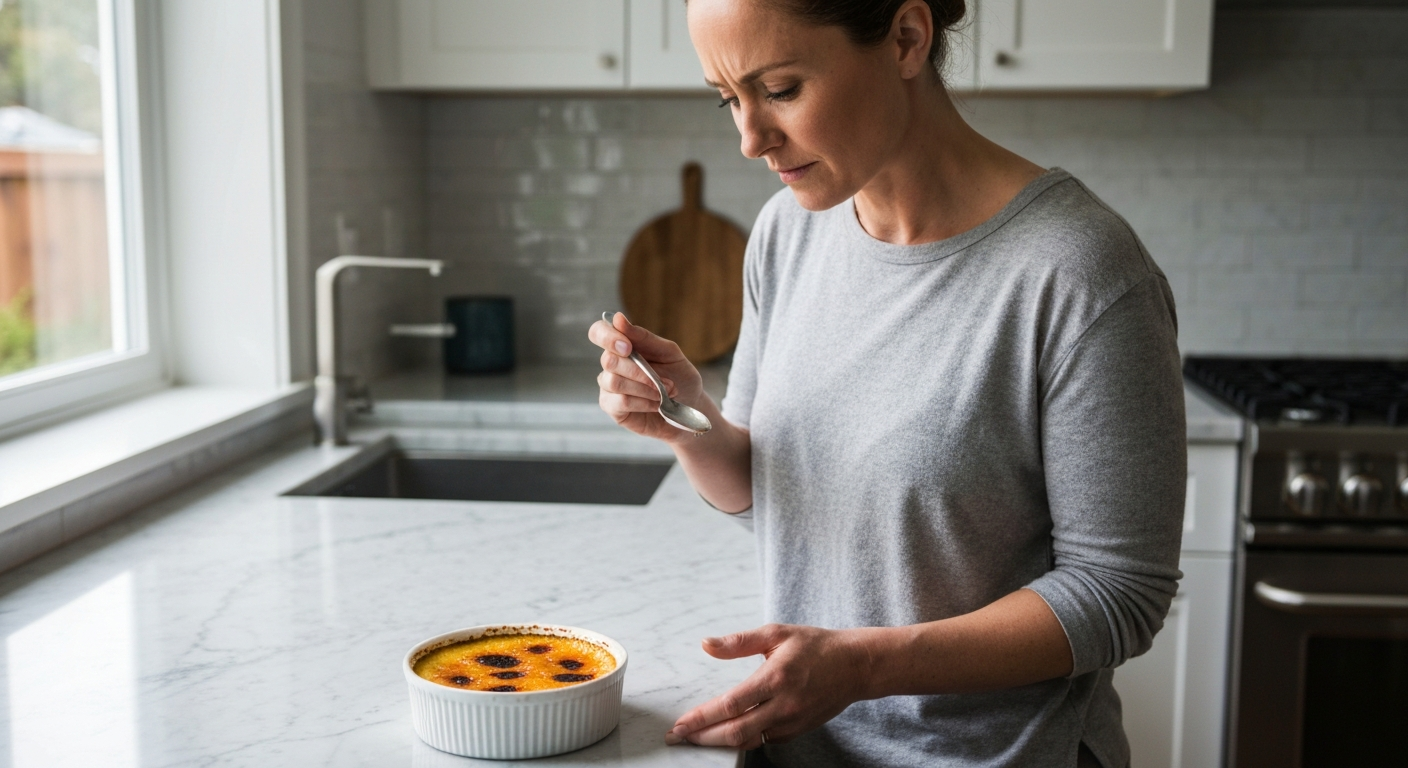

Your crème brûlée, pastry cream, or custard is mottled because of uneven cooking, curdled egg proteins, or air pockets trapped during mixing — the streaky, blotchy appearance happens when heat distributes inconsistently or when eggs scramble into tiny lumps instead of forming a smooth emulsion.
| ✓Our Pick |
Fine mesh strainer set for silky custards and sauces A well-reviewed choice that delivers real results — worth every penny for anyone dealing with this. See on Amazon → |
Mottling in custard-based desserts comes down to three culprits: heat shock to egg proteins, improper tempering technique, and trapped air bubbles that create uneven texture throughout your cream.
When you make any crème — whether it's crème brûlée, crème pâtissière (pastry cream), or crème anglaise — you're essentially creating a delicate emulsion of eggs, dairy, and sugar. The proteins in egg yolks begin to coagulate between 160°F and 180°F. If your mixture heats too quickly or unevenly, some proteins seize up into tiny curds while others remain liquid. This creates the characteristic mottled, cottage cheese-like appearance that ruins an otherwise perfect dessert.
The visual result is distinct: pale yellow streaks against darker patches, sometimes with visible lumps or a grainy texture when you drag a spoon through. You might also notice the cream weeps liquid around the edges or develops a skin with discolored spots.
"Custards curdle when overheated because the egg proteins contract and squeeze out water, creating a lumpy, watery texture." — Harold McGee at On Food and Cooking
Understanding which specific issue caused your mottling helps you fix it — and prevent it next time.
| ✓Quick Fix |
The Fastest Fix People Try for This A fast first step before anything more expensive or time-consuming — worth a look right now. See on Amazon → |
Yes — failing to temper your eggs properly is the most common reason for mottled crème, because pouring hot liquid directly into cold eggs causes instant, irreversible curdling.
Tempering means gradually raising the temperature of your egg mixture before combining it with hot milk or cream. The process works like this: you ladle a small amount of the hot liquid into your eggs while whisking constantly, then another ladleful, then another. This slow introduction raises the egg temperature gently, allowing the proteins to unfold gradually without seizing.
Skip this step — or rush it — and you get scrambled eggs in your custard. The hot liquid shocks the cold egg proteins, causing them to contract violently and clump together. These tiny clumps appear as pale, mottled streaks throughout your cream.
The entire tempering process should take 2–3 minutes. Rushing it by dumping all the hot liquid at once guarantees mottling.
Absolutely — cooking your custard at too high a temperature causes the egg proteins to overcook and curdle before the starch (if present) can stabilize the mixture.
Different crèmes have different heat tolerances:
| Crème Type | Maximum Safe Temperature | Contains Starch | Curdling Risk |
|---|---|---|---|
| Crème anglaise | 175°F–180°F | No | Very high |
| Crème brûlée | 170°F–175°F | No | Very high |
| Pastry cream (crème pâtissière) | 185°F–190°F | Yes (flour/cornstarch) | Moderate |
| Crème diplomat | 175°F | Partial | High |
Starch-thickened custards like pastry cream are more forgiving because the starch molecules help stabilize the egg proteins. But even these will curdle if you boil them aggressively or leave them on high heat too long.
For starch-free custards like crème anglaise or crème brûlée base, you have almost no margin for error. The moment your mixture exceeds 180°F, the proteins begin to overcook. You'll see this happen in real time — the smooth, glossy surface suddenly develops tiny lumps and the consistency becomes grainy.
Use an instant-read thermometer and stir constantly. Remove the pot from heat the moment you hit your target temperature. For crème brûlée, which bakes in a water bath, ensure your oven temperature is accurate (many ovens run 25°F hot) and that the water bath stays between 150°F and 170°F throughout baking.
Also Read: Why Is My Face Red and Blotchy? 9 Causes & Fixes
Yes — if your water bath heats unevenly or your ramekins sit at different distances from the heat source, some custards will set faster than others, creating internal mottling and surface discoloration.
Crème brûlée bakes in a bain-marie (water bath) specifically to ensure gentle, even heat transfer. The water acts as a buffer, preventing the bottom and sides of the ramekin from getting too hot. But several things can go wrong:
The ideal water bath reaches halfway up the sides of your ramekins. Start with hot tap water (not boiling) to avoid thermal shock to the custard. Place the baking pan on the oven rack before adding water to prevent spillage.
"A water bath insulates the custard from the oven's intense heat, allowing the eggs to set slowly and evenly from the outside in." — Stella Parks at Serious Eats
Trapped air creates pockets that bake differently from the surrounding custard, leaving pale spots and uneven texture throughout your crème.
Air gets incorporated during whisking — which you can't avoid entirely since you need to combine eggs and sugar thoroughly. But aggressive whisking creates foam, and foam means bubbles. These bubbles expand during baking, rise to the surface, and leave behind small craters or pale patches.
Straining serves double duty: it removes any small egg curds from tempering mistakes AND catches air bubbles. This single step prevents most mottling issues.
| ✓Our Pick |
Instant-read digital thermometer for custards and baking This is the go-to fix recommended by professionals — save time and money by getting it right the first time. See on Amazon → |
Using cream or milk that's close to its expiration date or has been improperly stored can affect how smoothly the proteins interact, potentially contributing to a grainy or mottled texture.
Fresh, high-fat dairy creates the smoothest custards. Heavy cream (36% fat or higher) emulsifies more readily than half-and-half or milk. The fat globules help suspend the egg proteins evenly throughout the mixture, reducing the chance of curdling.
Older dairy may have begun developing slight acidity as natural bacteria break down lactose into lactic acid. This acid can cause the egg proteins to coagulate prematurely, especially around the edges of the custard where heat penetrates first.
For best results:
- Use dairy that's at least 3–4 days from its sell-by date
- Avoid ultra-pasteurized cream if possible (standard pasteurized creates better texture)
- Store cream properly at 35°F–38°F
- Never use cream that smells sour or has thickened unusually
Undissolved sugar granules or uneven sugar distribution creates hot spots during cooking and visible crystalline patches in the finished custard.
Sugar does more than sweeten your crème. It also raises the coagulation temperature of eggs, giving you more time before curdling occurs. But this protection only works if the sugar fully dissolves into the egg mixture before cooking.
Whisk your eggs and sugar together until the mixture turns pale yellow and falls from the whisk in thick ribbons — this takes 2–3 minutes by hand or 1 minute with an electric mixer. The color change indicates the sugar has dissolved and the mixture has incorporated enough air to lighten. Rush this step and you'll have sugar granules that create uneven texture and hot spots where caramelization occurs prematurely.
If your custard has already curdled or become mottled, you may be able to salvage it by straining and blending — though prevention is always easier than rescue.
For mild mottling:
1. Strain the mixture through a fine-mesh sieve while still warm
2. Press gently with a spatula to force smooth custard through, leaving curds behind
3. Whisk vigorously to re-emulsify
4. If making pastry cream, return to low heat briefly while whisking constantly
For moderate curdling:
1. Transfer to a blender or use an immersion blender
2. Blend on medium speed for 30 seconds
3. Strain through a fine-mesh sieve
4. The texture won't be perfect, but it will be usable
For severe curdling with large scrambled egg pieces: unfortunately, there's no saving it. The proteins have contracted too much to re-emulsify. Start over with fresh ingredients and slower tempering.
Also Read: Why Is My Skin Shiny? 9 Causes & How to Fix It
Following these steps in order eliminates virtually all causes of mottling and ensures your custard comes out silky every time.
| Step | Why It Matters |
|---|---|
| Use fresh, cold heavy cream | Higher fat content creates stable emulsion |
| Whisk eggs and sugar until pale | Ensures complete sugar dissolution |
| Temper eggs gradually (2–3 min) | Prevents protein shock and curdling |
| Cook on medium-low heat only | Keeps proteins below curdling threshold |
| Stir constantly with wooden spoon | Distributes heat evenly throughout |
| Monitor temperature (stay under 180°F) | Catches overcooking before it's visible |
| Strain through fine sieve twice | Removes curds and air bubbles |
| Rest 10 minutes before pouring | Allows surface bubbles to rise and pop |
| Use proper water bath technique | Insulates custard from direct heat |
Mottled crème happens when egg proteins curdle from heat shock, improper tempering, or uneven cooking — the fix is always about controlling temperature and ensuring smooth emulsification. Temper your eggs slowly by adding hot liquid in small increments while whisking constantly. Cook on medium-low heat and never let starch-free custards exceed 180°F. Strain your mixture twice through a fine-mesh sieve to remove any small curds and air bubbles. Use a proper water bath for baked custards, with hot (not boiling) water reaching halfway up the ramekins. Fresh, high-fat dairy and fully dissolved sugar give you the best foundation for a silky, spot-free crème every time.
Grainy crème brûlée results from overcooking the custard base or baking at too high a temperature. The egg proteins have curdled into tiny, gritty particles throughout the mixture. To prevent this, cook your base on the stovetop only until it coats the back of a spoon (around 170°F), strain it well, and bake in a water bath at 325°F or lower. Using an oven thermometer helps ensure accurate temperature.
Mildly curdled pastry cream can often be rescued by blending it with an immersion blender for 30 seconds, then straining through a fine-mesh sieve. The mechanical action helps re-emulsify the fats and proteins. However, severely curdled pastry cream with visible scrambled egg pieces cannot be fixed and should be discarded. Prevention through proper tempering is much easier than rescue.
Lumpy crème anglaise happens when the egg yolks scramble during cooking, usually because the heat was too high or you stopped stirring. Since crème anglaise contains no starch to protect the eggs, it's especially prone to curdling. Always cook over medium-low heat while stirring constantly, and remove from heat the instant the mixture coats a spoon. Strain immediately through a fine sieve.
Most crème brûlée recipes bake best between 300°F and 325°F in a water bath for 40–50 minutes. The low temperature allows the custard to set gradually without curdling. The center should jiggle slightly like gelatin when done — it will firm up as it cools. Overbaking creates a rubbery texture and can cause the surface to crack or mottle.
For stovetop custards, the mixture is done when it coats the back of a wooden spoon and holds a clean line when you draw your finger through it (the "nappe" stage). An instant-read thermometer should read 170°F–180°F depending on the recipe. For baked custards, the edges should be set while the center still wobbles gently. It will continue cooking from residual heat after you remove it from the oven.
Reviewed and Updated on June 20, 2026 by George Wright