
Health
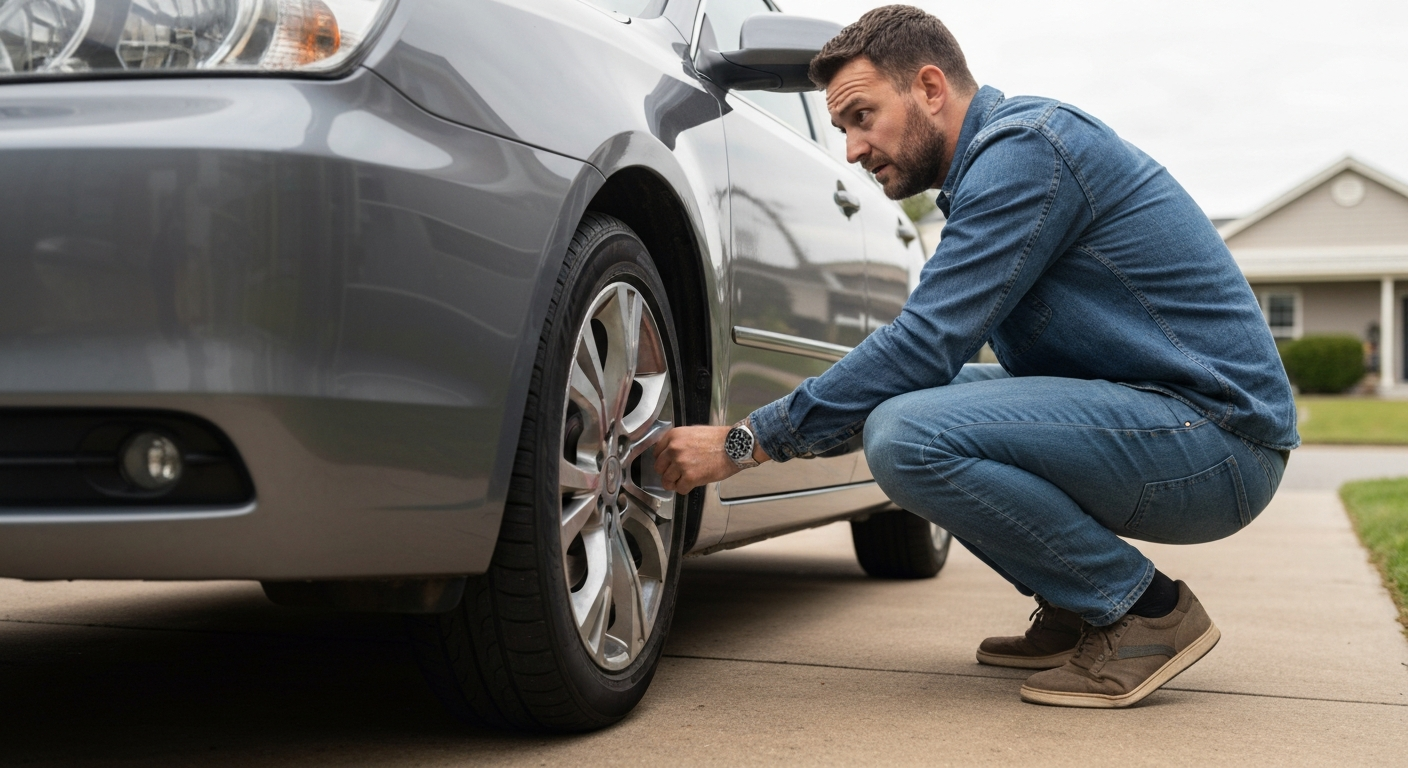

Your car is most likely shaking while driving due to unbalanced or damaged tires, worn brake components, failing engine mounts, or issues with the drivetrain such as worn CV joints or a damaged driveshaft. The specific cause depends on when the trembling occurs — whether it happens at all speeds, only during acceleration, at highway speeds, or when braking. Tire-related problems account for roughly 60–70% of vehicle vibration complaints, making them the first thing to check. The good news is that most causes of a shaking car are diagnosable at home and fixable without major expense.
| 🛒Amazon Pick |
Top-Rated Tire Pressure Gauges on Amazon Great value for money -- tackles the root cause rather than just masking the symptoms. See on Amazon → |
The speed at which your car trembles tells you a lot about the underlying cause — vibrations at low speeds typically point to tire or wheel issues, while shaking only at highway speeds often indicates balance problems or drivetrain wear.
Vehicle vibrations are caused by rotating components that have become uneven. When a tire is out of balance by even 15 grams, it creates a centrifugal force that increases exponentially with speed. At 100 km/h (62 mph), that small imbalance generates enough force to shake your entire steering column.
Different components have different "resonant frequencies" — the speed at which their imbalance becomes most noticeable. Tires typically cause vibrations between 80–120 km/h (50–75 mph). Brake rotors cause shaking only when braking. Engine mounts cause trembling at idle or during acceleration. Understanding this pattern is your first diagnostic tool.
"Vibration diagnosis starts with speed correlation. A vibration that appears at 60 mph and worsens at 70 mph almost always indicates a rotating mass imbalance — typically tires or wheels." — James Halderman, automotive technology educator at Pearson Automotive
The following causes account for over 90% of vehicle vibration complaints, ranked from most to least common.
Tire imbalance is the single most common reason your car is trembling while driving. Wheel weights fall off over time, tires wear unevenly, and the result is a wobble that transfers through the suspension into the cabin. You'll typically notice this as a steering wheel vibration between 80–120 km/h (50–75 mph) that may come and go.
The fix is straightforward: have your tires rebalanced at any tire shop. This costs between $15–$50 for all four wheels and takes about 30 minutes. Most shops recommend rebalancing every 10,000–15,000 km (6,000–9,000 miles) or whenever you notice vibration.
Tires develop flat spots from sitting too long, bulges from impact damage, or uneven wear from misalignment. Any of these creates a rhythmic thumping or shaking. Run your hand around each tire's tread surface — you should feel no bumps, bulges, or irregularities.
Check for these specific problems:
If you find damage or significant uneven wear, the tire needs replacement. A new set of all-season tires ranges from $400–$1,200 installed, depending on size and brand.
Vibration specifically during acceleration usually indicates a drivetrain problem rather than a tire issue. The drivetrain includes your CV joints (front-wheel drive), driveshaft (rear-wheel drive), and motor mounts.
CV joints connect the transmission to the wheels and allow the axle to flex as the suspension moves. When they wear out, they create a vibration or clicking noise that worsens during acceleration, especially when turning. Inspect the rubber boots covering each CV joint — if they're torn or leaking grease, the joint is likely damaged.
Driveshaft problems in rear-wheel-drive or all-wheel-drive vehicles cause a vibration felt through the floor rather than the steering wheel. The universal joints at each end of the driveshaft are the usual failure point.
"A vibration that only appears under load — during acceleration — points to the drivetrain. The torque stress reveals worn joints that might not vibrate when cruising." — Larry Carley, ASE-certified master technician at AA1Car
Also Read: Why Is My Check Engine Light Flashing?
If your car only shakes when you press the brake pedal, the rotors are almost certainly the problem. Brake rotors warp from heat cycling — repeated heating and cooling causes the metal to distort slightly. When the brake pads clamp onto an uneven rotor surface, you feel pulsation through the pedal and vibration through the steering wheel or body.
The technical threshold for rotor runout (warping) is 0.05 mm (0.002 inches). Anything beyond this is perceptible during braking. A mechanic can measure runout with a dial indicator and either resurface the rotors (if enough material remains) or replace them.
| Symptom | Likely Rotor Issue |
|---|---|
| Pulsating brake pedal | Rotor thickness variation |
| Steering wheel shakes during braking | Front rotor warping |
| Whole car shudders during braking | Rear rotor warping |
| Grinding noise with vibration | Worn pads contacting rotor |
Rotor replacement typically costs $200–$500 per axle, including new pads. This is standard maintenance — most rotors last 50,000–100,000 km (30,000–60,000 miles).
Engine mounts are rubber-and-metal brackets that attach the engine to the chassis. They absorb engine vibration so you don't feel it inside the cabin. When the rubber deteriorates or breaks, the engine's natural vibration transfers directly into the body.
Symptoms of worn engine mounts include:
Engine mounts typically last 100,000–150,000 km (60,000–90,000 miles) but fail earlier in hot climates or on vehicles with more powerful engines. Replacement costs $150–$600 depending on mount location and vehicle design.
Misalignment doesn't directly cause vibration, but it accelerates tire wear that does. If your alignment is off, tires develop uneven wear patterns within a few thousand kilometres. That uneven wear then causes shaking.
Signs your car needs alignment:
Alignment costs $75–$150 and should be checked annually or after hitting a significant pothole or kerb.
| 🛒Amazon Pick |
Best Wheel Alignment Tools for Home Mechanics on Amazon Highly rated by thousands of buyers -- one of the most effective solutions you can try at home. See on Amazon → |
Suspension parts — ball joints, tie rod ends, control arm bushings, and wheel bearings — wear gradually. When they become excessively loose, they allow the wheel to wobble slightly, creating vibration or a wandering feeling while driving.
A worn wheel bearing often produces a humming or grinding noise that changes with speed. Ball joints and tie rod ends create play in the steering that a mechanic can detect by shaking the wheel while the car is lifted. Control arm bushings deteriorate into a vague, imprecise steering feel combined with vibration over bumps.
Suspension repairs vary widely: wheel bearings cost $150–$400 per side, ball joints $100–$350, and complete control arms $200–$500. A reputable shop will show you the worn parts before replacing them.
You can narrow down the cause significantly before visiting a mechanic by observing exactly when and how your car shakes.
Pay close attention to the circumstances:
Park on a flat surface and examine each tire. Check for proper inflation (use your door jamb sticker for the correct pressure). Look for bulges, cuts, or uneven wear. Spin each wheel by hand if possible — it should rotate smoothly without wobbling.
With the car parked and the engine off, grab each wheel at 12 and 6 o'clock and try to rock it. Any detectable play indicates worn wheel bearings or suspension components. Then grab at 3 and 9 o'clock — play here suggests tie rod end wear.
With the engine running in Park, note any vibration. Excessive idle vibration suggests engine mounts. Turn the steering wheel lock-to-lock at low speed — clicking sounds indicate CV joint wear.
| Observation | Most Likely Cause |
|---|---|
| Vibration at 80–120 km/h, felt in steering wheel | Tire balance or front suspension |
| Vibration at all speeds, felt in seat | Rear tire issue or driveshaft |
| Vibration only when braking | Warped brake rotors |
| Vibration only when accelerating | CV joints, motor mounts, or driveshaft |
| Vibration at idle that disappears when driving | Engine mounts |
| Humming noise that changes with speed | Wheel bearing |
Also Read: Why Is My Car Shaking? Diagnosis, Top Causes, and Fixes
Most vibration causes are not immediately dangerous, but certain symptoms warrant pulling over or avoiding driving until repaired.
Stop driving immediately if you notice:
These symptoms may indicate an imminent tyre blowout, brake failure, or suspension collapse. Pull over safely and have the car towed rather than risk a highway breakdown.
Less urgent but still priority repairs include:
"A vibration that's getting progressively worse is never just going away on its own. The mechanical cause is degrading, and catching it early prevents cascade failures that cost significantly more." — Tom Torbjornsen, automotive expert at America's Car Show
Repair costs range from $40 for a simple tyre balance to $1,500+ for drivetrain work, depending on the cause.
| Repair | Typical Cost (Parts + Labour) |
|---|---|
| Tire rebalancing | $40–$80 |
| New tires (set of 4) | $400–$1,200 |
| Wheel alignment | $75–$150 |
| Brake rotor replacement (per axle) | $200–$500 |
| CV joint replacement (per side) | $250–$600 |
| Engine mount replacement | $150–$600 |
| Wheel bearing replacement (per side) | $150–$400 |
| Driveshaft repair | $400–$1,500 |
Start with the cheapest, most common fix: tyre balance and inspection. Many shops offer free visual inspections that can identify obvious problems before you commit to repairs.
| 🛒Amazon Pick |
Portable Car Jack Stands for Home Repairs on Amazon Top-rated pick recommended by professionals -- save time and money by getting it right the first time. See on Amazon → |
Your car is shaking while driving most likely due to unbalanced or damaged tires, which account for the majority of vibration complaints. If the shaking occurs only during acceleration, check your CV joints and motor mounts. Vibration only while braking points to warped rotors. Diagnosing when and how the trembling occurs is the key to identifying the cause — and most fixes are straightforward and moderately priced. Address vibrations promptly, as ignoring them typically leads to more expensive secondary damage.
Vibration that appears specifically at higher speeds (80–120 km/h or 50–75 mph) and disappears at lower speeds almost always indicates a tyre balance issue. The centrifugal force created by even a small imbalance increases with speed, becoming perceptible only once you reach a certain velocity. Have your tyres balanced first — it's the cheapest fix and resolves the majority of speed-specific vibrations.
Acceleration-specific shaking suggests a drivetrain component is failing under load. CV joints, motor mounts, and driveshafts are designed to handle torque stress, and when they wear out, they vibrate only when that stress is applied. The vibration disappears during cruising because the drivetrain isn't under the same load. A mechanic can inspect these components by putting the car on a lift and checking for play or damage.
Yes, underinflated tyres can cause vibration and instability. Low pressure causes the tyre to flex more than designed, generating heat and uneven contact with the road. This creates a wobbling sensation, particularly at higher speeds. Check all four tyres against the pressure listed on your door jamb sticker — not the maximum pressure printed on the tyre sidewall.
In most cases, you can safely continue driving to a repair shop, but avoid high speeds and monitor whether the vibration worsens. If the shaking becomes violent, if you hear grinding or see smoke, or if the car becomes difficult to steer, pull over immediately and have it towed. Mild, consistent vibration is usually a gradual wear issue; sudden or severe shaking may indicate imminent failure.
Most mechanics recommend tyre balancing every 10,000–15,000 km (6,000–9,000 miles) or whenever you notice vibration. You should also have them balanced after mounting new tyres, after a tyre repair, or after hitting a significant pothole. Regular balancing extends tyre life and prevents the uneven wear that leads to more serious vibration problems.
Reviewed and Updated on April 13, 2026 by Adelinda Manna