Health
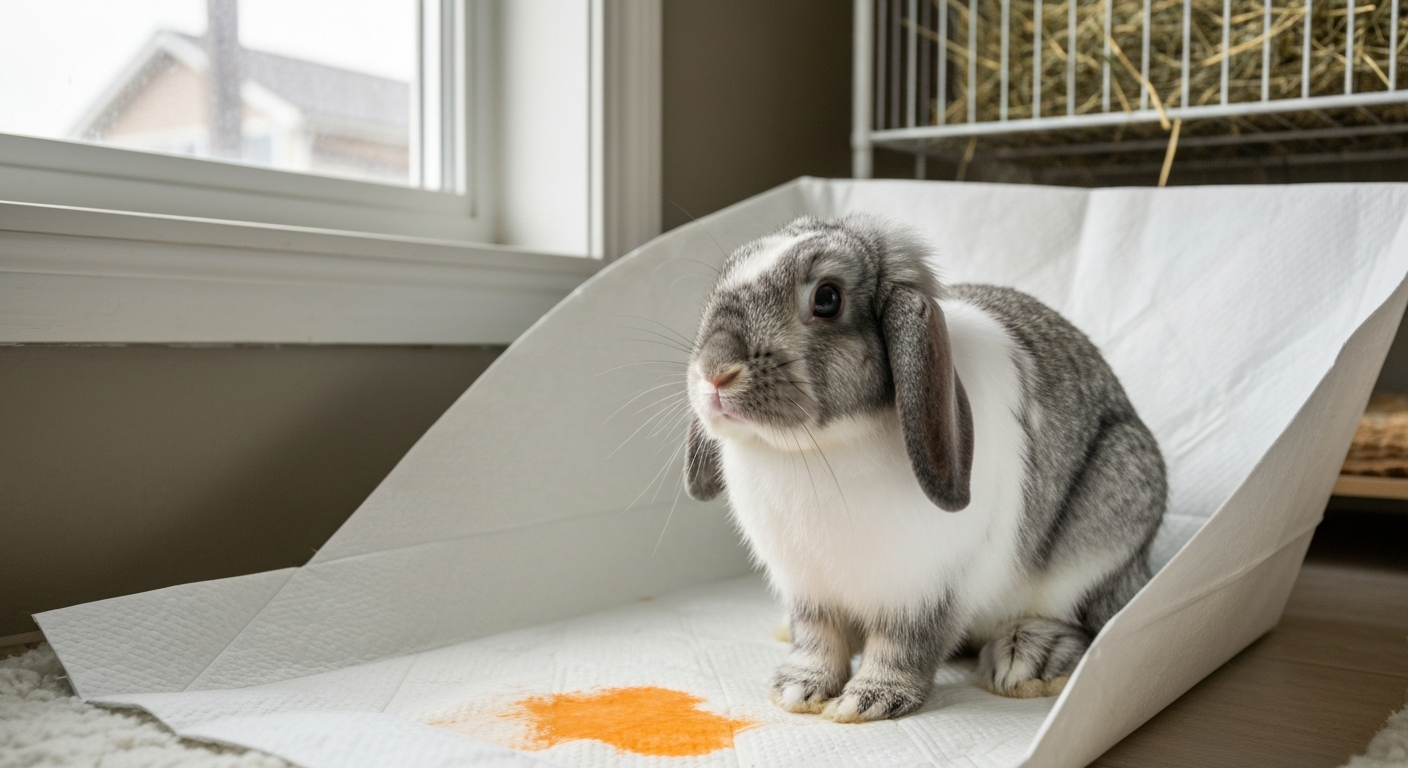

Your bunny's pee is orange because of pigments in their diet—most commonly from foods high in beta-carotene like carrots, leafy greens, or certain pellets—and this is almost always completely normal and harmless.
Rabbit urine naturally varies from pale yellow to deep orange, red, or even brownish depending on what they eat, how hydrated they are, and the time of year. Unlike in cats or dogs, orange urine in rabbits rarely signals a medical emergency. That said, certain warning signs alongside unusual urine color do warrant a vet visit.
| ✓Our Pick |
$3,000 emergency vet fund with 24/7 online vet access for rabbits A well-reviewed choice that delivers real results — worth every penny for anyone dealing with this. Learn More → |
Orange rabbit urine is typically caused by plant pigments called porphyrins and beta-carotenes that pass through your bunny's system and color the urine—this is normal rabbit physiology, not a disease.
Rabbits process food differently than other pets. Their bodies excrete excess plant pigments directly into urine rather than breaking them all down, which creates the dramatic color changes that often alarm new owners.
Diet is by far the most common reason your rabbit's urine looks orange. Carrots, carrot tops, spinach, kale, dandelion greens, and even certain hay varieties contain high levels of beta-carotene and other plant pigments. When your bunny eats these foods, their kidneys filter out the excess pigments and excrete them in urine.
You might notice your rabbit's pee changes color within 24–48 hours of introducing a new vegetable. This is completely normal. The urine may range from bright orange to rust-colored to deep red-orange depending on how much pigmented food your bunny consumed.
"Rabbit urine varies in colour from clear through yellow, orange, brown to bright red. This is usually not a cause for alarm and is most often due to plant pigments or porphyrins and can vary with the seasons." — Frances Harcourt-Brown, BVSc FRCVS at Textbook of Rabbit Medicine
Yes, dehydration concentrates urine and intensifies its color. When your rabbit isn't drinking enough water, their urine becomes more concentrated, making any existing pigments appear darker and more orange.
Check that your rabbit has constant access to fresh, clean water. Many rabbits prefer water bowls over bottles because they can drink more naturally. If you're using a bottle, ensure the ball bearing mechanism works properly—a stuck bottle can leave your bunny without water for hours.
Signs of dehydration in rabbits include:
- Darker, stronger-smelling urine
- Dry or tacky gums
- Skin that doesn't snap back quickly when gently pinched
- Lethargy or reduced appetite
Seasonal variation affects rabbit urine color more than many owners realize. During autumn and winter, rabbits often produce darker urine even without obvious dietary changes. This happens because of natural metabolic shifts and changes in the types of hay and forage available.
Spring grass and summer vegetables tend to produce lighter-colored urine, while winter hay and dried foods often result in deeper orange or brown tones. If your rabbit's urine gets darker in fall and lighter in spring, this seasonal pattern is completely normal.
Orange urine alone is rarely a health concern, but orange urine combined with other symptoms—straining to urinate, blood clots, pain, or changes in eating habits—requires immediate veterinary attention.
The key distinction is between pigmented urine (normal) and bloody urine (potentially serious). True blood in rabbit urine is actually quite rare, but it can indicate bladder stones, urinary tract infections, uterine problems in unspayed females, or kidney disease.
This is a common concern for rabbit owners, and fortunately there's a simple way to check. Normal pigmented urine (even when bright red or orange) will appear uniform in color throughout. Bloody urine often shows:
- Red streaks or clots that don't dissolve
- Color concentrated at the end of urination
- Gritty texture from calcium sediment
- Unusual smell beyond normal rabbit urine odor
You can also perform a simple hydrogen peroxide test at home. Place a few drops of 3% hydrogen peroxide on a urine sample. If it foams or fizzes, blood is likely present. Normal plant-pigmented urine won't react to hydrogen peroxide.
"Normal rabbit urine can be yellow, orange, red or brown. It is the presence of blood in the urine that is abnormal. Blood can be detected by placing a drop of hydrogen peroxide on the urine—if it foams, blood is present." — Dana Krempels, PhD at University of Miami Department of Biology
| 🐾Find a Vet |
Find a specialist vet near you VetClinic.info is a free directory of board-certified specialist vets across the US — find an orthopedic surgeon, oncologist, neurologist, or emergency clinic near you in seconds. Find Near You → |
While orange urine itself is usually harmless, certain conditions can affect rabbit urinary health:
| Condition | Urine Signs | Other Symptoms |
|---|---|---|
| Bladder sludge/stones | Thick, chalky white sediment; straining | Hunched posture, reduced movement |
| Urinary tract infection | Cloudy urine, strong odor, possible blood | Frequent urination attempts, wetness around rear |
| Uterine problems (unspayed females) | True blood, often at end of urination | Lethargy, swollen abdomen, reduced appetite |
| Kidney disease | Very dilute or very concentrated urine | Increased thirst, weight loss, poor coat |
If you notice any of these accompanying symptoms alongside unusual urine color, schedule a vet appointment promptly.
Use white or light-colored litter in your rabbit's box—this makes it much easier to spot changes in urine color, consistency, and frequency.
Paper-based litters or white wood shavings work well for monitoring purposes. Darker litters like brown paper pellets or colored recycled materials make it nearly impossible to assess urine health.
Normal rabbit urine spans a surprisingly wide color range:
- Pale yellow to golden (typical with high water intake)
- Orange to rust (common with pigmented foods)
- Red-orange to brick red (normal, especially seasonally)
- Brownish (can be normal, especially with certain hays)
- Cloudy with white sediment (normal calcium excretion)
Rabbits excrete excess calcium through their urine, so some white, chalky residue is completely normal. This differs from other mammals that excrete calcium primarily through bile. However, thick, paste-like calcium sludge that your rabbit struggles to pass is not normal and requires veterinary attention.
Also Read: Why Is My Pee Bubbly? 7 Causes & When to Worry
Yes, urine color can vary throughout the day based on:
- Recent water intake
- Time since last meal
- Specific foods eaten
- Activity level
- Environmental temperature
Morning urine is often darker and more concentrated than afternoon or evening urine. This is completely normal. What matters more than any single urine sample is the overall pattern and whether your rabbit seems comfortable and healthy otherwise.
See a vet within 24 hours if your rabbit's orange urine is accompanied by straining to urinate, loss of appetite, hunched posture, or if the hydrogen peroxide test shows blood.
Urinary blockages in rabbits can become life-threatening quickly, particularly in male rabbits whose urethras are narrower. A rabbit that's repeatedly going to the litter box but producing little or no urine needs emergency veterinary care.
Seek same-day veterinary care if you observe:
- Straining or crying while urinating
- Complete absence of urine for more than 12 hours
- Visible blood clots in urine
- Wet, soiled fur around hindquarters
- Refusal to eat or drink
- Grinding teeth (a pain signal in rabbits)
- Sitting hunched with eyes half-closed
For unspayed female rabbits over 3 years old, any unexplained urine color change combined with lethargy warrants a vet check. Uterine adenocarcinoma is unfortunately common in intact female rabbits and can cause bleeding that appears in urine.
Also Read: Why Is My Ivy Dying? 7 Causes & How to Save It
Fresh, unlimited hay should make up 80% of your rabbit's diet—this high fiber intake keeps the digestive and urinary systems functioning properly.
Timothy hay, orchard grass, or meadow hay provide the right balance of fiber and nutrients without excess calcium that can contribute to bladder sludge.
Feed vegetables that support urinary health while being mindful of those that can cause dramatic color changes:
| Vegetable | Effect on Urine Color | Notes |
|---|---|---|
| Carrots/carrot tops | Deep orange to red | Safe, but feed moderately due to sugar |
| Spinach | Can darken urine | High in oxalates; rotate with other greens |
| Cilantro | Minimal effect | Good daily green |
| Romaine lettuce | Minimal effect | Good for hydration |
| Dandelion greens | Orange tint possible | Excellent for urinary health |
| Parsley | Minimal to orange | Good in moderation |
Limit pellets to 1/4 cup per 6 pounds of body weight daily for adult rabbits. Overfeeding pellets contributes to obesity and can affect urinary health.
Encouraging water intake helps keep urine appropriately diluted:
- Offer both a water bowl and bottle to see which your rabbit prefers
- Rinse leafy greens and serve them wet
- Change water at least once daily
- Ensure water is room temperature, not cold
- In winter, check that water hasn't frozen or become too cold
Your bunny's orange pee is almost certainly caused by plant pigments from their diet—especially carrots, leafy greens, and certain hays—and is completely normal for rabbits. Unlike in dogs or cats, orange or even red-tinged urine in rabbits rarely indicates a medical problem. Monitor for warning signs like straining, blood clots, appetite changes, or pain behavior, but don't panic over color alone. Use light-colored litter to track changes, ensure constant access to fresh water, and maintain a hay-based diet for optimal urinary health.
A sudden change to orange urine usually means your rabbit recently ate something high in plant pigments. Think back to the last 24–48 hours—did you introduce a new vegetable, give extra carrots, or switch hay types? Seasonal dietary changes can also cause sudden color shifts. If your rabbit is eating, drinking, and behaving normally, the color change alone isn't concerning.
Red rabbit urine falls on the same spectrum as orange and is usually caused by the same plant pigments. The color can range from pale yellow through orange to deep red or even brown-red depending on diet and hydration. True blood in urine tends to appear as streaks or clots rather than uniform color. Use the hydrogen peroxide test if you're unsure—normal pigmented urine won't react, but blood will cause fizzing.
Cloudiness in rabbit urine is typically from calcium carbonate crystals, which is normal. Rabbits excrete excess dietary calcium through their urine rather than through bile like other mammals. Mild cloudiness combined with orange color is usually just a combination of normal calcium excretion and dietary pigments. However, thick, gritty, or paste-like sediment that your rabbit struggles to pass requires veterinary evaluation.
Not necessarily. Orange urine from dietary pigments is harmless and doesn't require dietary changes. However, if you're concerned, you can reduce high-pigment foods like carrots for a few days and see if the color lightens. The most important elements of rabbit diet—unlimited hay, fresh water, and appropriate vegetables—shouldn't change based on urine color alone.
Dietary-related orange urine typically returns to lighter colors within 24–72 hours after your rabbit stops eating the pigmented foods. If you haven't changed your rabbit's diet but their urine has been consistently orange for weeks, this is likely just their normal baseline color based on their regular food intake—every rabbit is slightly different.
Reviewed and Updated on May 27, 2026 by George Wright