Health
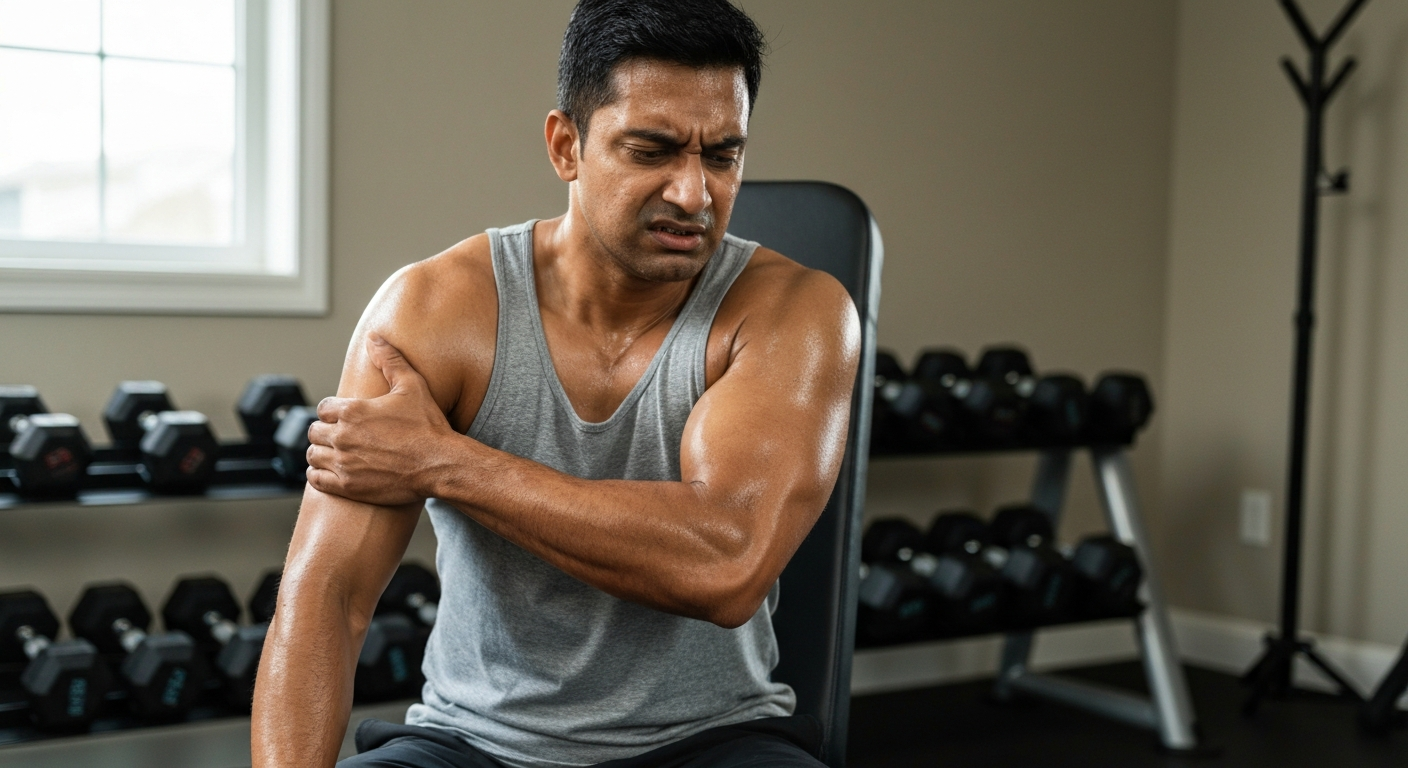

Your bicep is sore because of muscle fiber stress—most commonly from overuse, a new or intense workout, poor form during lifting, or accumulated tension from repetitive daily movements—and less frequently from a strain, tendinitis, or referred pain from your neck or shoulder.
| ✓Our Pick |
Home gym equipment for safer bicep training Trusted by professionals and everyday users alike — a smart investment that pays for itself. Learn More → |
Bicep soreness is one of those nagging sensations that can range from a satisfying post-workout ache to a worrying pain that lingers for days. Understanding why your bicep hurts—and whether it's something to monitor or something to act on—starts with knowing what's actually happening inside that muscle. The good news? Most cases resolve on their own with basic care. The not-so-good news? Ignoring warning signs can turn a minor issue into a longer recovery.
The bicep brachii is a two-headed muscle running from your shoulder to your elbow, and it's involved in almost every pulling, lifting, and carrying motion you do—making it vulnerable to a wide range of stressors.
Your biceps work harder than you might realize. Every time you pick up a grocery bag, open a door, or scroll through your phone for extended periods, these muscles engage. Here are the most common reasons your bicep might be hurting.
DOMS is the most frequent cause of bicep soreness, appearing 12 to 72 hours after unfamiliar or intense exercise.
When you challenge your muscles beyond their usual capacity—say, adding more weight to your curls or trying a new climbing workout—you create microscopic tears in the muscle fibers. This isn't damage in the harmful sense; it's how muscles grow stronger. Your body responds with inflammation to repair these fibers, and that inflammatory process causes the dull, achy soreness you feel.
DOMS typically peaks around 24 to 48 hours post-exercise and resolves within 3 to 5 days. The soreness is usually bilateral (affecting both arms if you worked both) and feels worse when you contract or stretch the muscle.
Repetitive movements—whether from work, sports, or daily habits—can fatigue the bicep and lead to persistent soreness.
You don't need to lift weights to strain your biceps. Carrying a heavy bag on one shoulder, repetitive motions at work (like scanning items or using tools), or even holding your phone for hours can overload these muscles. The soreness from overuse tends to develop gradually and often affects one arm more than the other, depending on your dominant side and specific activities.
Using momentum instead of controlled movement during bicep exercises shifts stress to tendons and can cause soreness that feels different from typical muscle fatigue.
When you swing weights or let your elbows drift forward during curls, you're not just cheating the exercise—you're placing uneven stress on the muscle and its attachments. This can lead to soreness concentrated near the elbow or shoulder rather than in the belly of the muscle.
"Swinging the weight reduces time under tension for the biceps while increasing stress on the tendons and joints, which can lead to overuse injuries over time." — Brad Schoenfeld, PhD at Lehman College
A bicep strain occurs when muscle fibers are stretched beyond their capacity, causing partial or complete tears that produce sharper, more localized pain than DOMS.
Strains range from mild (Grade I, with minor fiber damage) to severe (Grade III, a complete rupture). You might have a strain if:
Mild strains heal with rest in 1 to 3 weeks. Moderate strains may take 4 to 8 weeks. Severe strains or ruptures require medical evaluation and potentially surgery.
Bicep tendinitis is inflammation of the tendons connecting your bicep to bone, causing pain that's typically felt at the front of the shoulder or inside the elbow.
Unlike muscle soreness that feels like a general ache, tendinitis produces a more specific, sometimes burning pain at the attachment points. It's often worse with overhead movements or when rotating your forearm. Tendinitis develops from repetitive stress over time and is common in swimmers, tennis players, and people who do a lot of overhead work.
Your bicep might hurt even when nothing is wrong with the muscle itself—nerve compression or irritation in your neck or shoulder can send pain signals down your arm.
Conditions like cervical radiculopathy (a pinched nerve in your neck) or shoulder impingement can cause referred pain that shows up in your bicep. This type of pain often comes with:
"Biceps pain that radiates down the arm, especially when accompanied by tingling or weakness, warrants evaluation of the cervical spine and shoulder complex." — American Academy of Orthopaedic Surgeons
Also Read: Why Is My Elbow Popping? 6 Causes & When to Worry
Chronic stress causes you to hold tension in your muscles—including your biceps—which can produce soreness without any exercise or injury.
When you're stressed, anxious, or hunched over a desk for hours, your muscles don't fully relax. This sustained low-level contraction restricts blood flow and leads to that tight, achy feeling. Stress-related muscle soreness tends to affect multiple areas (neck, shoulders, and arms) and often worsens as the day progresses.
Distinguishing normal post-workout soreness from an actual injury determines whether you need rest or medical attention.
| Feature | DOMS (Normal Soreness) | Strain or Injury |
|---|---|---|
| Onset | 12–72 hours after exercise | Immediate or within hours |
| Pain type | Dull, achy, diffuse | Sharp, localized, or stabbing |
| Location | Muscle belly (middle of bicep) | Near joints, tendons, or specific spot |
| Swelling/bruising | None or minimal | Often present |
| Pain with rest | Mild or none | May persist at rest |
| Duration | Resolves in 3–5 days | Persists beyond 1–2 weeks |
| Function | Stiff but usable | Weakness or inability to use |
If your pain matches the injury column—especially if you have visible bruising, significant swelling, or can't perform basic movements—it's time to see a healthcare provider.
The right recovery approach depends on whether you're dealing with normal muscle soreness or something more serious.
For typical DOMS and overuse soreness:
For suspected strain or tendinitis:
Also Read: Why Is My Arm Sore After a Shot? Causes & Relief Tips
Progressive training, proper form, and adequate recovery are your best defenses against recurring bicep pain.
Most bicep soreness resolves on its own, but certain symptoms require professional evaluation.
Seek medical attention if:
A complete bicep rupture—where the tendon detaches from the bone—creates a visible "Popeye" bulge as the muscle bunches up. This requires surgical repair for full function recovery.
Bicep soreness usually comes from muscle fiber stress caused by new exercises, overuse, or tension—and typically resolves within a week with rest, gentle movement, and basic self-care. The soreness is your body's normal response to being challenged. However, sharp pain, swelling, bruising, or weakness signals something more serious that warrants a doctor's evaluation. Pay attention to how your pain started, where it's located, and how it behaves—that tells you whether to rest it out or get it checked out.
Your bicep can hurt without formal exercise due to repetitive daily activities like carrying bags, lifting children, typing with poor posture, or sleeping with your arm in an awkward position. Stress-related muscle tension is another common culprit—chronic stress causes you to hold your muscles tight without realizing it, leading to soreness that mimics workout fatigue.
Light workouts can cause soreness if your muscles aren't conditioned for that specific movement pattern, even if the weight is minimal. Novel exercises recruit muscle fibers in unfamiliar ways, triggering the same inflammatory repair process as heavier training. Additionally, dehydration, poor sleep, or insufficient protein intake can make your muscles more susceptible to soreness from lighter loads.
Normal post-workout bicep soreness (DOMS) typically peaks at 24–48 hours and resolves completely within 3–5 days. If soreness persists beyond a week or gets worse after the first few days rather than better, you may be dealing with a strain or overuse injury that needs additional rest or medical evaluation.
Yes, dehydration contributes to muscle soreness and cramping. Water is essential for transporting nutrients to muscles and removing metabolic waste products. When you're dehydrated, waste products like lactic acid accumulate more readily, and your muscles become more prone to fatigue and post-exercise soreness. Aim for at least 8 glasses of water daily, more if you're exercising.
Gentle stretching can help relieve mild muscle soreness by improving blood flow and reducing stiffness. However, avoid aggressive stretching if you suspect a strain—overstretching damaged fibers can worsen the injury. A good rule: if stretching increases your pain rather than producing a mild "relief" sensation, stop and let the muscle rest instead.
Reviewed and Updated on June 11, 2026 by George Wright