
Technology
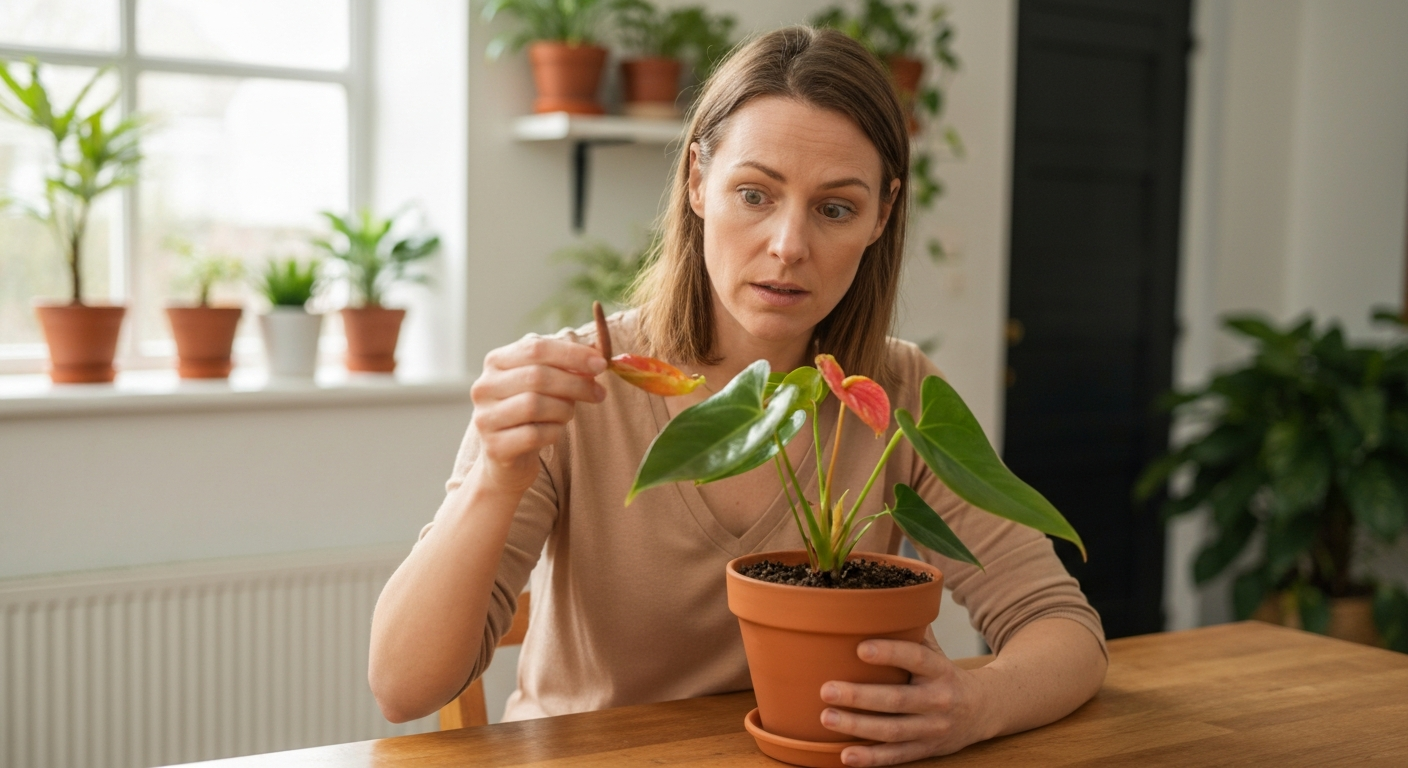

Anthurium leaves turn brown primarily because of inconsistent watering, low humidity, or direct sunlight scorching the foliage. These tropical plants evolved in the rainforest understory, where they receive filtered light and constant moisture in the air — conditions most homes don't naturally provide. Brown tips and edges typically signal environmental stress, while brown spots or patches often point to bacterial or fungal infections. Identifying the pattern of browning on your anthurium is the first step to restoring its glossy, heart-shaped leaves.
Brown leaves on anthuriums result from a mismatch between what the plant needs and what your home environment provides. The discoloration rarely appears overnight. It develops gradually as cells in the leaf tissue die from dehydration, sunburn, or pathogen damage.
Anthuriums (Anthurium andraeanum and related species) are epiphytes native to Central and South American rainforests. They grow attached to trees, drawing moisture from humid air rather than soil. When you understand this origin, the reasons behind browning become clearer.
| Browning Pattern | Most Likely Cause | Urgency |
|---|---|---|
| Crispy brown tips | Low humidity or underwatering | Moderate |
| Brown edges spreading inward | Salt buildup or overfertilization | Moderate |
| Brown spots with yellow halos | Bacterial or fungal infection | High |
| Entire leaf turning brown | Root rot from overwatering | High |
| Bleached brown patches | Direct sunlight burn | Low to moderate |
Humidity below 50% causes anthurium leaf tips and edges to turn brown and papery. This is the single most common cause of browning in indoor anthuriums, especially during winter when heating systems dry out the air.
Anthuriums thrive in 60–80% relative humidity. Most homes hover between 30–50%, and winter heating can drop indoor humidity to 20% or lower. The leaf margins lose moisture faster than the plant can replace it, causing cells to die and turn brown.
Signs that humidity is your problem:
To raise humidity around your anthurium, group it with other plants, place the pot on a pebble tray filled with water, or use a room humidifier. Misting provides only temporary relief and can promote leaf diseases if water sits on foliage overnight.
"Anthuriums require high humidity to thrive. If the humidity is too low, the leaf tips will turn brown and the plant may stop flowering." — University of Florida IFAS Extension
Overwatering leads to root rot, which causes entire leaves to turn brown, yellow, and mushy from the base upward. This is often fatal if not caught early, because damaged roots cannot absorb water or nutrients.
Many anthurium owners water on a fixed schedule without checking the soil first. In a pot without drainage holes, or in a heavy potting mix, water accumulates around the roots. The roots suffocate, die, and become colonized by fungi. The plant responds by sacrificing older leaves first.
Signs of overwatering damage:
If you suspect root rot, unpot the plant immediately. Trim away any brown, mushy roots with sterilized scissors. Repot in fresh, well-draining aroid mix and a pot with drainage holes. Water only when the top inch of soil feels dry.
Also Read: Why Is My Ductwork Sweating? 6 Causes & How to Fix It
Chronic underwatering causes brown, crispy leaf tips and edges that spread inward as the plant becomes increasingly dehydrated. Unlike overwatering, underwatered leaves feel dry and papery rather than soft.
Anthuriums prefer consistently moist (but not soggy) soil. When the root ball dries out completely, the plant cannot deliver water to leaf extremities. The tips and edges die first because they're farthest from the water supply.
Signs of underwatering:
The fix is straightforward: water thoroughly until water drains from the bottom, then don't water again until the top inch of soil is dry. Consistency matters more than quantity.
Direct sunlight scorches anthurium leaves, causing bleached brown patches that appear suddenly after the plant is moved or exposed to intense light. The damage looks different from other causes — it's localized to the sun-facing side of the plant.
In their native habitat, anthuriums grow under the forest canopy. They receive dappled light, never direct rays. A south-facing window or outdoor placement in full sun can burn the leaves within hours.
Sunburn characteristics:
Move your anthurium to bright, indirect light. East-facing windows work well, or place the plant a few feet back from south or west windows. Sheer curtains can filter harsh afternoon sun.
Yellow anthurium leaves typically indicate overwatering, nutrient deficiency, or the natural aging of lower leaves. Yellowing often precedes browning and serves as an early warning sign.
Yellowing from overwatering appears alongside soggy soil and may come with a mushy texture. Nutrient deficiency — particularly nitrogen or iron — causes yellowing between leaf veins while the veins stay green (called chlorosis). Natural aging affects only the oldest leaves at the base of the plant.
| Yellowing Pattern | Likely Cause | Solution |
|---|---|---|
| Lower leaves only, plant otherwise healthy | Natural aging | Remove old leaves; no action needed |
| Overall yellowing, soggy soil | Overwatering | Let soil dry; check for root rot |
| Yellow between veins, veins stay green | Nutrient deficiency | Feed with balanced fertilizer |
| Yellow with brown spots | Bacterial leaf blight | Isolate plant; remove affected leaves |
If multiple leaves turn yellow rapidly, check your watering routine first. Anthuriums need water when the top inch of soil is dry — not before, and not when the entire pot has dried out.
Excess fertilizer salts accumulate in the soil and burn anthurium roots and leaf edges, causing a distinctive pattern of brown margins. This is especially common when using synthetic fertilizers at full strength.
Anthuriums are light feeders. They need only a quarter-strength balanced fertilizer (20-20-20) every 6–8 weeks during the growing season. More isn't better — it's harmful.
Signs of fertilizer burn:
To flush excess salts, run water through the pot for several minutes, allowing it to drain completely. Repeat monthly during the growing season. Skip fertilizing for at least two months after a flush.
Brown spots with yellow halos indicate bacterial leaf blight, one of the most serious anthurium diseases. Caused by Xanthomonas bacteria, this infection spreads rapidly in warm, humid conditions and can kill the plant if untreated.
Bacterial blight starts as water-soaked spots that turn brown with a yellow margin. The spots may ooze a yellowish liquid. Fungal infections like anthracnose cause similar spots but typically lack the yellow halo and watery appearance.
"Bacterial blight can spread quickly through a collection of anthurium plants. Remove and destroy infected plants or plant parts immediately." — University of Hawaiʻi at Mānoa, College of Tropical Agriculture
If you suspect infection:
Prevention is the best approach. Water at the soil level, not from above. Space plants apart for airflow. Quarantine new plants before adding them to your collection.
Match the browning pattern on your plant to the list below to identify the most likely cause.
Crispy brown tips on multiple leaves → Low humidity. Solution: Increase humidity with a pebble tray or humidifier.
Brown edges spreading inward, crispy texture → Underwatering or fertilizer salt buildup. Solution: Water more consistently or flush the soil.
Soft, mushy brown areas starting at leaf base → Overwatering and possible root rot. Solution: Check roots, repot in fresh mix, improve drainage.
Bleached brown patches on one side → Sunburn from direct light. Solution: Move to bright, indirect light.
Brown spots with yellow halos → Bacterial infection. Solution: Isolate, remove affected leaves, improve airflow.
Entire old leaf turning yellow then brown → Natural aging. Solution: Remove the leaf; this is normal.
Follow this checklist to prevent brown leaves and keep your anthurium thriving.
| Care Factor | Ideal Conditions |
|---|---|
| Light | Bright, indirect (east window or filtered south) |
| Watering | When top 1 inch of soil is dry |
| Humidity | 60–80% (minimum 50%) |
| Temperature | 65–80°F (no drafts or sudden changes) |
| Soil | Well-draining aroid mix (orchid bark, perlite, peat) |
| Fertilizer | Quarter-strength, every 6–8 weeks in growing season |
| Pot | Drainage holes required; slightly snug fit |
| ✓Our Pick |
Search for anthurium potting mix and humidity trays Save yourself the frustration — a proven solution with consistently positive feedback from real buyers. See on Amazon → |
Brown anthurium leaves almost always trace back to humidity, watering, or light problems — all fixable with simple adjustments. Start by identifying the browning pattern: crispy edges mean low humidity or underwatering, mushy browning points to overwatering, and localized patches suggest sunburn or infection. Anthuriums are resilient once you match their rainforest preferences: bright indirect light, consistent moisture, and humidity above 50%. Remove badly damaged leaves, correct the underlying issue, and new growth should emerge healthy within a few weeks.
Brown tips almost always indicate low humidity or inconsistent watering. The leaf tips are the last to receive water through the plant's vascular system, so they're the first to suffer when humidity drops or the soil dries out too much between waterings. Raise humidity to at least 50% and water when the top inch of soil feels dry.
No, once leaf tissue turns brown, that damage is permanent. The cells have died and cannot regenerate. However, you can trim off brown sections with clean scissors to improve the plant's appearance. Preventing further browning on remaining leaves is the goal — new growth should emerge green if you correct the underlying problem.
Water when the top inch of soil feels dry, typically every 7–10 days depending on your home's conditions. Don't water on a fixed schedule. Check the soil first. Overwatering causes more anthurium deaths than underwatering. Make sure your pot has drainage holes so excess water escapes.
Yes, remove leaves that are more than 50% brown. They won't recover, and removing them redirects the plant's energy toward healthy growth. Use clean, sharp scissors or pruning shears. Cut at the base of the leaf stem where it meets the main plant.
Combined yellowing and browning usually indicates overwatering or root rot. The yellowing appears first as the roots begin to fail, then progresses to brown as the tissue dies. Check the roots immediately. Healthy roots are white or tan; rotten roots are brown, black, or mushy. Repot in fresh soil if you find root rot.
Reviewed and Updated on June 3, 2026 by George Wright