Technology

Your ABS light and traction control light are on together because both systems share the same wheel speed sensors, and a fault in one component—usually a failing sensor, damaged wiring, or low brake fluid—triggers both warning lights simultaneously.
| ✓Our Pick |
OBD2 scanner for reading ABS and traction control codes Backed by strong customer feedback — the most recommended solution in forums and Q&A communities. See on Amazon → |
Seeing two dashboard warning lights illuminate at once is understandably alarming. The good news: when the ABS and traction control lights come on together, it usually points to a single shared problem rather than two separate failures. Understanding why these systems are linked—and what triggers them—can save you hundreds of dollars in unnecessary repairs and help you decide whether you need immediate attention or can safely drive to a mechanic.
The ABS (anti-lock braking system) and traction control system share the same wheel speed sensors and control module, which is why a single fault often triggers both warning lights at the same time.
Your vehicle's ABS prevents wheel lockup during hard braking by monitoring how fast each wheel is spinning. Traction control uses the exact same data—it detects when a wheel is spinning faster than the others (losing traction) and applies braking force to that wheel or reduces engine power.
Both systems rely on:
- Four wheel speed sensors (one at each wheel)
- A shared ABS/traction control module
- The hydraulic brake system
- Wiring connecting all these components
When any of these shared components fail, the vehicle's computer disables both systems as a safety precaution and illuminates both lights.
"The traction control system uses the same wheel speed sensors as the ABS. If one sensor fails, both systems lose the data they need to function." — National Highway Traffic Safety Administration
| ✓Quick Fix |
The First Thing Most People Try Quick to get, easy to try — a sensible first move while you figure out next steps. See on Amazon → |
The most common cause in 2026 vehicles is a failing wheel speed sensor, followed by corroded wiring, low brake fluid, or a faulty ABS module.
Wheel speed sensors are the most frequent culprit when both lights appear together. These sensors sit at each wheel hub, constantly exposed to road debris, water, salt, and mud. Over time, the magnetic tip becomes coated with metallic particles, or the sensor itself cracks.
Signs of a bad wheel speed sensor include:
- Both lights come on intermittently, then turn off
- Lights appear after driving through puddles or in winter
- Speedometer behaves erratically
- One wheel triggers the ABS during normal braking
Replacement cost typically runs $100–$250 per sensor including labor—far less than most drivers fear when they see multiple warning lights.
The wiring harness connecting wheel speed sensors to the ABS module runs through harsh environments. It passes behind wheel wells, along the undercarriage, and through areas prone to rodent damage. A single frayed wire or corroded connector breaks the signal chain.
Check for this problem if:
- You recently had suspension or brake work done
- You live in an area with rodent problems
- Your vehicle has over 80,000 miles
- The lights appeared after hitting a pothole or curb
Also Read: Why Is My Steering Wheel Not Straight? 6 Causes & Fixes
Yes. The brake fluid reservoir contains a level sensor. When fluid drops below the minimum line—whether from a leak or worn brake pads—the sensor alerts the ABS module. Since the ABS depends on proper hydraulic pressure, both systems shut down.
This is actually the easiest problem to check yourself. Pop the hood, locate the brake fluid reservoir (usually near the firewall on the driver's side), and check the level against the MIN and MAX markings. If it's low, you either have a leak or your brake pads are worn enough to investigate.
"Low brake fluid can trigger ABS and traction control warnings because both systems depend on adequate hydraulic pressure to function properly." — Car Care Council
The ABS control module processes all wheel speed data and commands the hydraulic unit. When the module itself fails—due to internal circuit problems, water intrusion, or age—both systems go offline. This is the most expensive potential cause, with replacement costs ranging from $500–$1,500.
Module failure symptoms:
- Both lights stay on constantly
- ABS pump runs when it shouldn't
- Brake pedal feels different (hard or spongy)
- No other symptoms or codes present
Modern traction control uses steering input to determine driver intent. The steering angle sensor tells the system which direction you're turning. If this sensor fails or loses calibration, traction control can't work correctly—and the ABS module often disables both systems.
This issue commonly appears after:
- Wheel alignment service
- Steering rack replacement
- Battery disconnect (sensor loses calibration)
- Front-end collision repair
| Symptom | Most Likely Cause | Urgency |
|---|---|---|
| Lights come on after rain or car wash | Wet wheel speed sensor connector | Low |
| Lights appear then disappear randomly | Intermittent sensor or wiring fault | Medium |
| Lights on + low brake fluid | Leak or worn brake pads | High |
| Lights on + grinding brakes | Severely worn brake pads | Urgent |
| Lights on + check engine light | ABS module or major electrical fault | High |
| Lights on after battery replacement | Steering angle sensor needs reset | Low |
| Lights on + one wheel locks during braking | Failed sensor on that wheel | Medium |
You can drive short distances at moderate speeds, but your ABS and traction control are disabled—meaning wheels can lock during hard braking and you have no slip protection on wet or icy roads.
Your regular brakes still work normally. The underlying hydraulic system remains functional. What you lose:
- Anti-lock protection during emergency stops
- Traction control on slippery surfaces
- Stability control assistance (if your vehicle has it)
Drive directly to a repair shop if:
- The brake warning light is also illuminated
- The brake pedal feels abnormal
- You hear grinding, squealing, or clicking from the wheels
- Brake fluid is visibly low or leaking
For most sensor or wiring faults, you can safely drive during dry conditions while scheduling a repair appointment within a few days.
A basic OBD2 scanner that reads ABS codes will tell you exactly which sensor or circuit triggered the lights, often pinpointing the problem wheel.
Standard check-engine code readers won't access ABS codes. You need a scanner specifically capable of reading ABS and traction control modules. These cost $50–$150 for a reliable handheld unit.
Step-by-step diagnosis:
Common codes and their meanings:
| Code | Meaning |
|---|---|
| C0035–C0050 | Left front wheel speed sensor circuit |
| C0040–C0045 | Right front wheel speed sensor circuit |
| C0045–C0050 | Left rear wheel speed sensor circuit |
| C0050–C0055 | Right rear wheel speed sensor circuit |
| C0265–C0267 | ABS motor relay malfunction |
| C0550 | Electronic control unit (ECU) failure |
Once you identify which wheel is triggering the fault, you can inspect that sensor and its wiring before deciding on repairs.
Also Read: Why Is My GFCI Tripping? 7 Causes & How to Fix It
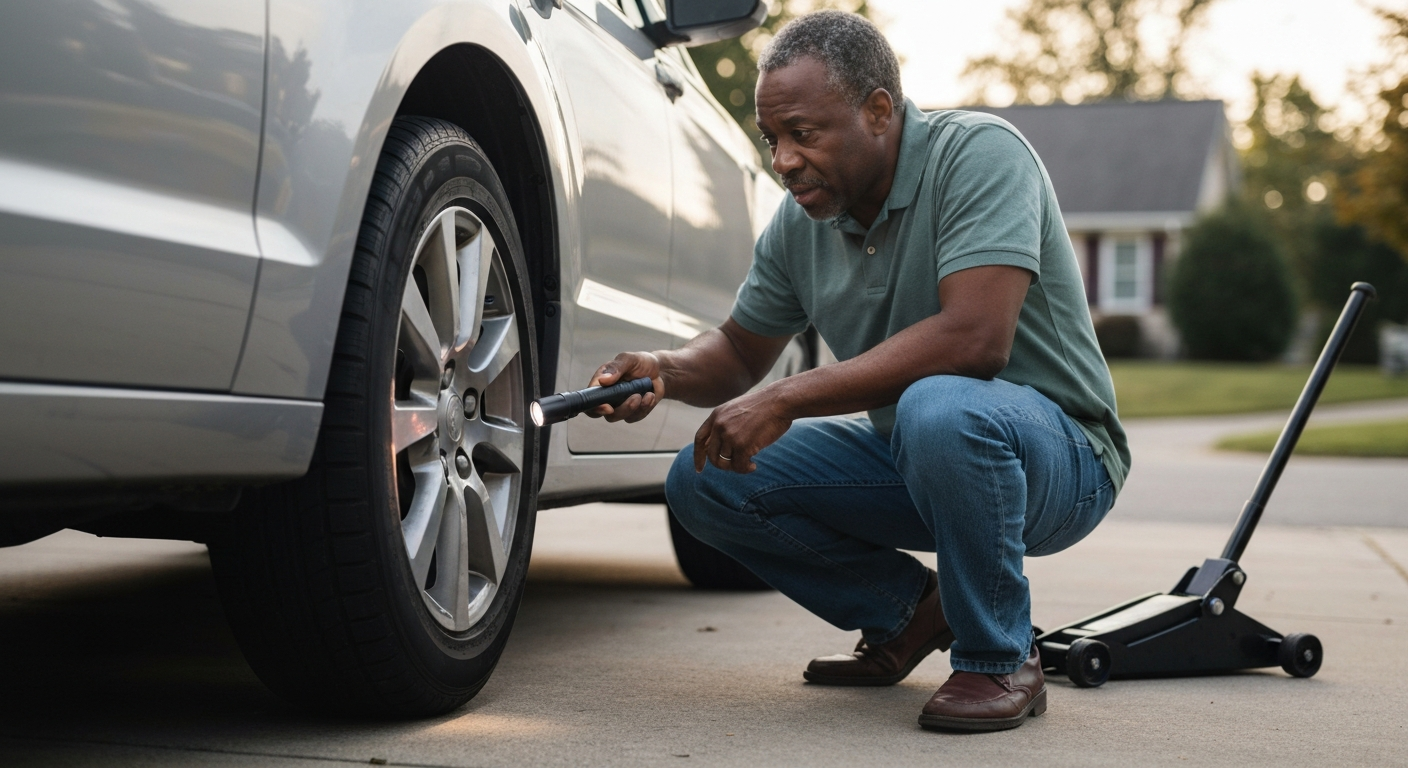
Most ABS and traction control light issues are DIY-friendly if you're comfortable working around brakes—sensor replacement and wiring repairs are straightforward with basic tools.
You'll need: Floor jack, jack stands, socket set, wire brush, sensor (part number from your vehicle's year/make/model).
Sometimes the sensor itself is fine, but the electrical connection is compromised.
If fluid level was low:
If fluid is low without obvious pad wear, you may have a leak. Check for wet spots around brake calipers, lines, and the master cylinder.
Take your vehicle to a professional if diagnostic codes point to the ABS module, if brake fluid keeps disappearing, or if you're uncomfortable working on brake components.
Professional diagnosis typically costs $75–$150. This makes sense when:
- You don't have an ABS-capable scanner
- Codes point to the control module rather than sensors
- Multiple codes from different wheels appear simultaneously
- The problem returns after you've replaced a sensor
- Any brake warning light accompanies the ABS/traction lights
A shop has bidirectional scan tools that can activate ABS components and perform self-tests. They can also bleed the ABS module—a procedure impossible without specialized equipment.
| ✓Our Pick |
Brake pad replacement kit with hardware A top-rated pick that works — readers who tried this reported noticeable improvement within days. See on Amazon → |
Regular brake fluid flushes, protecting wiring from road debris, and addressing small issues before they cascade will keep these systems reliable.
Maintenance tips:
- Flush brake fluid every 2 years or 30,000 miles
- Inspect wheel speed sensor wiring during tire rotations
- Apply dielectric grease to sensor connectors annually
- Replace sensors proactively if you live in harsh winter climates
- Don't ignore intermittent warning lights—they indicate developing problems
When your ABS and traction control lights come on together, it almost always traces back to a shared component—typically a wheel speed sensor, damaged wiring, or low brake fluid. Both systems depend on the same sensors and control module, so one fault disables both. Your regular brakes still work, but you've lost anti-lock and traction assistance. An ABS-capable OBD2 scanner will identify the exact cause, and most fixes cost under $300. Don't ignore these lights, especially before winter driving or if your brake warning light also appears.
Both systems share the same wheel speed sensors and control module. When any shared component—like a sensor, wiring harness, or the module itself—fails, the car's computer loses the data it needs for both systems. It illuminates both lights and disables both functions as a safety precaution rather than allowing them to operate with incomplete information.
You can clear the codes with a scanner, but if the underlying problem hasn't been fixed, the lights will return—often within a few miles of driving. Clearing codes can help confirm that your repair worked, but it's not a solution by itself. The only exception: if the lights came on after a battery disconnect, clearing codes and allowing the steering angle sensor to recalibrate may permanently resolve the issue.
The cost depends entirely on the cause. A wheel speed sensor replacement runs $100–$250. Wiring repairs can be under $100 if you do it yourself. Low brake fluid just needs a $10 bottle of brake fluid (though you should investigate why it was low). An ABS module replacement is the priciest fix at $500–$1,500. Most cases fall into the sensor category.
In most states, yes—ABS and traction control lights don't automatically fail a safety inspection because your base braking system still functions. However, some states with stricter emissions and safety programs may fail vehicles with any active dashboard warning lights. Check your state's specific requirements before assuming you'll pass.
No. Only replace the sensor that's actually failing. Unlike tires or brake pads, wheel speed sensors don't wear uniformly. However, if one sensor fails due to age and corrosion, it's reasonable to expect others might follow within the next year or two. Some drivers preemptively replace the sensor on the opposite side.
Reviewed and Updated on June 20, 2026 by George Wright