


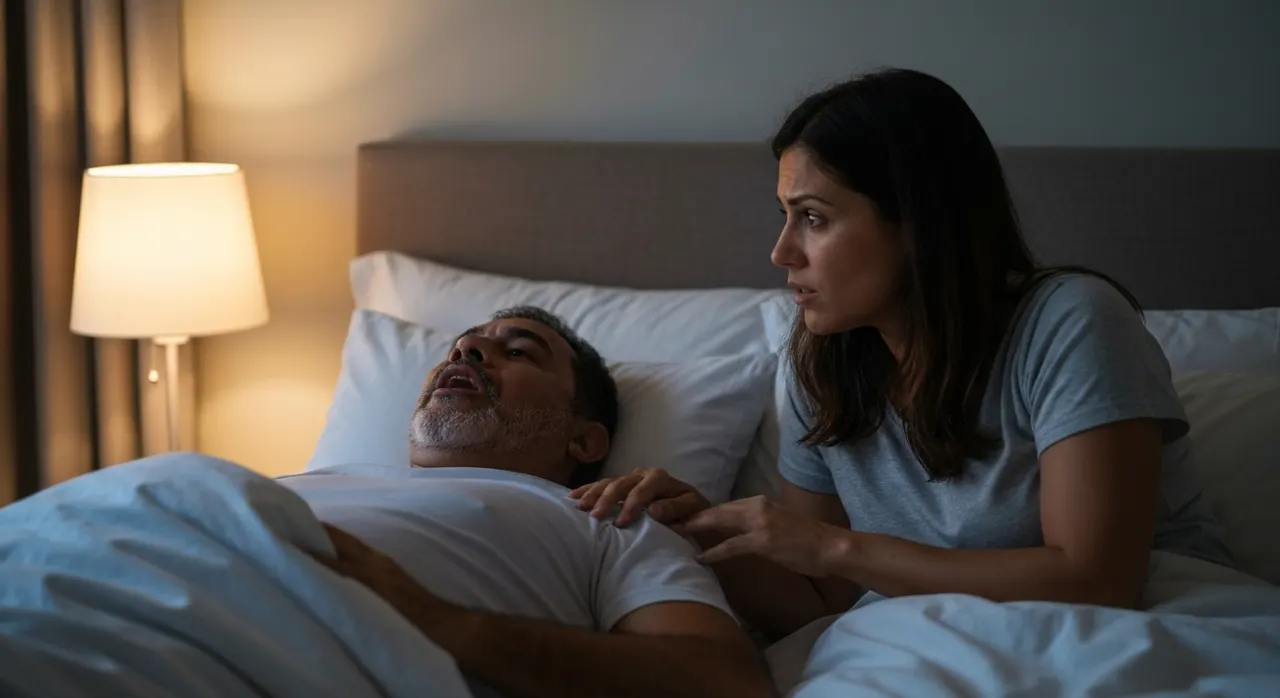
Snorking is a colloquial term for the rattling, gurgling, or snort-like breathing sound that occurs when airflow becomes partially obstructed during sleep or, less commonly, while awake — it's essentially a variation of snoring caused by relaxed throat tissues, nasal congestion, or sleep position.
The word "snorking" isn't a formal medical diagnosis, but it describes a recognizable sound that millions of people make every night. Whether you've been told you're "snorking" by a frustrated partner or you've noticed the sound yourself, understanding why it happens is the first step toward quieter, more restful sleep.
Also Read: Why Do Men Snore More Than Women? 6 Reasons Explained
What Exactly Is Snorking?
Snorking refers to the snort-like, gurgling, or pig-like sounds made during breathing — typically during sleep but sometimes while awake — and it's caused by turbulent airflow through a partially blocked airway.
The term emerged as slang to describe snoring that sounds more like snorting than the classic "sawing logs" rumble. When air passes through a narrowed passage in your throat, nose, or mouth, the soft tissues vibrate. Depending on the degree and location of the obstruction, this produces different sounds — from gentle whistles to loud, rhythmic snorking.
Anatomically, snorking happens when:
- The soft palate (the fleshy back part of the roof of your mouth) relaxes and partially blocks the airway
- The uvula (the dangling tissue at the back of your throat) vibrates against surrounding tissues
- The tongue falls backward during sleep, narrowing the throat
- Nasal passages become congested, forcing mouth breathing that creates turbulence
"Snoring is the sound of turbulent airflow causing vibration of upper airway structures during sleep." — American Academy of Sleep Medicine
The key distinction between snorking and regular snoring is often the quality of the sound. Snorking tends to be more irregular, with snort-like interruptions, while classic snoring follows a steadier, rhythmic pattern.
| ✓Quick Fix |
What Actually Works for This, Fast Quick to get, easy to try — a sensible first move while you figure out next steps. See on Amazon → |
Why Do People Snork? 6 Common Causes
Snorking results from anything that narrows your airway or causes your throat tissues to relax excessively during sleep.
Does Sleep Position Cause Snorking?
Sleeping on your back is the most common trigger for snorking. Gravity pulls your tongue and soft palate backward, partially blocking your airway. This creates the turbulent airflow that produces snorking sounds. Side sleeping often reduces or eliminates the problem entirely.
Can Alcohol Make You Snork?
Alcohol relaxes the muscles throughout your body, including those that keep your airway open. Drinking within 3-4 hours of bedtime significantly increases snorking because your throat muscles become too relaxed to maintain a clear airway. Even moderate drinkers who don't normally snork may notice the problem after a few drinks.
Does Being Overweight Cause Snorking?
Excess weight, particularly around the neck and throat, puts pressure on your airway. Fat deposits narrow the breathing passage even when you're awake, and this narrowing becomes more pronounced when throat muscles relax during sleep.
Can Nasal Congestion Lead to Snorking?
When your nose is blocked — from allergies, a cold, or structural issues like a deviated septum — you're forced to breathe through your mouth. Mouth breathing creates more turbulent airflow and is far more likely to cause snorking than quiet nasal breathing.
Does Age Affect Snorking?
Throat muscles naturally lose tone as you age. This is why snorking often appears or worsens in middle age, even without other contributing factors. The tissues become floppier and more prone to vibration.
Can Medications Cause Snorking?
Sedatives, muscle relaxants, and some antihistamines relax throat muscles similarly to alcohol. If you've started snorking after beginning a new medication, this connection is worth discussing with your doctor.
| Cause | Mechanism | Solution |
|---|---|---|
| Back sleeping | Tongue falls backward | Sleep on your side |
| Alcohol | Over-relaxes throat muscles | Avoid drinking 3-4 hours before bed |
| Excess weight | Fat deposits narrow airway | Weight management |
| Nasal congestion | Forces mouth breathing | Treat allergies, use nasal strips |
| Age | Natural muscle tone loss | Throat exercises, sleep position |
| Sedating medications | Relaxes airway muscles | Consult doctor about alternatives |
Also Read: Free audiobooks on managing stress and sleeping better
Snorking vs Snoring: Is There a Difference?
Snorking and snoring are variations of the same phenomenon — both involve vibrating airway tissues — but snorking specifically describes snoring with a snort-like, irregular quality.
Think of snorking as a subcategory of snoring. While classic snoring produces a steady, rhythmic sound (the stereotypical "zzzzz"), snorking includes:
- Sudden snorts that may briefly wake you
- Gurgling or pig-like sounds
- Irregular patterns with pauses
- A sound more like someone clearing their throat repeatedly
The distinction matters because snorking with pauses or gasps may indicate obstructive sleep apnea (OSA), a condition where breathing actually stops repeatedly during sleep. Regular snoring without pauses, while annoying, is generally less concerning from a health perspective.
"Primary snoring is snoring that occurs without associated arousals, oxygen desaturation, or evidence of sleep apnea." — National Heart, Lung, and Blood Institute
Also Read: Does Weight Gain Cause Snoring? 6 Facts & How to Fix It
When Is Snorking a Sign of Something Serious?
Snorking becomes concerning when it's accompanied by breathing pauses, gasping, excessive daytime sleepiness, or morning headaches — these symptoms may indicate sleep apnea.
Not all snorking requires medical attention. Occasional snorking after a few drinks or during a cold is normal. However, certain patterns warrant a conversation with your doctor:
Warning signs to watch for:
- Your partner notices you stop breathing during sleep
- You wake up gasping or choking
- You feel excessively tired during the day despite adequate sleep time
- You wake up with headaches most mornings
- You have high blood pressure that's difficult to control
- You fall asleep unintentionally during the day
Obstructive sleep apnea affects an estimated 22 million Americans, and many cases go undiagnosed. The condition doesn't just disrupt sleep — it's linked to increased risk of heart disease, stroke, diabetes, and accidents from daytime drowsiness.
If your snorking is accompanied by any warning signs, a sleep study can determine whether you have sleep apnea and what treatment might help.
Also Read: Sleep Apnea vs Snoring: Key Differences & When to Worry
How to Stop Snorking: 7 Evidence-Based Fixes for 2026
Stopping snorking often requires addressing the underlying cause — whether that's sleep position, weight, congestion, or muscle tone.
Try Side Sleeping First
The simplest fix is often the most effective. Sleeping on your side prevents your tongue from falling backward. Some people sew a tennis ball into the back of a sleep shirt to discourage rolling onto their back. Positional therapy pillows can also help.
Clear Your Nasal Passages
If congestion is driving your snorking, address it directly. Saline rinses, nasal strips, or treating underlying allergies can restore nasal breathing. When you can breathe comfortably through your nose, you're far less likely to snork.
Limit Alcohol Before Bed
Cutting off alcohol consumption 3-4 hours before sleep gives your body time to metabolize it before your throat muscles need to stay active. This simple timing change eliminates snorking for many people.
Consider Your Weight
Even modest weight loss can significantly reduce snorking. A reduction of just 10% of body weight has been shown to improve snoring in many people because it reduces the tissue mass compressing the airway.
Stay Hydrated
Dehydration makes the secretions in your nose and soft palate stickier, which increases vibration. Drinking adequate water throughout the day keeps these tissues more supple.
Strengthen Throat Muscles
Exercises that tone the muscles of the tongue and throat can reduce snorking. Techniques include singing, playing wind instruments, or specific oropharyngeal exercises (repeatedly saying certain vowel sounds, for example). Research published in 2015 showed that regular throat exercises reduced snoring frequency by 36% and intensity by 59%.
Use a Mandibular Advancement Device
For snorking that doesn't respond to lifestyle changes, a mandibular advancement device (MAD) can help. These mouthpieces hold your lower jaw slightly forward, which keeps your airway more open during sleep.
Also Read: Can Snoring Cause Headaches? 6 Causes & How to Stop Them
In Short
Snorking is slang for snoring that sounds more like snorting — irregular, gurgling, or pig-like breathing sounds during sleep. It's caused by the same factors as regular snoring: relaxed throat tissues, sleep position, nasal congestion, alcohol, excess weight, and aging. Most snorking responds well to simple fixes like side sleeping, treating congestion, and limiting alcohol before bed. However, snorking with breathing pauses, gasping, or daytime exhaustion may signal sleep apnea and warrants medical evaluation. For persistent snorking, a custom-fit anti-snoring mouthpiece can reposition your jaw to keep your airway open.
| ✓Our Pick |
Anti-snoring mouthpiece — adjustable mandibular advancement device (MAD) A well-reviewed choice that delivers real results — worth a look before anything pricier. See on Amazon → |
What You Also May Want To Know
What Does It Mean When Someone Is Snorking?
When someone is snorking, they're making snort-like or gurgling sounds during sleep due to partially blocked airflow. The soft tissues in their throat, mouth, or nose are vibrating as air squeezes through a narrowed passage. It's essentially a variation of snoring with a more irregular, snort-like quality rather than the steady rhythmic sound of classic snoring.
Is Snorking the Same as Sleep Apnea?
Snorking is not the same as sleep apnea, though it can be a symptom of it. Simple snorking means noisy breathing without breathing pauses. Sleep apnea involves actual stops in breathing — sometimes dozens or hundreds of times per night — followed by gasping or choking. If snorking includes pauses and gasps, a sleep study can determine whether apnea is present.
Can Children Snork?
Yes, children can snork, though it's less common than in adults. In children, snorking often results from enlarged tonsils or adenoids, allergies, or respiratory infections. Persistent snorking in children should be evaluated by a pediatrician, as it can affect sleep quality and development.
How Do I Know If My Snorking Is Keeping My Partner Awake?
The most direct approach is simply to ask — though if your partner seems tired, irritable, or has started sleeping in another room, you likely already have your answer. Partners of snorkers often report poor sleep quality even when they don't consciously wake up, because the noise disrupts their sleep cycles. Recording yourself sleeping with a smartphone app can also reveal how loud and frequent your snorking is.
Will Snorking Go Away on Its Own?
Snorking may go away on its own if it's caused by a temporary factor like a cold, seasonal allergies, or recent weight gain that you subsequently lose. However, snorking caused by aging, structural issues, or chronic conditions typically persists or worsens without intervention. Lifestyle changes or devices like anti-snoring mouthpieces are usually needed for lasting improvement.