Sleep


A snorer is someone whose airway partially collapses during sleep, causing soft tissue in the throat to vibrate as air pushes through the narrowed passage. About 45% of adults snore occasionally, and 25% do it every night — making snoring one of the most common sleep complaints in America.
| ✓Our Pick |
Custom-fit anti-snoring mouthpiece that repositions your jaw to open the airway A well-reviewed choice that delivers real results — worth every penny for anyone dealing with this. Learn More → |
Snoring happens when the muscles that keep the upper airway open relax too much during sleep, causing tissues to vibrate against each other as air moves past them. The narrower the opening, the louder the sound.
The sound originates in the pharynx — the section of the airway running from behind the nose and mouth down to the larynx. When you're awake, muscles in this region hold the passage open and firm. When you fall asleep, those muscles relax. For most people, the airway stays wide enough that air flows quietly. For a snorer, it narrows to the point where turbulent airflow sets the soft palate, uvula, and adjacent tissues vibrating.
The resulting noise can range from a soft flutter to a sound loud enough to wake up a roommate in the next apartment. Snoring can occur through the mouth, through the nose, or through both simultaneously — and the sound differs slightly in each case.
According to the Mayo Clinic, "Snoring occurs when air flows past relaxed tissues in your throat, causing the tissues to vibrate as you breathe, which creates those irritating sounds." The clinic notes that about half of all adults snore at some point.
"Snoring occurs when air flows past relaxed tissues in your throat, causing the tissues to vibrate as you breathe, which creates those irritating sounds." — Mayo Clinic
Not everyone who snores does so for the same reason. Seven primary factors — from anatomy to alcohol consumption — determine whether a given person becomes a snorer and how severe the problem gets.
The physical shape of your airway plays a large role. A low, thick soft palate narrows the back of the throat. Enlarged tonsils or adenoids — more common in children but present in some adults — can directly block airflow. A deviated nasal septum, where the wall between the nostrils leans to one side, forces more air through a narrower channel. None of these require weight gain or lifestyle problems. Some people are simply built with an airway that sits closer to the snoring threshold.
Yes, for many snorers, sleeping on their back is the primary trigger. In the back-sleeping position, gravity pulls the tongue and soft palate backward toward the throat wall, shrinking the airway opening. Rolling onto your side can dramatically reduce or eliminate snoring for what sleep specialists call "positional snorers." A classic trick: sew a tennis ball into the back of your sleep shirt to make back-sleeping uncomfortable enough that you naturally roll over.
Alcohol is a muscle relaxant, and it affects the throat just as it affects every other muscle group. Consumed within a few hours of bedtime, it causes the throat muscles to relax more than normal — even beyond typical sleep relaxation — making partial airway collapse more likely. Someone who doesn't typically snore may become a temporary snorer after drinking. Habitual snorers reliably report that drinking evenings produce their loudest episodes.
Extra weight, particularly around the neck and throat, deposits tissue that compresses the airway from the outside. Even a modest increase in neck circumference — as little as a few pounds concentrated in the right area — can push someone past the threshold into nightly snoring. According to the American Academy of Sleep Medicine, overweight individuals are significantly more likely to be habitual snorers, and even a 10% reduction in body weight can meaningfully reduce snoring severity.
Muscle tone throughout the body decreases with age, including in the pharynx. Older adults have less muscular rigidity keeping the upper airway open during sleep. This is why snoring often starts or worsens in middle age, even without changes in weight. The effect is gradual — most people notice their snoring becoming louder or more consistent between their 40s and 60s.
Men are nearly twice as likely to be habitual snorers as women. Research consistently shows roughly 40% of adult men snore habitually compared to around 24% of women. Men generally have wider, longer pharynxes with more tissue surface that can vibrate. Hormonal differences may also contribute. Women's snoring rates increase significantly after menopause, when the muscle-tone-supporting effects of estrogen and progesterone decline.
Chronic nasal congestion — from seasonal allergies, sinus infections, or a structural problem like a deviated septum — forces nighttime mouth breathing. Mouth breathing bypasses the nasal passages and sends unfiltered, unregulated air straight to the pharynx, where it's more likely to cause turbulence and tissue vibration. Treating the underlying nasal congestion often reduces or eliminates snoring caused by this pathway.
"Chronic nasal congestion or a crooked wall between your nostrils (deviated nasal septum) may contribute to your snoring." — Mayo Clinic
Snorers fall into distinct categories based on what's causing their airway to narrow. Identifying your snorer type helps target the right solution.
| Snorer Type | Main Cause | Best First Step |
|---|---|---|
| Positional snorer | Snores only on back | Side-sleeping, positional pillow |
| Mouth snorer | Chronic mouth breathing | Nasal strips, chin strap, treat allergies |
| Nasal snorer | Congestion or septum issue | Nasal irrigation, ENT evaluation |
| Tongue-based snorer | Tongue falls back during sleep | Mandibular advancement device |
| OSA-related snorer | Obstructive sleep apnea | Sleep study, CPAP, oral appliance |
A simple home test: close your mouth and try to snore. If you can't reproduce the sound, you're likely a mouth snorer. If you can still snore with your mouth closed, the issue is in the nasal passage or deeper in the throat.
Most snorers can meaningfully reduce or eliminate snoring with the right combination of behavioral changes and a properly fitted oral device. Surgery is rarely the first step.
1. Side sleeping. The simplest intervention for positional snorers. Use a body pillow or a specially shaped anti-snoring pillow to maintain side-sleeping through the night.
2. Lose weight if you're carrying extra pounds. Even modest weight loss reduces neck circumference and airway pressure. This is one of the few approaches with evidence of lasting impact on habitual snoring.
3. Avoid alcohol within 3 hours of bed. Even one drink close to bedtime measurably relaxes throat muscles. Shifting your last drink to earlier in the evening can reduce snoring noticeably.
4. Treat nasal congestion. Nasal rinses, antihistamines for allergies, or nasal steroid sprays (available OTC) can open the nasal passage and reduce mouth breathing at night.
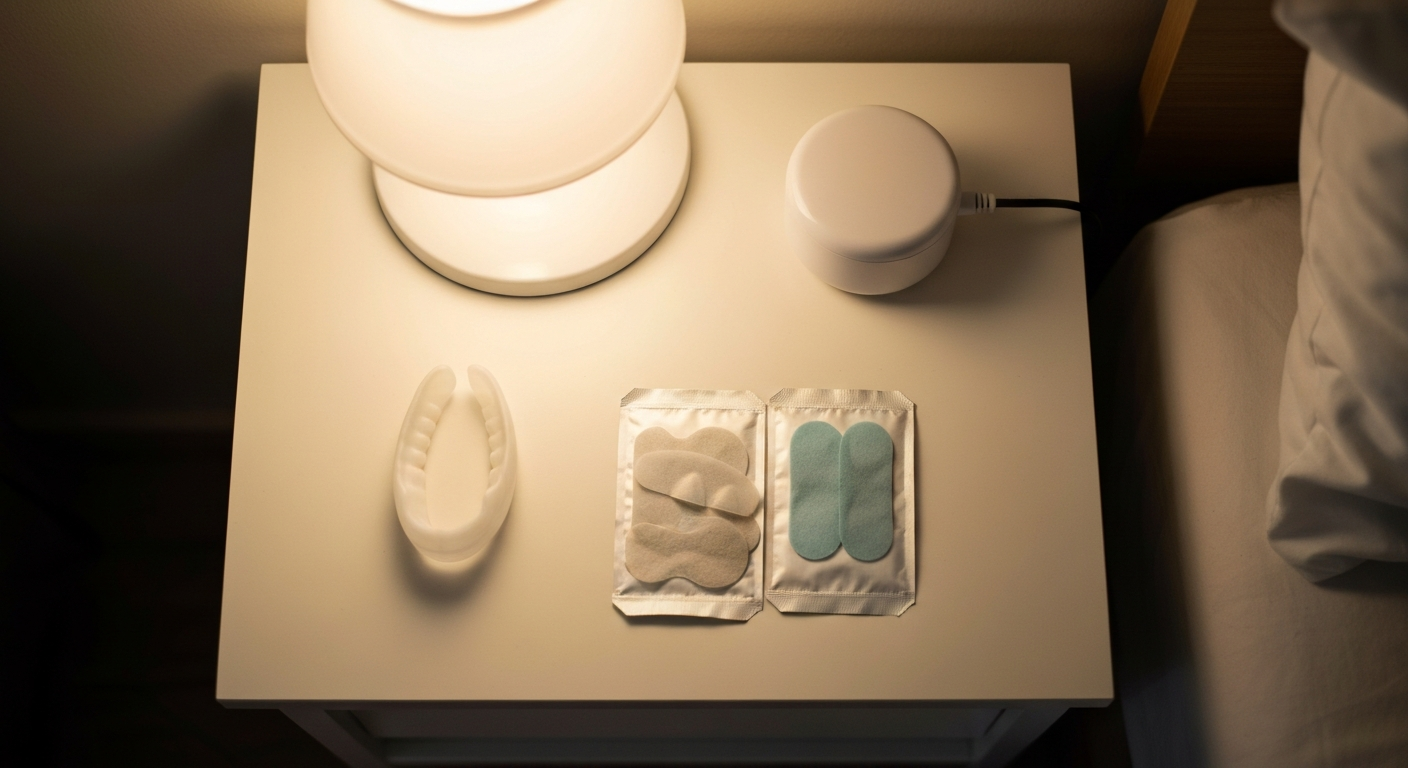
5. Use a mandibular advancement device (MAD). This is the most consistently effective non-surgical solution for most snorers. A MAD holds the lower jaw slightly forward during sleep, which pulls the tongue base away from the throat wall and widens the airway. Custom-fit versions (like SnoreMeds) are more comfortable and more effective than generic boil-and-bite options.
Also Read: Why Is My Download Speed So Slow? 9 Causes & Fixes
Snoring itself is usually harmless, but it can signal a more serious condition called obstructive sleep apnea (OSA), where the airway fully collapses repeatedly during sleep. OSA reduces blood oxygen levels and fragments sleep, significantly raising cardiovascular risk.
See a doctor if you're a snorer who also experiences:
A sleep study (polysomnography) can confirm or rule out OSA. If OSA is present, a CPAP machine or an oral appliance fitted by a dentist or sleep medicine specialist will be prescribed. The American Academy of Sleep Medicine considers oral appliances an effective first-line treatment for mild to moderate OSA in adults who prefer them to CPAP.
Snorers make up roughly half of all adults, and the root cause is almost always a partially narrowed upper airway during sleep — caused by anatomy, sleep position, weight, alcohol, age, or nasal obstruction. Most habitual snorers benefit significantly from side sleeping, addressing nasal congestion, and using a mandibular advancement device. Snoring accompanied by gasping, daytime fatigue, or witnessed apneas warrants evaluation for sleep apnea, which carries real cardiovascular risk if left untreated.
Snoring volume is determined by how narrow the airway becomes during sleep and how much air forces through it. Partners who sleep on their back, drink alcohol in the evenings, or are overweight tend to snore loudest. A mandibular advancement device and side-sleeping are the most consistently effective interventions for severe snorers.
Many snorers can significantly reduce their snoring with lifestyle changes: side sleeping, avoiding alcohol before bed, losing weight if overweight, and treating nasal congestion. For those who don't respond to lifestyle changes, a custom-fit oral device (MAD) can eliminate snoring without surgery or prescription treatment.
Loud, habitual snoring by itself is not medically dangerous, but it is a warning sign worth investigating. Habitual snorers have a higher risk of sleep apnea, which does carry serious health risks including high blood pressure, cardiovascular disease, and stroke. If snoring is accompanied by gasping, observed breathing pauses, or severe daytime fatigue, a sleep study is recommended.
Not necessarily. Snoring and sleep apnea overlap but are not the same condition. Most snorers do not have sleep apnea. Sleep apnea requires full airway collapses (apneas) that stop breathing for 10 seconds or more, repeatedly throughout the night. A clinical sleep study is the only way to distinguish between snoring alone and sleep apnea.
The most widely used anti-snoring devices are mandibular advancement devices (MADs), which gently hold the lower jaw forward during sleep. Nasal strips, chin straps, and positional pillows also help for specific snorer types. CPAP machines are prescribed for snorers with confirmed sleep apnea. Custom-fit MADs like SnoreMeds generally outperform generic boil-and-bite versions for comfort and effectiveness.
Reviewed and Updated on June 13, 2026 by George Wright